It’s normal for pregnant moms to see their skin changing as their belly grows. Tightness can develop into dryness, itching, or a feeling of being pulled over the abdomen, hips, breasts and thighs. That is often when many people consider adding a pregnancy stretch mark cream to their daily routine. A stretch mark cream will help to keep the skin moisturized and comfortable, but be realistic about expectations. There isn’t a topical product that can guarantee prevention of stretch marks, as genetics, hormones, and how fast your skin stretches during pregnancy all play a role.
In this article, we take a closer look at what causes pregnancy stretch marks, what a cream can realistically do, the best stretch mark cream ingredients and how to choose a pregnancy-safe stretch mark cream that will work for your skin.
Why Pregnancy Stretch Marks Happen
Before talking about creams, it helps to understand what's actually happening beneath the surface of your skin.
The Skin Mechanism
Stretch marks, also known as striae gravidarum, are scars on the skin caused by the skin expanding more rapidly than the layer underneath can accommodate. They are exceptionally common in pregnancy. Indeed, a review article in Dermatology and Therapy noted that as many as 90% of pregnant women develop them, thus stretch marks are one of the most commonly reported skin changes occurring in pregnancy.
Your skin contains two important proteins:
-
Collagen, the protein that provides strength
-
Elastin, which lets the skin stretch and bounce back
Collagen and elastin pregnancy changes are similarly impacted by hormones. When a bundle of fiber is stretched beyond its tolerances, small tears occur in the lower layers of the skin. Hence, stretch marks are not just a surface level issue. They start under the skin way before they start showing up.
Who Is at Higher Risk
Every mother can get stretch marks, but there are a few factors that can increase the likelihood of them appearing. An analysis on striae gravidarum concluded that genetics is among the most significant risk factors for getting stretch marks during pregnancy. If your mother or sisters had them, you’re more likely to have them too.
Other factors linked to a higher risk include:
- Carrying twins or multiples
- Rapid pregnancy weight gain
- Younger maternal age
- Significant breast enlargement
- Having stretch marks from puberty or previous weight changes
Since the stretch response of skin is controlled by genetics and hormones, every pregnancy is different. When they do occur, they are typically located on the abdomen, breasts, hips, thighs and buttocks, which are also the sites of greatest skin stretching.
Types of Stretch Marks and What They Mean
Stretch marks don’t all look the same. Knowing if they are new or mature can help you have realistic expectations about what skin care products can and can’t do.
New vs. Mature Marks
New stretch marks are generally red, pink, purple, or a deeper brownish red color depending on your skin tone. These newer marks are often described as red or purple pregnancy stretch marks.
You may notice that they:
- Feel itchy or sensitive
- Appear slightly raised
- Look more noticeable after a shower
As the skin is still in flux at this point, skin care products can assist with moisture and relief, if the area is feeling parched or inflamed.
As stretch marks are healing they tend to become more flat and lighter in color and they often turn white, silver or a pale beige. These are also known as white stretch marks pregnancy marks. Stretch marks respond less well to topical treatments at this stage. They may continue to fade naturally, but are unlikely to be removed completely just with creams.
Setting Realistic Expectations
A major misconception when it comes to pregnancy skincare is that a cream can stop you from getting or completely get rid of stretch marks. The current evidence doesn’t back up that claim.
What a stretch mark cream can do is:
- Improve hydration
- Support the skin barrier
- Reduce tightness and itchiness
- Keep stretching skin more comfortable
Pregnancy stretch mark cream is not a promise for prevention, but more like support for your skin to keep it hydrated during pregnancy.
What Stretch Mark Cream Can and Cannot Do
It's so easy to be influenced by products that claim to stop or get rid of stretch marks. In truth, a pregnancy stretch mark cream is more of a supportive skincare product, not direct treatment.
What It Can Do
A well-formulated cream can help keep stretching skin comfortable throughout pregnancy. Its benefits may include:
- Moisturizing dry skin
- Reducing tightness and discomfort
- Relieving itchiness caused by stretching skin
- Maintaining a healthy skin barrier
- Helping reduce moisture loss from dry skin
For many women, these benefits are a major boon, especially as their bellies continue to grow.
What It Cannot Guarantee
The best stretch mark cream for pregnancy also has its limitations. Genetics, hormones, and the way your skin reacts to stretching are far more important in whether you actually get stretch marks. Evidence to date also indicates that topical products have not been demonstrated in controlled studies to prevent stretch marks.
A cream cannot:
- Guarantee stretch mark prevention
- Override genetic factors
- Erase existing white stretch marks
- Permanently change how collagen forms in the skin
But that doesn’t mean applying a cream isn’t worth it. It’s just a matter of having realistic expectations and concentrating on what these products are meant to do: keep skin moisturized, comfortable, and supported during pregnancy.
Key Ingredients in Stretch Mark Cream
When you review the stretch mark cream ingredients, it is more helpful to think in terms of what actually supports and soothes your skin as it changes during pregnancy, rather than what offers “miracle prevention.”
Hydration and Barrier Ingredients
Hyaluronic acid - among the most reliable ingredients in hyaluronic acid pregnancy skincare. It acts as a humectant, helping the outer layers of the skin attract and retain water.
Glycerin - easy, mild, and reliable. It allows your skin to retain moisture without feeling heavy or oily, which is also why it’s present in most daily moisturizers.
Ceramides - consider these as the “mortar” in your skin barrier. Ceramides help maintain the strength of that barrier when your skin is stretching rapidly, making it harder for moisture to escape.
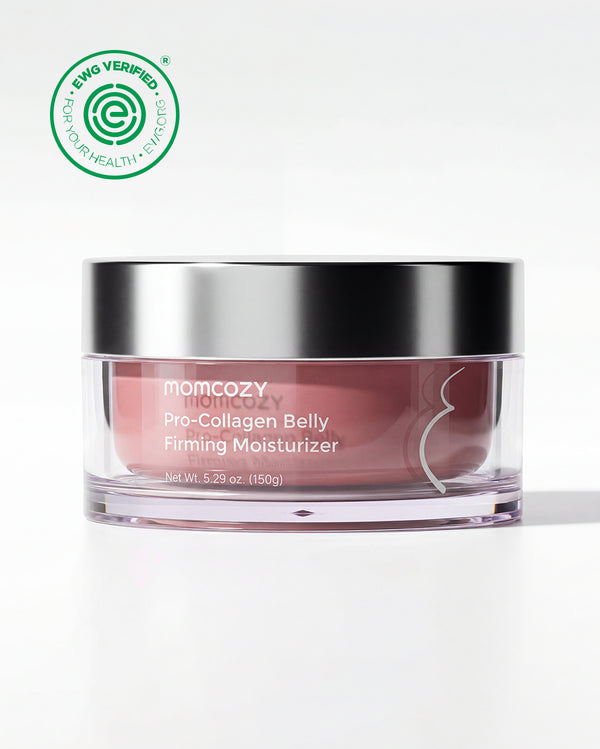
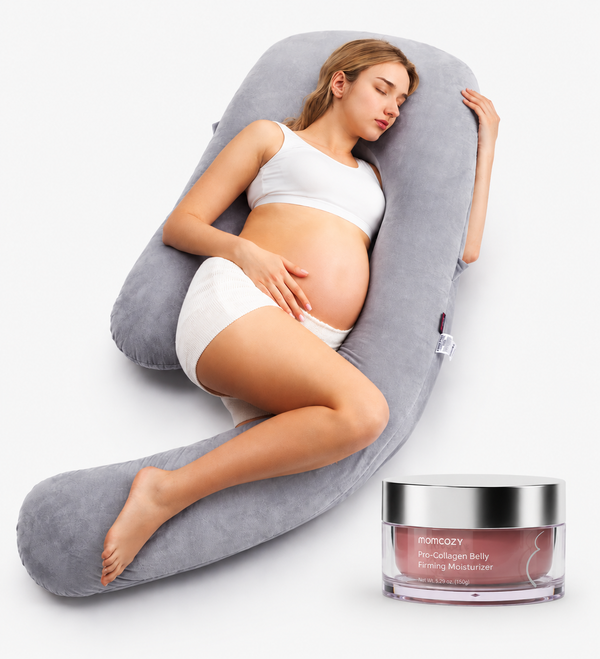
Peptides - they support the skin’s natural maintenance. They are milder substitute of retinoids and are commonly found in formulations of stretch mark cream that is safe to use during pregnancy. Certain products, such as the Momcozy Pro-Collagen Belly Firming Moisturizer Stretch Mark Cream, include peptides that may help boost skin elasticity and offer comfort.
À partir de $15.99 USD $59.99 USD
Nourishing and Soothing Ingredients
Shea butter / Cocoa butter - indulgent and soothing ingredient that a lot of people link to pregnancy skincare. When it comes to shea butter stretch marks, it’s worth noting that it won’t stop you getting stretch marks, but it can help to keep your skin soft and less itchy as it stretches quickly.
Panthenol (vitamin B5) - a soothing agent that relieves tightness and irritation of the skin.
Vitamin E and plant oils - this helps lock in moisture and gives creams a more nourishing feel that makes them more pleasant to use daily, and that really matters more for consistency than people think.
Pregnancy-Safe Ingredients vs. What to Avoid
Upon selection of stretch mark cream ingredients, safety and efficacy play an equal role. When pregnant, the goal is to nourish the skin, but not feed it with ingredients that are discouraged or not well researched.
Generally Safe
The majority of pregnancy skincare products are based on mild, thoroughly researched components that enable the skin to remain at ease and moisturized:
- Hyaluronic acid
- Glycerin
- Shea butter
- Ceramides
- Panthenol (vitamin B5)
- Colloidal oatmeal
- Simple plant oils
That is why these ingredients are found in most moisturizers and stretch mark creams: they help to reinforce the skin barrier and soothe dryness without causing additional irritation. And if you have sensitive skin or are easily irritated, fragrance-free products are generally the safest choice when pregnant.
Avoid or Check with Your Doctor
As you scan the list of ingredients to avoid during pregnancy, there are some actives that you really should avoid or only use under the advice of a doctor:
- Retinol and retinoids (tretinoin, adapalene, retinaldehyde)
- High-strength salicylic acid and other potent exfoliating acids
- Hydroquinone
- Strong or heavily fragranced products
One big concern when it comes to retinol pregnancy skincare is that retinoids are not generally regarded as safe to use when pregnant, due to their potency and influence over how quickly your skin cells turnover. When in doubt about a specific product, consult your healthcare provider prior to using it.
Which Texture Is Right for You
The good stretch mark cream is the one which suits your skin best related to texture and to your personal choice. Although many people compare stretch mark cream vs oil, they don’t consider that creams, oils, gels and butters have different advantages for type of skin, comfort and daily routine.
Cream, Oil, Gel, or Butter
Cream is the most balanced for day-to-day use. It’s hydrating, fast-absorbing, and safe to use on all skin types during pregnancy.
Oil is the ideal choice for sealing moisture as well as for massages. The skin remains soft after use, and it can be applied at night or before a moisturizer.
Gel is light and quickly absorbed into skin. It’s perfect for hot and humid climate or oily skin when rich formulations feel too heavy.
Butters are the most decadent option. It is ultra moisturizing, great for very dry skin and for night use.
How to Use Stretch Mark Cream During Pregnancy
Daily Routine
Regarding when to start using stretch mark cream, it's best to start in the first or early second trimester. With the skin pulling tight, itchy stretch marks during pregnancy are a common and annoying problem for many women. The good news is that time is flexible as long as you are consistent. Whether you decide to start in pregnancy, or later, it’s worth moisturising regularly to help support your skin’s comfort and hydration.
In terms of frequency, once a day is a good baseline, and twice a day is usually the best. For a lot of women, the best time to put it on is after a shower or right before bed, when skin is clean and more receptive to hydration.
Application Technique
If you’re curious about how to apply stretch mark cream, it’s simple and not that complicated.
- Apply to clean, slightly damp skin.
- Warm the cream between your hands first.
- Massage it gently over the belly using circular motions.
- Apply on the hips, thighs, and breasts using light upward strokes.
- Allow the product to dry before you put on your clothes.
Pregnancy skin can be more sensitive than usual, so keep the pressure light. Discontinue use if irritation occurs.
How to Choose the Right Stretch Mark Cream
With so many products available, choosing which one to buy can be a little overwhelming. The best stretch mark cream for pregnancy is generally the one that is most appropriate to your skin type, feels comfortable when you apply it, and one you can use regularly.
Match to Skin Type
Different skin types often benefit from different ingredients and textures:
Dry skin
- Shea butter
- Cocoa butter
- Ceramides
- Rich cream formulas
Sensitive skin
- Fragrance-free products
- Minimal ingredient lists
- Dermatologist-tested formulas
Itchy skin
- Panthenol
- Colloidal oatmeal
- Glycerin
Oily skin or hot weather
- Lightweight lotions
- Gel-based formulas
- Fast-absorbing textures
Beyond Cream: Lifestyle Support
Skincare is only part of the picture. These simple habits can help maintain skin health throughout pregnancy:
-
Drink plenty of water: Stay adequately hydrated to support overall health and skin suppleness from within.
-
Optimize your nutrition: Eat adequate protein, Vitamin C, and healthy fats to fuel collagen formation and barrier repair.
-
Manage weight mindfully: Follow a medically guided weight-gain plan to allow skin tissues to adapt gradually.
-
Keep showers warm, not hot: Avoid hot water to prevent stripping the skin’s natural protective oils.
-
Moisturize immediately after bathing: Apply cream within minutes of stepping out to lock in optimal hydration.
-
Ditch harsh physical scrubs: Avoid abrasive exfoliants that can irritate a sensitive skin barrier.
-
Wear frictionless clothing: Choose soft, breathable fabrics to minimize mechanical skin irritation.
-
Soothe itching safely: Layer on extra moisturizer or use a cool compress—do not scratch the skin.
-
Stay active safely: Engage in doctor-approved, pregnancy-safe exercise to boost circulation and nutrient delivery.
If itching is intense, especially on palms of hands and soles of feet, or if you notice it getting worse at night, consult your doctor for evaluation.
FAQ
Q: Can stretch mark cream completely prevent stretch marks during pregnancy?
Not completely. Genetics and hormones are known to contribute to the stretch mark formation. Creams can make your skin feel more comfortable and hydrated, but they cannot promise prevention.
Q: When should I start using stretch mark cream?
Most women begin in the first or early second trimester, before their belly starts to grow bigger. But it’s useful at any stage of pregnancy, especially if you feel like your skin is dry, tight, or itchy.
Q: How often should I apply stretch mark cream?
It’s typically sufficient to apply once or twice a day. Regular application, particularly after showering or before sleeping, can promote moisture retention of the skin. You can also reapply the belly cream when you feel discomfort.
Q: Is it safe to use stretch mark cream on my breasts during pregnancy?
Yes. The majority of pregnancy safe stretch mark creams can be used on the breasts. Always check the ingredient list to confirm. If you are going to breastfeed, do not put any products directly on your nipple.
Q: Should I avoid retinol in stretch mark cream during pregnancy?
Yes. Retinol and other retinoids are not really recommended when pregnant. They are Vitamin A derivatives, and high levels of Vitamin A can affect your baby’s development. If you have questions about an ingredient, talk first to your healthcare provider.
Conclusion
Stretch marks are a normal part of pregnancy. You can get them whether you regularly have a skincare routine or never really think about it. That’s why it’s useful to think of pregnancy stretch mark cream not as a promise, but as a way to keep your skin comfortable as it stretches through several months of growth and change.
And if you do get stretch marks, don’t be hard on yourself. Often genetics, hormones and the unique properties of your individual skin will be more of a factor than any product ever could. A cream can’t change your genetics, but it can make your skin feel softer, less dry and more comfortable as your pregnancy progresses. And for a lot of women, the simple act of spending a minute a day taking care of their changing body is enough of a reason to use one.