


If you're wondering what stroller age is right for your baby — or whether your toddler is still at the right age to ride in one — you're not alone. Choosing the right stroller at the right stage makes a big difference for both safety and comfort. This guide breaks it all down by age, from the newborn days to when it might be time to retire the stroller for good.

Key Takeaways
- Newborns can use a stroller from birth, as long as it supports a fully flat recline or fits an infant car seat.
- Most strollers have a minimum age of 0 months when used with the right seat or attachment.
- The typical recommended upper stroller age is around 3 years old, though many children continue using one until age 4 or 5.
- Rear-facing weight limits — usually 50 lbs — are a more reliable guide than age for knowing when to stop.
- A versatile stroller that grows with your child saves money and eliminates the need to buy multiple products.
What Stroller Features Matter at Every Age?
Not every stroller works for every age. As your child grows, their needs change — and so should the stroller features you prioritize. Here's a quick overview:
| Age Range | Stroller Type | Key Features to Look For |
| 0–6 months | Full-size stroller with bassinet or infant car seat adapter | Flat recline, head support, sun canopy |
| 6–12 months | Standard stroller with full recline | Upright seat, 5-point harness, storage |
| 12–18 months | Convertible or compact stroller | Adjustable seat, easy fold, sturdy frame |
| 18–24 months | Everyday or travel stroller | Higher weight limit, footrest, canopy |
| 2–3 years | Lightweight or umbrella stroller | Easy to push, compact fold, light frame |
| 3+ years | On-demand use only | Weight limit check, child's independence level |
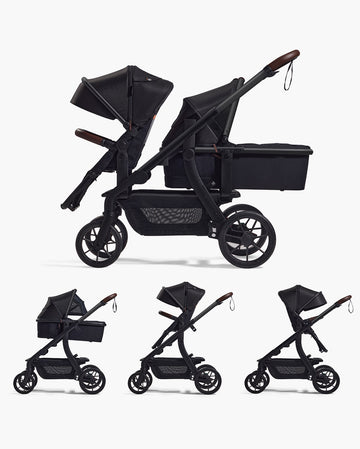
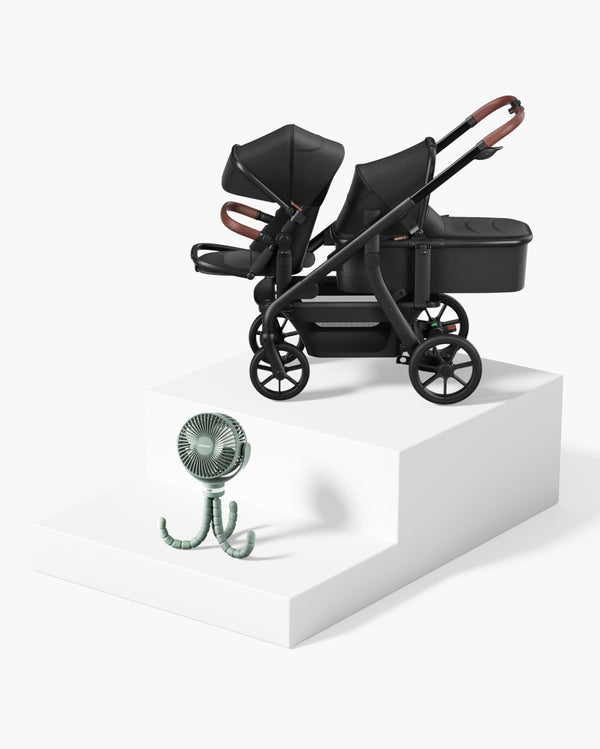
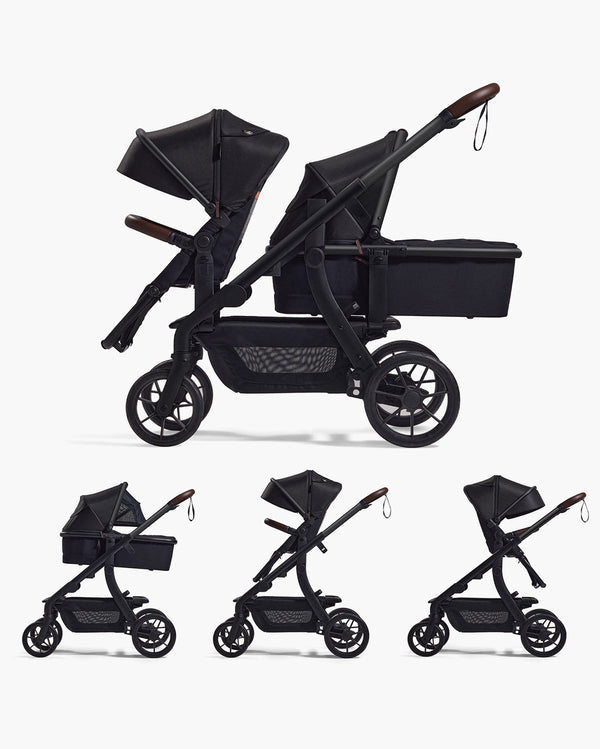
If you want one stroller that covers all of these stages, a convertible option is the most practical choice. The Momcozy ChangeGo Baby Stroller, for example, offers 23 configurations and adapts from a single newborn stroller all the way to a tandem double as your family grows. It's built to meet ASTM safety standards and uses OEKO-TEX certified fabric, so it's safe for babies from day one.
Member price
$656.98$729.98
Member price
De$629.99$699.99
What's the Best Stroller for Babies 0 to 6 Months Old?
Newborns need full flat recline support because they can't hold their heads up yet. Their spines are still developing, so a fully reclined or bassinet-style position is essential to prevent any compression or slumping.
What to look for in a newborn stroller:
- A bassinet mode or car seat adapter compatibility so your baby can lie completely flat.
- A multi-position recline — ideally fully flat.
- A large, extendable canopy with UPF 50+ sun-protective fabric to shield from sun and wind.
- A five-point harness for secure positioning as your baby grows.
- A peekaboo window so you can check on your baby without stopping.
The Momcozy ChangeGo Baby Stroller includes all of these out of the box. The extendable UPF50+ canopy, leather bumper bar, and full recline seat make it a solid option for newborns and young infants.

What Should You Look for in a Stroller for 6- to 12-Month-Olds?
By 6 months, most babies have developed enough head and neck control to sit in a more upright position. They're also more curious and alert, so they benefit from a seat position that lets them see the world around them.
Key features for this stage:
- A 3-position or multi-position recline so you can adjust for naps or upright exploring.
- A full-size seat with enough room for a growing baby.
- A spacious storage basket — you're hauling more gear now, from diaper bags to snacks.
- An adjustable handlebar so parents of different heights can push comfortably.
At this stage, the Momcozy ChangeGo Baby Stroller continues to be a practical fit, with its full-size toddler seat, 3-position recline, adjustable leg rest, and storage basket that holds up to 19.8 lbs. The 5-position adjustable handlebar also makes it easy for taller and shorter parents to share pushing duties.
Which Strollers Work Best for 18- to 24-Month-Old Toddlers?
Once toddlers hit 18 months, they're walking more — but they still need a stroller for longer outings, trips to the store, or travel days when tired legs aren't going to cut it. At this age, durability, maneuverability, and ease of use become the top priorities.
What to prioritize at this stage:
- A sturdy, stable frame that can handle an active toddler who climbs in and out.
- A weight limit of at least 40–50 lbs to accommodate growth into the preschool years.
- Smooth-rolling wheels — 12-inch rear wheels make a big difference on uneven surfaces.
- One-hand fold stroller for busy parents loading and unloading from a car.
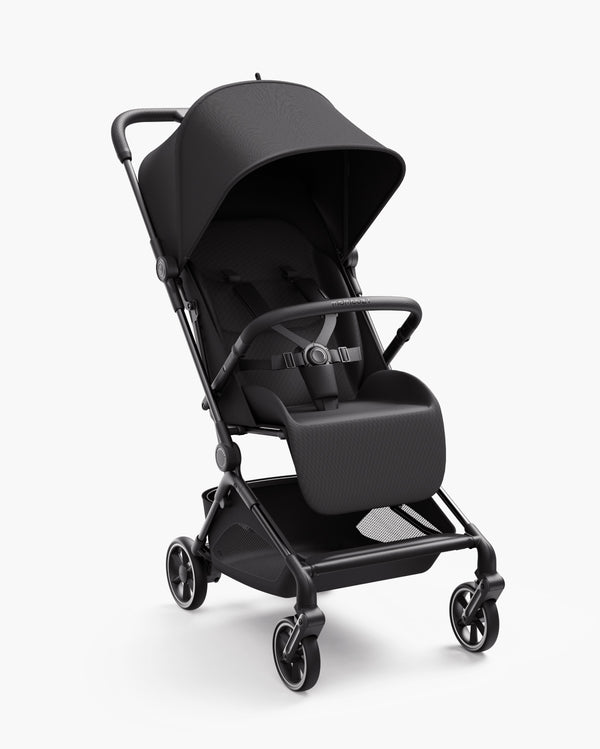
If you're also looking for a lighter option for travel and everyday errands at this age, the Momcozy TuckGo Stroller is worth considering. It weighs just 6.3 kg, folds to carry-on size, and has a reinforced carbon fiber frame that keeps it stable without adding bulk. The spacious seat and 3-position recline still make it comfortable for naps on the go, and it holds up to 45 lbs — more than enough for toddlers in this age range.
Do Strollers Have Age Limits?
Most strollers don't have a hard cutoff age printed on the box. Instead, they set stroller weight and height limits. A typical stroller supports children up to 50 lbs or around 43 inches tall, depending on the model. So technically, a 4-year-old who falls under the weight limit can still use the stroller safely — it's a matter of the individual child, not a universal rule.
That said, most pediatric guidelines suggest that children who are walking steadily and can handle moderate distances on their own don't need a stroller as their primary mode of transportation anymore. The stroller age limit is more of a developmental and practical milestone than a hard safety boundary.
How Old Is Too Old for a Stroller?
Most children stop using a stroller between ages 3 and 4. By this point, the majority of kids can walk reasonable distances without getting too tired, and they generally prefer to move on their own. However, every child is different, and there are plenty of valid reasons to keep using a stroller past age 3.
Here's a practical way to think about it: once your child can comfortably walk 1–2 miles without needing to be carried, and they're not dealing with any physical or developmental considerations, it may be a natural time to phase out the stroller. Don't feel rushed by what other parents are doing.
Is It Safe to Use a Stroller at Any Age?
Yes. Using a stroller is safe at any age, as long as the stroller is appropriate for your child's size and developmental stage. The key rules to follow:
- Always use the harness system — even with older toddlers who resist it.
- Never exceed the stroller's stated weight or height limit.
- Check for ASTM certification and safety-tested materials, especially for newborns.
- Make sure the recline position is appropriate — newborns need full flat recline, while older babies can sit more upright.
For families looking for peace of mind, both the Momcozy ChangeGo Baby Stroller (ASTM certified, OEKO-TEX fabric) and the Momcozy TuckGo Stroller are built with safety as a baseline, not an afterthought.
Member price
De$629.99$699.99
What Are the Benefits of Setting a Stroller Age Limit?
Setting a loose stroller age limit — even if it's flexible — can actually help with your child's development. Here's why it matters:
- It encourages more walking, which builds endurance, balance, and gross motor skills.
- It supports independence and confidence — children who walk more feel more capable.
- It makes outings simpler for parents over time, since you're not managing a stroller through every store or event.
- It creates a natural transition that feels like growing up, not a loss, when handled positively.
That said, enforcing an age limit too strictly can backfire. If a child is exhausted, sick, or in a high-traffic environment, using a stroller is a practical and safe choice regardless of age.

What Are the Exceptions to the Stroller Age Limit?
There are many situations where it makes complete sense to keep a stroller in use beyond the typical age range:
- Children with physical disabilities or mobility challenges may need stroller support longer.
- Kids with developmental differences — such as autism spectrum disorder — may benefit from the security and containment a stroller provides.
- High-sensory environments like theme parks, airports, or crowded cities where a tired child could become overwhelmed or a safety concern.
- Long-distance travel days where walking fatigue is a real factor, even for older kids.
In short, the question isn't just 'what is the right stroller age?' — it's 'what does my child need today?' That answer will vary based on your child, your schedule, and your environment.
When Is the Right Time for Your Child to Stop Using a Stroller?
There's no single right answer, but here are some signs it may be time to start transitioning away from the stroller:
- Your child consistently asks to walk and can manage a full outing without needing to be carried.
- Your child has outgrown the stroller's weight or height limit.
- Using the stroller has become more of a preference than a need.
- Your child is school-age and walking independently in most situations.
The transition works best when it's gradual. Start with shorter outings without the stroller, then work up to longer trips. Let your child be part of the process — it helps them feel in control rather than like something was taken away.
What If My Child Won't Give Up the Stroller?
This is more common than you might think. Some children find the stroller comforting — it's their safe seat in a big, busy world. If your child resists giving it up, try these approaches:
- Use the stroller selectively rather than cutting it off entirely — reserve it for longer outings or travel.
- Let your child 'earn' walks by choosing the route or destination to give them some control.
- Praise walking efforts without making the stroller feel like a punishment.
- If there's a developmental or sensory reason behind the resistance, talk to your pediatrician before making abrupt changes.
Rushing this transition rarely helps. Most children naturally outgrow the stroller when they're ready, especially once they realize walking comes with more freedom.
Find the Right Stroller for Every Age
Stroller age isn't one-size-fits-all. The right choice depends on your baby's developmental stage, your lifestyle, and what each day looks like for your family. Whether you're outfitting for a newborn or keeping up with a toddler on the move, Momcozy baby strollers have you covered at every stage.
Frequently Asked Questions
Q1. Can a newborn ride in a stroller?
Yes. Newborns can ride in a stroller from birth, but only if the stroller supports a fully flat recline or is compatible with an infant car seat. A reclined position protects their developing spine and airway. Always look for newborn-specific features like a bassinet mode, a five-point harness, and a UPF50+ canopy before using any stroller with a baby under 6 months.
Q2. What age should a child stop using a stroller?
It depends. Most children naturally transition away from the stroller between ages 3 and 4, when they can walk longer distances comfortably. However, there is no universal cutoff. Weight and height limits on the stroller itself are the most practical guideline. Children with special needs, sensory differences, or high-stimulation environments like theme parks may benefit from stroller use beyond age 4 without any concern.
Q3. What is the weight limit for most strollers?
Most standard strollers have a weight limit between 40 and 55 lbs. This is a more reliable guide than age for knowing when a child has outgrown their stroller. Always check the manufacturer's specifications for your specific model before use. Exceeding the weight limit affects both safety and the longevity of the stroller's frame and braking system.
Q4. Is a lightweight stroller okay for a newborn?
Not always. Many lightweight and umbrella strollers are designed for babies 6 months and older because they don't offer a fully flat recline. If you want a lightweight stroller for a newborn, make sure it explicitly states newborn compatibility and includes full recline support. Always confirm the minimum age listed in the product specifications before use.
Q5. Do I need a separate stroller for travel?
It depends on how often you travel and how far. A compact, lightweight travel stroller — like the Momcozy TuckGo Stroller — is worth having if you fly frequently or navigate tight spaces like theme parks or city streets. At 6.3 kg and carry-on dimensions, it's much easier to manage in airports and on public transit than a full-size stroller.
Q6. When can a baby sit upright in a stroller?
Most babies are ready to sit more upright in a stroller around 6 months, once they have stronger head and neck control. Before that, a fully reclined or flat position is necessary for safety. Many convertible strollers allow you to adjust the seat angle as your baby develops, which makes the transition gradual and easy to manage without switching products.
Q7. Are there strollers that work from newborn to toddler?
Yes. Convertible and modular strollers are designed to grow with your child from birth through the toddler years. The Momcozy ChangeGo Baby Stroller, for example, offers 23 different configurations — including bassinet and toddler seat options — and can even convert into a tandem double stroller as your family grows. This makes it a cost-effective long-term investment for most families.








