


Memory foam and fiber-filled nursing pillows can both provide feeding support, but the material name does not tell you how a finished pillow will feel or fit. Core properties, fill amount, height and shape all need separate checks. When comparing nursing pillow options, start with the exact construction and its instructions rather than assuming that one filling is automatically more supportive.
This article breaks down how memory foam vs. fiber-filled pillows compare in construction. It also provides a checklist of product claims worth verifying before you choose.
Key Takeaways
- Memory foam and fiber-filled nursing pillows can both provide support; material labels alone do not establish firmness, usable height or caregiver fit.
- Foam density and surface firmness are different properties, so a density label cannot be treated as a complete support or comfort rating.
- Fiber-filled pillows can be firm, and current model details matter more than an assumption that every fiber-filled design is soft or easily flattened.
- Check the filling, cover, shape and permitted adjustments separately, because a cotton cover does not verify the material used inside the pillow.
- Choose the verified construction features that fit your feeding routine, keep support that already works, and never use a nursing pillow for infant sleep.
What Does Support Mean in a Nursing Pillow?

Support on a nursing pillow is about what happens when you add weight on it. The main point should be that the pillow keeps its shape. It also helps the pillow stay at a usable height while you feed your baby. This is different from how the cover feels on your skin. It is also different from whether a caregiver likes the pillow in a certain position.
Some can feel plush on top but still sag when you press down. A core can feel solid inside and still not fit every person. It may also miss the right angle for feeding. Support does not mean a latch will be better. It also does not mean any discomfort will fade. It does not guarantee height will work for everyone.
Surface Feel, Support and Fit Are Different Questions
The outer cover matters, but so does the core inside. The shape as a whole also changes how it feels. When you compare two designs, do not start with looks. Start with the parts and the listed specs. First, find the core material. Then look for how stiff it is. Next, check the size and the height they claim. Also note the contour. Finally, read what the manufacturer says about how it is meant to be used.
How Does a Memory-Foam Core Respond to Pressure?
This type of foam is made from viscoelastic polyurethane foam and, therefore, it requires more time to bounce back when compared to other springier foams. When pressed, it gets compressed and gradually recovers its shape after the removal of pressure. It may have different properties, depending on the nature of materials used in its manufacture and its construction.
Slow Recovery Is Not the Same as a Support Guarantee
Slow recovery is a term for how foam comes back after being pressed. But this does not always tell if a nursing pillow is supportive or not. Thickness, specified foam features, the whole shape and the way it is designed are important points for properly evaluating a model.
It does not show a universal specific time for recovery. It also does not tell about compression-retention level, cooling effect or health benefits. Manufacturer details should be checked for foam type and specified qualities, not just the words on the label.
How Can a Fiber-Filled Pillow Provide Firm Support?
A nursing pillow that uses fiber can feel quite supportive. How it feels can change a lot based on the amount of filling and how it is put inside the cover. The phrase “fiber-filled” by itself does not tell you if the pillow will feel plush or tight. It also does not say whether it will be thick or flatter.
Fiberfill Does Not Automatically Mean Soft
Fiberfill can be used in a design intended to provide a firmer or higher-feeling support surface. For instance, Boppy talks about a nursing pillow that uses more fill, made with recycled polyester, and it is shaped to stay in place. The company links that to firmer, higher support. This is a specific product note. It is not proof that every fiber-filled pillow is built the same way or feels the same.
Also, older versions and newer versions can be different. So when you compare specs, you need to look at the exact product generation. Instead of assuming the filling will go flat fast or that it will stay firm for a long time, read the manufacturer’s latest write-up. Look for the parts on the filling and how the pillow is put together.
Read Fill and Cover Separately
The inner fill and the outer cover are not the same thing. They are built as separate parts. You cannot swap them in a description. For instance, a cotton cover tells you what fabric is used on the outside, but it does not tell you what is inside the pillow or how much fill is there.
If you are looking for a nursing pillow that uses fibers, review the exact fill mix first. Then look for the stated fill amount, if it is given. Also check how the fill is spread. Next, review how the fill is kept in place, such as the way the enclosure is made. Finally, confirm the cover fabric. These points depend on the specific product. They do not work like one rule that always predicts how firm or how long it will last.
Density, Firmness and Height Are Different Measurements

Density, firmness, and height are not the same thing when you talk about a nursing pillow. They each point to a different part of how the pillow will feel. Density is all about the quantity of material contained in a given area. Density gives us an idea of the mass contained in a specific volume of material. On the other hand, firmness is what one experiences when pressure or weight is applied on the pillow. It is simply how well the material can resist pressure. Height, or loft, refers to the height of the pillow. Therefore, it is not possible to determine support and comfort using just a single figure.
What a Density Label Does Not Tell You
The foam density label shows the material composition that was used but it doesn't say anything about the firmness of the pillow. The firmness of the pillow depends on various factors associated with the construction of the pillow and foam itself, so it's impossible to calculate the exact value of nursing-pillow hardness from the density number.
Height is also important to consider since the form of the pillow influences its fit in terms of the caregiver and the feeding position. There is no fixed inches-by-torso formula for selecting pillow height. If the performance relies on one number, make sure to find comparable information about the model and construction details.
Why Shape and Caregiver Fit Still Matter
The filling is simply one of the aspects that determine the fit of the nursing pillow during the feeding process. However, the opening, size, height of the pillow, as well as the position recommended for use, may influence the fit of the pillow against the caregiver.
The Same Material Can Come in Different Structures
Two nursing pillows may use the same type of filling material yet be different in terms of the shape, size, opening, or height level at which the user is raised. Comfort levels may also differ according to the specific type of chair used and the position of feeding along with the position of the pillow used by the caregiver.
Don’t pick a nursing pillow just because it looks full. Check the exact size first. Look at the shape and how it sits against your body. Use the manufacturer’s directions for both setup and day to day use. If you are not sure how to position it, look up the newest guide on how to use a nursing pillow.
What Can a Hand Press or Online Review Actually Tell You?
It is easy to determine the texture of the external material of the pillow with one quick pressing by hand, but the information about whether the pillow retains its comfortability and suitability for long-term use can only be received from the actual use of the product.
Online reviews may help you make your mind about the general impression about the item, but remember that it is subjective information which does not prove scientifically that the pillow functions properly.
The reviewers may have a variety of impressions about the pillow's durability depending on how old it is, what it is used for, and their own preferences. Make sure that you check only reviews of the appropriate model and specifications.
Compare Construction, Not Just the Material Name
The best way to compare is to begin first at exact models and not see a memory foam and fiber fill like categories that are opposed. It is best to keep the evidence fields similar for both the items then, have a documented construction apart from what is expected and ignore what you do not know about the performance.
Read the Product Label Before Drawing the Comparison
|
Evidence Field |
Memory-Foam Construction |
Fiber-Filled Construction |
What to Verify |
|
Core / filling |
Verify foam type and exact structure; do not assume every foam is the same. |
Verify actual fiber composition and model/generation. |
Read fill specification separately from the cover. |
|
Firmness / support |
Density is not a firmness score or complete support proof. |
A fiber-filled model can be firm; the category is not a softness rating. |
Seek comparable finished-product evidence; unknown stays unknown. |
|
Response to pressure |
Slow recovery is a memory-foam characteristic; model response varies. |
Response is model-specific, not inferred from the fiber label. |
No universal speed, sag or height-retention claim. |
|
Height / shape / fit |
Defined core shape still needs caregiver-fit checks. |
Fill amount and finished shape still need caregiver-fit checks. |
Compare dimensions/shape and permitted setup; no universal body formula. |
|
Adjustment |
Do not assume a core can be trimmed or altered. |
Do not assume filling is accessible or removable. |
Use only explicitly permitted model adjustments. |
|
Care / durability |
Cover washability does not establish core washability or lifespan. |
Fiberfill does not establish whole-pillow washability or lifespan. |
Exact care label and appropriate product evidence, not material stereotypes. |
The table shows why neither construction earns a blanket advantage from its material name. A pillow might list details in some areas, but not in every performance characteristic. If key parts are not given, that data should stay blank. You should not guess about how soft it feels, how well it supports you, or how long it will last.
If you are using a nursing pillow buying guide, consider more than the filling. Check the size, the shape, what it needs for cleaning, and how you plan to use it.
When you compare brands, it helps to use a guide to compare nursing pillow designs. It can help you go from vague build terms to the real differences between specific designs.
Which Construction Is Worth Considering for Your Routine?
The question here is whether any feature of that pillow is applicable in your routine and not just whether the pillow has memory foam or fiber fill. See your current pillow product, how it is constructed, and whether it can be reconfigured to help you adjust something.
A Defined Core
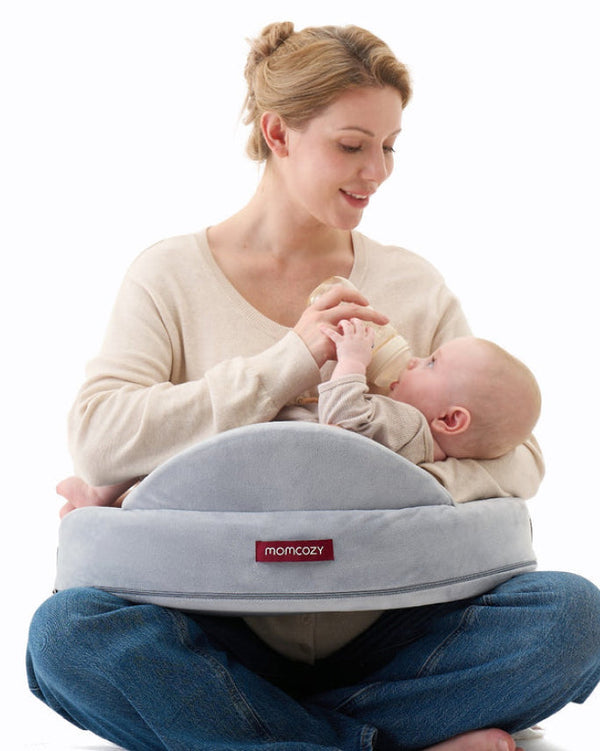
Should you consider having a defined foam core in your pillow, try looking at the Momcozy MaxSupport Nursing Pillow and its features. A defined foam core is not a guarantee of firmer, more durable or comfortable pillows as compared to all fiber-filled ones.

Permitted Fill Adjustment
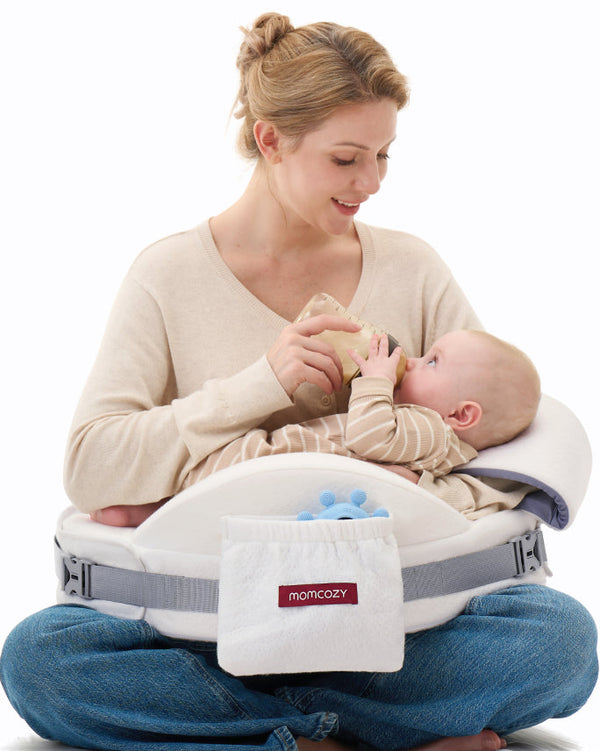
For height adjustments and other multi-functionality, consider the Multifunctional and Adjustable Nursing Pillow and its permitted adjustments of the fill. Don't assume anything regarding the type of exact fill material and construction if you're not told explicitly by the manufacturer.
Keep What Already Works
In case your current nursing pillow offers all the support and fit needed to be used as intended, there is no point changing it just because of some other construction. Unless you are sure you need another pillow, make sure whether you need a breastfeeding pillow first.
Compare Momcozy nursing pillow models rather than turning this construction comparison into a product ranking.
Check Adjustment and Care Instructions Before Choosing
The specific nursing pillow that you have will determine how it can be maintained and adjusted. The kind of filling does not necessarily indicate what you can alter, clean, or wet, therefore it is best to follow the manufacturer’s instructions on the pillow that you have at hand.
Check the Core and Cover Separately
Keep these points in mind while going through the product details:
- The Cover: Look out for any removable outer cover. There are cleaning guidelines to the outer cover. Do not assume that if the outer cover is machine-washable, then the inner pillow is also machine washable.
- The Core: Examine the manufacturer’s guidelines for the pillow body or core. Not all fiber-filled pillows are machine washable, and memory foam cannot be cut, soaked or tampered with, unless specified by the manufacturer.
- Adjustment: In case it is an adjustable pillow, only make adjustments according to the ones that have been recommended by the manufacturer. Never adjust the fill or the height of the pillow in any manner that you think is right.
- Intended Usage: Nursing pillows should only be used for feeding babies under the guidance of caregivers. They are not meant to be used as sleeping surfaces for infants.
Look for the care label along with the manufacturer’s instructions prior to use. If there is any confusion regarding washing, adjustment, or the core of the nursing pillow, contact the manufacturer directly rather than making assumptions based on material information. For broader nursing pillow safety guidance, refer to the dedicated safety information.
Member price
De$54.99$59.99
Frequently Asked Questions
Should I judge a newly unpacked foam pillow immediately?
Follow the exact product’s unpacking and preparation instructions before use. No universal recovery time was verified for the nursing-pillow models in this brief. If the shape or condition is unclear, ask the manufacturer rather than adding heat, cutting the core or inventing a compression test.
Does recycled fiber mean less support than new fiber?
The recycled label identifies sourcing, not a comparative support measurement. Current manufacturer documentation describes a firm pillow using recycled polyester fill, but this does not prove that all recycled and new-fiber constructions perform alike. Compare the exact finished models and their available evidence.
Can a cover from another model change the pillow’s support?
Do not assume cross-model compatibility or use a cover as added padding. Verify the correct cover and instructions with the manufacturer. The current Boppy FAQ specifically distinguishes old and new cover compatibility; that example should not be generalized to every brand or Momcozy model.
Does a material label or certification badge prove safe sleep suitability?
No. Neither memory foam nor fiberfill makes a nursing pillow an infant sleep product. A material or certification statement also needs its own verified scope; do not infer brand approval from it. Follow the product warnings and move the baby to an appropriate sleep space when needed.
Conclusion
Neither memory foam nor fiber fill is a universal winner for nursing pillow support. Read the exact fill or core specification, separate firmness from height and fit, and compare the same construction fields across models. Choose based on verified features that suit your routine, whether that means keeping your current pillow, considering another structure, or making no immediate purchase. Before deciding, use the comparison table to identify any missing information, then confirm those details in the product label, care instructions, or manufacturer manual.









