


The best breast milk cooler keeps pumped milk cold for the time you are away from reliable refrigeration. It should also hold your expected milk volume without becoming difficult to carry. Some parents need a compact cooler for errands. Others need full-day storage for several pumping sessions. This guide explains the available cooler types, how to compare them, and how to protect pumped milk during workdays, road trips, and flights.
The Best Breast Milk Coolers
There is no single breast milk cooler that suits every pumping routine. The best option should hold the milk you expect to pump and keep it cold for the entire time you are away from reliable refrigeration.
A compact cooler may be enough for daycare drop-off, errands, or a short appointment. For a full workday, several pumping sessions, or extended travel, greater capacity and separate containers can make milk easier to organize. Also consider how the cooler stays cold. Some systems require loose ice packs, while others use a pre-frozen insert that must be prepared the night before.
Parents can compare 12-ounce and 22-ounce breast milk coolers according to their usual pumping volume, number of sessions, and time away from home. A smaller model keeps the load lighter, while a larger option provides more room for multiple sessions or unexpected delays.
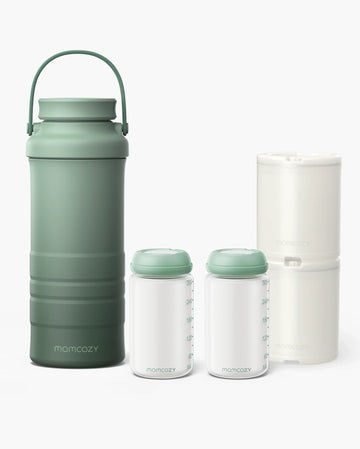
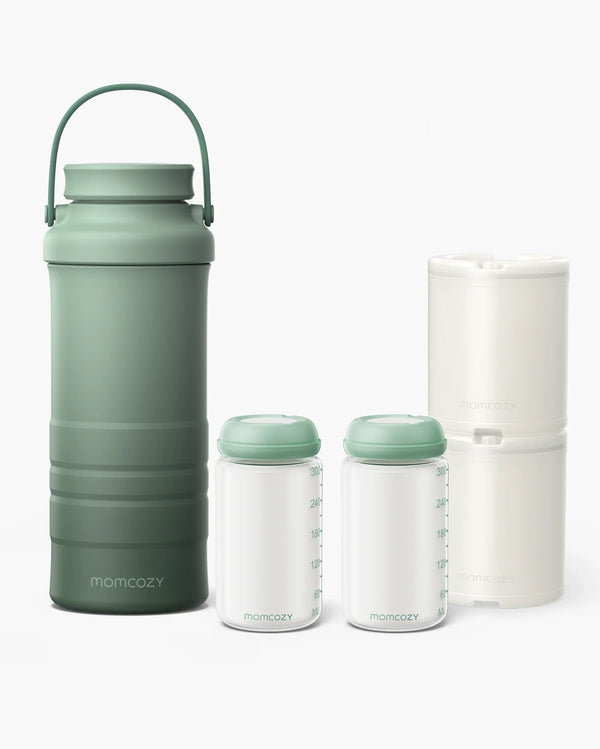
For parents who need full-day capacity, the 22oz Portable Breast Milk Cooler is one suitable option. It includes two separate 11-ounce bottles and a cooling tube that surrounds them, helping keep milk from different pumping sessions organized. The tube should be frozen at about 0°F (−18°C) for at least 12 hours before use, and cooling performance depends on proper preparation and keeping the cooler closed.

Member price
$159.99$169.99code ÉCONOMISEZ 10%
What Is a Breast Milk Cooler?
A breast milk cooler is a portable system that helps keep expressed milk at a cold storage temperature when a refrigerator is unavailable. It normally combines an insulated outer container with a frozen or chilled component.
A cooler is not a replacement for safe storage practices. Its job is to maintain a cold environment while you commute, work, travel, or run errands. Cooling time depends on the design, how well the cold source was prepared, the outdoor temperature, and how often the cooler is opened.
The CDC breast milk storage guidelines state that expressed milk can travel in an insulated cooler with frozen ice packs for up to 24 hours. At your destination, use the milk, refrigerate it, or freeze it promptly.
What Types of Breast Milk Coolers Are There?
Breast milk coolers generally fall into four groups:
- Insulated cooler bags: These hold bottles or storage bags beside frozen ice packs. They offer flexible capacity but may take up more room in a pump bag.
- Pre-frozen bottle-style coolers: These use a frozen cooling tube or insert inside an insulated container. They reduce the need to arrange loose ice packs and usually keep bottles upright.
- Ice-and-water chillers: These use ice water around a separate milk chamber. They can cool freshly pumped milk but require access to ice and water.
- Powered portable coolers: These use electricity or a battery to maintain a set temperature. They may suit car travel but depend on a reliable power source.
The terms “cooler” and “chiller” are not always used consistently. Instead of relying on the name, check how the product creates and maintains a cold environment.
Do I Need a Breast Milk Chiller?
You may need a breast milk chiller if you pump away from home and cannot place the milk in a refrigerator soon afterward. It is especially useful for:
- Workplaces without convenient refrigerator access
- Long commutes after pumping
- Several pumping sessions during one day
- Road trips and flights
- Outdoor events or day trips
- Shared refrigerators where portable storage is more practical
- Unexpected schedule changes that delay your return home
You may not need a dedicated chiller for every outing. If you will return home quickly and can remain within the CDC room-temperature storage window, a clean storage container may be enough. Freshly pumped milk can remain at room temperature for up to four hours when the temperature is 77°F, or 25°C, or colder. Cooler conditions are better, and milk should be chilled sooner in warm environments.
A dedicated cooler becomes more useful when timing is uncertain. It provides a prepared cold source instead of relying on finding a refrigerator later.

How to Choose a Breast Milk Cooler
Start with your actual pumping routine rather than the longest cooling claim on the package.
Estimate your total milk volume. Add the amount you usually pump during each session while away. Leave some extra capacity for schedule changes, but avoid carrying a much larger cooler than you need.
Count your pumping sessions. Separate bottles can help keep sessions organized. They are also useful when you need to cool freshly expressed milk before combining it with milk that is already cold.
Identify your longest period without refrigeration. Include pumping time, work, commuting, airport screening, flight delays, and travel from the airport. Your cooler should cover the full period, not only the flight itself.
Choose a cold source you can prepare reliably. A pre-frozen tube works well when you have freezer access the night before. An ice-based chiller may be easier when ice is available during travel. A powered cooler requires dependable electricity.
Consider where you will carry it. A bottle-style cooler may fit more easily beside pumping supplies. A larger cooler bag can hold several bottles but may require its own carrying space.
Plan for your destination. Confirm whether you will have a refrigerator, freezer, or additional frozen insert available. A good departure plan still needs reliable storage after arrival.
What Should You Look for in a Breast Milk Cooler?
Compare the following features before buying:
|
Feature |
What to Check |
|
Cooling method |
Determine whether it uses frozen inserts, loose ice packs, ice water, or electrical power. |
|
Cooling conditions |
Check how long the cold source must freeze and whether the duration assumes the cooler stays closed. |
|
Capacity |
Match the usable milk capacity to your expected pumping output. |
|
Separate storage |
Multiple containers can keep pumping sessions organized and reduce unnecessary mixing. |
|
Secure seals |
Bottles and lids should close firmly before going into a work bag or carry-on. |
|
Milk-contact materials |
Look for cleanable, food-grade containers intended for storing breast milk. |
|
Cleaning requirements |
Confirm which parts can be washed and which parts should only be wiped clean. |
|
Carrying size and weight |
Calculate the size and weight with bottles, milk, and the frozen cold source included. |
|
Replacement parts |
Check whether extra bottles, lids, and cooling inserts are available. |
|
Travel practicality |
Consider airport screening, cup-holder fit, and available bag space. |
For example, the CM001 measures approximately 4.11 × 4.13 × 11.42 inches. It weighs about 3.56 pounds with the frozen cooling tube installed. That weight matters if you are already carrying a breast pump, laptop, and other work supplies.
Be cautious with claims such as “24-hour cooling.” The test conditions matter. A cooler may perform differently if its insert is only partly frozen, the lid is opened often, or it is left in a hot car.
Can't I Just Use a Regular Insulated Water Bottle?
A regular insulated water bottle is designed to slow temperature changes. It does not automatically chill freshly pumped milk or keep it within a safe temperature range.
The CDC recommends storing breast milk in clean, food-grade glass or plastic containers with tight-fitting lids. A suitable insulated bottle may meet some of those container requirements. However, it still needs a reliable cold source if the milk will be stored beyond the room-temperature window.
A dedicated breast milk cooler combines storage and cooling in one system. Its insert or ice pack surrounds the milk container, making the cold source easier to prepare and position. Separate storage bottles may also help prevent warm, freshly pumped milk from reheating an earlier cold batch.
If you use another container, confirm that it is intended for food storage, closes securely, and remains at 40°F, or 4°C, or below. Do not judge milk safety only by whether the bottle feels cool.

How to Keep Pumped Breast Milk Cold While Traveling
Prepare the cooler before the day of travel. If it uses a frozen tube or insert, freeze that part for the full time stated in the instructions. A partly frozen insert may shorten cooling performance.
Follow these steps during the trip:
- Wash your hands before pumping or handling milk. Use clean pump parts and food-grade storage containers.
- Label each container. Add the pumping date and, when useful, the time. If milk is going to daycare, include your baby’s name.
- Store smaller amounts. The CDC suggests storing two to four ounces, or the amount used for one feeding, to reduce waste.
- Place milk into the prepared cooler promptly. Secure every lid before packing it.
- Keep pumping sessions separate when needed. The CDC advises cooling freshly expressed milk before combining it with older, already cooled milk. If you combine cooled batches, calculate the storage time from the oldest milk.
- Keep the cooler closed. Repeated opening allows warm air inside. Keep it away from direct sunlight and do not leave it in a parked vehicle.
- Check the milk at your destination. Use it, refrigerate it, or freeze it as soon as practical. A refrigerator should remain at 40°F or below.
For U.S. air travel, breast milk can exceed the usual 3.4-ounce liquid limit. Frozen ice packs, gel packs, and cooling accessories are also allowed. Remove the cooler for screening and tell the officer that you are carrying breast milk. Current requirements are available in the TSA guidance for traveling with breast milk.
FAQs
Q1. What Are Common Breast Milk Cooler Mistakes?
Common mistakes include using a partly frozen ice pack, opening the cooler too often, and leaving it in direct sunlight or a hot car. Another mistake is forgetting to move the milk to a refrigerator or freezer promptly after reaching the destination.
Q2. How Long Can Breast Milk Stay in a Cooler With an Ice Pack?
The CDC allows expressed breast milk to remain in an insulated cooler with frozen ice packs for up to 24 hours. This assumes the cooling source stays frozen or cold enough and the cooler remains properly packed. Use, refrigerate, or freeze the milk when you reach your destination.
Q3. How Many Hours Can Breast Milk Last Without Refrigeration?
Freshly expressed breast milk can remain at room temperature for up to four hours at 77°F, or 25°C, or colder. Use it sooner when possible, especially in warmer conditions. Previously frozen, warmed, or partially consumed milk follows shorter storage limits.
Q4. Can I Save a Half-Drank Bottle of Breastmilk?
Yes, but only briefly. Use leftover breast milk within two hours after your baby finishes feeding. After two hours, discard it. Offering smaller amounts first can reduce waste when you are unsure how much your baby will drink.
Q5. Is 110 Too Hot for Breast Milk?
Yes, 110°F is warmer than necessary and should not be fed until it cools. Breast milk does not need warming. If you warm it, use warm rather than hot water and test several drops on your wrist. Do not heat breast milk in a microwave or directly on a stove.
Q6. Can Babies Drink Cold Breastmilk?
Yes. Properly stored breast milk can be served cold, at room temperature, or warm. Some babies accept cold milk immediately, while others prefer it closer to body temperature. Warming is a preference, not a safety requirement.
Q7. How Long Will 200 Ounces of Breastmilk Last?
Divide 200 ounces by the amount your baby drinks in 24 hours. If your baby usually drinks 25 ounces daily, 200 ounces lasts about eight days. If your baby drinks 30 ounces, it lasts about six to seven days. Follow the storage date on each batch rather than treating the full stash as one date.
Q8. Does My Breastmilk Cooler Count as a Carry-On?
TSA allows breast milk and cooling accessories in carry-on baggage, but TSA does not set airline baggage allowances. Whether the cooler counts as a carry-on or personal item depends on the airline. Check its policy before traveling, especially if you also have a pump bag.
Q9. Will TSA Open My Breast Milk?
Possibly. TSA officers may need to test breast milk or request that certain pouches be opened for alternative screening. If you do not want the milk X-rayed or opened, tell the officer before screening begins. You may then receive additional screening.
Q10. Is a Mini Fridge Cold Enough for Breastmilk?
A mini fridge is suitable only if it consistently maintains 40°F, or 4°C, or below. Use an appliance thermometer to verify the temperature. Do not assume that a hotel minibar, beverage cooler, or cosmetic fridge is cold enough for breast milk storage.
Choose the Best Breast Milk Cooler for Your Routine
The best breast milk cooler is the one that covers your full time away, holds your expected pumping volume, and fits into your normal travel routine. Check how the cold source works, how long it must freeze, and how much the complete system weighs. For longer workdays or multiple pumping sessions, a larger dual-bottle cooler can provide more organized storage. Whatever system you choose, follow official storage times and move the milk to reliable refrigeration as soon as you reach your destination.








