Planning your first family dinner out with a new baby? You're probably wondering when it's actually safe to put your little one in a restaurant high chair — and what to do if they're not ready yet. Here's everything you need to know, from developmental milestones to sanitation checks, dining tips, and the best gear to bring along.
The Milestone of Your First Family Meal Out
Eating out as a family is one of those small but meaningful moments. It's not just about the food — it's about getting back into a rhythm, enjoying time together outside the house, and helping your baby experience the world around them.
But here's the thing: there's no single "right" age for your first restaurant outing. Some families head out when the baby is just a few.. weeks old. Others wait until their baby is sitting up confidently. The key is knowing what your baby is actually ready for — and planning around that, not around what other families are doing.
Is It Safe to Take a Newborn to a Restaurant?
Yes, you can take a newborn to a restaurant — but that doesn't mean they should go straight into a high chair. In the early weeks, your baby's immune system is still developing, and crowded, enclosed spaces carry a higher risk of germ exposure. Loud environments can also be overstimulating for very young infants.
That said, plenty of parents successfully dine out with newborns. The key is choosing the right setting: a quieter restaurant, going during off-peak hours, and keeping the outing short. For newborns, your best option is keeping them in their infant car seat or a baby carrier at the table — not a restaurant high chair.
When Can Babies Sit in High Chairs at Restaurants?
This is the big question. The general guideline is around 6 months, but the real answer depends on your baby's physical development, not just their age.
Before placing your baby in a restaurant high chair, they should be able to:
- Hold their head up steadily without support, so their airway stays clear and comfortable.
- Sit upright with minimal assistance, meaning they're not slumping to the side or forward.
- Show some core stability, even if they still need a little help staying balanced.
If your baby can do all three consistently, they're likely ready for a restaurant high chair with a secure harness. If they're wobbly or still need significant head support, it's better to hold off and use a carrier or bring a reclined infant seat instead.
One important note: if your baby was born prematurely, their developmental timeline may be different. Always go by their adjusted age rather than their birth age, and check with your pediatrician if you're not sure.
What Should You Check Before Using a Restaurant High Chair?
Restaurant high chairs get used dozens of times a day by different families. That means two things: germs and wear. Before you put your baby in one, take 60 seconds to run through this quick check.
Sanitation:
- Wipe down the tray, armrests, and harness straps with a disinfecting wipe before use — these areas are touched constantly and rarely cleaned between customers.
- Bring your own portable high chair cover if your baby tends to mouth surfaces, which adds an extra layer of protection.
Stability:
- Give the chair a gentle shake before placing your baby in it. It should feel solid, not wobbly.
- Check that all legs are even and sitting flat on the floor.
- Look for any cracked plastic, loose bolts, or broken parts — if anything looks off, ask for a different chair or skip it entirely.
Harness:
-
Always use the harness straps, even if your baby seems stable. Babies can shift or lean unexpectedly.
-
Make sure the buckle clicks securely and the straps aren't frayed or damaged.
-
Never leave your baby unattended in a restaurant high chair, even for a moment.
Are Restaurants Required to Have High Chairs?
Not always. There is no federal law in the United States that requires restaurants to provide high chairs. Whether a restaurant has them — and how many — is entirely up to the individual business.
In practice, most family-friendly restaurants do keep high chairs on hand, but smaller spots, fine dining establishments, or cafes may not have any. Here's how to handle it:
- Call ahead and ask if they have high chairs available, especially if you're visiting a smaller or less family-oriented restaurant.
- Check reviews on Google or Yelp — parents often mention in reviews whether a place is high-chair-friendly.
- Bring your own portable or clip-on chair as a backup. This gives you full control over cleanliness and fit regardless of where you're eating.
What Are Your Options If Your Baby Isn't Ready for a Restaurant High Chair Yet?
If your baby hasn't hit that 6-month developmental milestone yet, you still have plenty of options for dining out comfortably.
-
Infant car seat at the table: Most infant car seats can sit safely on the floor or on a stable surface beside you. Never place them on a chair or elevated surface.
-
Baby carrier or wrap: Keeps baby close, contained, and often happy while you eat. Great for younger babies who are calmer when held.
-
Portable clip-on chair: Designed for babies who can sit up but need a more compact seating option than a traditional high chair. These attach directly to the table edge.
-
Your own travel high chair: A foldable, lightweight high chair you bring from home — familiar to your baby and clean.
Top Gear to Bring When Dining Out With Your Baby
Having the right gear makes a real difference, whether you're heading to a casual brunch spot or a family dinner. Here are two Momcozy product options worth knowing about.
Momcozy DinerPal High Chair — Consistent, Safe Seating From Home to Any Meal
If you want your baby in a chair that you know is clean, stable, and properly fitted, the Momcozy DinerPal High Chair is built for exactly that. Rather than relying on whatever a restaurant happens to have available, this chair gives your baby a consistent, familiar seat at home — and it's equally ideal when hosting family meals where you want full control over your baby's seating setup.
Here's what makes it stand out:
| Feature |
Detail |
| Design |
5-in-1, transitions from infant to adult use |
| Material |
FSC-certified beechwood, heat-treated to 248°F |
| Weight Limit |
308 lbs — built for lifelong use |
| Adjustment |
Tool-free, 20-second seat and footrest adjustment |
| Safety Certification |
ASTM F404 (US) and EN14988 (EU) certified |
| Tray |
23.5" extra-wide, dishwasher-safe |
| Harness |
5-point, fully removable and machine-washable |
The 90-90-90 ergonomic sitting position it promotes — hips, knees, and ankles each at 90 degrees — supports healthy posture and safer swallowing, which matters especially when your baby is just starting solids.
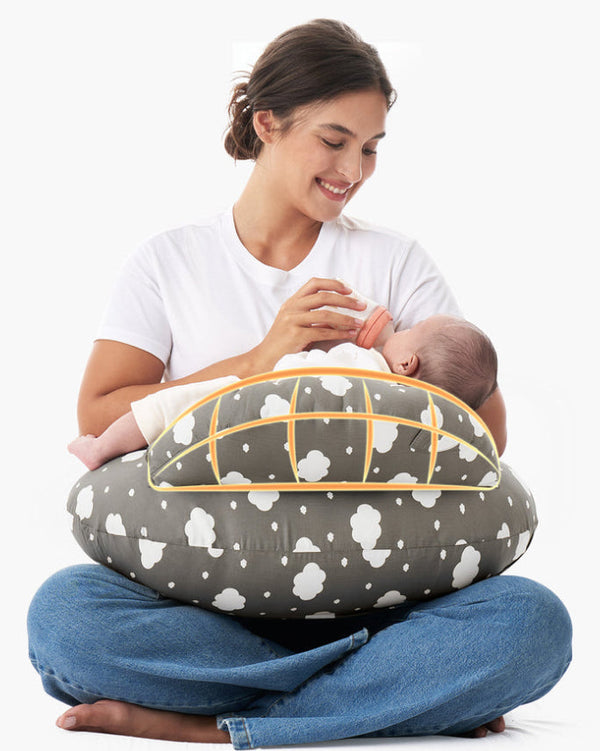
Momcozy Nursing Pillows — For Babies Not Yet Ready for High Chairs
For younger babies who aren't high-chair-ready, feeding in a restaurant setting can get uncomfortable fast — for both of you.
5 Modes
Safety Design
Lifelong Use
Ease of Cleaning
Momcozy MaxSupport Nursing Pillow
Momcozy MaxSupport Nursing Pillow is built with 100% ergonomic memory foam and features a thoughtfully designed 14 cm safety fence that prevents baby from rolling or slipping during feeds — a detail that's especially useful when you're in an unfamiliar setting and can't control your surroundings. Its spacious 22.6" x 14.5" cushion supports full arm contact during longer feeding sessions, and the adjustable waist strap fits a wide range of body types so anyone — mom, dad, or another caregiver — can use it comfortably. The cover is soft, breathable, and machine-washable.
Momcozy Multifunctional and Adjustable Nursing Pillow
Momcozy Multifunctional and Adjustable Nursing Pillow takes a different approach with a larger overall footprint — 23.6"(L) x 28"(W) x 5.5"(H) — and widened sides designed to provide more comprehensive arm support for the parent. It features an adjustable waist strap with a built-in security fence to keep baby stable during feeding, and it's genuinely multipurpose: useful for feeding from 0+ months, propping from 3+ months, tummy time from 6+ months, and supported sitting from 9+ months. Made with 100% cotton, it's easy to clean and practical for everyday use.
Both pillows free up at least one of your hands during feeding — a small but significant advantage when you're managing a restaurant outing on your own.
What Are the Best Tips for Dining Out With a Baby or Toddler?
Even when your baby is technically ready for a restaurant high chair, the outing still takes some planning. These tips make the experience smoother for everyone.
- Pick a family-friendly restaurant. Look for places with a kids' menu, noise tolerance, and staff who are used to families. This isn't the time to try that quiet, intimate bistro.
- Go during off-peak hours. Lunchtime on a weekday or an early dinner avoids crowds, long waits, and impatient looks from other diners.
- Bring your own supplies. Pack a bib, wipes, a portable high chair cover, a couple of small toys, and any snacks your baby already likes. Don't count on the restaurant to have everything you need.
- Order as soon as you sit down. Less waiting time means less fussing time. Know what you want before you get there if possible.
- Keep the meal short. Babies and toddlers have limited patience. Aim for a relaxed but efficient meal rather than a long, drawn-out outing.
- Have an exit plan. If your baby hits their limit, be ready to pack up and go without stress. It's not a failure — it's just parenting.
How Long Do Babies Typically Use Restaurant High Chairs?
Most children use high chairs — both at home and in restaurants — from around 6 months until approximately 2 to 3 years of age. The transition away from a high chair usually happens gradually, not all at once.
Signs your child may be ready to move to a booster seat or regular chair include:
- They can climb in and out of the high chair themselves.
- Their feet can comfortably reach a footrest or the floor.
- They're sitting still and eating independently with minimal mess.
- They're showing clear frustration with or resistance to the high chair.
Every child moves at their own pace. There's no need to rush the transition — a well-fitted high chair with proper foot support actually encourages better posture and focus during meals.
Start Dining Out Confidently With the Right Gear for Your Baby
Knowing when babies can sit in high chairs at restaurants — and how to prepare for it — takes the guesswork out of one of parenting's most common questions. Most babies are ready around 6 months, once they can hold their head steady and sit upright on their own. Until then, there are plenty of safe, comfortable alternatives. Check out the Momcozy Baby High Chair and Momcozy Nursing Pillows to find the right fit for wherever you and your baby are right now.
5 Modes
Safety Design
Lifelong Use
Ease of Cleaning
FAQ About When Babies Can Sit in High Chairs at Restaurants
Q1: Can I put my 4-month-old in a restaurant high chair?
Not yet. At 4 months, most babies don't have the neck and core strength needed to sit safely in a standard high chair. The general recommendation is to wait until around 6 months, when your baby can hold their head steady and sit upright with minimal support. Until then, keep your baby in an infant car seat or a carrier at the table.
Q2: Do I need to bring my own high chair to a restaurant?
Not necessarily, but it's a smart backup. Most family-friendly restaurants have high chairs available, but they vary widely in cleanliness and condition. If your baby is used to a specific chair at home, bringing a portable or clip-on option can make the outing much smoother and gives you full control over hygiene.
Q3: How do I keep a restaurant high chair clean enough for my baby?
Always wipe down the tray, armrests, and harness straps with a disinfecting wipe before placing your baby in the chair. Restaurant high chairs are used repeatedly throughout the day and are rarely sanitized between each use. Bringing a portable high chair cover adds an extra layer of protection, especially for babies who mouth surfaces.
Q4: What if the restaurant doesn't have a high chair?
It depends on what gear you have with you. If you've brought a portable clip-on chair or a compact travel high chair, you're covered. If not, your best options are keeping baby in their infant car seat next to the table, using a baby carrier, or holding them on your lap throughout the meal.
Q5: Is it safe to use a restaurant high chair without a harness?
No. Always use the harness straps, even if your baby seems balanced and calm. Babies can shift, lean, or lunge forward unexpectedly. A secured harness is the single most important safety feature of any high chair. If the restaurant's chair has a broken or missing harness, ask for a replacement chair rather than skipping the strap.
Q6: At what age do kids stop needing a high chair at restaurants?
Most children transition out of restaurant high chairs somewhere between age 2 and 3, moving to a booster seat or a regular chair. The right time depends on your child's size, balance, and ability to sit still independently during a meal. There's no hard cutoff — follow your child's development rather than a specific age.