


Feeling unusually tired, nauseated, or hungry can make you wonder whether more than one baby is developing. No symptom pattern can count fetuses, so it helps to understand what the clues can and cannot tell you.
What Are Twin Pregnancy Symptoms?
The common symptoms of twin pregnancy are largely the same as those of a singleton pregnancy. Hormones and individual sensitivity affect how you feel. Symptoms may be stronger with twins, but they can also be mild or absent. Cleveland Clinic therefore treats them as clues, not confirmation.

Breast tenderness
Rising estrogen and progesterone can make breasts feel full, sore, or sensitive. This is common in any pregnancy. More intense tenderness may occur with twins, but it does not distinguish twins from one baby.
Fatigue
Early pregnancy increases the body's workload, and carrying twins can add to that demand. Plan short rest periods, eat regularly, and tell your clinician if fatigue is sudden, extreme, or accompanied by faintness, breathlessness, or a racing heartbeat.
Frequent urination
Hormonal changes increase kidney activity, while the growing uterus eventually presses on the bladder. Frequent urination is common. Burning, fever, pelvic pain, or cloudy urine needs medical attention because it may indicate an infection.
Increased appetite
Some people notice greater hunger as pregnancy progresses, while nausea suppresses appetite in others. Rather than using hunger to judge fetal number, follow your care team's personalized advice on nutrition and weight gain. Meals with protein, fiber, healthy fats, and carbohydrates can provide steadier energy.
Morning sickness
Nausea and vomiting may be more intense in a multiple pregnancy. Contact your clinician if you cannot keep fluids down, urinate very little, feel dizzy, or lose weight because you may need treatment.
Increased back pain
A faster changing center of gravity and a larger uterus may place more strain on the lower back later in a twin pregnancy. Supportive footwear, posture changes, clinician approved movement, and rest can help. New severe pain, rhythmic pain, bleeding, or fluid leakage should be assessed promptly.
Sleep problems, heartburn, and leg cramps
Body size, movement, reflux, and cramps can interrupt sleep. Smaller meals, gentle stretching, and a supportive sleep position may help. Ask your clinician before using medicines or supplements.
Twins: Signs and Symptoms in Pregnancy
Some observations can raise clinical suspicion. Even so, the signs and symptoms of twin pregnancy below have other explanations. Dates may be off, or a sound may be counted twice. Ultrasound remains the most reliable way to know.
Early fetal movement
Feeling movement earlier than expected is sometimes described with twins, especially by someone who has been pregnant before. Perception varies with placental position, body awareness, and prior experience, so movement timing cannot identify twins.
Fetal movement in more than one area
Later, movement may be felt in separate areas. One active baby can also stretch and kick in several places, so clinicians use examination and imaging to determine fetal number and position.
Fundal height is greater than gestational age
Fundal height is the distance from the pubic bone to the top of the uterus. A larger measurement can occur with twins, uncertain dates, fibroids, body shape, or extra amniotic fluid.
Gaining weight quickly
Twin pregnancies generally require a different weight gain plan from singleton pregnancies, and weight may rise more quickly. A sudden increase with swelling, headache, or visual changes needs prompt assessment because fluid retention can accompany preeclampsia.
Hearing more than one heartbeat on a fetal Doppler
A trained clinician may detect two distinct heart rates, but Doppler findings can be misleading. The same fetal heartbeat may be picked up in two places, and the pregnant person's pulse may be confused with a fetal rate. Ultrasound is needed for confirmation.
How to Know If You’re Carrying Twins
The earliest symptoms of pregnancy with twins may include nausea, fatigue, breast soreness, and frequent urination, but they are not a diagnostic test. Medical history and laboratory results provide context, while ultrasound supplies the decisive evidence.
Doppler heartbeat count
Two clearly different fetal heart rates can strengthen suspicion when checked by a professional. A Doppler cannot show the number of embryos, placentas, or amniotic sacs, and it should not replace a scan.
Elevated hCG levels
Human chorionic gonadotropin, or hCG, can be higher in a multiple pregnancy, but normal ranges overlap greatly. Dating differences and other pregnancy conditions also affect the value. A single result cannot confirm twins, and trends should be interpreted by a clinician.
Abnormal AFP test results
Alpha fetoprotein, or AFP, can be higher when more than one fetus is present. It is a screening marker, not a diagnosis. MedlinePlus notes that an unexpected result is interpreted with gestational age and followed by appropriate testing.
Twin pregnancies measure large for gestational age
A uterus that measures ahead can prompt a scan, particularly when dates are reliable. Measurements alone remain imprecise because body build, fibroids, amniotic fluid, and fetal size can also change abdominal growth.
History or intuition
Family history, fertility treatment, age over 35, or a previous twin pregnancy can increase probability. Intuition may prompt a useful conversation, but neither history nor a feeling proves twins are present.
How Is a Twin Pregnancy Confirmed?
Prenatal ultrasound is the most reliable confirmation. It can show two embryos or fetuses and whether they have separate or shared placentas and amniotic sacs. This information shapes monitoring because shared structures can bring different risks.
An early scan may identify twins but can be inconclusive. A clinician may repeat it if dates or visibility are uncertain. NHS guidance notes that an ultrasound at about 11 to 14 weeks is important for dating and identifying placentas and membranes.

How to Keep a Twin Pregnancy Healthy
Attend every prenatal visit. Your team may monitor blood pressure, blood count, glucose, cervical length, and fetal growth more often. Ask for an individualized plan for vitamins, nutrition, weight gain, rest, work, travel, and activity.
Low impact movement may be appropriate when your clinician approves it. The Momcozy BirthEase Pregnancy Ball Set has a textured anti-slip surface, reinforced base, anti-burst construction, a 330 pound weight capacity, a foot pump, and app based courses developed by maternal movement specialists. It is a support tool, not medical advice, so ask your clinician before exercising and keep it away from sharp objects.
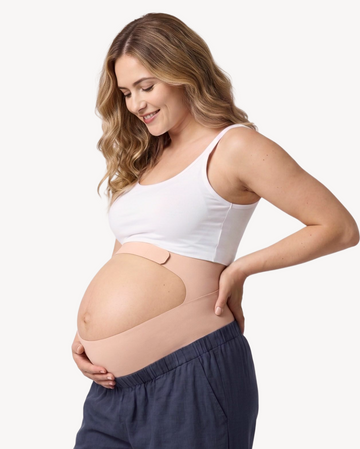
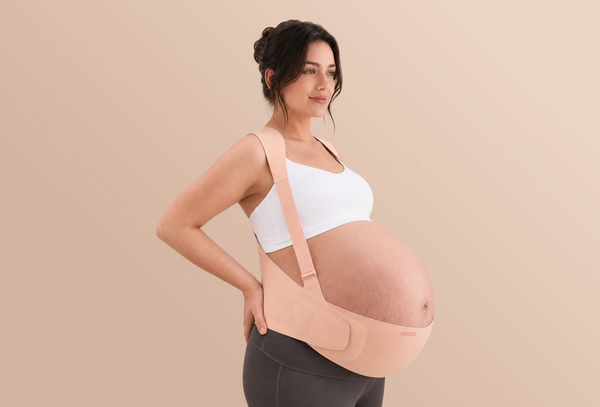
As the abdomen grows, external support may improve comfort during selected activities. The Momcozy Go As You Grow Plus Size Pregnancy Belly Band is designed for twin, multiple, and fast growing pregnancies. Its cushioned straps, airflow channels, grip strips, and gentle lift help redistribute belly weight. Momcozy advises limiting wear to two to three hours a day. You can also compare options in the Momcozy pregnancy belt collection.
For rest, the Huggable U Shaped Maternity Body Pillow uses polyester filling to support the head, back, belly, sides, knees, hips, and feet. Its flexible shape can also be arranged for reading or lounging. The Momcozy pregnancy pillow collection provides other sleep support choices.
Know when to call for help. The CDC urgent maternal warning signs include trouble breathing, persistent severe abdominal pain, reduced fetal movement, bleeding more than spotting, and fluid leakage. Seek urgent care for these concerns or whenever your care team tells you to do so.
Member price
$101.00

Member price
Desde$79.99$94.00
What Causes Multiple Gestation Pregnancy?
Fraternal twins result when two eggs are fertilized, while identical twins result when one fertilized egg splits. Several factors increase the chance of fraternal twins, but identical twinning is usually not predictable.
Family history
A maternal family history of fraternal twins may reflect a tendency to release more than one egg during ovulation. It does not mean twins are guaranteed. Family patterns are less useful for predicting identical twins.
Fertility treatments
Medicines that stimulate ovulation can lead to the release of multiple eggs. In vitro fertilization can result in twins when more than one embryo is transferred or when an embryo splits. Your fertility specialist can explain the likelihood for a specific treatment plan.
Age over 35
People over 35 are more likely to release more than one egg during a cycle, which raises the chance of fraternal twins. Age also affects other pregnancy risks, so early and consistent prenatal care remains important.
Personal history of twins
Having previously carried fraternal twins may mean a higher chance in a future pregnancy, particularly when the underlying tendency to release multiple eggs remains. A previous twin pregnancy still cannot predict the outcome of any one conception.
What Types of Complications Are Associated With Twin Pregnancies?
Most people with twins can have healthy outcomes, but closer surveillance matters. ACOG identifies risks including preterm birth, preeclampsia, gestational diabetes, and growth differences. Care also depends on whether twins share a placenta or sac.
Premature birth
Preterm birth means birth before 37 completed weeks. It is the most common complication of a multiple pregnancy, and babies born early may need help with breathing, feeding, temperature control, or other functions. Report contractions, pelvic pressure, new backache, bleeding, or fluid leakage as instructed by your care team.
Gestational diabetes
Gestational diabetes occurs when blood glucose becomes too high during pregnancy. Carrying twins raises the risk, so complete recommended screening. Nutrition changes, activity, glucose monitoring, and medication may be used according to individual needs.
Preeclampsia
Preeclampsia is a blood pressure disorder that usually develops after 20 weeks or after birth. It occurs more often in multiple pregnancies. Seek prompt advice for a severe headache, vision changes, pain high in the abdomen, breathing difficulty, or sudden major swelling.

Twin to twin transfusion syndrome
Twin to twin transfusion syndrome, or TTTS, can occur when identical twins share a placenta and blood flow through connected vessels becomes unbalanced. It does not affect twins with separate placentas. Regular specialist ultrasound helps detect changes that symptoms alone cannot reveal.
Why is a multiple gestation pregnancy considered high risk?
Two fetuses and their placental arrangement place added demands on the pregnancy and increase several maternal and fetal risks. The high risk label does not predict a poor outcome. It signals that more frequent observation and access to experienced maternity care can help problems be recognized earlier.
Is There a Difference Between Single and Twin Pregnancy Symptoms?
There can be a difference in intensity or timing, but there is no symptom that belongs only to twins. In a pregnancy with twins, symptoms may feel stronger and abdominal growth may become noticeable sooner. The ranges still overlap, so the table describes tendencies rather than diagnostic rules.
|
Feature |
Singleton pregnancy |
Twin pregnancy |
|
Nausea and breast tenderness |
Common and variable |
May be more intense, but may also be mild |
|
Fatigue |
Common, especially early and late |
May feel greater because physical demands can be higher |
|
Weight and abdominal growth |
Follows an individualized singleton pattern |
May increase faster and usually follows a different target |
|
Fundal height |
Often tracks gestational age after midpregnancy |
May measure ahead, with other causes still possible |
|
Fetal movement |
Timing and location vary |
May be noticed in several areas, but this is not proof |
|
Prenatal monitoring |
Routine schedule if uncomplicated |
Usually more frequent, based on placenta, sacs, and risk |
|
Confirmation of fetal number |
Ultrasound shows one fetus |
Ultrasound shows two fetuses and evaluates placentas and sacs |
FAQs About Signs and Symptoms of Twin Pregnancy
Q1. How are twins delivered?
Twins may be born vaginally or by cesarean birth. The plan depends on fetal position, gestational age, health, labor progress, and clinical expertise. Discuss options with your obstetric team.
Q2. What do you feel when pregnant with twins?
You may feel the same changes seen in any pregnancy, including nausea, breast tenderness, tiredness, frequent urination, appetite changes, and later movement or pelvic pressure. Some people feel them more strongly, while others have few symptoms.
Q3. What are the different types of twins?
Fraternal twins come from two fertilized eggs. Identical twins come from one fertilized egg that splits. Clinicians also classify twins by whether they share a placenta and amniotic sac because this determines monitoring.
Q4. How early can you tell if you’re pregnant with twins?
Ultrasound can sometimes identify two gestational sacs or embryos early in the first trimester. The exact timing depends on dating, scan method, and image quality. If an early scan is unclear, a repeat scan can provide a more dependable answer.
Q5. Are twin pregnancy symptoms always stronger?
No. Early twin pregnancy symptoms can be intense, ordinary, mild, or absent. Symptom severity reflects many factors and cannot reveal how many fetuses are developing.
Q6. Can high hCG levels mean twins?
They can raise suspicion, but they can also reflect dating differences or other conditions. The range for twin and singleton pregnancies overlaps, so a clinician interprets the result in context and uses ultrasound to confirm fetal number.
Q7. Can you be pregnant with twins and have no symptoms?
Yes. Some people have few early signs and symptoms of twin pregnancy and learn they are carrying twins at an ultrasound. A lack of strong symptoms does not determine whether a pregnancy is progressing normally.
Q8. Can twins be detected at 6 weeks?
Sometimes. A transvaginal ultrasound may show two sacs or embryos around this time, but six weeks can be too early when ovulation or implantation occurred later than estimated. A clinician may recommend another scan instead of drawing a conclusion from one image.
Q9. Can twins be detected at 8 weeks?
Often, twins are clearer on ultrasound by eight weeks, particularly with a transvaginal scan. Visibility still depends on pregnancy dating and scan conditions. Later imaging is also important for determining placentas and sacs.
Q10. Can you have twins but not know?
Yes. Mild symptoms and the absence of an early scan can delay recognition. Most twin pregnancies are identified through prenatal ultrasound, which is one reason timely prenatal care matters.
Q11. Why a home pregnancy test cannot confirm twins
A home pregnancy test detects whether hCG is present in urine. It does not count fetuses or reliably measure hormone concentration, and line darkness varies with timing, urine concentration, and the test itself. MedlinePlus pregnancy test guidance confirms that these tests determine pregnancy status, while ultrasound establishes whether twins are present.
The Bottom Line
Early in pregnancy, symptoms with twins can spark a reasonable question, but they cannot provide the answer. Record concerns, start prenatal care, and rely on ultrasound for confirmation and placental assessment. With appropriate monitoring, individualized self care, and prompt attention to warning signs, many twin pregnancies progress to healthy outcomes.








