


So your sister just announced her wedding. It's in October. Your due date is in December. And now you're staring at a flight confirmation page, wondering if you're allowed to click "buy."
When you're pregnant, even a simple weekend away can start to feel like a big decision. The good news is that travel with pregnancy is fine for most women. You just need to know a few things before you go.
This guide covers when to travel, how to get there, what to pack, and what to ask a doctor before booking.
Is Travel Safe During Pregnancy?

It's the first thing most people ask, so here's the honest answer. For many people with an uncomplicated pregnancy, travel is usually safe. There just isn't one answer for everybody.
Doctors are generally fine with traveling with pregnancy as long as you take a few easy steps. And honestly, a little getaway can do wonders for your mood.
That said, your doctor might tell you to stay put if you have any of these:
- A past preterm birth or pregnancy loss
- Preeclampsia or high blood pressure
- Gestational diabetes that isn't under control
- Placenta previa or bleeding you can't explain
- Twins or more
Even if your pregnancy is low-risk, there are four things to think about before booking anything.
- Blood clots. Pregnancy makes clots more likely, and sitting for hours makes it worse. So walk often, drink water and think about Momcozy compression socks.
- Where you're going. Some places have Zika or malaria, and some have very few hospitals. Check the travel warnings first.
- Food and water. Food poisoning hits harder when you're pregnant. If you're not sure the tap water is safe, stick with bottled water. And skip anything that isn't fully cooked.
- Medical care. Find out where the nearest hospital is, and bring a copy of your prenatal records.
Call your doctor or midwife before you book. It takes a few minutes, and it takes a lot of worry off your plate.
When Is the Best Time to Travel During Pregnancy?

Pregnant women find traveling in the middle of pregnancy very comfortable and the easiest. As stated by ACOG in its guidance[b] for travelers, the best time for pregnancy travel is about weeks 14-28. Early pregnancy often includes nausea and fatigue, and the last trimester is more difficult for traveling because of being uncomfortable. Nevertheless, everything still depends on you and your comfort.
If your trip falls later in pregnancy, give yourself extra time and a flexible plan. Keep contact information of your provider, information about hospitals providing maternity care in your destination location, and pay attention to your return date as well as departure date.
Can I Still Travel at 32 Weeks?
Often you can, but you'll want to be more careful. At 32 weeks, you're well into the third trimester.
A car trip with lots of stops is usually fine if your pregnancy is healthy. Many airlines will still let you fly at 32 weeks if you're carrying one baby. Some ask for a doctor's letter, and the rules for twins are stricter. Cruise lines have most likely said no by now.
Before you commit, ask yourself:
- Did my doctor say the trip is okay?
- Will I be near good medical care?
- Does my travel insurance cover pregnancy and early birth?
- If the trip had to end early, could I handle it?
If you answered yes to all four, a calm and easy trip at 32 weeks can work out just fine. The CDC recommends travelers to check the policies of airlines and cruise companies, so be sure to check them for every trip.
What Should I Prepare for a Trip?

Here's the thing about travel with pregnancy. A little planning makes a huge difference. Here's what you should get ready for.
Paperwork and plans:
- A copy of your prenatal records, with your due date, blood type and any problems
- Your doctor's phone number and your insurance details
- The names of hospitals near where you're staying
- Travel insurance that covers pregnancy problems
- The airline or cruise line's pregnancy rules (check these early!)
- For international trips, ask the doctor about food and water safety, vaccines, medicines, and insect protection.
Health stuff:
- Your medicine and prenatal vitamins, plus a few extra days' worth in case your trip runs long
- A refillable water bottle and snacks like crackers, nuts and fruit
- Compression socks
- Any medicine your doctor has okayed for headaches, nausea or heartburn
Comfort gear:
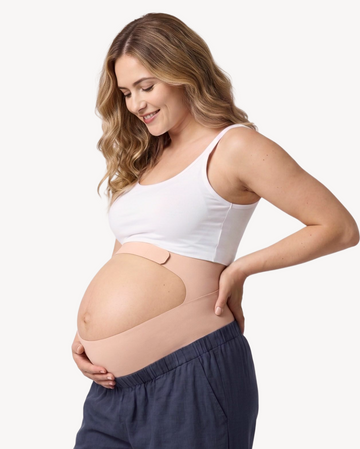
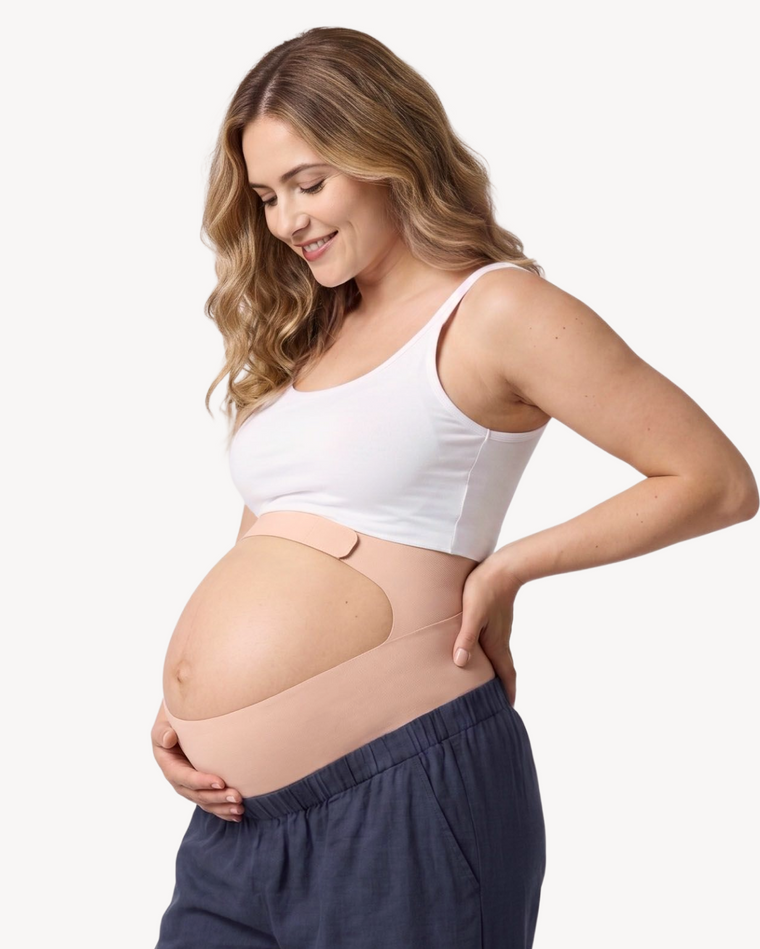
Your back and hips are already working overtime. Add hours of sitting, walking and lugging a bag around, and they get cranky fast. A little support helps a lot.
The Momcozy BellyEmbrace Maternity Belly Band is an easy way to take some weight off the back. It comes in two pieces that wrap around the lower belly and back. A built-in support layer follows the spine's curve and spreads the weight more evenly. That helps ease strain on the lower back and pelvis during long stretches of sitting, walking, or standing. The fabric is soft, thin, and seamless, so it doesn’t show under clothes. Small air holes let the skin breathe. A self-gripping closure makes it quick to put on and take off, which helps on bathroom breaks. It comes in sizes S to 3XL and works best in mid to late pregnancy. Momcozy suggests wearing a belly band for about two to three hours at a time, then taking it off. It should feel snug, not tight, and it shouldn’t be worn to sleep. It is for comfort only, and it doesn’t replace a seat belt or a doctor’s advice. If you want to compare styles, check out the pregnancy belt collection.
Sleep is the next thing to plan for. Hotel pillows weren’t made for a growing belly, so a pregnancy pillow from home can help. The Momcozy Huggable U-Shaped Pregnancy Body Pillow supports the head, back, belly, and legs at the same time. Its U shape wraps around the whole body. The cover comes in velvet or a cooling fabric. There are two zippers, one on the outer cover and one on the lining, so the filling can be adjusted. It is a large pillow, so it suits a car trip better than a flight. The pregnancy pillow collection has other shapes for different sleep styles.
Also, toss in some loose clothes and slip-on shoes, because your feet may swell on the road. And try to pack light. You'll be the one carrying that bag, or begging someone else to.
Opt for Zero-Pressure Intimates: When you are traveling for hours, the last thing you want is a tight, restrictive bra digging into your skin. Your breasts can become extra sensitive and fluctuate in size during pregnancy. We highly recommend wearing the Momcozy Ultra Soft Seamless Nursing Bra (YN21) or the Jelly Strip Bra (YN46) for your journey. Made with butter-soft, highly stretchable fabric and a wire-free design, it provides ultimate comfort and gentle support without any pinching or digging. Whether you’re taking a nap in a cramped plane seat or on a long road trip, it feels like a second skin. Plus, it doubles perfectly as a nursing bra for your postpartum days—making it a smart, multi-purpose travel investment! Member price
Desde$39.99
Member price
Desde$39.99
$44.00

Travel by Car
A road trip allows you to plan your stops, and this is very convenient for pregnant women as you can take a break whenever it is needed.
What Should I Prepare for a Car Trip?
- Water and snacks within reach
- A small pillow or rolled towel for your lower back
- A belly band to ease the pressure on your back while you sit
- A route with rest stops and hospitals along the way
- A second driver, if you can swing it, so you can rest
- Your prenatal records in the glove box
A good playlist doesn't hurt either.
How Can I Make a Car Trip Safer?

It starts with your seat belt. Wear it every single time.
- Put the lap belt low across your hips, under your belly. Never over it.
- Run the shoulder strap between your breasts and off to the side of your bump.
- Keep the belt snug and flat.
- Sit as far back from the steering wheel as you can while still reaching the pedals. Try to leave about 10 inches between your chest and the wheel.
- Leave the airbag on. Doctors say not to turn it off.
Also, don't drive when you're exhausted, and skip night driving if it's hard on you.
Take breaks to move, stretch, and take a walk. In case of longer drives, you should walk during breaks and flex your feet and ankles while sitting. Always keep your water bottle at hand. Do not postpone your rest stops.
How Long Can I Sit in a Car While Pregnant?
There is no magic formula for everyone. Sitting for more than 4 hours can increase the risk of developing a blood clot, and pregnancy increases this risk as well. Take stops to move and consult your provider for your situation.
Travel by Plane
Flying is the one that gets the most questions. That's mostly because every airline has slightly different rules.
What Should I Prepare for a Plane Trip?
- Book an aisle seat so you can get to the bathroom and stretch your legs
- Wear compression socks and loose clothes
- Bring an empty water bottle and fill it after security, because cabin air is dry
- Pack snacks, since you can't count on the food on board
- Keep your prenatal records and any airline letter in your carry-on, not your checked bag
- Use a belly band or small cushion to support your back
- Check the airline’s pregnancy policy before booking, and again before the return flight. The pregnancy weeks on the return date count too.
Try to walk down the aisle about once an hour. If you can't, flex your ankles in your seat.
Is It Safe to Fly During Pregnancy?
For most healthy women, yes. The ACOG states that occasional air travel is generally safe when there are no obstetric or medical complications.
Here are a few things that might be worrying you:
- Cabin pressure and radiation. The cabin pressure is controlled, and the radiation on a normal flight is very low. Pilots and flight attendants fly a lot more than most passengers, so they may want to ask their doctor about limits.
- Airport scanners. Standard scanners are considered safe in pregnancy. If you'd still rather skip it, you can ask for a pat-down.
- Turbulence. Severe turbulence can’t be predicted, and ACOG advises that pregnant women keep their seat belts fastened while seated, worn low across the hips.
Airlines have different rules about how late you can fly. Usually, they allow flying until about 36 weeks. Sometimes there are limitations. Some airlines ask for documentation. So it is better to check this information with the airline instead of a general cutoff week.
When Should I Not Fly?
Sometimes you have to reconsider your trip and stay at home. Discuss with your provider before flying in case you have pregnancy complications or conditions that can worsen during the flight. According to the ACOG, air travel is not recommended in cases when a medical or obstetric condition can deteriorate in the air or require emergency care.
In addition, rethink your trip if your provider advises against your trip, and if the airline refuses to transport you at your stage. In case you notice any of the urgent warning signs such as vaginal bleeding or fluid leaking, severe belly pain that doesn’t go away, trouble breathing, or a headache that won’t go away, you should consult your provider rather than continuing the trip.
Travel by Ship
A cruise can make a really nice babymoon. You unpack once, wake up somewhere new and food is always nearby. The tricky parts are timing and medical care.
Most cruise lines won't let you sail if you'll be entering the 24th week at any point on the trip. They usually count the last day of the cruise, not the day you board. Some also want a doctor's letter. So read the rules before you pay a deposit.
Medical care at sea can be limited, and reaching a hospital may take a while. Travel insurance should cover pregnancy-related care too.
If you do set sail, here are a few tips:
- Pick a short cruise with ports near good hospitals
- Check out the ship's medical center. It can treat small problems, but it's not a hospital
- Ask your doctor which seasickness remedies are safe. Some motion sickness medicines aren't recommended in pregnancy, and some women like ginger or wrist bands
- Stay out of the hot tubs and saunas, since they can make your body too hot
- Take the stairs slowly and watch out for wet decks
- Bring your own pregnancy pillow if the cabin bed isn't comfy
And if boats already make you queasy, a rough-water trip might not be worth it.
FAQs
Can I Travel 4 Hours Away at 37 Weeks Pregnant?
There can be reasons why you want to go on a trip while 37 weeks pregnant. However, this needs careful consideration. It will depend on your health, how you are getting there, and if there is maternity care at the place you are going. At 37 weeks, labor can start any time, and a four-hour trip can make it harder for you to get to your doctor faster. Talk to your doctor about your trip. Plan for the trip back as well. If travel is necessary, find maternity care along the route and at the destination.
Do I Need to Tell My Airline I'm Pregnant?
Different airlines have rules. Sometimes airlines want to know your pregnancy stage or ask for a note from a doctor. Check the airline's rules before your flight.
Do I Need a Doctor's Note to Fly When Pregnant?
Not always. Sometimes airlines ask for a note after a certain week. Sometimes they don't. Your doctor can suggest a note or some of your records, especially when you are near the end of your pregnancy.
Conclusion
Traveling while pregnant doesn't have to be hard. When your plans include your health, your comfort, and your access to care, it can be even fun. Choose a time that feels right, check airline and cruise rules, and plan ways to move and rest along the way.
Most of all, talk with your doctor about your trip. A little planning can make you feel ready whether you're going on a drive, getting on a plane, or going on a cruise.








