Pain in shoulder in pregnancy is commonly linked to muscle strain, posture changes, or sleep position. Pain that is sudden, severe, or paired with bleeding, abdominal pain, dizziness, chest pressure, or trouble breathing needs prompt medical care. The timing, location, and movements that affect the pain can help separate common soreness from a pattern that needs evaluation.
What Are the Causes of Shoulder Pain During Pregnancy?
Shoulder pain can come from different sources in each trimester as posture, activity, and sleep position change. Pregnancy is divided into three trimesters. Changes in posture, body weight, activity, and sleep can affect the shoulders differently during each stage.
First Trimester
Pain in the shoulder in early pregnancy often has the same causes as shoulder soreness at any other time. An old injury may flare up, especially after exercise, lifting, long hours at a desk, or sleeping with one arm raised.
Early breast changes can also affect upper-body posture. Some people begin sleeping in a different position after learning they are pregnant, which may place unfamiliar pressure on the neck or the shoulder.
Shoulder pain alone is not considered a reliable early pregnancy symptom. Its pattern and any symptoms elsewhere in the body provide more useful clues.
Second Trimester
As the belly and breasts grow, the upper body may shift forward. The neck and upper-back muscles then work harder to keep the head and chest balanced.
Common sources of strain include:
- Using a screen below eye level
- Carrying a bag or a child on one side
- Sitting without arm or back support
- Wearing a bra that no longer fits well
- Reaching overhead for long periods
The soreness may begin near the neck and spread into one shoulder or across the upper back.
Third Trimester
A larger belly can change balance, spinal position, and movement patterns. Research on postural changes during pregnancy found that balance and body mechanics can continue changing as pregnancy progresses.
The shoulders may feel tired after several hours of standing, driving, cooking, or working at a desk. Limited movement and repeated use of the same arm can add to the strain.
Why Shoulder Pain Happens Often in Pregnancy
Most shoulder pain during pregnancy is musculoskeletal. Musculoskeletal pain comes from muscles, joints, tendons, ligaments, or nearby tissue.
Several physical and daily changes can place more work on the upper body:
- The growing belly shifts the center of balance forward.
- Increased breast weight may pull the shoulders forward.
- Reduced activity can lead to stiffness.
- Repeated lifting may overload one side.
- Phone and laptop use can strain the neck.
- Stress may keep the shoulder muscles tense.
- Previous neck or shoulder injuries may become more noticeable.
Pain from muscles or joints often responds to posture, rest, or movement. It may increase after a certain activity or when the neck and arm move in a particular direction.
What Causes Right and Left Shoulder Pain in Pregnancy?
The side of the pain may offer a clue, but location alone cannot confirm the cause. Pay attention to whether the pain changes with movement or appears with neck, abdominal, or chest symptoms.
Pain in Left Shoulder During Pregnancy
Pain in left shoulder during pregnancy often comes from sleeping on that side, carrying weight with the left arm, or poor desk posture.
Pain in left shoulder in pregnancy may also begin in the neck. Tingling, numbness, or weak grip can point to nerve irritation. Pain that changes when you move the arm may involve the shoulder, while pain affected by head movement may come from the neck.
Pain in Right Shoulder During Pregnancy
Pain in right shoulder during pregnancy often comes from the same posture, lifting, and sleep-related causes.
Pain in right shoulder in pregnancy can also be referred pain, which means it starts elsewhere in the body. Gallbladder irritation may cause upper-right abdominal pain that spreads to the back or right shoulder, especially after a heavy or fatty meal.
Pain Between the Shoulder Blades
Pain between the shoulder blades often comes from prolonged sitting, phone use, driving, or leaning forward. A tight bra band may add pressure as the chest changes.
Seek medical advice if upper-back pain comes with numbness, arm weakness, fever, or a recent injury.
More Serious Causes of Shoulder Pain in Pregnancy
Most shoulder soreness has a muscle or posture-related cause. The following conditions can create a different pain pattern and need medical assessment.
|
Possible Cause
|
Pattern That Needs Attention
|
|
Ectopic pregnancy
|
Shoulder-tip pain with pelvic or abdominal pain, vaginal bleeding, dizziness, weakness, or fainting
|
|
Preeclampsia
|
Upper abdominal or shoulder pain with headache, vision changes, facial or hand swelling, nausea, or trouble breathing
|
|
HELLP syndrome
|
Pain below the right ribs with nausea, headache, unusual fatigue, easy bleeding, or a sudden feeling of illness
|
|
Pulmonary embolism
|
Sudden chest or shoulder discomfort with shortness of breath, coughing blood, or a fast or irregular heartbeat
|
|
Gallbladder disease
|
Upper-right abdominal pain that moves toward the back or right shoulder, often with nausea or vomiting
|
|
Heart attack or acute coronary syndrome
|
Chest pain or pressure with discomfort in one or both shoulders, arms, back, neck, or jaw, sometimes with shortness of breath, sweating, nausea, or dizziness
|
Shoulder pain alone cannot identify any of these conditions. The accompanying symptoms, medical history, examination, and testing determine the cause.
How to Relieve Common Causes of Shoulder Pain During Pregnancy
Mild pain linked to posture or movement may improve with better body support, gentle activity, and fewer long periods in the same position.
Use a Pregnancy Belly Band
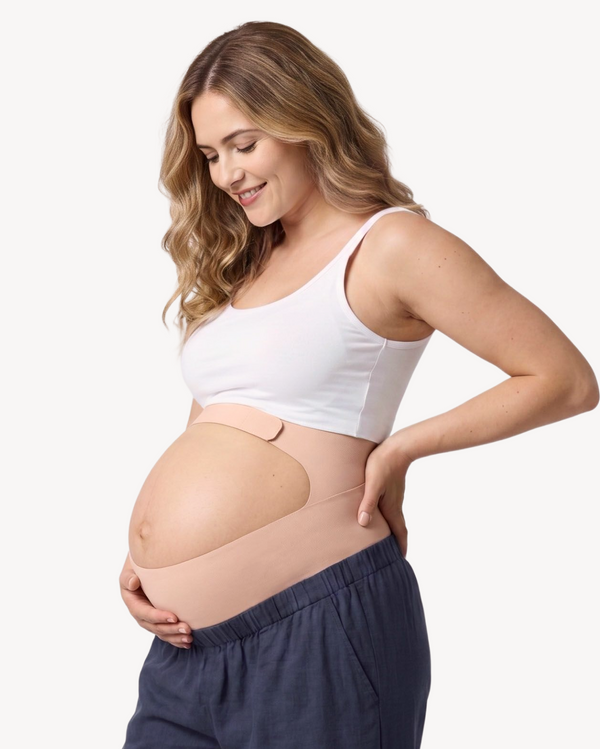
As the belly grows, supporting its weight may make standing and walking feel more comfortable. Choose a belly band with adjustable sizing, breathable material, and enough support without tight pressure.
The BumpEase Ergonest Maternity Belly Band is one option for abdominal and lower-back support during daily activities. Other styles in the Momcozy belly band collection offer different levels of coverage and support.
A belly band should allow normal breathing and movement. It may support general comfort, but it does not treat the medical cause of shoulder pain.
Use Pillows for Support
During side sleep, place support beneath the upper arm so the shoulder does not roll forward. Adjust the head pillow until the neck stays level with the spine.
A full-body pillow may be helpful when the belly, back, knees, and upper arm all need support. The Huggable - U Shaped Maternity Body Pillow supports both sides of the body and may reduce the need to arrange several separate pillows.
The Momcozy Pregnancy Pillow collection also includes smaller shapes. Full-body pillows offer wider support, while wedges and compact designs take up less bed space.
Full Body Support
Effective Pain Relief
Soft and Comfortable
Multi-Purpose Use
Add Gentle Movement
Short movement breaks can ease stiffness caused by sitting in one position. Try slow shoulder rolls, gentle neck turns, light chest stretches, or a brief walk.
The Momcozy BirthEase Pregnancy Ball Set—Maternity Exercise Ball can support upright sitting and gentle movement after approval from a prenatal care provider.
Soporte Lumbar
Comodidad
Eficacia
Keep both feet flat, use the ball near a stable surface, and stop if movement causes pain, dizziness, bleeding, contractions, or shortness of breath.
Short movement breaks may reduce stiffness caused by desk work or long periods of sitting. Slow shoulder rolls, gentle neck turns, light chest stretches, and brief walks are simple options.
Some pregnant users may also prefer supported sitting on an exercise ball. The Momcozy BirthEase Pregnancy Ball Set—Maternity Exercise Ball can be used for gentle movement after approval from a prenatal care provider.
Choose a ball that suits your height and has a stable, non-slip design. Keep both feet flat, stay near a secure surface, and stop if movement causes pain, dizziness, bleeding, contractions, or shortness of breath.
How to Prevent Shoulder Pain During Pregnancy
Reducing repeated strain can keep mild soreness from returning.
- Raise computer screens closer to eye level.
- Support both forearms while typing.
- Change position every 30 to 60 minutes.
- Switch arms when carrying light items.
- Use both hands for heavier objects.
- Bring items close to the body before lifting.
- Avoid holding a phone between the ear and shoulder.
- Wear a supportive bra in the correct size.
- Keep frequently used items between waist and shoulder height.
- Limit repeated overhead reaching.
- Ask about prenatal physical therapy if the pain keeps returning.
Frequent position changes usually place less strain on the body than holding one rigid posture for a long period.
When to Call a Doctor
Contact your prenatal care provider when you have shoulder pain:
- Lasts for several days without improving
- Continues to get worse
- Limits arm or neck movement
- Causes numbness or weakness
- Repeatedly interrupts sleep
- Begins after a fall or injury
- Feels deep and unrelated to movement
- Appears with upper abdominal or pelvic discomfort
Seek immediate care for severe shoulder, chest, back, or abdominal pain, especially with bleeding, trouble breathing, fainting, vision changes, facial or hand swelling, a fast heartbeat, or a fever of 100.4°F or higher. These symptoms appear on the CDC’s list of urgent maternal warning signs.
When should I worry about back pain in pregnancy? Contact a healthcare professional sooner when back pain is sudden, severe, linked to an injury, or accompanied by bleeding, contractions, fever, urinary symptoms, numbness, or weakness. ACOG notes that back pain may sometimes occur with preterm labor or a urinary tract infection.
Frequently Asked Questions About Pain in the Shoulder in Pregnancy
Q1. Pain in the Shoulder in Early Pregnancy: Ectopic or Normal?
Pain that becomes stronger when you raise your arm, turn your head, or press the sore area often points toward muscles or joints. Ectopic-related discomfort may feel deep or appear near the shoulder tip without changing during shoulder movement.
A clinician may use your symptoms, medical history, blood tests, and an ultrasound to identify the cause.
Q2. Why Do I Have Pain Between My Shoulder Blades in My Third Trimester?
The rib cage and chest position continue changing late in pregnancy. These changes can make the muscles connecting the shoulder blades and spine work harder.
A prenatal physical therapist can check muscle strength, spinal movement, and workstation setup. This may be useful when the pain keeps returning despite basic posture changes.
Q3. Which Side of Shoulder Hurts With Ectopic Pregnancy?
Ectopic pregnancy-related shoulder pain can occur on either side. The painful side does not reliably show where the ectopic pregnancy is located.
The sensation comes from irritation around the diaphragm, so it may be felt far from the pelvis.
Q4. Can Shoulder Pain Be a Sign of Ectopic Pregnancy?
Yes, it can. Shoulder pain alone cannot confirm an ectopic pregnancy.
Diagnosis usually includes an ultrasound and blood tests that measure human chorionic gonadotropin, often called hCG. hCG is a hormone produced during pregnancy.
Q5. What Does Preeclampsia Shoulder Pain Feel Like?
The pain may feel deep and steady near the upper-right abdomen, below the ribs, or around the right shoulder. It may continue despite moving the arm or changing position.
Muscle soreness is more likely to change when the area is pressed or the shoulder moves. Preeclampsia pain can sometimes be confused with heartburn or gallbladder discomfort.
Q6. When to Worry About Shoulder Pain in Early Pregnancy?
Contact a healthcare professional promptly when unusual shoulder pain occurs in someone with a higher risk of ectopic pregnancy. Risk factors can include a previous ectopic pregnancy, fallopian tube surgery, pelvic infection, or certain fertility treatments.
Risk factors do not confirm a problem, but they can affect how quickly testing is needed.
Q7. Is Shoulder Pain at Night During Pregnancy Common?
Yes. Staying on one side for several hours may compress the lower shoulder, while an unsupported upper arm can pull the other shoulder forward.
Adjust the head pillow height and support the upper arm. Pain that also continues through the day may need a closer assessment.
Q8. Are Heating Pads or Ice Packs Safe for Shoulder Pain in Pregnancy?
A wrapped ice pack may suit a recent strain or mild swelling. Low heat may feel better for stiff or tight muscles.
Protect the skin with a cloth and keep each session brief. Place the heat on the shoulder area and stay awake while using a heating pad.
Q9. Which Pain Relievers Are Safe for Pregnancy Shoulder Pain?
Medication safety depends on pregnancy stage, dose, health history, and other medicines. Check with a prenatal care provider before taking any pain reliever.
The FDA advises avoiding NSAIDs during pregnancy at 20 weeks or later unless a healthcare professional specifically prescribes them. NSAIDs are nonsteroidal anti-inflammatory drugs and include ibuprofen and naproxen.
Q10. Does Shoulder Pain Mean Labor Is Near?
Shoulder pain alone is not a standard sign that labor is beginning. Labor is identified by regular painful contractions that cause changes to the cervix.
Fluid leakage, increasing pelvic pressure, or regular contractions deserve a call to the maternity care team.
Q11. Is Acid Reflux a Possible Cause of Shoulder Discomfort During Pregnancy?
Pregnancy can make acid reflux more common. Reflux usually causes burning behind the breastbone, a sour taste, burping, or discomfort after eating or lying down.
A meal and symptom record may reveal a digestive pattern. Isolated shoulder pain is less typical and may have another cause.
Take the Next Step Toward Better Support
Track where the pain begins, what movements affect it, and how long it lasts. Adjust desk posture, lifting habits, sleep support, and daily movement for mild muscle soreness. Contact your prenatal care provider when pain persists, changes, or limits normal activity. Prompt medical care is the safest next step when the pain feels severe or appears with symptoms elsewhere in the body.