


You're doing everything right — pumping regularly, staying hydrated, feeding on demand. Yet somehow, the clogs keep coming back in the same spot. Before blaming your supply or your latch, check what's pressing against your breast all day. Your nursing bra might be the silent culprit you've never thought to question.
Bra fit is one of the most overlooked factors in breast health during the postpartum period. A bra that's even slightly too tight can compress milk ducts, restrict flow, and create the exact conditions that lead to painful clogs — and worse, mastitis. Getting the fit right isn't about comfort alone. It's about keeping your milk moving freely, every single day.
A. Why bra fit directly affects your milk ducts
Compression blocks flow
Too-tight fabric presses on delicate milk ducts just beneath the skin, slowing or fully blocking milk movement in that area.
Seams and underwires
Rigid seams or wires sitting directly over duct tissue create chronic pressure points — a common cause of recurring clogs in the same location.
Size changes constantly
Breast size fluctuates throughout the day — fuller before feeds, smaller after. A bra that fits at 8am can be too tight by 10am.
Cumulative damage
One tight day won't cause mastitis. But weeks of low-level compression slowly impairs drainage — until one session tips you over.
B. Signs your nursing bra is too tight
These are the signals most moms ignore until things escalate:
Red marks or indentations on your skin after taking the bra off
A recurring lump or tenderness in the same spot — not moving, not resolving
Reduced output on one side during pumping sessions
Discomfort or tightness that builds as the day goes on, especially before a feed
Nipple soreness or friction caused by seams sitting in the wrong place
Bra band riding up at the back — a sign it's too small, increasing tension across the front
If you notice a hard lump, localized redness, warmth, or fever developing alongside these signs, you may already have mastitis — not just a clog. Mastitis requires medical attention and should not be managed with massage alone. See a doctor promptly.
C. Find your perfect fit: designed for duct health
1. Best for all-day wear comfort
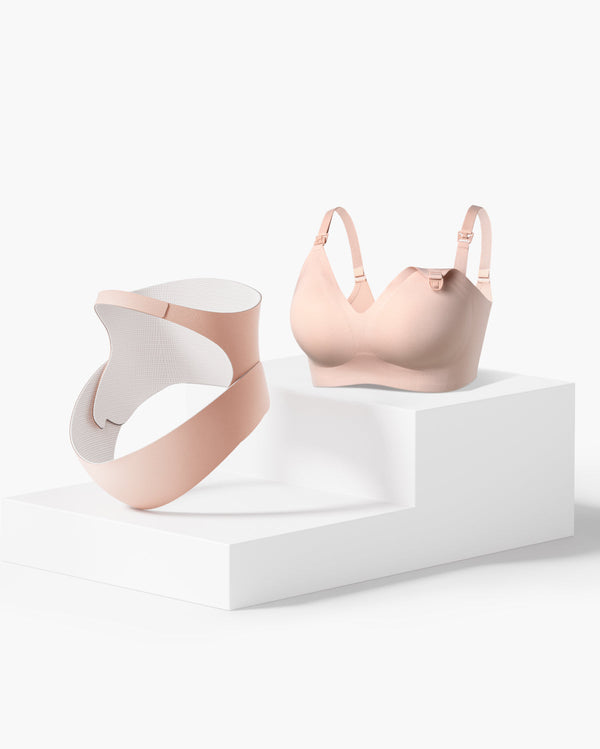
Momcozy ultra soft seamless nursing bra
Flexible sizing: spot-gluing construction creates a second-skin feel that adjusts naturally as your breast size changes — no gripping, no compressing.
Made from buttery-soft, breathable fabric that stretches with your changing body throughout pregnancy and breastfeeding.
OEKO-TEX® Standard 100 certified: zero harmful substances against your skin — especially important for postpartum moms with reactive skin.
Best for: moms in the early postpartum weeks when breast size fluctuates most and duct compression risk is at its highest — the most tissue-forgiving option in the lineup.
$44.00 CAD


2. Best for support without underwire
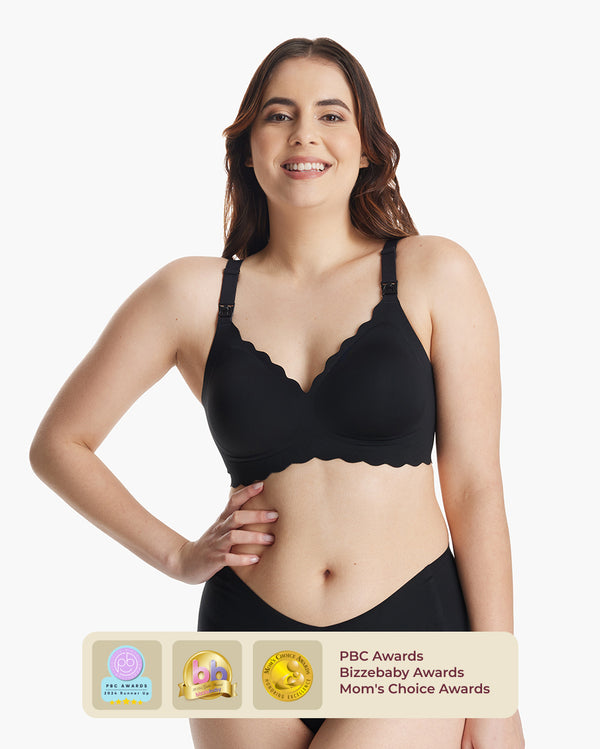
Momcozy jelly strip nursing bra YN46
Jelly strip, not underwire: delivers the lift of a structured bra without the duct-compressing pressure of a wire — support where you need it, nothing where you don't.
Seamless construction: no single pressure line pressing into duct tissue at any point during wear.
Soft-touch nursing access: opens without pulling or twisting the fabric, minimizing sudden pressure changes that can aggravate sensitive tissue.
Best for: moms who want more lift and hold — without giving up on soft, wire-free comfort.



3. Best for sensitive & reactive skin
Momcozy soft U.S. cotton seamless maternity bra
U.S. cotton fabric: naturally breathable and non-irritating — the safest choice for moms whose skin reacts to synthetic materials, especially postpartum.
No rigid structure whatsoever: no underwire, no stiff panels — purely adaptive support that won't create localized pressure points as breast size shifts through the day.
Pregnancy through weaning: strong underband elasticity provides greater accommodation for your changing body at every stage.
Best for: moms with sensitive skin, eczema-prone tissue, or anyone recovering from a previous bout of mastitis who needs the most tissue-safe option available.

4. Best for pumping & nursing in one
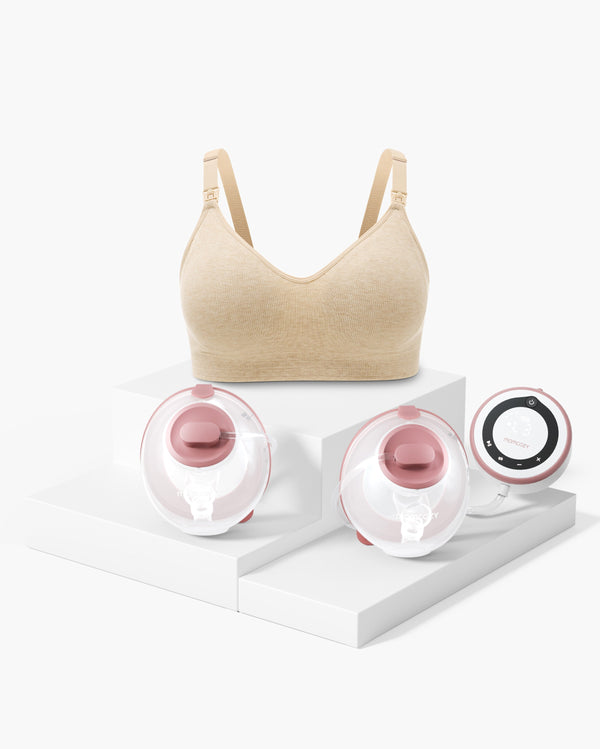
Momcozy 4-in-1 hands-free pumping bra
Media-recognized: independently featured by Babylist, The Good Trade, and top parenting editors for its versatility and comfort.
Wire-free, seam-free construction: nothing rigid to press against milk ducts — the most common source of chronic compression clogs.
Adaptive stretch fabric: moves with your breast throughout the day as size changes between feeds, maintaining consistent — never crushing — contact.
Best for: moms who pump and nurse throughout the day and want a bra whose design actively reduces compression risk at every stage.


D. What to do if you already have a clog
Switch to a looser, wire-free bra immediately — or go braless if possible. Apply a warm compress for 10–15 minutes before each feed or pump session. Gently massage from the outer breast toward the nipple. Increase pumping or nursing frequency on the affected side. Most clogs resolve within 24–48 hours with consistent drainage. If they don't, or if fever develops, seek medical advice.
And once the clog clears — check your bra. If it left marks on your skin that day, it's too tight.
E. Practical tips for getting fit right
Re-measure every 4–6 weeks — breast size shifts significantly through the breastfeeding journey
When in doubt, size up — a slightly looser fit is always safer than a slightly tighter one
Avoid sleeping in a structured bra — nighttime compression is especially risky as milk builds overnight
Check for red marks every evening — your skin tells you what you can't feel building up inside
Need help finding your size? Use Momcozy Bra Size Calculator








