


MEDICALLY REVIEWED BY

Mary Bicknell, MSN, BSN, RNC, ANLC
Mary Bicknell comes with over 30 years of experience as an RN in the NICU. Educating mothers on the importance of healthy breastfeeding is important to her. It can be challenging to maintain successful breastfeeding through many difficult situations and long hospitalizations. Mary is committed to helping families define what successful breastfeeding means to them; and to assist them to obtain their goal. After leaving the bedside, Mary became a nurse leader and continued to make sure that breastfeeding education and support was always available to the families in her unit.
For most long weekends with reliable daily access to an outdoor trash bin, tightly bagged diapers plus a small lidded waste container are the lowest-bulk option. A dedicated diaper pail makes more sense when you will be in close quarters, cannot empty waste daily, or prefer a reusable container with a controlled bag-and-lid system.
The deciding factor is not simply trip length. It is the number of days—and warm, enclosed hours—between approved trash stops. No pail eliminates every odor in every situation, and heat, humidity, time, and the contents of the diaper all matter. Emptying before the container is packed full is usually the more practical odor-control strategy.
Choose the smallest setup that fits your trash access
A travel diaper setup should match your disposal routine, not add unnecessary gear.
Travel situation |
Lowest-bulk setup |
Step up when… |
One-night hotel stop with confirmed trash access |
Disposable diaper bags and the room bin, if permitted |
The room bin is too small or you would rather not leave bagged diapers indoors overnight |
Long weekend by car with daily outdoor bins |
Small lidded bin lined with a trash bag, plus diaper bags |
You expect long stretches in the vehicle or have limited opportunities to empty it |
RV trip with frequent campground dumpster access |
Lined, lidded container kept upright inside the RV |
The RV is compact, weather delays trash runs, or stops between dumpsters may be several days apart |
Week-long road trip or shared rental with uncertain trash access |
Dedicated pail or a more robust lidded bin with ample liners |
You need a contained place to hold bagged diapers until you can use an approved bin |
Plan supplies around your child's usual diaper use rather than a pail's advertised volume. Newborns may use 8 to 12 diapers per day in their first weeks. From 5 months onward, usage may be up to 8 diapers per day; by 6 months, a typical estimate is 5 to 6 per day. These are planning estimates, not promises—pack for your baby's normal routine and add backup bags for delays.

Bag-and-bin or dedicated pail?
A portable diaper pail is optional travel equipment. Its value is in containment and routine, not in making diapers disappear.
Setup |
Best for |
Tradeoffs to consider |
Disposable diaper bags only |
Minimal packing, overnight stops, immediate access to approved trash |
Requires a dependable place to discard each bag promptly |
Small lidded bin with ordinary liner |
Long weekends with daily trash access |
Low bulk and flexible, but the lid and liner system may be less controlled than a purpose-built pail |
Dedicated diaper pail |
RVs, shared rooms, longer stays, or periods between trash access |
Adds an item to pack and clean; bag compatibility varies by model |
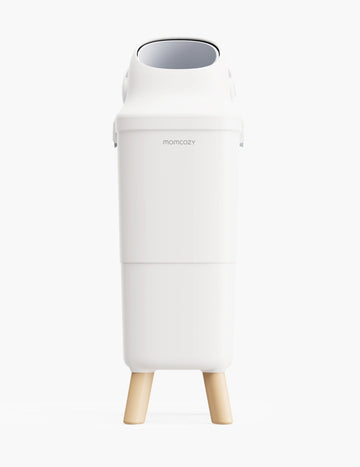
Before buying or bringing a pail, check its liner system. Some pails use model-specific refill bags, while others accept ordinary trash bags. For example, the manufacturer states that the Momcozy Triple-Seal Diaper Pail has a 22 L (approximately 5.8-gallon) capacity and works with standard 13-gallon drawstring and non-drawstring bags rather than proprietary refills. That is a model-specific specification—not a rule for all diaper pails—and it does not translate into a guaranteed diaper count.
For travel, the practical question is simple: can you bring enough compatible liners for the days between trash access? If the answer is no, a simpler bag-and-bin arrangement may be easier to manage.
RV diaper disposal: keep diapers out of the plumbing
The RV rule is absolute: do not put used diapers in the RV toilet, black tank, composting toilet, dump station, or recycling bin.
RV black-tank maintenance guidance limits tank contents to water, urine, toilet paper, and bowel movements. Diapers belong in solid-waste trash, never in the plumbing system. Campground sewer rules can be even more specific; one campground policy explicitly prohibits flushing diapers and warns that guests may be charged for negligent stoppages or repairs. See the campground policy example.

A workable RV routine
- Roll each used diaper tightly and fasten its tabs.
- Put it in a small disposal bag or directly into a lined container, according to your preferred setup.
- Keep the container upright, closed, and away from food-prep and sleeping areas.
- Locate the campground's approved trash area when you arrive.
- Empty the tied liner into the designated dumpster as often as the property permits.
Do not assume every campground allows the same storage arrangement. Some properties require trash to be bagged and placed in a dumpster and prohibit leaving it outside overnight or storing it in a trailer or truck bed. Ask where waste belongs, when bins are accessible, and whether there are wildlife-related bagging rules.
Hotel rooms and short-stay rentals
For a hotel room or rental, discretion starts with containment and ends with following the property's instructions.
Roll the diaper, secure it with its tabs, place it in a plastic bag, and tie the bag tightly before putting it in an approved trash container. For extra containment during an overnight stay, place that tied bag inside a larger zip-top bag before it goes into the room bin.

This approach is adapted from hotel guidance for other absorbent products, so it is sensible containment guidance—not a universal baby-diaper policy. A hotel, host, or local waste provider may have different instructions.
When the room bin is not enough
Ask the front desk or host:
- Whether bagged diapers may go in the room trash
- Where the approved outdoor bin or dumpster is located
- Whether additional trash bags or a larger bin are available
- When housekeeping or trash collection is scheduled
For a rental, do not place diapers in recycling or leave them in an unapproved outdoor container. If the host's instructions are unclear, ask before you need to dispose of a full bag.
Keep odor and leaks manageable
A few habits make a bigger difference than adding more products:
- Roll and tab each diaper. This reduces air exposure before disposal.
- Empty sooner in warm or confined spaces. Do not wait for a pail or liner to reach maximum capacity.
- Keep backup liners accessible. Store them where you can reach them during a roadside or overnight change.
- Carry wipes for the container exterior and changing area.
- Keep the lid mechanism clean. If your pail has a seal or gasket, keep it clean and dry; this may help when odors linger, though it is not a guarantee of odor removal.
- Avoid relying on fragrance to solve a disposal problem. A scented bag may not suit people sensitive to fragrance and should be kept away from infants.

After the trip, empty the container completely before bringing it into storage. Follow the pail manufacturer's care instructions. General deep-cleaning guidance includes hot soapy water, vinegar diluted at a 1:3 vinegar-to-water ratio, and baking-soda paste, followed by complete air-drying—but use only methods permitted for your particular container.
Pack for the itinerary, not the ideal scenario
For a two-night hotel stay with confirmed daily trash access, bring diaper bags, a few larger zip-top bags, and use the room bin only if the property permits it. For a long weekend with a car and outdoor bins, a small lidded bin plus liners is usually the lightest flexible setup. For a compact RV or a week with uncertain disposal access, a dedicated pail can make the daily routine more contained.
Before leaving, check:
- How many days may pass between approved trash stops
- Your baby's usual daily diaper use, plus extra supplies
- Enough disposal bags or compatible pail liners
- A lidded container or pail that can stay upright in transit
- Wipes and cleaning supplies permitted for the container
- Hotel, host, campground, or RV park trash instructions
- A plan that keeps diapers out of toilets, RV tanks, dump stations, and recycling
Choose the smallest setup that covers the longest likely gap between trash access. Then use Momcozy's baby-travel planning resources to organize the rest of the trip around the same goal: fewer surprises when you are away from home.








