How much milk am I supposed to pump? It’s a common question that many new moms ask, and the answer can look different for everyone. Your pumping output will depend on things like your baby’s age, how often you pump, and your milk supply. While there’s no set rule, knowing what’s typical at different stages can help you get a clearer picture of what to expect. Let’s get to understand what’s normal, so you can feel more confident and less stressed about the process.
For most moms, a normal amount to pump per session is about 0.5 to 4 ounces from both breasts if you also nurse, and 3 to 5 ounces per session if you exclusively pump. There is no single "right" number—your output depends on your baby's age, how often you pump, and your own storage capacity. How much milk is normal to pump is personal—it shifts with your baby's age and how often you empty. For general guidance, the CDC outlines what to expect as your baby grows.
Key Takeaways
- Most nursing moms pump about 0.5–4 oz per session; exclusive pumpers average 3–5 oz across 6–8 daily sessions.
- In the first week, output is tiny (colostrum comes in teaspoons); mature milk and bigger volumes arrive around weeks 2–6.
- Pumping output is not the same as total milk made—your baby at the breast removes more than any pump.
- Frequent pumping (every 2–3 hours) is the strongest lever for building and protecting supply.
- Signs your baby is doing well matter more than the bottle number: steady weight gain and 6+ wet diapers a day.
How Many Ounces Should I Be Pumping By Baby Age?
The amount of milk you should pump varies as your baby grows. In the early months, newborns require smaller quantities, but this increases as they grow and their stomach capacity expands:
| Baby Age |
Amount of Milk You Should Pump per Day |
Frequency of Feeding |
| Newborn |
1-2 oz (30-60 ml) |
Every 2-3 hours |
| 2-4 Weeks |
2-3 oz (60-90 ml) |
Every 2-3 hours |
| 1-2 Months |
4-5 oz (120-150 ml) |
Every 3-4 hours |
| 3-4 Months |
4-6 oz (120-180 ml) |
Every 3-4 hours |
| 6 Months |
6-8 oz (180-230 ml) |
Every 4-5 hours |
| 6-9 Months |
6-8 oz (180-230 ml) |
Every 3-4 hours (day) |
| 9-12 Months |
6-8 oz (180-230 ml) |
Every 3-4 hours (day) |
From ¥22,100 JPY ¥26,000 JPY
High Efficiency
Expert-Tuned Rhythms
APP Control
Long Battery
These daily totals answer the most common "how much" questions at a glance, and the numbers climb quickly in the first month. For the exact per-session amounts—how many ounces should i be pumping at 2 weeks, or how much milk should i be producing at 1 month—see the week-by-week timeline just below. Normal breast milk production looks different for every mom, so treat these ranges as a guide, not a grade.
What's a Normal Amount to Pump Per Session?
A question nearly every pumping mom asks is how much breastmilk should i be pumping—or, put another way, what is the normal amount of breastmilk to pump. The short version (from the answer at the top of this article) is about 0.5–4 oz per session if you also nurse, or 3–5 oz if you exclusively pump. But that single figure hides two things that matter more than the pump: your storage capacity (how much milk your breasts hold between sessions) and the time of day. Many moms get more in the morning and less by evening, so compare your own sessions instead of another mom's bottle.
One more distinction clears up a lot of worry: pumping output is not the same as the total milk you make. Your baby at the breast removes more than any pump, so a lower bottle number doesn't mean low supply. For exclusive pumpers, a daily total of 24–32 oz across 6–8 sessions is typical once supply is established (around 4–6 weeks); per-breast yields of 3–5 oz per session are common. This average breast milk production meets most babies' needs between 1 and 6 months. The CDC notes that pumping volume tracks your baby's age and feeding pattern, not a fixed quota, and La Leche League offers hands-on pumping guidance.
What is the Average Amount of Milk Pumped in 20 Minutes?
The average amount of milk you can pump in 20 minutes depends on factors such as your milk supply, pumping technique, and how regularly you pump. On average:
-
For a New Mother (0-6 weeks): You might pump around 1-2 ounces (30-60 ml) per breast during a 20-minute session.
-
For Established Milk Supply (6+ weeks): After your milk supply stabilizes, you may pump between 3-5 ounces (90-150 ml) per breast in 20 minutes.
Note that some mothers may pump more or less than this range. Hydration, diet, pump quality, stress levels, etc., can make a big difference to the amount of milk you express.
How Does Pumped Output Change Week by Week?
Your "normal" number changes fast in the first month—how much is normal to pump and how many oz should i be pumping both look very different in week 1 than at 1 month. Knowing the timeline helps you worry less when volumes look small. The American Academy of Pediatrics notes that feeding and pumping patterns shift as your baby develops.
- Week 1 (days 1–3): Colostrum comes in teaspoons—about 5–15 ml (0.2–0.5 oz) per session. This is enough; a newborn's stomach is tiny.
- Days 4–14: Transitional milk arrives. How much should you be pumping at 1 week? Roughly 0.5–2 oz per session as mature milk begins to come in.
- Weeks 2–3: How much should I be pumping 2 weeks postpartum? Around 2–3 oz per session. How much should you be pumping at 3 weeks postpartum? About 2–4 oz as supply builds.
- Week 4 (1 month): How much milk should I be pumping at 1 month? Roughly 3–5 oz per session. Mature milk supply is now established and steadier.
- 6+ weeks: Supply regulates to baby's demand. Volumes stay in the 3–5 oz range for exclusive pumpers.
These are averages. When does mature milk supply come in? Usually between days 4 and 14, with full regulation by about 6 weeks. Frequent removal—not a target number—drives the climb.
How Much Pumped Milk Should I Feed My Baby?
The amount of pumped milk your baby needs largely depends on their age, weight, and appetite. It is generally recommended that you feed your baby the same amount of milk as they would get from breastfeeding. As babies grow, their feeding needs increase:
New Mom Kit
Hands-Free Feed
Budget-Friendly Combo
Easy Pumping
| Baby Age |
Milk Needed per Day |
Amount per Feeding |
| Newborn |
16-24 oz (480-720 ml) |
1-2 oz (30-60 ml) |
| 1-2 Months |
24-32 oz (720-960 ml) |
3-5 oz (90-150 ml) |
| 3-4 Months |
24-32 oz (720-960 ml) |
4-6 oz (120-180 ml) |
| 6 Months |
24-32 oz (720-960 ml) |
6-8 oz (180-230 ml) |
| 6-9 Months |
24-30 oz (720-900 ml) |
6-8 oz (180-230 ml) |
| 9-12 Months |
24-30 oz (720-900 ml) |
6-8 oz (180-230 ml) |
Note: Some babies may require slightly more or less, depending on their growth and developmental needs.
Why You’re Not Producing Enough Breast Milk When Pumping?
It's common for new mothers to worry about milk supply, especially if you're exclusively pumping or supplementing breastfeeding with pumped milk. If you're not producing enough milk while pumping, several factors could be contributing, but the good news is that you can address the issue with a good breast pump. It is the key to effective milk expression.
Here is a list of the most common reasons and how you can solve them:
Low Milk Supply
Check your milk supply while pumping and breastfeeding to ensure you're getting enough. If it is low in both scenarios, you may have production issues. What could cause this, and how to solve it? Infrequent pumping or breastfeeding is one of the top causes. While you can't control your baby's hunger, you can pump more frequently. Stress, fatigue, and illnesses can also affect your milk supply. So, dedicate time to rest and destress. Finally, avoid smoking and develop a healthy diet.
Improper Breast Pump
The breast pump you are using also has a big impact. If you are still using manual pumps, this may be your sign to move on to the more advanced ones. Electric and wearable breast pumps are more effective and efficient. They pump automatically, so you can use them hands-free. Effectively, they are also less tiring to use.
If you are working to build or protect your supply, the pump you use matters. A traditional plug-in pump like Momcozy's V3 (hospital-grade, up to -270 mmHg) or the cordless V3 Pro gives the strong, steady suction that helps establish supply, especially in the early weeks. For sessions away from home, a wearable such as the ultra-slim Air 1 or the warm-massage W1 keeps you pumping on schedule. If output stays low, the CDC offers troubleshooting tips. Each one has unique features that make it better than other alternatives. They may offer customizable settings, natural pumping movement, or transparent tops that facilitate milk volume monitoring.
Similarly, just as choosing the right pump can make a difference in your breastfeeding journey, selecting well-reviewed nursing essentials also matters. For example, the YN46 nursing bra, recognized by the UK parenting community Netmums as one of their Top 10 shopping items, provides both comfort and support, making it a trusted choice for new moms.
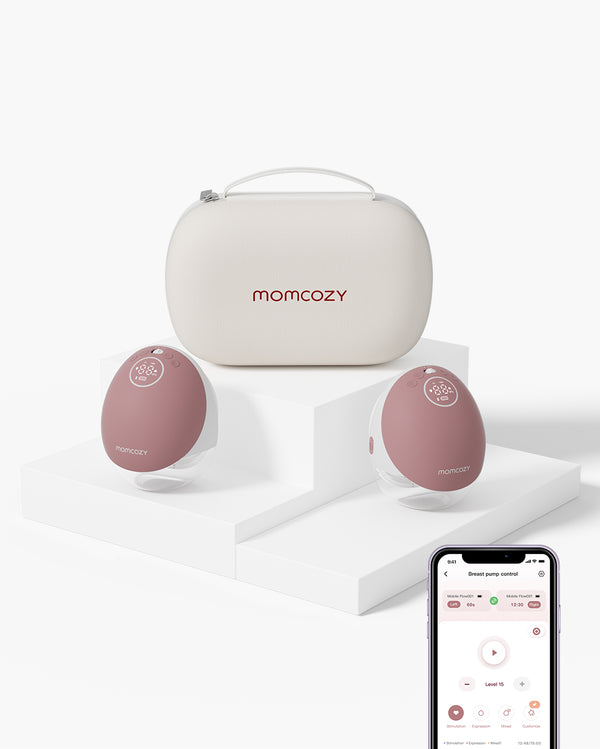
The Momcozy M9 Mobile Flow™ Hands-Free Breast Pump is another great choice, offering high efficiency with suction up to -300mmHg and personalized settings via its app. It's portable, comfortable, and adjustable for both comfort and milk output, making it ideal for busy moms. Ready for a better way to pump? 🤱✨ Try the Momcozy M9 today!
From ¥22,100 JPY ¥26,000 JPY
High Efficiency
Expert-Tuned Rhythms
APP Control
Long Battery
The Momcozy Air 1 Ultra-Slim Breast Pump is designed for modern moms who prioritize discretion, efficiency, and convenience. Momcozy Air 1 is the thinnest wearable breast pump on the market, measuring just 2.4 inches thick—22% slimmer than the M9 Mobile Flow™. Offering a nearly invisible pumping experience, Momcozy Air 1 allows moms to pump confidently anywhere—whether at work, in public, or at home. ✨ Get your Momcozy Air 1 and simplify your routine.
The Momcozy M5 breast pump is a good choice. It has three pumping modes and nine gears, which can meet the needs of most mothers. It weighs 230g and is lighter. 🎯 Try the Momcozy M5 now and pump with confidence!
New Mom Kit
Hands-Free Feed
Budget-Friendly Combo
Easy Pumping
Improper Pump Settings
The pump setting can also affect milk production and milk flow. Suppose the suction is too strong. It will cause pain and discomfort, which will affect the release of oxytocin - the hormone that promotes milk flow. On the other hand, if the suction is too weak, the pump will not be able to effectively express milk. In both cases, you will not be able to empty your breasts. That will affect your supply over time. So, adjust the pump settings to find the strongest suction that still feels comfortable. Adjust as needed while you are pumping.
Breast Pump Malfunction
Your breast pump may be damaged. Contact customer support to get it serviced or buy a new, high-quality one.
Wrong Flange Size
Even if the suction and speed are right, using the wrong flange size can feel uncomfortable and limit milk flow. This also leads to incomplete emptying, which reduces your milk supply over time.
Damaged or Dirty Breast Pump Parts
You also have to maintain breast pumps. If it has been a while since you cleaned it, or if you have never cleaned it, this is your sign to do so. But if all parts are clean, some may be damaged. The good news is that stores like Momcozy offer breast pump parts for purchase. Thus, you can easily replace the dysfunctional ones.
Improper Posture When Pumping
What is your position while pumping? Please note that you cannot lie down when pumping. The recommended position is to be sitting or standing up, with a straight back, shoulders relaxed, and feet on the ground. This encourages milk flow. If you had a C-section, a reclined position may be better for you. You can use nursing pillows, armrests, and nursing bras to make the experience more comfortable.
How to Maintain My Breast Milk Supply If I Choose Exclusive Pumping
Exclusive pumping can be demanding, but with consistency, it’s possible to maintain a healthy milk supply. Here are some strategies to help:
Most exclusive pumpers aim for a daily total of 24–32 ounces across 6–8 sessions. Will pumping every 2 hours increase milk supply? Yes—more frequent emptying signals your body to make more, so shortening the gap (rather than lengthening it) is the most reliable way to grow supply. If you track totals, how much milk should you produce when pumping is best read as a weekly trend, not a single session. And how much breastmilk should i be producing really comes down to supply and demand—the more often you empty, the more you make. The La Leche League shares practical pumping schedules for exclusive pumpers.
- Aim to pump every 2-3 hours, even if you don’t feel like you have enough milk. Regular pumping signals your body to keep producing.
- Drink plenty of water and eat nutrient-rich foods. Your body needs good fuel to produce milk, so don’t neglect your own health.
- If you're struggling with supply, power pumping (mimicking cluster feeding) can stimulate milk production. Try pumping for 20 minutes, resting for 10 minutes, then pumping again for 10 minutes.
- Gently massage your breasts before and during pumping. This can help with milk flow and prevent blocked ducts.
- Make sure your pump’s flange size is appropriate. An ill-fitting pump can cause discomfort and reduce milk output.
From ¥22,100 JPY ¥26,000 JPY
High Efficiency
Expert-Tuned Rhythms
APP Control
Long Battery
If you are exclusively pumping, remember that breast milk production works on supply and demand. The more frequently you pump, the more milk your body will produce. However, it’s also important to take care of yourself to avoid burnout.

Build Supply With a Big Host, Stay Consistent With a Wearable
The most suitable setup for building supply is a two-pump combo: a big host pump at home plus a wearable for outings. A hospital-grade pump like the Momcozy V3 (plug-in, up to -270 mmHg) or the cordless V3 Pro delivers strong, complete sessions with built-in supply-building rhythms such as Lactation Starter, Milk Boost, and Power Pumping. For pumping on the go—work, commuting, or night sessions—pair it with a wearable like the ultra-slim Air 1 or the warm-massage W1. They are teammates, not rivals, and together they cover every scenario of your day.
Frequent, comfortable sessions are what protect supply. The La Leche League and the CDC both emphasize consistent milk removal over any single pump's power.
When to Seek Help
If you've tried the above strategies and are still struggling with milk production, it might be time to seek help:
- If you're pumping significantly less milk than your baby needs, despite frequent pumping.
- If you experience ongoing pain while pumping, or develop symptoms of mastitis (painful, swollen, red breast tissue).
- If your baby isn't gaining weight as expected, despite feeding regularly.
When to Supplement with Formula
If your breast milk supply is insufficient and you've exhausted ways to boost it, supplementing with formula might be necessary to ensure your baby gets enough nutrition. Here’s when you should consider formula supplementation:
- If your baby is consistently hungry and not gaining weight as expected, formula can help fill the gap until you’re able to improve your supply.
- If exclusive pumping becomes overwhelming, and you feel stressed or exhausted, using formula temporarily can help reduce the pressure.
- In some cases, medical conditions such as hormonal imbalances or low milk production may require formula supplementation.
FAQs
How Can I Safely Transition From Exclusive Pumping to Breastfeeding?
Transitioning from exclusive pumping to breastfeeding requires patience and consistency. Below is how you can make the switch:
- Start by offering the breast after your baby is used to a bottle. This gives them time to adjust and figure out the latch without feeling rushed or confused.
- Engage in skin-to-skin contact to encourage your baby’s natural instincts to latch. This helps with bonding and stimulates milk production.
- Initially, offer the breast as often as possible to increase supply and ensure your baby learns how to latch correctly.
Is It Normal for Pumped Milk to Look Different at Different Times of Day?
Yes, it's completely normal for breast milk to look different throughout the day. Milk changes in consistency and appearance based on several factors:
- Milk produced in the morning tends to be richer in fat and calories, while milk produced later in the day may have a higher water content.
- As milk is pumped, you may notice a separation of fat. When this happens, it’s just a sign that you have rich milk. Shaking the container can mix it back together.
- Your own hydration levels and diet can influence the color and consistency of your milk. If you're dehydrated, your milk may appear thinner.
Can I Combine Milk From Different Pumping Sessions in One Bottle?
Yes, you can combine milk from different pumping sessions as long as the milk is from the same day and has been stored correctly. Note:
- Make sure that milk from different sessions is combined before it has been refrigerated for more than a few hours. If you combine milk from sessions that were refrigerated separately, the milk should be used within 24 hours.
- Do not mix warm milk with cold milk. Always cool fresh milk in the fridge before adding it to milk that’s already chilled or frozen.
How Do I Know if My Baby is Getting Enough Milk If I’m Exclusively Pumping?
If you're exclusively pumping, you might feel uncertain about whether your baby is getting enough milk. Check out some signs your baby is consuming enough:
- Your baby should steadily gain weight over time. Regular check-ups with the pediatrician will monitor this.
- A baby who is getting enough milk typically produces six or more wet diapers and at least 3 to 4 dirty diapers a day.
- If your baby seems full, content, and doesn’t cry excessively after a feeding, it's a good indicator that they’ve had enough milk.
What Should I Do if My Baby Doesn’t Latch Well After Exclusive Pumping?
If your baby is struggling to latch after being fed bottles for a while, here are some tips that may help:
- Nipple shields can help your baby latch more easily if they’re accustomed to bottle nipples. Over time, your baby may get used to the breast again without the need for the shield.
- Try breastfeeding when the baby is sleepy. Sometimes, babies latch more easily when they're in a relaxed, sleepy state.
- Slowly begin to offer the breast before transitioning back to bottle-feeding, allowing your baby to re-familiarize themselves with nursing.
How much milk should I be pumping per session?
If you nurse and pump, expect about 0.5 to 4 ounces total per session. If you exclusively pump, aim for 3 to 5 ounces per session across 6 to 8 daily sessions (24 to 32 ounces total). Your baby's age and your storage capacity shift the number, so compare yourself to your own trend, not another mom's bottle.
Will pumping every 2 hours increase my milk supply?
Yes. Milk production follows supply and demand—the more often you empty your breasts, the more your body makes. Pumping every 2 hours (rather than stretching to 4) sends a stronger "make more" signal and is a common way to build or protect supply. The CDC highlights frequent feeding and pumping as key to sustaining milk.
What is the normal amount of breastmilk to pump?
There's no universal "normal," because it depends on whether you nurse too, your storage capacity, and your baby's age. The typical per-session ranges are 0.5–4 oz (nursing plus pumping) and 3–5 oz (exclusive pumping), but remember pumping output isn't your total supply—your baby at the breast removes more than any pump. Smaller volumes in the first weeks are completely normal while colostrum and transitional milk are still coming in, and the week-by-week timeline above shows what shifts when.
How much should I be pumping at 2 weeks postpartum?
Around 2 to 3 ounces per session at two weeks, as mature milk comes in and supply builds toward its regulated level. Day-to-day swings of half an ounce are normal—consistent weight gain and wet diapers matter more than any single session.
How much milk should I pump in 20 minutes?
Twenty minutes is a common session length, and pumping around 0.5 to 2 ounces per breast in that time is normal once your supply settles. Rather than watching the clock, pump until the flow slows and the breast feels softened. Some mothers need a little longer to fully drain, which is perfectly fine.
How much should I be pumping by my baby's age?
In the first days you'll collect only drops to a few millilitres of colostrum, building to about 1–2 ounces per session by the end of week one. By around one month, total daily output often reaches 24 to 30 ounces and then stays fairly steady, because breast milk supply plateaus rather than climbing as the baby grows.
How much breast milk does my baby actually need?
From about one month, most exclusively breastfed babies take roughly 24 to 30 ounces a day, spread across feeds, and this amount stays steady through the first six months. Knowing your baby's daily need helps you set realistic pumping goals, since you're aiming to match intake rather than overfill the freezer.
Is it normal to pump only a small amount?
Yes, especially in the early weeks or if you pump between nursing sessions, when there's simply less milk waiting to be removed. A low pumping number doesn't mean low supply — your baby often removes milk far more effectively than a pump. Frequency and full drainage matter more than any single session's total.
How much should I be pumping in the first week?
Expect very little at first: a few millilitres of thick colostrum on days 1–3, increasing as your mature milk comes in around days 3–5. By the end of week one, many mothers pump roughly 1 to 2 ounces per session. Frequent removal in these early days matters far more than the volume you see.
Why am I pumping less than my baby drinks at the breast?
This is normal and not a red flag. A baby's latch and natural suckling are usually more efficient at drawing milk than a pump's suction, so your pumped amount can look smaller than a full feed. It reflects the pump's limits, not your supply, which is why pump output alone is a poor measure of how much you make.
How can I pump more milk per session?
Pump more often and drain fully, since milk works on supply and demand. Make sure your flange fits correctly, add breast massage or hands-on pumping, and try relaxing with a photo of your baby to encourage letdown. A short daily "power pumping" block can also nudge output up over several days.
Final Words
Don’t stress about hitting a specific target every time you pump. The amount you produce can vary from day to day, and that’s totally normal. What matters most is staying consistent and patient. If you ever feel unsure or need advice, don't hesitate to seek medical aid.
So, how much milk am i supposed to pump? There is no single number—most moms do fine with 0.5–4 oz per session when nursing, or 3–5 oz when exclusively pumping (the week-by-week timeline above shows the details). For supply-building sessions at home, a big host pump like the V3 or V3 Pro pairs naturally with a wearable such as the Air 1 or W1 for life on the go. Keep your sessions frequent, trust your baby’s cues, and reach out for support when you need it.