


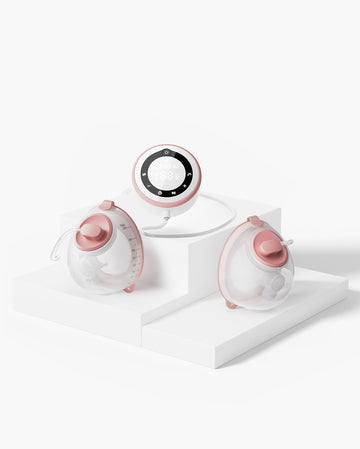
A hospital grade breast pump could be the difference between pumping for 30 minutes with minimal output and getting full bottles in just 15 minutes. These professional-level machines use a completely different motor system than your typical pump, creating the kind of suction that actually mimics a baby's natural nursing pattern.
Whether you're dealing with low supply, pumping for multiples, or just want the most efficient option available, knowing your options for buying or renting can save you both time and money.
The phrase hospital grade breast pump can mean three very different things, and knowing which one you are looking at is the key to choosing well—so we break down the three types and how to use them together below.

Key Takeaways
- The U.S. FDA does not define or officially recognize the term “hospital grade”—it describes strong suction, a closed system, and a durable motor, not a legal category.
- There are three types: multi-user hospital pumps (rental), personal-use hospital-grade pumps you buy and own (like the V3 and V3 Pro), and wearable pumps that market themselves as “hospital-strength.”
- A personal-use hospital grade breast pump like the V3 or V3 Pro is the everyday workhorse for home; a wearable covers your on-the-go sessions.
- You rarely need all three—most moms do best with a personal-use hospital-grade pump at home plus a wearable for out-of-the-house sessions.
- Reach for a multi-user rental pump only when a clinician prescribes one for a medical need such as a NICU stay or very low supply.
What Is a Hospital Grade Breast Pump?
A hospital grade breast pump is a heavy-duty, multi-user pump built with a powerful motor that creates stronger suction than regular personal pumps. These FDA-regulated devices can reach suction levels up to 300 mmHg (compared to 150-250 mmHg in standard pumps) and keep working efficiently even after thousands of hours of use. They're called "hospital grade" because they're the same pumps used in NICUs and maternity wards – they have sealed motors that prevent milk contamination, so multiple moms can safely use the same pump with their own collection kits.
What “Hospital Grade” Actually Means (and What the FDA Says)
Here is the part that surprises many moms: the U.S. FDA does not define or officially recognize the term “hospital grade” for breast pumps. As the FDA puts it, “The FDA does not recognize the term ‘hospital grade,’ so this term doesn’t mean a pump is safe.” Breast pumps are regulated medical devices, but “hospital grade” is an industry and marketing phrase, not a legal category. The FDA’s breast pump buying guide explains what actually matters when choosing a pump.
In practice, “hospital grade” usually describes a pump with strong suction (often around -250 to -300 mmHg), a closed anti-backflow system, and a durable motor built for heavy daily use. What the term does NOT tell you is who the pump is for—and that is exactly where the three types below come in.
The 3 Types of “Hospital-Grade” Breast Pumps
When you see “hospital grade” or “hospital-strength” on a breast pump, it can point to three very different products. Understanding the three types of hospital grade breast pump helps you pick the right tool for your situation. Aeroflow’s hospital-grade FAQ makes the same split between multi-user and personal-use pumps.
1. Multi-user hospital pump. The unit on a maternity floor (think the rental names your IBCLC already knows). Many mothers, each with her own kit. Almost always rented with a prescription, not bought off a lifestyle page. Use this when a clinician wants it: NICU, very low supply, early exclusive emptying that needs that motor.
2. Personal closed-system host you own. One mother’s nightstand pump. Strong, closed, not a shared ward machine. Shop the hospital-grade collection for what is actually on the site. We will not name a plug-in host that is not live yet, and we will not crown an older wearable as that host.
3. Wearable with “hospital-strength” on the box. Still a personal in-bra cup. Suction numbers can look similar on a spec sheet. The job is hands-free, not multi-user infection control. Quiet is M9. Slim commute is Air 1. Heat is Wellness 1. Browse the wearable collection. A hose-and-bottle electric pump can stay at home if you like seeing the milk move.
| Job | Who uses it | How you get it |
|---|---|---|
| Multi-user rental | Ward / prescribed medical need | Prescription + DME or hospital rental |
| Personal closed-system host | One household, heavy home use | Buy from the hospital-grade collection |
| Wearable cup | Work, commute, toddler in the other arm | Buy a personal wearable (not a rental class) |
Hospital Grade Breast Pump vs Regular: Key Differences
When choosing between a hospital grade breast pump and a regular pump, you're essentially deciding between clinical-level power and everyday convenience. Hospital grade pumps are built for multiple users in medical settings with motors that last thousands of hours, while regular pumps are personal devices made for individual mothers to own and use at home or work.
| Feature | Hospital Grade Breast Pump | Regular Breast Pump |
| Suction Strength | Up to 300 mmHg | 150-250 mmHg |
| User Design | Multi-user with sealed motor system | Single-user only |
| Motor Durability | Thousands of hours without performance loss | 500-1,500 hours typical lifespan |
| Weight | 5-8 pounds | 1-3 pounds |
| Portability | Limited, requires outlet | Highly portable, battery options |
| Programming | 2-phase expression with clinical settings | Basic expression modes |
| Insurance Coverage | Only with medical necessity | Typically fully covered |
| Best For | NICU babies, low supply, medical conditions | Daily pumping, working mothers |
| Availability | Rental through medical suppliers | Direct purchase from retailers |
A hospital grade breast pump is better than regular pumps for mothers with low supply or NICU babies who need maximum milk extraction, while regular pumps are better than hospital grade models for portability and cost-effectiveness. Most mothers do perfectly well with a regular pump, but those facing medical challenges often find the extra power of hospital grade breast pumps worth the rental fee.
Do I Need a Multi-User Hospital-Grade Breast Pump?
Yes, you will need a hospital grade breast pump if you're facing specific breastfeeding challenges that require maximum pumping power to establish or maintain milk supply. Your healthcare provider or lactation consultant can help determine if your situation warrants this clinical-level equipment and whether insurance will cover the rental costs.

When Do You Need a Hospital Grade Breast Pump?
Your doctor will recommend a hospital grade breast pump for specific medical situations requiring maximum pumping power.
- Your Baby Is in the NICU: NICU babies can't nurse regularly. Hospital grade pumps provide the strongest stimulation to establish milk supply when your baby can't latch.
- You Have Low Milk Supply: Hospital grade pumps boost production better than regular pumps through stronger suction. Most mothers rent for 1-2 months to increase supply.
- You're Exclusively Pumping: Pumping 8-12 times daily requires a pump that won't lose power. Hospital grade pumps maintain strong suction and extract milk faster.
- You Have Multiple Babies: Twins or triplets need more milk than regular pumps can efficiently produce. Hospital grade pumps meet higher demands while saving time. When managing multiple babies, using a nursing pillow can provide the necessary support.
- Medical Issues Prevent Nursing: Mastitis, breast surgery, or cleft palate can make nursing impossible. Hospital grade pumps provide necessary extraction power – insurance typically covers these cases.
How Long Will I Need to Use a Hospital Grade Breast Pump?
Most mothers use a hospital grade breast pump for 1-3 months, with many successfully switching to a personal pump once milk supply is established around 6-8 weeks postpartum.
Your specific timeline depends on your medical situation and insurance coverage. NICU mothers often need them until baby comes home and can nurse directly, which could be several months. Insurance typically covers 30-60 days initially, though doctors can request extensions with proper documentation. Exclusive pumpers and mothers of multiples sometimes rent for 6+ months if the improved efficiency justifies the $40-75 monthly cost. You can switch whenever you feel confident a regular pump will maintain your supply – some mothers transition after just one month, while others with ongoing challenges continue renting throughout their pumping journey.
How to Get a Hospital Grade Pump
Obtaining a hospital grade breast pump doesn't have to be complicated once you understand your options and requirements. Whether you're dealing with a NICU stay, supply challenges, or medical complications, there are multiple pathways to access these powerful pumps through insurance coverage, direct rental, or purchase.
Through Insurance Coverage
The most affordable way to get a hospital grade breast pump is through your insurance, but you'll need proper medical documentation to qualify. Insurance companies require specific paperwork and diagnosis codes to approve coverage for these medical devices.
- Get a prescription with procedure code E0604 (not E0603, which is for standard pumps).
- Ask your doctor to include an ICD-10 diagnosis code for your medical necessity.
- Have your OB/GYN sign and add their NPI number to the prescription.
- Expect 30-60 days of initial coverage, with possible extensions if your doctor provides more documentation.
- Call your insurance during pregnancy to learn your coverage limits and approved suppliers.
- Save all receipts – some plans reimburse you instead of paying the supplier directly.
Where to Find Hospital Grade Breast Pumps
Hospital grade breast pumps are available through several reliable sources, though availability varies by location. Start by asking your hospital's lactation department, as they often have the best rates and immediate availability.
- Start with your hospital's lactation department for competitive rates and immediate access.
- Contact certified lactation consultants who maintain pumps for their clients.
- Visit specialized breastfeeding stores that offer pumps with in-person support.
- Use national suppliers like Aeroflow or Byram Healthcare for insurance processing and nationwide shipping.
- Check if your WIC office or state health department provides free or reduced-cost access.
- Compare online medical supply companies but factor in shipping time and costs.
How to Rent a Hospital Grade Breast Pump
Renting a hospital grade breast pump involves several straightforward steps that you can start during pregnancy or after delivery. The process typically takes 3-5 days if going through insurance, or same-day if renting directly out-of-pocket.
Step 1: Determine Your Insurance Coverage
Contact your insurance company to check if hospital grade pump rentals are covered under your plan. Ask specifically about coverage duration, approved rental companies, and whether you need preauthorization. Get the coverage details in writing or email for your records.
Step 2: Get a Prescription from Your Doctor
Schedule an appointment with your OB/GYN to discuss your need for a hospital grade pump. Your doctor must write a prescription including:
- Procedure code E0604 for hospital grade breast pump
- Your full name and date of birth
- ICD-10 diagnosis code for your medical condition
- Doctor's signature and NPI number
- Duration of rental needed
Step 3: Find a Rental Supplier
Contact approved suppliers from your insurance list or find local options if paying out-of-pocket. Compare rental rates, delivery options, and included services. Popular rental sources include:
- Hospital lactation departments ($50-75/month)
- Medical supply companies like Aeroflow or Byram
- Local breastfeeding centers and boutiques
- Certified lactation consultants with rental programs
Step 4: Submit Your Paperwork
Send your prescription and insurance information to your chosen supplier. If using insurance, the supplier will verify coverage and get approval, which takes 2-3 business days. For out-of-pocket rentals, you'll just need to provide payment and sign the rental agreement.
Step 5: Arrange Delivery or Pickup
Schedule delivery or pickup once approved. Most suppliers offer free delivery for rentals over 30 days. If picking up, bring your ID and insurance card. The pump should come sanitized and tested, ready to use.
Step 6: Purchase Your Personal Kit
Buy a new accessory kit for $30-60 that includes your breast shields, tubing, bottles, and membranes. Never share these parts with other users. Some suppliers include the kit in the first month's rental, so ask before ordering separately.
Step 7: Complete Setup and Training
Request setup assistance when the pump arrives. Many suppliers offer free training via phone or video call. Test the pump immediately to ensure it's working properly and report any issues within 24 hours for quick replacement.
How to Rent a Hospital Grade Breast Pump
⏱️ Timeline: 3-5 days with insurance | Same day out-of-pocket
Day 1
Insurance Check
Call insurer for coverage details and approved suppliers
Day 1-2
Get Prescription
Visit doctor for E0604 procedure code + diagnosis
Day 2
Find Supplier
Compare hospital lactation departments ($50-75/mo) vs medical suppliers
Day 2-5
Submit Documents
Send prescription to supplier and wait for approval
Day 5
Arrange Delivery
Schedule pickup or delivery with ID and insurance card ready
Day 5
Buy Your Kit
Purchase personal accessories ($30-60) - may be included
Day 5
Test & Train
Complete video setup training and test immediately
📋 Prescription Must Include:
- Procedure code E0604
- Your name & date of birth
- ICD-10 diagnosis code
- Doctor's signature & NPI
- Rental duration needed
🏥 Common Diagnosis Codes:
- Low milk supply
- NICU/premature baby
- Multiple births
- Mastitis complications
- Latch difficulties
Can I Get a Hospital Grade Breast Pump Through Insurance?
Yes, you can get a hospital grade breast pump through insurance, but only with documented medical necessity like a NICU baby, low milk supply, or other breastfeeding complications.
Unlike standard pumps that insurance must cover, hospital grade pumps require special approval. Your doctor needs to write a prescription with procedure code E0604 and a diagnosis code explaining your medical need. Most plans cover 30-60 days if approved, though some deny coverage entirely. You'll have to use your insurance's approved suppliers, not just any rental company. If denied, you can appeal with more documentation from your doctor, or pay the $40-75 monthly rental yourself.
Hospital-Grade vs Hospital-Strength: Quick Comparison & Where Each Type Fits
As the three-type framework above shows, “hospital-grade” usually points to a multi-user rental pump (Type 1) or a personal-use hospital-grade pump like the V3 or V3 Pro (Type 2), while “hospital-strength” is the marketing term for powerful personal wearables (Type 3). The table below puts all three side by side, and the product lists right after it show concrete examples of each.
| Feature | Type 1: Multi-User (Hospital) | Type 2: Personal-Use Hospital-Grade | Type 3: Wearable “Hospital-Strength” |
|---|---|---|---|
| Built for | Many mothers, one after another (NICU, maternity) | One mother at home | One mother, on the go |
| Suction | Highest, ~300 mmHg, most consistent | Strong, up to -270 mmHg (V3 / V3 Pro) | Strong, ~250–300 mmHg |
| User design | Sealed motor, safe for multiple users | Single-user, closed system | Single-user wearable |
| Where used | NICUs, maternity wards | Home (nightstand) | Work, car, around the house |
| How you get it | Rental (often insurance + prescription) | Buy and own | Buy and own |
| Best for | NICU, low supply, medical needs | Daily home supply-building | Hands-free sessions |
Best 5 Multi-User Hospital-Grade Breast Pumps for 2026
These are authentic FDA-regulated multi-user breast pumps designed for clinical settings. All require rental through medical suppliers or hospitals and are built to serve multiple mothers safely with sealed motor systems and thousands of hours of operation.
| Pump Model | Suction Power | Key Technology | Clinical Features | Best For |
| Medela Symphony | 300+ mmHg | 2-Phase Expression, Symphony PLUS | Gold standard in NICUs worldwide | NICU babies, preemies, multiples |
| Ameda Platinum | 300 mmHg | CustomControl Technology | Independent dual controls | Mothers needing precise customization |
| Ardo Carum | 300 mmHg | Sensitive Vacuum Regulation | Swiss precision engineering | Sensitive mothers, European standard |
| Medela Lactina Select | 250+ mmHg | Autocycling Technology | Proven institutional reliability | Budget hospital rentals |
| Limerick PJ's Comfort | 300 mmHg | Customizable Suction Patterns | Research-backed design | Complex medical needs |
1. Medela Symphony Breast Pump
The Medela Symphony Breast Pump stands as the undisputed leader in hospital-grade pumping technology, trusted by NICUs and birthing centers worldwide. This FDA-approved multi-user device features Medela's proprietary 2-Phase Expression technology, which precisely mimics a baby's natural nursing rhythm through stimulation and expression phases. The Symphony PLUS program card offers specialized patterns specifically designed for premature infants, making the Medela Symphony particularly effective for initiating, building, and maintaining milk supply in challenging medical situations.

2. Ameda Platinum Breast Pump
The Ameda Platinum Breast Pump was engineered from the ground up specifically for hospital environments, featuring CustomControl™ technology that allows mothers to independently adjust both speed and suction for each breast. This FDA-cleared multi-user system includes a digital display showing exact vacuum levels in real-time, ensuring consistent and proven vacuum stability throughout pumping sessions. The Ameda Platinum works exclusively with HygieniKit milk collection systems, maintaining the highest hygiene standards for multi-user clinical settings.

3. Ardo Carum Hospital Breast Pump
The Ardo Carum Hospital Breast Pump brings Swiss precision engineering to clinical lactation support, featuring exceptionally sensitive vacuum regulation that adapts to each mother's needs. This hospital-grade system offers a gentle stimulation mode that smoothly transitions into deep expression, with built-in memory functions that save personalized settings for each user. The Ardo Carum is renowned for its remarkably quiet operation—essential in NICU environments—while meeting strict European medical device standards for multi-user safety.

4. Medela Lactina Select Breast Pump
The Medela Lactina Select Breast Pump serves as a dependable hospital-grade option, offering autocycling technology for truly hands-free operation in clinical settings. While the Lactina Select features less sophisticated programming than the Symphony, it delivers consistent clinical-grade performance with proven reliability over thousands of hours of use. The Medela Lactina Select has become a popular choice in smaller birthing centers and for home rentals where straightforward operation and lower rental costs are priorities.

5. Limerick PJ's Comfort Breast Pump
The Limerick PJ's Comfort Breast Pump was developed through extensive clinical research, offering highly customizable suction patterns that can be precisely tailored to match individual physiological needs. This hospital-grade pump features comprehensive closed-system protection and was specifically designed for long-term medical rentals in complex cases. The Limerick PJ's Comfort proves particularly effective for mothers facing challenging medical situations requiring extended pumping support, with programming flexibility that adapts to changing needs over time.

Best 5 Personal-Use Hospital-Grade Breast Pumps for 2026 (V3 & V3 Pro)
The Type 2 category is the one most everyday moms buy and keep: a personal-use hospital grade breast pump that brings hospital-level suction and a closed system into a unit made for one mother at home—no rental paperwork, no prescription. The five below are the strongest personal-use hospital-grade pumps you can own, led by Momcozy’s V3 and V3 Pro.
Comparison at a Glance
| Pump Model | Max Suction | Power Source | Best For |
|---|---|---|---|
| Momcozy V3 | up to -270 mmHg | Plug-in | Home workhorse, heavy daily use |
| Momcozy V3 Pro | up to -270 mmHg | Cordless / portable | Home + on-the-go |
| Spectra S1 Plus | up to 270 mmHg | Rechargeable battery | Home with cord-free flexibility |
| Spectra S2 Plus | 270 mmHg | Plug-in | Budget home pumping |
| Medela Pump in Style with MaxFlow | up to ~295 mmHg | Portable (battery) or plug-in | Trusted brand, travel |
1. Momcozy V3 — Plug-In Personal-Use Hospital-Grade Pump
Momcozy V3 Hospital-Grade Breast Pump is a plug-in home workhorse that brings hospital-level suction and a closed system to your nightstand—no rental paperwork, no prescription. Built for the postpartum milk-building stage, it is the strong, steady pump for thorough morning and evening sessions.

- Up to -270 mmHg dual-motor suction with independent control per breast (dual-pump control)
- SoftStart™ gently ramps the vacuum over about 10 seconds to ease you into letdown
- Five built-in rhythms: Cozy Flow, Power Pumping, Milk Boost, Lactation Starter, and Deep Emptying
- Momcozy app control to adjust modes remotely and track each session
- Closed anti-backflow system keeps milk out of the motor for hygienic long-term use
- 1500-hour motor life built for months of heavy daily use without suction decay
2. Momcozy V3 Pro — Cordless Personal-Use Hospital-Grade Pump
Momcozy V3 Pro Hospital-Grade Breast Pump keeps every V3 feature and goes cordless. It delivers the same up to -270 mmHg dual-motor suction with SoftStart™, the five rhythms, app control, and a closed system—then adds smart stabilization so you get hospital-grade power anywhere, untethered from a wall outlet.

- Everything the V3 has: up to -270 mmHg dual-motor suction, SoftStart™, five rhythms, app control, closed system
- StableFlow™ smart pressure stabilization auto-corrects for minor leaks and position shifts
- Adaptive Suction holds the vacuum steady within the effective range as the bottle fills
- Brightness-adaptive night light dims to match the room for comfortable night pumping
- Premium waterproof carry bag keeps the unit and accessories organized for travel
- Portable and cordless—hospital-grade output without being tied to an outlet
3. Spectra S1 Plus — Rechargeable Personal-Use Hospital-Grade Pump
The Spectra S1 Plus is a long-time favorite personal-use hospital-grade pump. It pairs up to 270 mmHg of hospital-strength suction with a closed anti-backflow system, and its built-in rechargeable battery lets you pump cord-free anywhere in the house.

- Up to 270 mmHg hospital-strength suction
- Closed anti-backflow system for hygienic, single-user use
- Built-in rechargeable battery for cord-free pumping around the home
- Quiet motor with a night-light and timer for discreet sessions
- A practical, well-proven home workhorse for building supply
4. Spectra S2 Plus — Plug-In Personal-Use Hospital-Grade Pump
The Spectra S2 Plus is the plug-in twin of the S1—same up to 270 mmHg hospital-strength suction and closed system, but it runs off an outlet instead of a battery, which is why it usually costs less.

- Up to 270 mmHg hospital-strength suction
- Closed anti-backflow system, single-user design
- Plug-in power (no battery) for reliable at-home use
- Quiet operation with night-light and timer
- The budget-friendly pick for moms who pump mostly at one spot
5. Medela Pump in Style with MaxFlow — Portable Personal-Use Hospital-Grade Pump
The Medela Pump in Style with MaxFlow is a trusted personal-use pump with closed-system protection and Medela’s 2-Phase Expression technology. Independent testing puts its suction around 295 mmHg, and it comes in portable (battery) or plug-in versions.
- Around 295 mmHg suction per independent testing
- Closed system with backflow protection
- 2-Phase Expression mimics baby’s natural suckling rhythm
- Available in portable (battery) or plug-in versions
- A well-known brand with strong, reliable daily output
Which One to Choose
Pick the V3 if you pump at a dedicated spot with an outlet and want maximum durability. Pick the V3 Pro for the same hospital-grade output but cordless. The Spectra S1/S2 and Medela MaxFlow are solid alternatives if you prefer those brands—but the V3 and V3 Pro are the only ones here with dual-motor independent control and a 1500-hour motor built for daily heavy use. All five are Type 2 personal-use hospital-grade pumps you buy and own.
Why Choose a Hospital-Suction Wearable Breast Pump?
Hospital-grade wearable pumps combine hands-free ease with a strong 250–300 mmHg suction. They are perfect for situations where you need to remain mobile yet aren't satisfied with standard wearables.
- Powerful Suction Without Stuckness: These pumps provide 250–300 mmHg as opposed to 220 mmHg in conventional devices. You can exercise, hold your baby, or work instead of sitting stationary, thanks to the additional strength, which helps with sluggish letdown or poor supply.
- More breastfeeding in Less Time: Many moms finish their breastfeeding sessions in 20 minutes as opposed to 30 minutes, consuming 20–30% more milk overall. When pumping eight to ten times a day, saving ten minutes per session adds up to two hours per day.
- Better for Difficult Circumstances: They function when standard wearables don't, particularly in cases of dense breast tissue or supply problems. You obtain the power you require without having to deal with hospital renting issues.
- Discrete Workplace Pumping: Pump at your workstation or during meetings without anybody noticing. No lengthy stops in the pumping room or heavy machinery.
- One-Time Purchase: At $150-400, they cost less than 4-6 months of hospital pump rental. You obtain enough electricity for the majority of your demands, and you own it permanently.

Top 5 Hospital-Strength Wearable/Portable Breast Pumps for 2026
For mothers who need powerful suction but don't require a hospital rental, these five wearable/portable pumps deliver hospital-level strength (280-300 mmHg) in portable, personal-use designs you can buy and own.
Comparison at a Glance
| Pump Model | Suction Power | Key Strength | Best For |
| Momcozy M9 | 300 mmHg | App control with smart features | Tech-savvy mothers wanting customization |
| Momcozy V1 Pro | 300 mmHg | 15 adjustable suction levels | New moms prioritizing maximum extraction efficiency |
| Willow Go | 280 mmHg | Spill-proof 360° mobility | Active mothers who move while pumping |
| Freemie Independence II | 300 mmHg | Works with regular bras | Budget-conscious power pumpers |
| Zomee Z2 | 300 mmHg | Traditional style, strong suction | Mothers preferring non-wearable design |
1. Momcozy Mobile Flow™ Hands-Free Breast Pump | M9
Momcozy M9 Mobile Flow™ Hands-Free Breast Pump combines maximum 300 mmHg suction with advanced app features for mothers who want complete control over their pumping experience. Its smart technology sets it apart from other strong wearables.
- Powerful 300 mmHg suction with 15 adjustable levels
- Momcozy app offers personalized modes including Milk Boost™ and Milk Relief™
- DoubleFit™ flange claims 28% increased efficiency (based on internal testing)
- 1800 mAh battery lasts 4-6 sessions per charge
- Whisper-quiet at 42 dB for discrete pumping
- Insurance eligible through DME partners
2. Momcozy V1 Pro
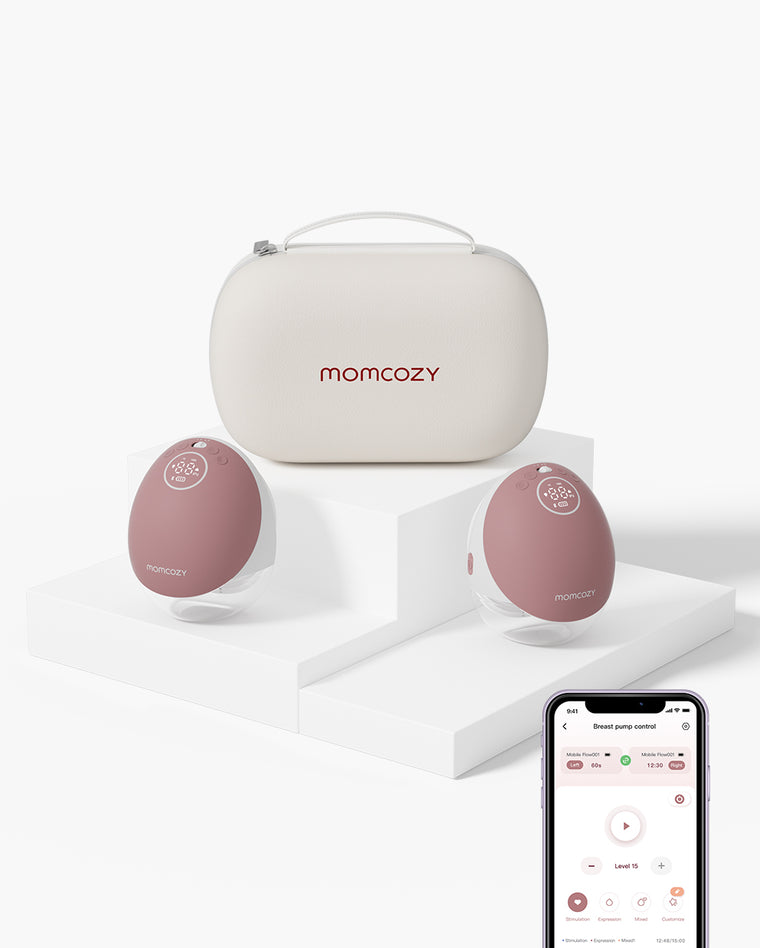
The Momcozy V1 Pro Hospital-Grade Wearable Breast Pump delivers maximum 300 mmHg suction with exceptional comfort features for mothers prioritizing high-efficiency milk extraction. Its DoubleFit™ flange technology and ergonomic design make it ideal for new moms concerned about effectively emptying their breasts.
- Maximum 300 mmHg suction with 15 adjustable levels for personalized comfort
- 3 fine-tuned rhythms mimic baby's different hunger-level suckling patterns
- DoubleFit™ flange system increases milk production by 28.2% (per user testing)
- 102-degree angled tunnel allows comfortable lean-back positioning
- Includes 24mm flange plus 17mm, 19mm, and 21mm inserts for custom fit
- Integrated collection cup with leak-proof seal prevents backflow and contamination
3. Willow Go
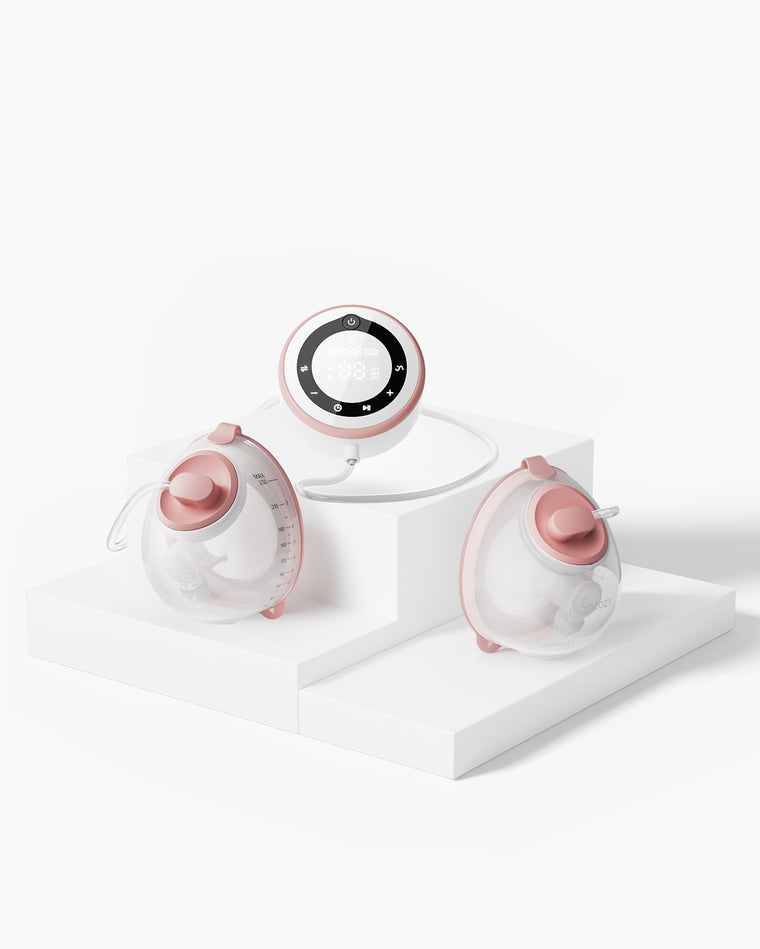
The Willow Go offers 280 mmHg suction with true hands-free mobility – you can bend, lie down, or move freely without spills. It's slightly less powerful but more flexible than competitors.
- Strong 280 mmHg suction with 7 levels
- Patented spill-proof technology allows 360° movement
- Self-sealing milk bags or reusable containers
- App tracks milk volume and pumping history
- 2-hour battery life, charges via USB-C
- Most expensive but offers unique mobility features

4. Freemie Independence II
The Independence II provides 300 mmHg hospital-strength suction at a more affordable price point. Its cup design works with your existing bras rather than requiring special sizing.
- Full 300 mmHg suction matching clinical pumps
- Closed system prevents milk contamination
- Digital display shows exact suction levels
- Memory function saves your preferred settings
- Compatible with most regular bras
- Best value for hospital-strength power

5. Zomee Z2 Double Electric
The Z2 isn't wearable but delivers consistent 300 mmHg suction for mothers who prefer traditional pumping. It's the most affordable way to get hospital-strength suction.
- Powerful 300 mmHg suction with 10 levels
- 3 modes: massage, expression, and combo
- Closed system with backflow protection
- Large LCD display for easy nighttime use
- Includes tote bag and cooler
- Best for home use or dedicated pumping spaces

All five pumps offer suction comparable to hospital grade equipment (280-300 mmHg) but remain personal-use devices you purchase rather than rent. Choose based on your lifestyle needs: app features (M9), quiet operation (Elvie), total mobility (Willow), budget (Freemie), or traditional design (Zomee).
Finding Your Perfect Hospital Grade Breast Pump Solution
For everyday pumping, the most practical setup pairs a personal-use hospital grade breast pump (the V3 or V3 Pro) at home with a wearable for out-of-the-house sessions. The V3 or V3 Pro gives you hospital-grade suction and a closed system for thorough home sessions, while a wearable keeps you on schedule wherever the day takes you. For evidence-based breastfeeding support as you build your routine, the CDC breastfeeding page is a trusted resource.
Insurance-covered rentals make sense if you have a newborn in the NICU or significant supply problems. Wearables like the Momcozy M9 provide 300 mmHg suction for daily pumping with additional power without the inconvenience of renting. Ask your healthcare practitioner if you really need hospital-level power before you spend money.

Common Questions About Hospital Grade Breast Pumps
Q1: Is it worth it to rent a hospital-grade breast pump?
Yes, it's worth renting if you have a NICU baby, low milk supply, or you're exclusively pumping. At $40-75 monthly, these pumps help establish supply faster than personal pumps. Most mothers rent for 1-3 months then switch to a personal pump. If your regular pump works fine, don't bother with the extra expense.
Q2: Do you get more milk with a hospital grade pump?
Yes, hospital grade pumps typically produce 18-35% more milk than standard pumps. They reach 300 mmHg suction compared to 250 mmHg in regular pumps, and their cycling pattern works better for milk extraction. The difference is biggest in early weeks and for mothers with supply problems. If your supply is already good, you might not see much change.
Q3: Is Momcozy pump hospital-grade?
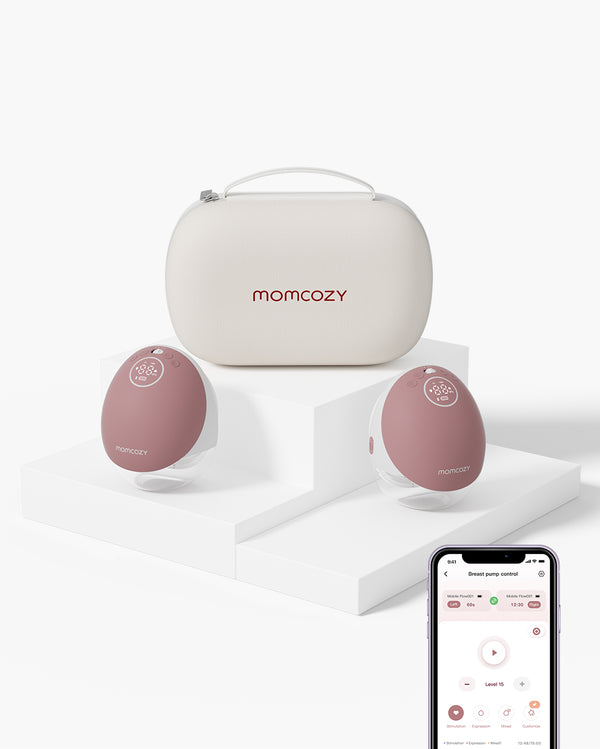
Yes — the Momcozy V3 and V3 Pro are hospital-grade breast pumps. Both deliver hospital-level suction (up to 270 mmHg) with a closed system for thorough sessions at home. The V3 is the plug-in version for home use, while the V3 Pro adds cordless freedom plus StableFlow™ smart pressure stabilization and Adaptive Suction. They are personal-use pumps you buy and keep for home pumping — but the suction strength is genuinely hospital-grade.
Q4: Can I use a hospital grade breast pump and a wearable together?
Yes—and most moms should. A personal-use hospital grade breast pump (like the V3 or V3 Pro) at home plus a wearable for work or errands covers every scenario. The big-host pump protects your supply with strong, complete sessions; the wearable keeps you consistent when you are away from an outlet. Save a multi-user rental for the times a clinician actually prescribes one.








