


Pregnancy is not a condition that spares any of the female body parts. Due to higher levels of hormones, relaxation of muscles and joints, shifting of organs, and alteration of the center of gravity, pregnancy is often accompanied by various degrees of discomfort and pain, with which many expectant mothers cope. That being said, if the baby's mother suffers from a sudden sharp pain in just one part under the stomach, that might be a worrying symptom.
When the pregnant right side hurts, it doesn't automatically imply some pregnancy condition, either. Light discomfort can simply be a consequence of the growing abdominal organs expanding to make room for the baby and the surrounding tendons and muscles. The National Health Service advises that minor abdominal pain throughout pregnancy is usually nothing to worry about, in particular if it is less when the you lies down, sits, passes gas or goes to the bathroom.
At the same time, right-side pain during pregnancy should not always be ignored. The place, intensity, timing, and accompanying symptoms are essential. The right-side discomfort and pregnancy may be related to a urinary tract infection, ectopic pregnancy in the first trimester, or preeclampsia in the third trimester.
This article will describe the common causes, provide some comfort methods, and list the alarming symptoms that need a doctor’s help.
What Causes Right Side Pain During Pregnancy?
There is not one particular reason why you might have right-sided pain when pregnant. It can depend on your stage of pregnancy, where you feel the pain, what it feels like and if there are any other symptoms you have.
Round Ligament Pain
The round ligaments are supportive structures. We might say it is because the tissues are stretching with the enlarge of the womb; because of this, the pains - stabbing, sharp pulling and cramps - that are on either side of the lower belly and are either on the left side or the right side.
The pain from round ligaments usually begins during the second trimester. It can also begin later or even in the first trimester. You often might feel it when you stand up quickly, change positions while you are lying down, cough, or sneeze. The NHS says that they are also referred to as growing pains, and the pain can manifest as a sudden sharp pain either on the right or left side of your lower stomach.
This is one of the possible causes of right lower quadrant pain during pregnancy.
Muscle and Postural Changes
Throughout pregnancy, the enlargement of the woman's body will result in moving the woman's center of gravity and altering her posture as her belly gets rounder. As a result, her back, abdominal, hip, and pelvic muscles bear an additional strain and have to support her in a new way.
Because of this, right-side waist pain during pregnancy is largely a symptom of muscle strain or deformation that may have resulted from such factors as stand-up working for a long time, excessive walking, lifting heavy objects, and sleeping in the wrong way, among others.
Per ACOG, the physical changes in a woman's body often mean back pain. Their advice is to maintain proper posture, choose the type of clothing and shoes, and choose the kind of exercise applicable.
Gas and Constipation
Hormones can decrease motility of the GI tract. The enlarging uterus can pressure adjacent organs. Increases in gas and constipation can cause pain, pressure, distension or fullness in the upper abdomen or crampy pain in the lower abdomen. This usually subsides after passing gas or a bowel movement. Severe pain should not be thought to be due to gas or constipation.
Urinary Tract Infection
Urinary tract infection (UTI) can cause discomfort in the abdominal region below the ribs. This can also extend to the sides or back of the body, burning when urinating, frequent urination or urges, urinating in cloudy fluid, urinating in a strong-smelling fluid, and blood in the urine.
Pregnancy requires special attention to the management of UTIs. A kidney infection presents with flank or back pain associated with fever, chills, nausea, and vomiting and requires immediate professional care.
As a result, if a pregnant woman complains, “I'm pregnant, and my right side hurts,” and has accompanying symptoms such as fever, it is crucial to call an obstetrician.
Ectopic Pregnancy
Ectopic or tubal pregnancy is a form of conception outside the womb. The gestation tissue will not grow attached to the uterine wall, but elsewhere. The most frequent site of ectopic implantation is the fallopian tubes connecting the ovaries with the uterus.
One-sided abdominal or pelvic pain is considered one of the early signs of ectopic pregnancy. It must be kept in mind by physicians that a ruptured ectopic pregnancy might lead the patient to present with sudden, very severe pain in the abdomen.
Since rupture can cause death, every pregnant woman experiencing one-side pain should consult a doctor and never treat it as a trivial case.
Preeclampsia and Upper Right Abdominal Pain
Upper right side pain in pregnancy can be caused by liver or gallbladder issues, but it could also indicate preeclampsia, especially if it occurs after 20 weeks of pregnancy.
Besides upper abdominal or shoulder pain, ACOG also lists other preeclampsia symptoms like a terrible headache or difficulty seeing that could start with mild disturbances up to complete vision loss. They could also have swelling of the face or hands, vomiting and nausea after the first half of pregnancy. Beyond that, shortness of breath and high blood pressure will also present.

Is It Normal to Have Pain in Your Right Side When Pregnant?
Yes, it’s normal.
You may be having an occasional dull discomfort on your right side due to stretching of the ligaments that support your womb, muscular tension, trapped gas, constipation, or even a change in your posture.
If you feel pain when getting up from bed and feel better after a while when you are sitting, you may be attributing this to round ligament pain.
However, “normal” cannot be established based on the location of the symptoms.
If the pain is very severe and you cannot stand it, or if it is associated with bleeding, fever, dizziness, painful micturition, abnormal vaginal discharge, contractions, fluid leakage, or other accompanying symptoms, if any, it definitely needs a specialist's examination.
The NHS recommends seeing a doctor if pain in the belly from pregnancy is very strong or it continues even after a good rest, and it's accompanied by other symptoms, for instance, vaginal bleeding, painful contractions, unusual discharge, leakage of fluids, problems with urination, or a discomfort feeling at the back.
What Can I Do to Relieve Right Side Pain During Pregnancy?
Depending on the provoking factors, treatment of pain is indicated. In case of mild discomfort, and absence of pregnancy-associated pathology detected by a healthcare provider, several measures may help relieve pregnancy-related pain.
Change Positions Slowly
Sudden movements may rarely trigger round ligament pain.
If coughing or sneezing causes sudden pain, try gently pressing with your hand to support the area.
Rest
If you experience discomfort that doesn't get better after you stop the workout, you will have to figure out if this is the case and whether it gets better.
ACOG suggests that you should discontinue the workout session and get in touch with your doctor if you notice any symptoms like abdominal pain, bleeding, dizziness, chest distress, or regular contractions that are painful.
Use Gentle Movement
For uncomplicated pregnancies, moderate exercise can help promote comfort and mobility. Walking, swimming, and modified forms of some prenatal exercises are generally considered safe forms of exercise by the ACOG.
Always consult your personal medical professional about appropriate exercise for your particular situation and complications. Your doctor may recommend that you stop exercising if you have any complications.
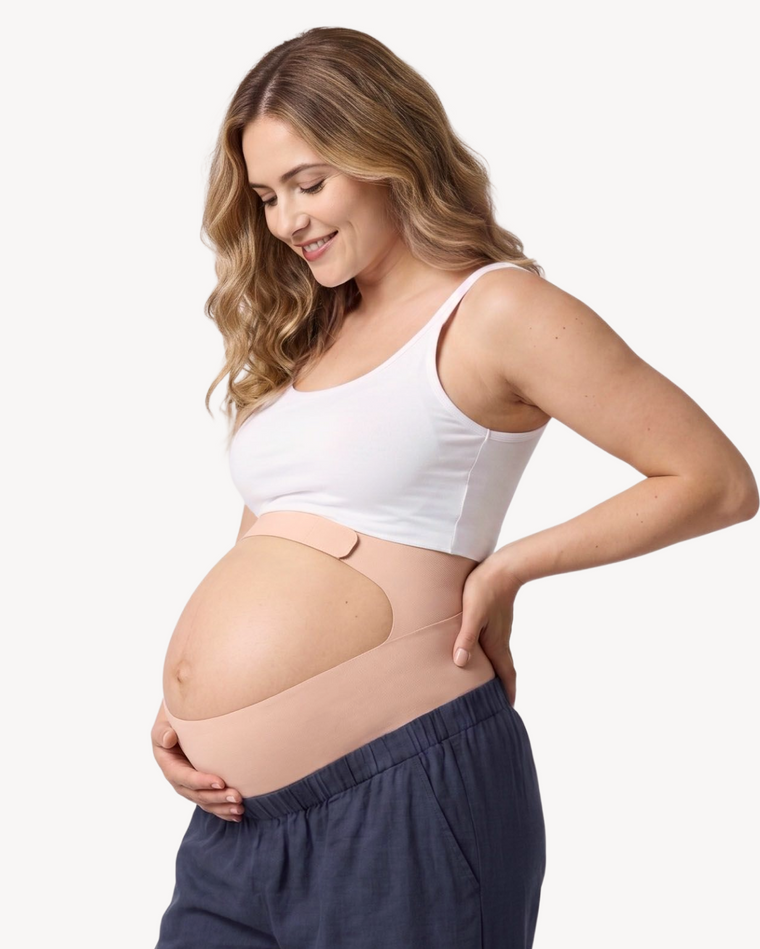
Support Your Growing Belly
As the belly grows, some women find maternity support garments very helpful.
A maternity support band can provide extra support to your growing belly plus your lower back. The Momcozy Ergonest Maternity Belly Band is a maternity support garment. A support band should not be tight, but should allow for comfort. Should you have unexplained, severe, or recurring pain, seek professional medical assistance, not a maternity support band.
Try Pregnancy-Friendly Movement
A maternity exercise ball may also be helpful for range of motion and positioning during pregnancy with your doctor’s approval.
The Momcozy BirthEase Pregnancy Ball Set is perfect for prenatal exercises and relaxing on.
Before engaging in any form of physical activity/exercise with an exercise ball, ensure that it is safe for you and that your physician approves of this type of activity. ACOG advises that women consult their provider regarding physical activity if medical or pregnancy-related conditions are present.
Stay Hydrated
Taking in plenty of fluids is good for maintaining well-being during pregnancy and preventing issues caused by constipation or dehydration.
Call your physician in case of vomiting, inability to keep the fluid intake, or pain and other serious symptoms.
Avoid Self-Diagnosing Persistent Pain
It can be difficult to tell the difference between normal round ligament pain and other causes of discomfort.
There are other factors that might cause a comparable sensation.
If your pain persists, becomes more regular, more severe, or is accompanied by other symptoms, it is best if you call a physician rather than attempt to deal with it on your own at home.
When Should I Worry About Right Side Pain in Pregnancy?
Right-side pain should be taken seriously if it is severe, sudden, persistent, or occurs with other symptoms
Seek immediate medical attention if you experience any of the following:
- Sudden or severe abdominal pain
- Vaginal bleeding or spotting
- Fever or chills
- Dizziness, fainting, or weakness
- Shoulder pain with abdominal or pelvic pain
- Painful urination or blood in the urine
- Persistent vomiting
- Painful contractions that are regular in time
- Fluid leaking from your vagina
- Lower back pain that is severe
- Severe headache or vision changes
- Swelling of your face or hands that is sudden
- Abdominal pain that is persistent in the upper right side
Right-side pain is particularly concerning during early pregnancy because ectopic pregnancy can cause unilateral pelvic or abdominal discomfort. ACOG recommends emergency treatment for ectopic pregnancy if sudden severe pain, shoulder pain, weakness, or fainting occur.
Later in pregnancy, seek immediate medical attention for upper-right abdominal pain with symptoms of preeclampsia.
If you suspect that you are having a severe problem, get checked and treated, rather than waiting for the symptoms to disappear.
FAQs
What does preeclampsia side pain feel like?
The pain of preeclampsia may be felt in the upper abdomen (right side near the liver as well) and may be constant, with severe headache, eyesight changes, edema, nausea or vomiting, difficulty breathing or high blood pressure as other symptoms of the condition.
Due to the variety of symptoms that preeclampsia can cause, upper-right abdominal pain should not be diagnosed or ruled out on your own.
Is one-sided pain normal in early pregnancy?
Mild unilateral discomfort may be experienced during pregnancy, but unilateral discomfort in the early stages can also be a symptom of ectopic pregnancy.
ACOG states that ectopic pregnancies can cause slight cramping or pain on one side of the pelvis. Sudden, severe pain, shoulder pain, weakness, dizziness, or fainting can be a sign of rupture and requires emergency treatment.
Can I lie on my right side while pregnant?
For most people, sleeping on your right side is generally fine. Many providers recommend left side-lying in later pregnancy to improve circulation. Use pillows between your knees and under your bump for comfort. If a position consistently triggers pain, try another and ask your provider.
Can miscarriage pain be on one side?
Pregnancy loss may present with abdominal or pelvic cramps, but unilateral pain can have multiple causes and should not be used as an indicator for miscarriage.
Bleeding, cramping or pelvic pain during pregnancy should be evaluated by a qualified healthcare professional, as unilateral pain in early pregnancy can also indicate ectopic pregnancy.
How is right side pain in early pregnancy diagnosed?
The diagnosis of pregnancy is made based on the presenting symptoms and suspected causes. To that end, a physician may be asking about the onset of the pain, its nature, radiation, severity, whether it is colicky or constant, associated manifestations, and aggravating factors. A physical exam, alongside laboratory tests, ultrasound, and blood tests, may be done to confirm the diagnosis. According to ACOG, in cases where an ectopic pregnancy is suspected, an ultrasound and blood hCG test are done.
Could a UTI cause right side pain in pregnancy?
Yes. UTIs can cause pain or burning while urinating, back or side pain, lower abdominal pain, frequent and urgent need to urinate, and cloudy or bloody urine.
Infections that occur in the kidneys can cause fever, chills, nausea, vomiting, and pain in the side or back. Kidney infections during pregnancy require immediate treatment.
When does round ligament pain usually start?
Round ligament discomfort usually begins in the second trimester as the uterus grows and stretches these supportive ligaments. It is sometimes felt earlier, however.
A stabbing or pulling pain on either side of the lower abdomen, often brought on by sudden movements, is an example of this discomfort.
Conclusion
If the pregnant right side hurts, there are many things that may be the reason. Some of them are not dangerous to the fetus and the mother, for example, round ligament pain, muscle pain, constipation, or gas. Pain in the right lower quadrant during pregnancy can be caused by many factors, most of which are related to pregnancy, but the location of the pain cannot be used for diagnosis.
The kind and location of pain can give many hints. For example, the right-sided waist pain during pregnancy is related to muscular or posture problems. But, the similar discomfort on the upper right side can appear due to preeclampsia.
The most critical part of this information is that you should pay particular attention to the entire image. Severe, persistent, sudden, or worsening pain or pain associated with bleeding, fever, dizziness, urinary symptoms, contractions, fluid leakage, headache, vision changes, or upper abdominal pain should be evaluated by a healthcare provider.
Pregnancy can be uncomfortable, but you shouldn't have to guess what's happening inside your body. When you feel something is wrong, or that something other than normal pregnancy discomforts is occurring, calling your obstetric care provider is the best thing to do.








