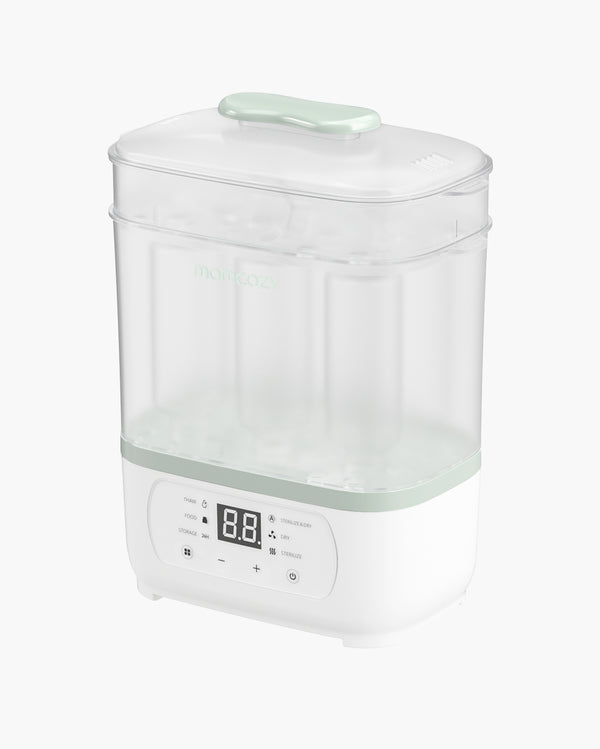
It's late, and the baby has finally fallen asleep. The counter holds a heap of bottles, nipples, rings, and valves, and by morning, there will be another heap. Washing the bottles is not difficult, but a bottle that looks clean can still have a thin film of milk on it and bacteria can grow on that.
This guide will show you 3 ways of cleaning the feeding bottles: washing them by hand, using a dishwasher, and using a bottle washer. Each way is broken down into a set of numbered steps and at the end there is a comparison table. The suggestions are based on the Centers for Disease Control and Prevention (CDC), as well as tips for newborns and night feedings.
Why Baby Bottle Cleaning Matters
Clean bottles for your baby's well-being are a must. Infants with maturing immune systems cannot effectively defeat harmful bacteria as well as adult systems.
Health Risks from Dirty Bottles
Dirty bottles provide the ideal growing conditions for dangerous bacteria, such as E. coli, Salmonella, and Cronobacter. They generate severe gastrointestinal issues, diarrhea, and potentially fatal infection among toddlers. The residue from milk remaining in dirty bottles provides bacteria with nutrients for rapid reproduction, especially when the bottles are stored at high temperatures.
Stop Bacteria from Growing
When you don't get adequate cleaning, bacteria multiply every 20 minutes under favorable conditions. That sticky milk from the bottle nipple makes it a five-star hotel for bacteria. Daily effective cleaning puts a halt to the cycle and saves your baby from preventable diseases.
Build Immunity the Safe Way
Although limited exposure to germs strengthens the immune system, dirty bottles introduce babies to toxic amounts of harmful bacteria before their immune system is fully prepared. Clean bottles allow your baby's immune system to develop naturally without taxing it.
What Parts Need to Be Washed from Baby Bottles?
Understanding every component ensures no sneaky bacteria get left behind in hard-to-reach spots.
Parts to Clean After Each Feed
Every single item needs washing after each use:
- Bottle body - where the milk deposits stick
- Nipple - the part that is weakest against bacteria with tiny holes
- Nipple ring/collar - clogged by milk due to the threads
- Bottle cap/lid - often forgotten, but of the same level of importance
- Vent system parts - if your bottle includes anti-colic parts

Tricky Spots Parents Miss
These are precisely the areas where bacteria thrive. Nipple openings trap milk particles, and threads where the nipple ring screws onto may become caked with dried milk. Bottletop lids also tend to get forgotten by many parents, as do minuscule crevices around anti-colic valves.
When to Replace Bottle Parts
Replace nipples when nipples become sticky, cracked, or turn colors – every 2-3 months. Bottle bodies must be replaced when you notice cracks, chips, or spotty discolorations that cannot be removed even after washing.
How to Hand Wash Baby Bottles

Hand washing needs no special equipment, so many parents start here. The steps below show how to wash feeding bottle by hand, following the CDC's method. All you need are basic items: a clean basin, some dish soap, a bottle brush, and a clean towel. You’ll want to use the basin and brush only for baby items, as a kitchen sink can have lots of germs.
- Make sure your hands are washed first. Scrub for 20 seconds.
- Pull each bottle apart: the bottle, nipple, ring, cap, and valve.
- Keep the parts out of the sink, and rinse them with running water.
- Then, put the parts in a basin of hot soapy water, and scrub the parts with the brush. Make sure you squeeze soapy water through the nipple holes to get the milk out of the holes.
- Rinse the parts, and set them on the towel to air dry. Avoid using a dish towel to dry them, as it can recontaminate the parts.
- Wash both the brush and the basin, and let them dry. Washing them every few days is appropriate.
Mold can grow in a drying rack that’s left with water, so to be safe you want to use a dry towel instead.
A Note on Newborns
Newborns call for one extra step. Here is how to wash bottles for newborn babies, sanitizing becomes a daily job when the baby is under two months old, was born early or has a weak immune system. The basin and brush get washed after every use as well. Boiling cleaned parts for 5 minutes is one way to sanitize, and steam is another, though the bottle maker's instructions come first. Parents who like microwave steam bags can read Momcozy's guide to sterilizing bottles in the microwave.
How to Wash Baby Bottles in the Dishwasher

A dishwasher works for any part marked dishwasher-safe, so check the label on each one first. Here is how to wash infant bottles this way.
- Separate every bottle into its parts.
- Rinse each part under running water to get rid of loose milk.
- Load the dishwasher with nipples and rings in a closed basket or mesh laundry bag, so these small pieces don't end up in the filter.
- Choose hot water and a heated dry or sanitizing setting.
- Wash your hands before unloading. Any part that is still damp can air-dry on a clean towel.
- Put the dry parts away in a clean, closed cabinet.
Hold each nipple up to the light before it goes in the cabinet. Milk can hide in the small holes, and catching it now saves a second wash.
How to Wash Baby Bottles by Bottle Washer
A bottle washer handles washing, steaming and drying in one cycle. It saves the most time for families who wash lots of bottles or pump parts every day. Momcozy sells three models, and all of them are listed in its bottle washer collection.
The basic routine is below. Details vary by model, so keep the manual handy.
- Wash your hands.
- Pour out leftover milk. According to Momcozy, handwashing first isn't necessary.
- Load the racks with bottles upside down, each opening over a spray jet, nipples on the nipple racks and small parts on the upper rack.
- For pump parts, set up the rotary jets the way the manual shows. Only heat-resistant parts should go in, and motors or electronic parts should never be washed.
- Fill the water tank to the MAX line. Where the tap water is hard, purified or distilled water is the better choice.
- Drop in one cleaning tablet made for the washer. Dish soap makes far too much foam.
- Close the lid, pick a cycle and press start, adding steam and drying if wanted.
- Wash your hands, then unload the clean parts.
The CDC lists steam as one way to sanitize and also says to follow the maker's instructions, so the manual matters for the steam step as well.
Momcozy DeepClean Baby Bottle Washer and Sterilizer (D8)
The Momcozy DeepClean Baby Bottle Washer and Sterilizer (D8) is the largest of the three. It holds up to 8 bottles or a full pump kit and includes a self-clean mode. Momcozy lists 112,000 Pa of spray pressure, 22 mode combinations and 212°F steam, along with a TÜV SÜD "S" cleaning rating. It suits families that pump often or wash many bottles daily. Momcozy's guide to using the D8 bottle washer covers the setup.
Momcozy DeepClean Lite Baby Bottle Washer and Sterilizer
The Momcozy DeepClean Lite Baby Bottle Washer and Sterilizer is built for small spaces. It is 9 inches wide and holds 4 bottles, with 4 layers of spray, a 9-minute steam step and 60 minutes of drying. It has no self-clean mode, but its compact size suits a small counter and a moderate number of bottles.
Momcozy KleanPal Pro Baby Bottle Washer and Sterilizer
The Momcozy KleanPal Pro Baby Bottle Washer and Sterilizer is made for everyday bottle feeding. It holds 4 bottles and has a 3-layer spray with 26 nozzles. Steam takes 10 minutes, drying takes 60 minutes and the water drains on its own. Pump parts get a standard wash, while the D8 and the Lite use rotary jets for them.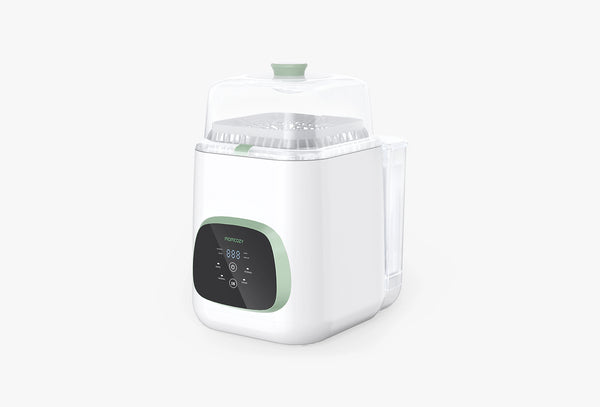

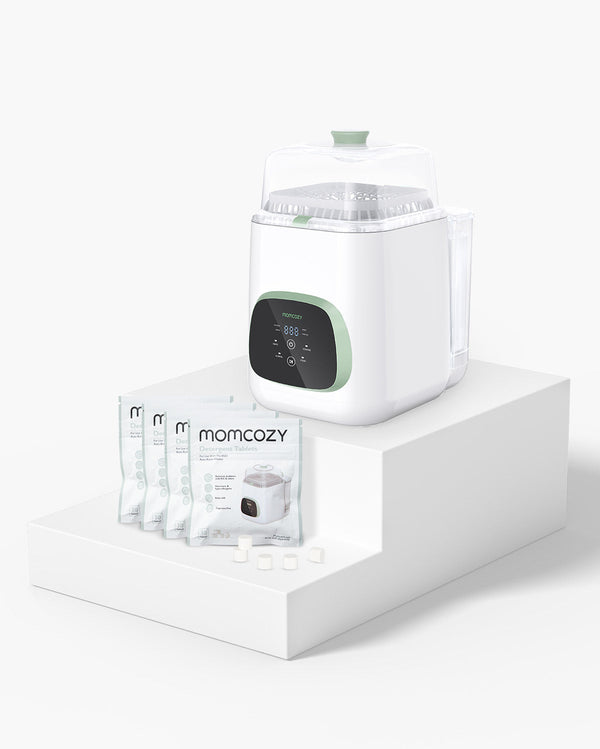
These details come from Momcozy's product pages. Specs can change, so a quick check before buying is wise.
What's the Best Way to Wash Baby Bottles?
No method suits every family. The best one is the one that actually gets done after each feed, and this table compares all three.
|
Method |
Best for |
Effort |
Sanitizing |
Up-front cost |
|
Hand washing |
Small batches, travel and occasional use |
Highest: scrubbing, rinsing and air-drying |
A separate step is needed for babies who need daily sanitizing |
Lowest |
|
Dishwasher |
Homes with a dishwasher and dishwasher-safe bottles |
Medium: loading and unloading |
A hot-water cycle with heated drying makes a separate step unnecessary, per the CDC |
None if one is already owned |
|
Bottle washer |
Frequent bottle feeding or pumping |
Lowest: load, add a tablet and press start |
Momcozy models include a steam step; follow the manual |
Highest |
Do You Need Special Baby Bottle Soap?
The soap aisle can be overwhelming, but here's what you actually need to know.
Is Special Baby Soap Necessary
Regular, fragrance-free dish soap is perfectly safe for cleaning baby bottles. Pediatric experts often note that standard dish soaps clean effectively as long as you rinse thoroughly and avoid products with strong fragrances or harsh additives.
Recommended Soaps for Bottles
When choosing a soap for baby bottles, always go for fragrance-free options that remove milk fats thoroughly without leaving residue. Brands like Dawn and Palmolive are safe picks, but if you want an easier and more consistent cleaning routine, consider pairing your wash with the Momcozy KleanPal Pro Bottle Washer or Momcozy DeepClean Lite Baby Bottle Washer. Using it together with the Washing Block for Momcozy Bottle Washer (120 Tablets) ensures every cycle is both hygienic and convenient, giving you peace of mind while saving time.
Natural vs Commercial Soaps
| Cleaning Type | Pros | Cons |
| Commercial Soap | Effective, convenient | May contain additives |
| Natural/Organic | Fewer chemicals | Often more expensive |
| DIY Solutions | Very natural, cheap | Less convenient |
Effective cleaning matters more than fancy marketing. A simple, effective dish soap often outperforms expensive specialty products.
How Often Should Baby Bottles Be Cleaned?
Bottles need washing after each feeding, and the CDC says this means using soap and water. Rinsing with water leaves milk film behind. The nipple and ring, cap and valve all need cleaning, too.
Washing does not ensure the complete removal of all contaminants. For additional assurance, sanitizing can also be done. The CDC recommends sanitizing once a day for infants younger than two months, infants who were born prematurely, and for infants with a weakened immune system. Daily sanitizing may not be necessary for older, healthy babies when bottles are cleaned carefully after each use. The dishwasher can sanitize the bottles as well, if it uses a heated dry cycle and if the water is set to the hot water and a heated drying cycle or sanitizing setting.
New bottles need a wash before their first use as well. Momcozy's guide to washing and sterilizing feeding bottles walks through five ways to do it.
Do You Need to Wash Baby Bottles After Every Feed?
Yes. Even a bottle that looks empty keeps a film of milk on the inside, and bacteria multiply quickly in it. Once that film dries, it also gets much harder to scrub off.
Formula comes with one more rule. Any formula left after a feeding or the remainder of a bottle that has not been finished within 2 hours should be discarded. Bacteria from saliva get a head start in leftover formula, so a used bottle should never be topped off.
On a really exhausting night, the milk should at least be rinsed off of the parts. The full soap wash can wait until just before the next feed. To learn how to clean the feeding bottle well, remember three things: wash soon, use soap and let every part dry fully.
Common Baby Bottle Cleaning Mistakes
Even well-meaning parents can make mistakes that put their babies at risk.
Temperature Errors
Water over 180°F can cause plastic to release chemicals and rubber nipples to break down. Stick to comfortably hot water – hot enough to dissolve milk fats but not scalding.
Cleaning Products to Avoid
Skip harsh chemicals, bleach-based cleaners, and antibacterial soaps with triclosan. Regular dish soap works perfectly and is much safer.
Timing Mistakes
The biggest mistake? Letting bottles sit unwashed for hours. Bacteria start multiplying within 2 hours at room temperature. That 2 AM bottle needs attention before the 6 AM feeding.
Storage Errors
Storing damp bottles creates mold growth. Always ensure bottles are completely dry before storage, and keep storage areas clean.
FAQs
Are Baby Bottles Dishwasher Safe?
Yes, most baby bottles are dishwasher safe, but it depends on the material. Glass bottles can go on any rack and are most durable. Plastic bottles (polypropylene and polyethylene) should go on the top rack only to prevent warping from heat. Silicone nipples are dishwasher safe on the top rack, but natural rubber nipples must be hand-washed to prevent deterioration. Before washing, rinse bottles immediately after use and fully disassemble all parts. Place small components in a mesh basket to prevent them from falling through. Use the sanitize cycle if available, and consider air-drying instead of heated drying to extend the life of plastic components. Always check manufacturer instructions, as some decorated bottles or specific parts may require hand-washing only.
Is It OK to Wash Baby Bottles in the Dishwasher with Other Dishes?
Yes, you can safely wash baby bottles in the dishwasher together with other dishes, as long as you follow proper precautions. Place bottles, nipples, and small parts in a secure basket or mesh bag to prevent them from falling through. Always use the top rack to avoid excess heat damage, and run a hot water cycle with heated dry or sanitize mode if available. It’s also important to wash your hands before handling clean bottles and to ensure all parts are completely dry before reassembly. For parents who prefer extra caution, hand washing or using a dedicated electric bottle sterilizer can add peace of mind.
Is it okay to just rinse baby bottles?
No. A rinse only removes the loose milk and the thin film on the side of the bottle is still there, and germs keep multiplying in that film. The only way to get rid of it is to clean it with soap and water after each feeding and let it dry.
Is it safe to reuse baby bottles without washing them?
No. Formula that is left in the bottle after feeding should be thrown out, and the bottle should be washed before it’s used again. Cronobacter can survive in powdered formula and make babies under two months very sick.
Can I pre-make bottles for night feeds?
Yes, as long as you are using formulas. Use a clean bottle and wash your hands first. Mix formula as directed and follow the CDC guidelines for formula storage. A bottle of formula that has been mixed and isn't used in 2 hours should be put in the refrigerator and should be used in 24 hours. Once a baby has started feeding from a bottle, it should be finished within an hour. To warm the bottle, run it under warm water. To test if the water is too hot for the baby, take a few drops out and put it on your wrist. If your baby is under two months old, was born early or has a weakened immune system, ask your pediatrician about extra steps for preparing formula. For breast milk, follow the CDC's breast milk storage guidelines.
Do I need to clean infant formula scoops?
Usually not. In general, try to keep as much powder as possible dry. So as long as the scoop stays in the container, it doesn't need to be washed. Of course, it needs to be washed if it gets dirtied or if it touches the floor, in which case it needs to be washed just like a bottle. Let it air dry completely before it goes back in.
How Often Should I Replace Baby Bottle Nipples?
Change nipples every 2-3 months with regular use, or sooner when you notice cracks, tears, or discoloring. Signs that a change is necessary include sticky nipples even after washing, wear and tear that is easily visible, or flow that is not quick enough or overly quick. The silicone nipples last as long as the rubber ones, but need frequent changing.
Can I Prepare Bottles in Advance and Store Them?
Yes, but definitely. Prepared bottles may be stored refrigerated for a maximum of 24 hours after assembly. Refrigerated prepared formula may be stored for a maximum of 24 hours and must always be prepared freshly when time permits. Never store prepared bottles at room temperature for over 2 hours.
What Should I Do if My Baby Gets Sick?
You don't have to discard the bottles, but sterilize the entire set after your baby recovers. Wash all the bottles thoroughly, and then sterilize them using your chosen method. Bottles can be safely reused after proper sterilization to prevent reinfection, but pacifiers may need to be replaced.
How Do I Remove Stubborn Milk Residue or Odors?
For deposits, soak bottles for a few hours overnight in hot water with baking soda (1 tablespoon/cup). For odors, soak in a solution of equal parts water and white vinegar, and wash as usual. Never use chemicals or bleach. If the bottles persistently come out cloudy or smell foul, replace them.
Conclusion
There are a few habits to effectively clean feeding bottle: wash after every use with soap and water, let air dry, and sanitize when the baby needs it. There are many ways to wash feeding bottles that work, e.g. by hand, by a dishwasher, or by a bottle washer, so use whatever works best for your family. When washing feeding bottles becomes a hassle, it's time to look into a feeding bottle washer. The Momcozy Bottle Washer collection offers the opportunity to compare the D8, the DeepClean Lite, and the KleanPal Pro. The D8, for example, also has a self-clean mode. If you have feeding related questions or concerns, contact your pediatrician.
This article is for general information only and does not replace medical advice. Always follow the instructions from bottle and washer manufacturers.