MEDICALLY REVIEWED BY

International Board Certified Lactation Consultant | Postpartum Specialist Bethany Duvall is an International Board Certified Lactation Consultant (IBCLC) and postpartum specialist with a bachelor's degree in holistic nutrition. Drawing on her expertise in lactation care, nutritional knowledge, and personal experience as a mother, she is dedicated to helping families navigate pregnancy and postpartum with evidence-based, compassionate support. Her approach respects each family's unique needs, choices, and values.
When you spend time pumping and see less milk than you expected, it can be hard to know what to change. You may wonder whether your supply is low, whether the pump is working well for you, or whether buying a different one would help. Those questions can feel especially pressing if the amount of milk you express has dropped since switching pumps. The amount you pump does not always reflect your milk supply. Your baby’s feeding, wet diapers, and weight gain help complete the picture.
When considering a breast pump for low milk supply, start with the problem you need it to solve. A different pump may help when your current setup does not remove milk well or is difficult to fit into your day. Low milk supply can also have other causes, so no single pump is the best choice for every situation. Thyroid conditions, polycystic ovary syndrome (PCOS), retained placental tissue, certain medications, and hormonal birth control—especially methods containing estrogen—are worth raising with your healthcare provider. They can help assess whether any of these may be affecting your supply. Looking at fit, milk removal, and your feeding routine can help you decide whether you need a new pump or a different kind of support.
If you are worried about how much your baby is taking in, their weight, or their health, reach out to their healthcare provider promptly for support while you work through the pumping issue. You do not need to have your pump situation sorted out before asking for help with feeding concerns. It is important to address those concerns without waiting to see what happens with a new pump.

Can a Breast Pump Help Increase Milk Supply?
To understand what a pump can help with, consider the main function: removing milk. Its role in supporting supply depends on whether it removes milk comfortably and effectively, and how pumping fits alongside the rest of your baby's feeds.
Suckling at the breast or pumping can trigger the milk ejection reflex, often called let-down, which moves milk toward the nipple. Oxytocin helps release milk, while prolactin supports milk production.
Regular milk removal may help maintain or increase supply, depending on your circumstances. Both frequency and effective milk removal matter. This is why the most useful pump is one you can use comfortably and regularly within your feeding plan. A higher suction setting does not automatically mean a better result, and changing pumps may not address other causes of low supply.
Before Buying Another Pump, Check Flange Fit, Assembly, and Worn Parts
If the amount in the collection cup is lower than you expected, start with a few checks on your current pump. Flange fit, settings, assembly, and worn parts are worth reviewing before you spend money on a replacement:
Flange fit. The flange (also called a breast shield) is the part that fits against your breast. Your nipple should sit comfortably in the tunnel; repeated pinching or rubbing is a sign to stop and reassess. You can measure each side separately, but a measurement is only a starting point. Comfort and how pumping goes matter too. See Momcozy's breast pump flange sizing guide for measuring instructions.
Assembly. When using a breast pump, follow the manual to make sure the collection cups and connections are assembled correctly. If your pump has tubing, check those connections too. If milk leaks, pause and check the assembly before pumping again.
Worn parts. Look for cracks, warping, or visible wear on valves, membranes, and other replaceable parts. Replace parts according to the instructions for your specific model. Contact the manufacturer's customer support if you need help troubleshooting the device.
Settings. Check the manual for your pump’s modes and steps. Many electric pumps begin with a stimulation phase to encourage let-down, followed by an expression phase to remove milk. When you switch to expression mode, start at a lower suction level and work through the levels gradually to find what feels comfortable and works for you. You do not need to use the setting someone else prefers, and stronger suction is not automatically better.
These checks can also make the next decision clearer. If a better fit or a replacement part improves pumping, your current pump may still meet your needs. If it does not, you will have a more specific idea of what to look for in another model.
How to Choose the Best Breast Pump for Low Milk Supply
If a new pump still seems appropriate, think about the parts of pumping that are hardest for you now. Is it getting a comfortable fit? Is it finding time for sessions? Are you struggling to keep up with cleaning? Those details give you a practical way to compare features.
A Comfortable Fit and Adjustable Settings
Start with fit. A pump needs a flange or insert that works for your body, along with settings you can adjust easily. Different sizes and compatible inserts give you ways to adapt the setup when the included flange does not fit. That flexibility may be more useful day to day than a longer list of modes.
A product page may list maximum suction in millimeters of mercury (mmHg). That number describes suction pressure; by itself, it cannot tell you how much milk you will pump. You need a setting and rhythm that work for you. If pumping hurts, stop and check the fit, position, and settings. If discomfort continues, ask a qualified professional for help rather than turning the suction higher to push through it.
A Setup That Fits How Often You Pump
Next, picture an ordinary day with the pump. If you rely on it for most feeds, you will repeat assembly, pumping, and cleaning many times, so those steps deserve close attention. If you pump occasionally in place of a nursing session, getting the pump ready quickly may matter more. When choosing a breast pump for working moms, consider your pumping space, access to power, and what you will need to carry.
If time is the main difficulty, a double pump is worth considering because it pumps both breasts at once. This removes the need to finish one side before starting the other and may make sessions easier to fit into a short break. Research suggests that pumping both breasts at the same time may also help you collect more milk in the same amount of pumping time than pumping one side at a time. This does not guarantee an increase in your overall milk supply. Think about where you usually pump and how long you can set aside, then compare models with those needs in mind.

Cleaning, Replacement Parts, and Everyday Cost
The work around a session matters too. After pumping, you still need to store the milk, take the pump apart, clean the parts, and let them air-dry. CDC guidance calls for cleaning parts that touch the breast or breast milk after every use. For extra protection, sanitize cleaned pump parts at least once daily, especially if your baby is under 2 months old, was born prematurely, or has a weakened immune system. Daily sanitizing may not be necessary for older, healthy babies if parts are cleaned carefully after each use. Follow the manufacturer’s instructions for safe sanitizing methods. Reading a model's instructions for cleaning breast pump parts before buying can help you judge how it will fit into your day.Check which parts come apart and which the manufacturer allows in a dishwasher.
Check whether you can readily buy replacement valves, membranes, and inserts, and what replacement parts and extra accessories will cost. Consider whether the charging or power setup works where you plan to pump and how to reach customer support. Read the return policy before ordering; opened or used pumps may have return restrictions. A single-user pump is intended for one person, so avoid buying one used or borrowing or sharing one that someone else has used.
Which Type of Breast Pump Fits Your Feeding Plan?
With those needs in mind, the different pump types become easier to compare. Each offers a different way to organize a session. Consider which setup addresses the difficulty you are having, as well as the device's intended use and how comfortably it works for you.
A Personal Double Electric Pump for Regular Sessions
For regular pumping, a personal-use double electric breast pump can be a starting point. Pumping both sides at once may help when setting aside enough time is difficult. From there, look at the details that make repeated use manageable: comfortable parts, straightforward adjustments, and a setup you can bring to work if needed.
A Multi-User Rental Pump When Your Care Team Recommends One
When your baby is not yet feeding effectively at the breast, choosing equipment may require more individual guidance. If you need to rely on pumping to establish or maintain supply, ask your healthcare provider or lactation consultant whether a rental pump would suit your situation. The recommendation should take account of your needs, your baby's needs, and the specific device.
Before renting, confirm that the manufacturer says the pump is designed for multiple users, and get your own new accessory kit, including flanges and tubing. Only pumps designed for multiple users should be shared; a single-user pump should not be passed between people, even with a new accessory kit. The FDA says “hospital-grade” has no consistent definition. That label alone does not establish that a pump is safe for multiple users or provide evidence that it increases milk supply.
A Wearable Breast Pump for Work and Other Busy Moments
If holding collection cups makes it difficult to fit pumping around work or childcare, a wearable setup may be worth considering. For some parents, that convenience helps make room for a session in a busy day. As you try one, check how it feels when worn, whether it stays positioned correctly, and whether it removes milk effectively for you.
Give yourself a clear basis for comparing a new pump with your usual setup. Note the interval since the last feed or pumping session, the settings, your comfort, and the amount collected. Looking at sessions under similar conditions may make the comparison more useful. One unusually high or low session on its own does not tell you whether a pump is a good fit.
Momcozy Pumps to Consider for Your Routine
Momcozy V1 Pro: A Hands-Free Double Electric Option
If you need a hands-free breast pump that lets you pump both breasts at once, the Momcozy V1 Pro is one option to compare. Its separate motor connects to two collection cups by tubing. It offers 15 suction levels and DoubleFit silicone flanges; the U.S. product page lists 24 mm flanges with 17 mm, 19 mm, and 21 mm inserts. Those size and setting options provide ways to adjust the setup to your needs.
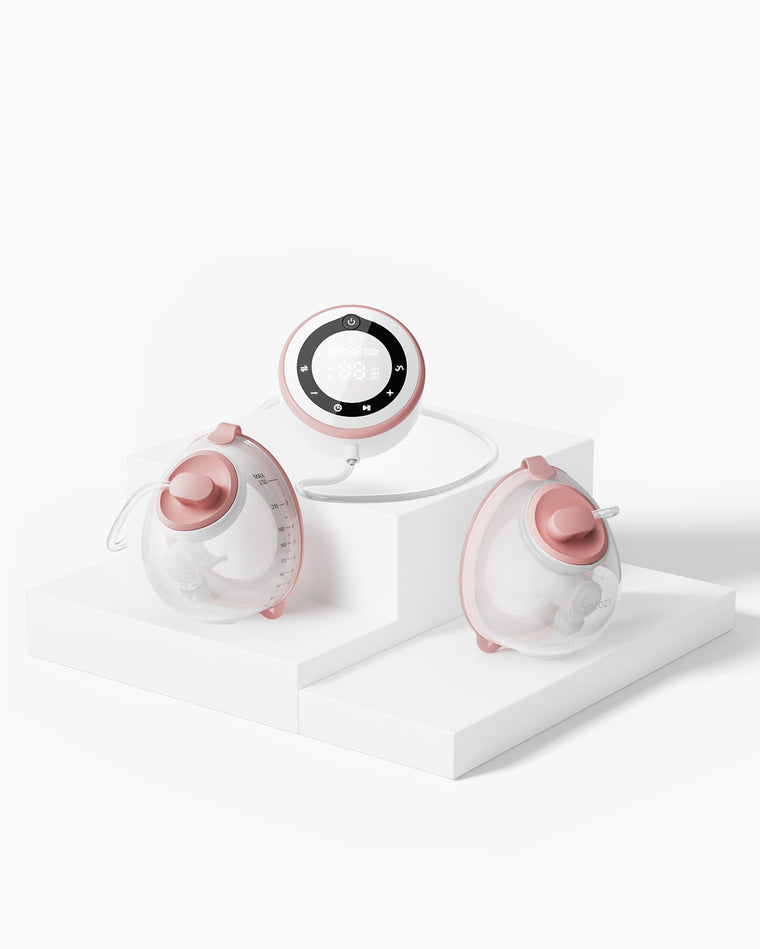
The practical question is whether that arrangement works where you usually pump. Check that an appropriate flange or insert size is available, and think through where you would place the motor and tubing. The range of settings gives you room to adjust, while your comfort and milk removal help guide which setting to use.
Momcozy M9: A Wearable Option with App Controls
If you would prefer to adjust a wearable breast pump from your phone and keep your pumping records in one place, the Momcozy M9 wearable breast pump offers those features. Its app provides controls, pumping-output tracking, and reminders. MyFlow lets you customize modes and intensity, while Milk Relief and Milk Boost offer preset pumping options when you would rather start with an existing arrangement.
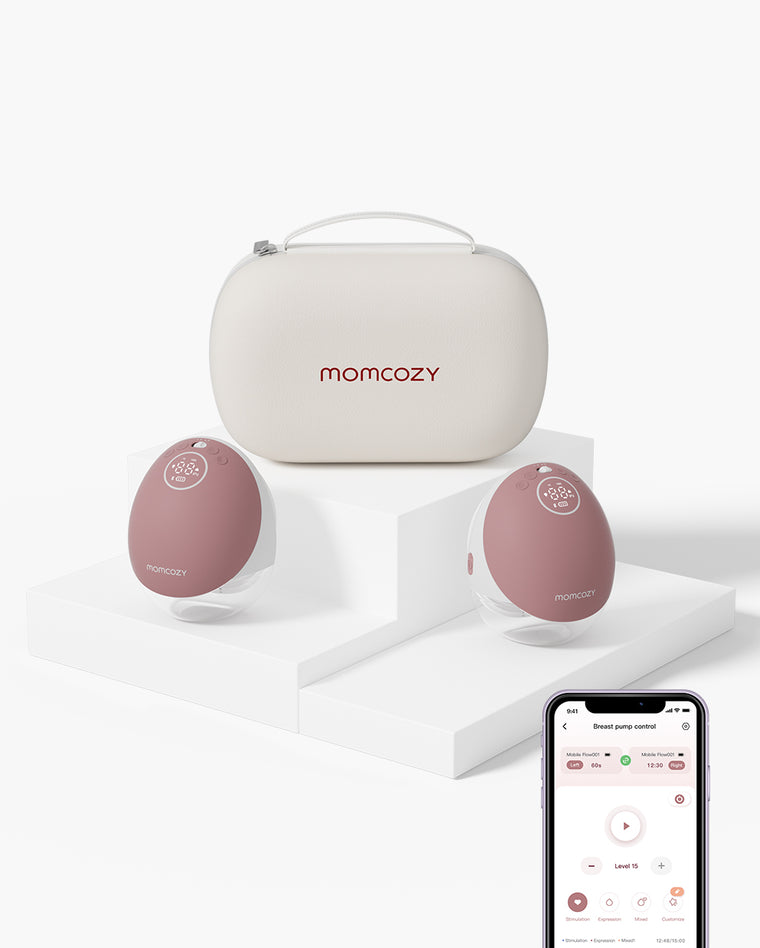
The value of these features is in how they help you manage a session and keep track of pumping. The name “Milk Boost” does not guarantee an increase in milk supply, and an app record of pumping output does not measure your baby's intake. As with any pump, keep comfort, effective milk removal, and your feeding routine at the center of the decision.
Get Help for Feeding Concerns or Persistent Pain
Contact your baby's pediatrician as soon as possible if you are concerned about low intake, less swallowing once milk has come in, fewer wet diapers than expected for their age, or poor weight gain. Seek emergency care if your baby is difficult to wake or too weak to feed; call 911 if you cannot wake them, or if they are very weak or unresponsive. Do not delay a feeding assessment to test a new pump.
If pumping continues to hurt, your nipple is injured, or pumping still is not going well after checking fit and assembly, ask a healthcare professional or an IBCLC (International Board Certified Lactation Consultant) to assess your setup. Bring your pump so they can see how you position and use it. Contact a clinician about persistent or worsening breast redness, swelling, warmth, or pain, particularly with fever or feeling unwell.
You do not need a perfect feeding log before asking for help. Bring your baby's recent weight records and whatever you can share about nursing, bottle-feeding, and pumping. If you have notes on output, include the time, interval since the previous feed, and any discomfort. These details may help your care team look for patterns, but you can make an appointment before you have a week of records.
An assessment can help turn a broad worry about supply into a more specific next step. That might mean a different flange size, help with latch, a change to your pumping schedule, or attention to a health concern. It may also show that your pump is adequate and that practical support with feeding, cleaning, or childcare would help. With that information, you can make a more informed decision about buying another pump.

Frequently Asked Questions
How Long Should I Pump If My Milk Supply Is Low?
There’s no magic number of minutes that works for everyone, so you don’t need to pump to a set time. How long you pump depends on whether you are replacing a nursing session, relying mainly on pumping, or adding a session as part of a professional plan, as well as your milk flow and comfort. Pumping longer doesn’t always mean more milk. If anything feels painful, rubs, or starts to swell, it’s okay to stop and check your fit and settings. If you’re working with a lactation consultant, their plan is a great guide. Share how it’s going with them, including anything that feels hard, so you can adjust the plan together if needed.
Will I Lose My Milk Supply If I Only Pump Three Times a Day?
The answer depends in part on what happens outside those three sessions. Does your baby also nurse at other times? Pumping three times during work while nursing at home is different from relying on only three pumping sessions for all breast milk. The breast receives different amounts of stimulation and milk removal in those situations. If you exclusively pump—especially while establishing supply or when you are not pumping enough for your baby—three sessions may be too few for your situation and are worth discussing promptly with a healthcare professional. The number alone cannot guarantee that supply will stay the same or prove that it will decrease.
Can Pumping Cause Low Milk Supply?
Pumping can help maintain supply, but the outcome depends on how it is used. If a pump is not removing milk well, or pumping sessions do not replace nursing sessions, the body may receive less stimulation to make milk. Over time, that may affect supply. Check the pump, fit, and overall feeding schedule, and consider other possible causes too. One low-output session is not enough to show that your supply has decreased.
Does Pumping Every Two Hours Increase Milk Supply?
It can help in some situations, but it isn’t the right plan for everyone. It depends on your whole feeding routine. Adding appropriate pumping sessions may help if milk has not been removed often enough. Before setting a timer for every two hours, count effective nursing sessions too when reviewing your overall milk-removal schedule. CDC guidance says that when you are away from your baby or exclusively pumping, try to pump as often as your baby drinks breast milk. If you are considering extra sessions, discuss a schedule that fits your goal, rest, and what you can realistically do.
Can a Breast Pump Increase Milk Supply?
A pump may help when it addresses a reason milk is not being removed well or often enough, although no model can guarantee an increase. If low supply is related to missed milk-removal opportunities, flange fit, or milk not being removed well, improving the setup or frequency may help. If health conditions, medications, or previous surgery may be involved, the underlying cause needs individual attention. Compare product features when shopping, but judge any change in supply in the context of feeding and pumping over time, not from a product name.
Should I Keep Pumping If No Milk Is Coming Out?
It can be unsettling to start pumping and see no milk at first. Milk flow may take a little time to begin as the milk ejection reflex gets going. If you are comfortable, adjust your position, check that your nipple is centered, and review the mode. If milk still does not flow, pause to check the assembly, seal, and flange fit. Do not keep raising suction or extending the session to force it. If this happens repeatedly, ask a lactation consultant to assess your setup. If you are also worried that your baby is not getting enough to eat, contact their pediatrician.