


MEDICALLY REVIEWED BY

Shelly Umstot, BSN, RN
Shelly Umstot is a BSN and has been a registered nurse for over 35 years. She lives in North East Ohio and is a freelance health content writer. Her passion is bringing understanding to those with questions and concerns regarding health issues and helping them obtain and maintain their optimal health. She loves being with her family and has two lovely granddaughters who have stolen her heart. Assisting new parents in finding the information they need to face the joys and challenges of caring for their children is a gratifying experience for her as a professional, parent, and grandparent herself.
Daily nasal suction can be safe when used gently and sparingly, with clean equipment and attention to warning signs.
Yes, daily use can be safe when your baby is congested, as long as suction is gentle, limited, and the device is kept clean.
Is your baby snuffling and unlatching at 2:00 AM while you wonder if one more quick nose clearing is too much? Home-care guidance often recommends saline drops with gentle suction before feeds to make breathing and eating easier. You’ll get clear limits, a gentle routine, and the red flags that mean it’s time to call.
The short safety answer
A nasal aspirator is a small suction device that removes mucus from a baby’s nose, and it is considered safe when used correctly. Daily use during a stuffy week can be reasonable if you keep it gentle and limited. For example, using it before the two hardest feeds and before bedtime often keeps breathing calm without overdoing it.
Aggressive suction can inflame or even bleed delicate nasal tissue. If the nose looks raw or your baby fights the device every time, take a break and rely on moisture and rest until the lining settles.
Why the nasal lining gets irritated
Mucus keeps tissues moist and traps particles, but babies mostly breathe through their noses, so extra mucus makes feeding and sleep harder. That thin, sensitive nasal lining is the mucous membrane, and it gets irritated easily when it is already swollen from a cold. It’s why a mildly stuffy nose can turn a calm latch into short, frustrated pauses.
Blocked noses are harder for babies and can disrupt eating and sleep because they can’t clear congestion on their own. The lining swells from dry air or illness, so repeated suctioning can add to the irritation. On a dry winter night, one gentle pass after a warm bath can be enough to ease the snuffling.

How often is safe during a cold
Supportive-care advice notes that saline drops with gentle suction should be limited to about three to four times a day. A simple way to stay in range is to tie suctioning to the toughest moments, such as the morning feed, an afternoon feed, and bedtime.
Aspirator guidance also says to use no more than 4 times daily and space sessions out, which is especially important for newborns with tiny, sensitive passages. If feeds are every 3 hours, suctioning before two feeds plus bedtime gives three sessions, which usually stay gentle enough.

Saline drops should not be used for more than 4 days in a row, so chronic congestion requires a pediatric check rather than more suction. If the nose still sounds stuffy after several days, a day of just humid air can give the lining a break.
A gentle routine that protects the lining
Saline drops before suction loosen thick mucus and make suction gentler. Two to three drops per nostril and a quiet ten-second count are usually enough; that little pause gives mucus time to thin, so you don’t need repeated pulls.
A nasal aspirator removes mucus from the nose only, and oral suction styles often include a guard to prevent deep insertion. Whether you use a bulb, oral tube, or electric device, keeping the tip at the nostril entrance and using gentle suction protects the lining.
Using the aspirator before feeds reduces the chance of vomiting and makes nursing or bottle-feeding smoother. In my own postpartum days, doing suction right before the latch kept feeds calmer and my arms steadier.

Choosing a device and keeping it clean
The main types are bulb, oral suction with a filter, and electric options, each designed to clear mucus from the nose. If the “ick factor” of oral suction is too much, an electric model can feel like a more comfortable compromise.
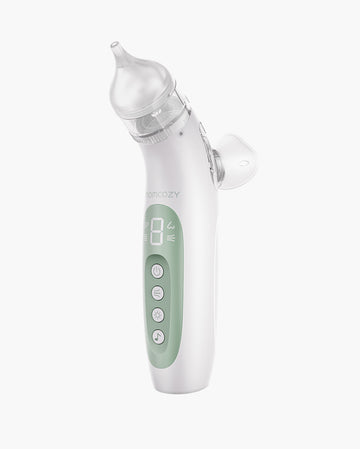
For families wanting adjustable control to stay gentle, many parents appreciate electric designs like the Momcozy BreezyClear™ 2-in-1 Spray & Suction Electric Nasal Aspirator. It combines a fine mist spray (to soften mucus first, like saline drops) with hospital-grade suction up to 65kPa across 4 adjustable levels—starting very low for newborns and increasing only as needed. Soft rounded silicone tips stay at the entrance, it's quiet and rechargeable, and disassembly makes cleaning straightforward (warm soapy water + air-dry). Start on the lowest level, use only when congestion truly affects feeding/sleep (e.g., 3 times max per day), and always pair with saline/moisture for the lining's sake—test gently in your routine, as every baby's nose is different.
Bulb aspirators are common and inexpensive but hard to dry, while electric models cost more. For a tiny newborn nose, a device that lets you control suction can feel gentler.
Cleaning steps such as disassembly, washing with warm, soapy water, and, in some cases, boiling for 5 minutes help keep the device hygienic. A quick rinse right after use keeps mucus from drying and sticking.
Safety-minded designs emphasize appropriate suction levels and pediatric ENT input to balance comfort and effectiveness. If you can adjust suction, start low and increase only if needed, especially in the first few months.
Some electric devices are designed to keep mucus in a collection cup and away from the motor, helping reduce contamination inside the unit. If durability and hygiene matter most, that design detail is worth comparing.

When to call your pediatrician
If breathing remains fast or labored even after suction, seek care, as rapid breathing, retractions, or bluish skin can signal serious respiratory distress. For a baby under 6 months, breathing around 60 to 80 times per minute is a red flag.
Fever or dehydration in young infants also warrants a call, and a fever over 100.4 °F in a newborn or fewer wet diapers are concerns. If the diaper count drops and feeding is weak, call even if the nose sounds better.
Everyday comfort tips that reduce the need for suction
Cool-mist humidity and extra fluids support easier breathing and feeding. A clean humidifier at night, plus an extra nursing session, can cut down how often you reach for the aspirator.
Simple prevention steps like handwashing, covering coughs, and avoiding kisses from sick visitors reduce viral spread during the respiratory season. If grandparents want to help, ask for fresh handwashing and a kiss-free hello.
Daily suction can be safe when it’s gentle, limited, and paired with moisture and rest. If your gut says you need it too often or your baby isn’t improving, trust that instinct and get a pediatric check-in.
Disclaimer
This article, "Is It Safe to Use a Baby Nasal Aspirator Every Day? (Mucous Membrane Safety)," is provided for general informational and educational purposes only. It summarizes common home-care practices for nasal congestion relief based on publicly available pediatric and supportive-care guidance, but it is not medical, pediatric, ENT (ear, nose, and throat), or professional advice. It is not a substitute for personalized guidance from a qualified healthcare professional, such as your pediatrician, regarding your baby's respiratory health, nasal mucous membrane condition, congestion management, signs of infection, dehydration, or any breathing difficulties.
Nasal aspirators, including manual (bulb/oral) and electric models sold by Momcozy, can help gently clear mucus to support easier breathing and feeding when used correctly and sparingly, but daily or frequent use carries risks if not managed properly. Overuse (more than 3–4 times per day), aggressive suction, repeated insertion without saline, improper tip placement, or lack of thorough cleaning can irritate, inflame, dry out, or damage the delicate nasal mucous membrane, potentially leading to bleeding, rawness, increased swelling, discomfort, infection risk, or worsened congestion. Always use the lowest effective suction, apply saline drops first to loosen mucus, limit sessions (e.g., before key feeds and bedtime only), keep the tip at the nostril entrance without deep insertion, space uses throughout the day, and give the nasal lining breaks (e.g., humidified air days) if irritation appears. Do not use saline drops continuously for more than 4 days without medical advice, and never rely solely on suction for chronic or persistent symptoms.
Momcozy sells baby products, including nasal aspirators and related items, but no product is guaranteed to be risk-free or produce the same results for every baby. Effectiveness, safety, comfort, and suitability depend on gentle technique, proper frequency, saline use, thorough cleaning (disassemble, wash with warm soapy water, air-dry completely, sanitize/boil if manufacturer allows), individual baby sensitivity, and strict adherence to the product's specific instructions, warnings, age guidelines (typically 0+ months with soft, rounded tips), and applicable U.S. safety standards (such as CPSC, ASTM, FDA-related where relevant, or CE). Always read and follow the manufacturer's user manual in full before use, cleaning, or sanitizing; replace disposable filters/parts after each use where required; discontinue if baby shows distress, bleeding, or no improvement; and verify certifications directly with Momcozy or the retailer.
By reading this article or using any information herein, you agree that any reliance on the content is at your own risk. Momcozy, its authors, affiliates, and contributors are not liable for any injury, nasal irritation, bleeding, infection, worsened breathing/feeding issues, dehydration, or other damages (direct or indirect) that may arise from the use, misuse, overuse, improper cleaning, or reliance on nasal aspirators or any advice described here.
Momcozy is not responsible for any consequences arising from the use of this content. For any concerns about your baby's breathing, nasal health, congestion that persists, rapid breathing, fever, reduced wet diapers, or product use, consult a licensed healthcare provider immediately—especially for infants under 6 months. Never leave your child unattended with any baby product.








