Is it normal for babies to snore or snort in their sleep? A bit of newborn snoring or snorting is quite normal, as they have such tiny nasal passages. A very small amount of mucus or dryness can make their breathing quite loud when they're asleep. Some babies will also make little squeaks, grunts, and snuffles as they get used to breathing in the world outside the womb.
However not every breathy sound is necessarily normal. Loud or frequent snoring, persistent noisy breathing, breathing with gasps, apneas (pauses in breathing), changes in skin color and difficulty feeding all require a visit to the doctor. If your baby is obviously having trouble breathing, then you need to consult your pediatrician.
Key Takeaways:
- Occasional soft snoring or snorting is perfectly normal in a newborn as their nasal passages are so tiny.
- Different sounds (snoring, stridor, wheezing, grunting, gasping etc) can have different etiologies.
- Saline drops and a nasal aspirator can be of use if there's mucus present and it's visible or has been loosened. Suctioning should be very gentle and minimal.
- Keep your baby sleeping on their back on a firm, flat sleep surface. Don't elevate the mattress and don't use any positioning products in an attempt to reduce snoring.
- Get in touch with your child's pediatrician if you have persistent loud or odd breathing sounds (especially if there are other symptoms present).
What Is the Difference Between Snoring, Snorting, Stridor, Wheezing, Grunting, and Gasping?
Different breathing sounds can be indicative of what's going on (though the sound alone won't diagnose anything). The key is to note when the noise occurs (is it on the in breath or the out breath?), and whether your baby seems comfortable at all. That information is very useful when you go to the doctor.

Here are some general differences to watch for:
- Snoring: is just a low pitched vibrating sound which occurs during sleep as a result of air passing through the nose or upper airway.
- Snorting: a short snuffling or snorting sound which can occur when air is passing through a narrow nasal passage or around some mucus.
- Stridor: a high pitched, harsh sound. Indicates narrowing in the upper airway and should be discussed with your doctor if it's present.
- Wheezing: typically a whistling sound associated with air moving through the narrowed lower airways. It's not the same as normal snoring.
- Grunting: a short sound which can occur as a baby is breathing out. Repeated grunting with each breath (in particular if this is occurring in the context of chest retractions or other signs of distress) needs urgent medical assessment.
- Gasping: or pauses in breathing (gasping, repeated choking sounds, obvious pauses in breathing) should not be considered normal for a baby's sleep. Seek medical advice immediately and call an ambulance if your baby is having difficulty breathing or is changing color.
What Commonly Causes Newborn Snoring or Snorting?
One oft-cited explanation is the size of the newborn's nares. They're so small that a very small amount of mucus, dry air or mild irritation will produce quite loud noises as the air passes through. The babies will also make their own little noises as their breathing patterns sort themselves out.
Other possible contributors would be dust, smoke, fragrances, and all the other sorts of airborne irritants. Some babies will make quite noisy breathing sounds around feeding time but that doesn't necessarily mean it's reflux.
If the breathing is persistent, quite loud, and/or is accompanied by coughing, choking, difficulty feeding, and/or any change in the pattern of breathing then it's worth asking your pediatrician to have a look at it rather than just assuming it's nothing.
Is the Snoring Actually From Nasal Congestion?
If your baby is sounding congested then look for the signs of mucus first rather than just go on the sound. You may see mucus around the nostrils, you may have sticky secretions or they may just be struggling to breathe comfortably through their nose. They can quite easily sound snuffly even if there's very little mucus at all.
Use these simple steps to decide what to do next:
- Check for visible mucus. Just look around the nostrils gently, don't insert anything into the nose.
- Check your baby's general condition. Is your baby feeding well? Are they breathing easily? Is their color normal?
- If there's mucus present then consider some gentle nasal care. Plain saline may be of help in loosening up the dry or sticky secretions prior to gentle suction (where appropriate).
- Don't suction just because it sounds like you need to. If there's no mucus visible (or indeed no mucus that you can see at all) then suctioning will just irritate the baby’s delicate nose without, in any way, addressing the actual problem.
- Contact your pediatrician if the symptoms persist. Noisy breathing that continues without any obvious congestion may well need to be looked at for other causes.
For additional guidance, read Momcozy’s article on baby congestion and what parents should know.
When Can Saline or a Nasal Aspirator Help?
Saline drops and a nasal aspirator can be of use in the case of a baby who has quite visible or loose mucus which is impeding their nasal breathing or their feeding. Always adhere to the product instructions and your clinician's advice. If you do use saline, then use plain saline suitable for babies rather than any medicated nasal product unless, otherwise directed by your clinician.
If you do need to suck, then keep it absolutely gentle, absolutely shallow, and absolutely brief. Don't insert the tip deep into the nostril and don't do it repeatedly as that can irritate and/or swell the nasal lining. A nasal aspirator is not intended to deal with every breath sound and it should not be used to remove any suspected milk from the airway.

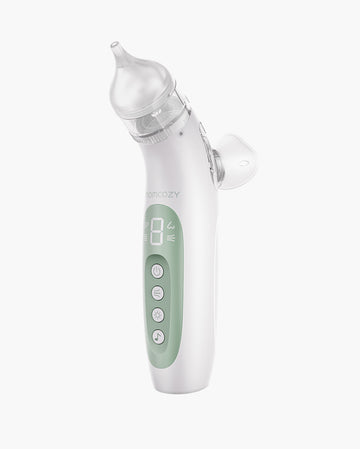
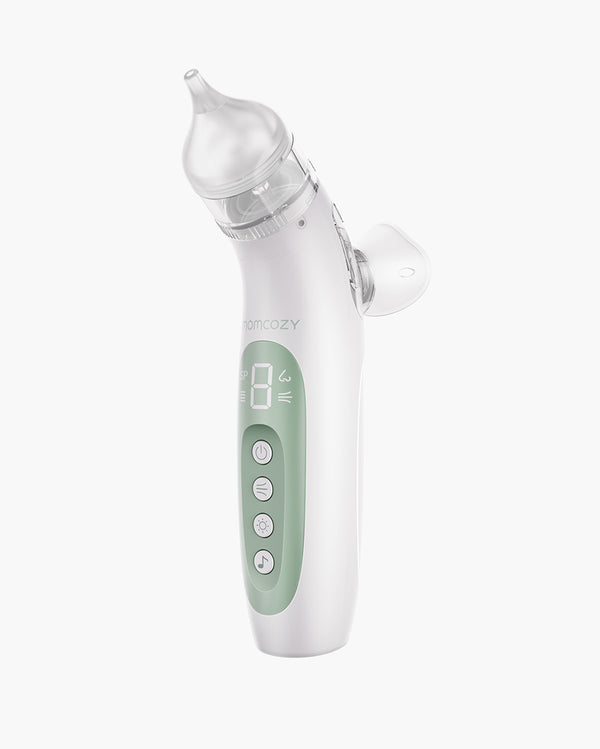
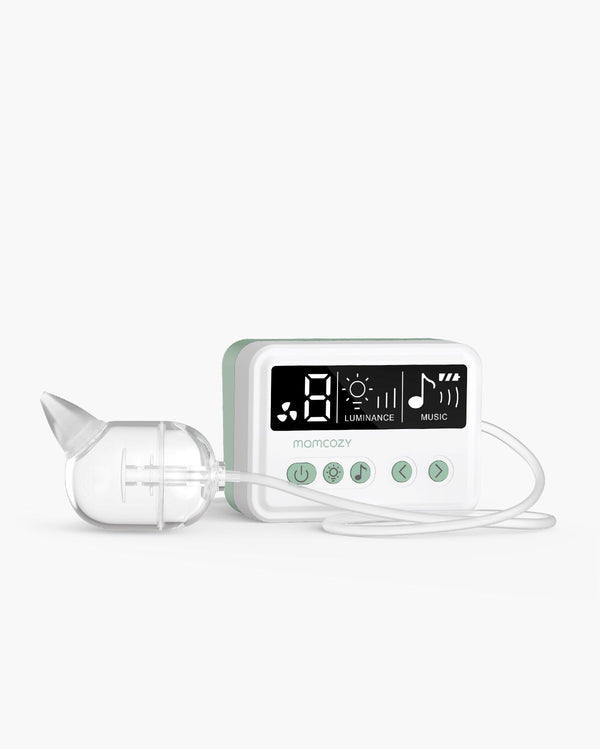
When actual mucus is present, you can explore Momcozy’s baby nasal aspirators, including the Momcozy BreezyClear™ 2-in-1 Spray & Suction Electric Nasal Aspirator. Choose an appropriate product and use it according to its instructions; consult your pediatrician if you are unsure whether suction is needed.
Member price
€69,99Code Save 10%
For more guidance, see how to suction your baby’s stuffy nose and how often to use a baby nasal aspirator.
What About Snoring After Feeding or Reflux?
If your baby is making snorting or rattly noises after feeding, then note when the noises start, how long they last, and whether there is any associated coughing, choking or difficulty with feeding. The timing may be of some use to your pediatrician in terms of working out the pattern but it doesn't prove that reflux is the cause. Newborns can make all sorts of noises after feeding for a variety of reasons.
Don't use a nasal aspirator to clear any milk that's got stuck in the nose or to treat suspected reflux. If your baby is coughing or choking on feed, has persistent wet or rattly breathing, is having difficulty with feeding, or is clearly uncomfortable when breathing then get in touch with your pediatrician. You need to see your doctor immediately if your baby is having a serious problem with breathing or if their skin is changing color.
Newborn Snoring vs. Stridor or Laryngomalacia
Stridor is a high pitched, harsh sounding breath - often more noticeable when inhaling. It's different from the lower, vibrating sound of snoring. If a baby has persistent stridor, especially if this is associated with feeding problems or signs of increased work of breathing, it should be seen by a doctor.
One cause of stridor in babies is laryngomalacia (soft tissue around the voice box that moves in and out with breathing). Not all noisy breathers have laryngomalacia and the stridor alone doesn't prove the diagnosis. A clinician can decide whether further investigation is required and can then go on to explain what the next steps would be.
When Is Newborn Snoring More Concerning?
Occasional soft snoring is probably not a problem at all if your baby is otherwise happy and feeding well. If however it's loud or frequent, or if there are odd breathing sounds that are persistent or a change in the normal pattern of breathing, then it's worth discussing it with a pediatrician.
Watch for these warning signs:
- Increased breathing effort: you might see the skin drawing in around the ribs and neck or the nostrils flaring as they breathe.
- Gasping or choking: this can happen quite frequently particularly when your baby is asleep or feeding.
- Feeding difficulties: your child may have problems with sucking, swallowing and breathing at the same time or may become very fatigued during feeding.
- Poor growth: if you're concerned about your child not putting on weight and they also have ongoing noisy breathing, this could be a sign of an issue.
- Color changes: look out for blue or grey lips, tongue or skin.
- Breathing pauses: be on the lookout for obvious pauses in breathing, particularly if they're associated with color change, gasping or difficulty getting back to normal breathing.
If your baby is having difficulty breathing, has blue/grey lips or tongue, or is unresponsive then get emergency services on the phone straight away. Don't wait for an appointment.
How Can You Help a Newborn Who Snores From Mild Congestion?

If your baby is just suffering from mild congestion and is breathing quite comfortably then there are a few things you can try. If the air in the room is dry then a clean cool mist humidifier (as per the instructions) will help. Plain infant saline will help to loosen the sticky mucus and gentle suction may be of use, if you can see the mucus or if it is making it difficult for your baby to breathe or to feed.
You can also reduce your baby's exposure to cigarette smoke, strong fragrances, dust and other irritants. Don't overuse the nasal aspirator and don't give any over the counter cold medication or use essential oils for congestion in your newborn unless your doctor specifically recommends it.
Safe sleep is still important even if your baby is sounding congested. Always place your baby on their back on a firm, flat, and level sleep surface, which is appropriate for infant sleep. No pillows, no wedges, no positioners, no mattress inclines should be used to alter your baby's sleeping position or to reduce snoring.
For more information, read Momcozy’s guide to safe sleep for newborns.
When Do Newborns Stop Snoring?
Babies don't all stop snoring/noisy breathing at the same age. As your baby grows, you may find that there are periods of noisy breathing due to small nasal passages or congestion. That will come and go. If the problem persists or you are at all concerned, then don't just carry on with it because your baby is a baby.
Rather than focus on a particular age, just look at how often your baby snores, how loud it is and any other symptoms. If the snoring is ongoing, getting worse, or is associated with feeding problems, gasping, apnea or increased effort to breathe, then you should arrange a consultation with your doctor.
Frequently Asked Questions
Is it normal for a newborn to snore?
Soft intermittent snoring is very common in babies (they have such tiny nasal passages). If it's loud, frequent, and/or persistent (and particularly if it's in conjunction with other symptoms), then it's worth raising with your child's doctor.
Why does my newborn snore only while sleeping?
Your baby's breathing sounds may be very obvious when they're asleep as a result of their position and the way the air is moving through their tiny nasal passages. Any continuous sound, any very loud sound, or any sound at all which is associated with breathing difficulty should be the subject of a consultation with your doctor.
Why does my newborn snort in sleep?
Snoring can occur when air is passing through narrow nasal passages or around mucus. If it's happening regularly or is in association with gasping, color change, or increased respiratory effort, then your baby should be assessed.
Can nasal congestion cause baby snoring?
Yes, a bit of mucus or nasal irritation will make breathing sound noisier. Snoring doesn't necessarily imply congestion is present, so don't go around suctioning just because someone is snoring.
Can reflux cause a newborn to sound snorty?
Feeding related sounds can occur for a number of reasons and the timing of them alone doesn't prove reflux. If your baby is coughing frequently, choking, has a persistent rattly breath or is having difficulty feeding, then you should speak to your pediatrician.
What is the difference between snoring and stridor?
Snoring is generally a lower pitched, vibrating sound whereas stridor is often a high pitched, harsh sounding noise heard most during inhales. If your baby has a persistent stridor, then it should be seen by a doctor.
Is wheezing the same as snoring?
No. Wheeze is typically a whistling sound due to narrowed lower airways. Snoring is generally a vibrating sound due to airflow through the upper airway. If your baby has any unusual or persistent breathing sounds, you should seek medical advice.
Can I use a nasal aspirator if my newborn snores?
A nasal aspirator may be of some benefit in the case of visible or loose mucus which is impacting on breathing or feeding. It should be used gently as per the instructions, and you should avoid repeated suctioning where there is no mucus present.
Should I change my baby’s sleep position if they snore?
No. Place your baby on their back on a firm, flat, and level sleep surface. Don't use pillows, wedges, positioners or an inclined mattress to treat snoring.
When should I call the pediatrician about newborn snoring?
If the snoring is loud, frequent, persistent, and/or is associated with feeding problems, coughing, choking or strange breathing sounds then get in touch with your pediatrician. If your baby is having difficulty breathing, or is turning blue or grey round the lips and/or tongue, or is unresponsive, seek medical help immediately.
Conclusion
Newborns can make a rather wide variety of noises when they're asleep and some amount of soft snoring or snorting is likely to be down to their tiny nasal passages and/or a bit of mild congestion. You can simply be aware of the sound, look for any visible mucus, and only use some gentle nasal care if you need to.
Newborn snoring is generally not a problem in itself. If it's loud, frequent, persistent or is associated with gasping, apneas (pauses in breathing), color changes or feeding problems, then it does require a medical review. Keep your baby on their back on a firm, flat sleep surface and if at all in doubt as to your baby's breathing then get in touch with your pediatrician. If your baby is in any way showing signs of serious breathing difficulty, then you need to get emergency help.