


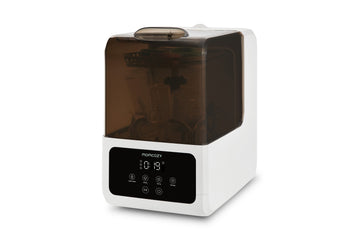
Washing baby bottles multiple times a day gets old fast, so it makes sense to look for a faster or easier method. This is where the bottle washer vs dishwasher debate arises. It might seem logical to put them in a dishwasher, but that isn't always a gentle treatment for nipples, valves, and small plastic parts. A bottle washer, however, is designed with this purpose in mind and is capable of cleaning more efficiently and thoroughly, while safeguarding delicate materials from heat and wear. Before deciding which to include in your kitchen habits, it helps to understand how they work.
What Is a Bottle Washer?

A bottle washer is a countertop machine designed to perform one task: clean baby bottles, nipples, valves, breast pumps, and pump parts without the guesswork of hand washing. Rather than a sink full of soapy water and a bottle brush, everything is placed in a rack, washed, sterilized, dried and stored all in one machine cycle.
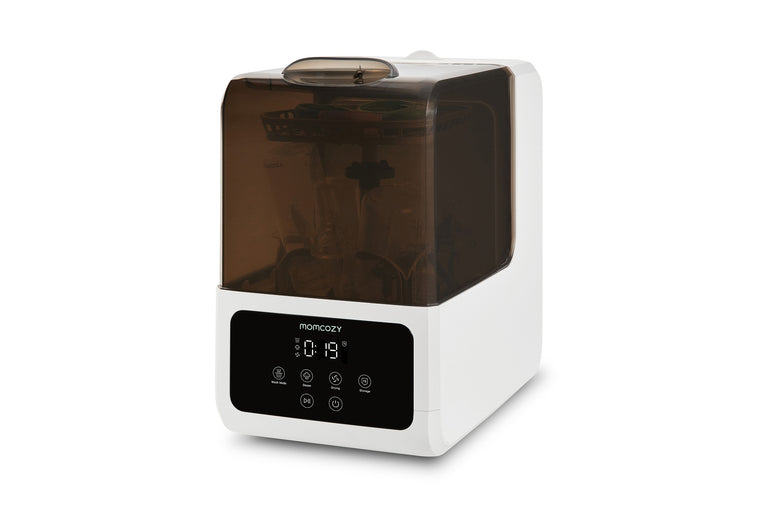
The Momcozy DeepClean Lite Bottle Washer
The Momcozy DeepClean Lite Bottle Washer is built around that same compact, all-in-one idea: one machine on your counter replaces the bottle brush, the drying rack, and a separate sterilizer. It can clean 6 to 8 bottles at a time with a full 4-in-1 wash, sterilize, dry, and store cycle, so you spend less time scrubbing and more time with your baby. Powered by a 22,000 Pa high-pressure warm water system delivered through a 4-layer spray structure and 38 multi-angle spray jets, it pushes warm water into the narrow openings of nipples and the curved surfaces of pump parts, the spots that are hardest to reach by hand.
The Routine It Replaces
It's not just about the cleaning. It's the routine it replaces. If you've ever hand-washed a full day of bottles, you know how repetitive it is. That becomes a load-and-go job with a dedicated washer, and it's often the biggest appeal for exhausted parents who want an hour of their day back.
What Is a Dishwasher?
A dishwasher is a versatile kitchen appliance that uses hot water, detergent, and mechanical arms to wash a variety of dishes, cookware and utensils. It's built for versatility rather than specialization, which is exactly why the bottle washer vs dishwasher comparison exists in the first place. Baby bottles can technically be loaded onto the top rack of a standard dishwasher, and many parents are doing this without a problem.
That said, dishwashers weren't engineered with delicate feeding equipment in mind. Spray arms are designed to target big, flat surfaces such as plates, glasses, etc. and narrow bottle necks, nipple holes, and pump valves are not always met with even pressure. The detergent residue is also an issue, as dish soap created for pots and pans isn't always the most mild for something a baby will place into their mouth. Some plastics and silicone can also warp or break down over time during the high heat of the drying cycle.
None of this is to say a dishwasher is a bad choice. It can be used for many families as a component of a larger routine, particularly when complemented with good drying and storage practices. It does give an idea of why some parents are seeking something more specific.
Bottle Washer vs Dishwasher: Head-to-Head Comparison

The core difference between a bottle washer and a dishwasher is design intent. A dishwasher is built to handle a mixed, general load, while a bottle washer is built around one specific job: getting feeding equipment fully clean and sterile, cycle after cycle.
Design and Cleaning Precision
A dishwasher uses a general spray pattern to wash a mixed load of dishes, while a bottle washer's water pressure and spray pattern are designed specifically around the shape of the bottle, the nipple, and the pump parts. Small areas a dishwasher's spray arms can't reach tend to get cleaned more deeply by a bottle washer, such as the DeepClean Lite's 38-jet, 22,000 Pa setup, all built into one compact, all-in-one unit rather than a separate wash, dry, and sterilize setup.
Cycle Time and Consistency
A dishwasher load typically runs longer, since it's washing a mixed batch of dishes at once, and you're often waiting to accumulate a full load before running it. A bottle washer can be run more frequently with a smaller batch, since it's built to keep up with how often bottles actually get used throughout the day, and a full wash, sterilize, and dry cycle stays on a predictable timeline rather than depending on how the rack happens to be loaded.
Sterilization
Sterilization is also worth weighing. Some dishwashers have a sanitize setting, but it's not the same as high-heat steam sanitizing. A bottle washer built for that purpose generally runs a hotter steam cycle targeted at feeding equipment, which is part of why parents who feed often prefer it.
Cost and Countertop Space
A dishwasher doesn't need any extra apparatus or countertop space, while a bottle washer is an added expense that also takes up room, even a compact, all-in-one one. For families who only use a few bottles occasionally, it may not be worth it. It comes down to volume: how much daily bottle washing a household actually has.
Is Your Dishwasher Enough for Baby Bottles?

For occasional or light bottle use, a dishwasher can absolutely get the job done. If you are washing one or two bottles per day, it is reasonable to store them securely on the top rack, use a detergent that doesn't contain strong fragrances and ensure that everything is completely dry before you put it away. This is a method used by many families without problems.
The place where a dishwasher begins to fail is in frequency and detail. Exclusively pumping and bottle-feeding parents can use up to 6, 8 or more bottles and pump components per day. Having to run the dishwasher more often than is convenient, and waiting until it is full to run the dishwasher, is not ideal because bottles sit there dirty for hours. Then, there's the fact that certain parts of the pump, such as the tiny valves and membranes, can be lost or bent or left out completely during the regular dishwasher cycle because they are too small to be reliably caught by the spray pattern.
When you see cloudy residue on bottles after you have put them in the dishwasher, or you are always looking for milk residue in the nipple holes, it is likely that your existing setup is not exactly meeting your needs in the kitchen.
Which Should You Choose?

There's no universal answer. It comes down to how many bottles you're washing daily, how much time you have, and whether pump parts are part of the mix. A parent washing two bottles a day has different needs than someone exclusively pumping through eight bottles plus pump accessories before noon.
Is a bottle washer really necessary?
Not for every family, but it really comes in handy when washing the bottles and the pumps becomes a real hassle. A bottle washer can make hand washing or dishwasher cycles several times a day much easier.
Why do people buy bottle washers instead of using the dishwasher?
Mostly consistency. A dedicated washer reaches every part the same way, cycle after cycle, without depending on how things happen to sit on a dishwasher rack. For parents juggling feeding schedules, that reliability counts for a lot.
Which is better for cleaning baby bottles, a countertop dishwasher or a baby bottle washer?
For bottles and feeding accessories, a baby bottle washer is generally the superior option, as it's designed to accommodate the bottle shape and cleaning requirements. A countertop dishwasher is more of a compromise and will work well for all sorts of dishes, but is not as optimized as the narrow bottle sections.
How to Choose a Professional Bottle Washing Product
Match the machine to your actual routine, not the longest feature list. The right bottle washer comes down to a few practical factors: how many bottles and pump parts you need to wash at once, what each cycle actually does, and whether it fits your kitchen and daily routine without.
Capacity
If you're handling multiple bottles and full pump sets daily, look for something that covers a real batch in one go. The 6 to 8 bottle range the Momcozy DeepClean Lite Bottle Washer offers is a good benchmark, so you're not running back-to-back cycles.
Cycle Functions
Some washers wash only. Some wash, sterilize and dry in a single cycle. A drying cycle of about 55 minutes with a dual-layer drying system leaves less residual moisture, and HEPA-filtered storage can help bottles stay clean for up to 72 hours after drying finishes.
Cleaning Breast Pump Parts
If pump parts are part of your daily load, look for a rotational spray attachment designed for curved and irregular surfaces, since standard spray patterns often miss these contours. Counter space matters too. A small, narrow body that moves easily on quiet rolling casters, with a front-opening lid, is easier to tuck between the sink and a tight kitchen wall. A washer that's hard to install or maintain tends to get abandoned in favor of hand washing, which defeats the purpose of buying one.
FAQs
Is it better to wash bottles by hand or in the dishwasher?
They both work, but often a dishwasher will wash dishes more reliably than hand washing, because of the pressure and heat applied to the dish.
When did you stop sterilizing bottles?
This will depend on the baby and situation, so ask your pediatrician for recommendations that are right for your baby's age and medical needs.
Do I need to sterilize bottles or can I just wash them?
It depends on the baby's immune system and age. Discuss with your paediatrician whether it is necessary to continue sterilising or not.
Can nipples go in the dishwasher?
So many are claimed to be dishwasher safe, but some can melt or warp if taken near the heating element. Always read the manufacturer's care instructions first.
Can I use regular water for a bottle washer?
The vast majority of bottle washers operate effectively with standard tap water, although in hard water areas filtered water is sometimes suggested to reduce mineral build-up.
What's better, a bottle washer or sterilizer?
A bottle washer is used to wash and remove milk residue and debris, followed by a sterilizer to kill germs. Some parents use both or a combination of both, such as a combined machine like the DeepClean Lite.
How long do you use a bottle washer for?
This length of time can be a few months or a couple of years, depending on how you feed your baby, including the use of bottles or any equipment to feed the baby with a pump.
What is the best bottle washer on the market?
It depends on the space you have on the counter, budget, and volume of your bottles. If you are looking for an all-in-one, compact washer, you might want to consider a bottle washer such as the Momcozy DeepClean Lite Bottle Washer.
How much does a bottle washer cost?
There is a wide range of capacities and features depending on the price, so you should try to compare a couple of them before you begin calculating the price based on the number of bottles you use each day.
Can you wash breast pump parts in a bottle washer?
If you wash bottles with the pump parts, many bottle washers can be used for this purpose, but verify that the spray attachments will fit with the pump accessories you use.
Does a dishwasher sanitize baby bottles?
Some have a sanitize mode, which is designed to reduce bacteria but requires a higher temperature and is not dedicated steam sterilization. Discuss any special sterilisation concerns with your child's doctor.
Conclusion
When deciding between a bottle washer and a dishwasher, it all depends on how much washing your family does every day. Light, occasional bottle washing can be done in a dishwasher without any problems with care in placement and careful drying. However, if cleaning bottles and pumps is a daily, multiple-load chore, it is more time-efficient and consistently cleaner to use a bottle/pump washer designed for that purpose, which can save time and money. The purpose is the same either way: to provide clean and safe feeding supplies without making the routine any more stressful.








