


A pile of damp bottles can feel overwhelming when your baby is hungry and every clean nipple seems to have disappeared. Careful washing remains the foundation of bottle hygiene, while steam sanitizing provides an extra level of germ reduction.
The best steam sterilizer can make that process easier to repeat. The right model may sanitize, dry, and protect feeding items in one cycle, leaving fewer wet parts on the counter and less work between feeds.

Why Use a Steam Sterilizer?
A steam sterilizer uses heated water vapor to reduce germs on heat-safe feeding items. It offers a chemical-free sanitizing method for bottles, nipples, pacifiers, and compatible breast pump parts.
Steam sterilizers can solve several common bottle-care problems:
- Inconsistent timing: A programmed cycle controls how long items are exposed to steam.
- Too many small parts: Electric models can process bottles, nipples, rings, and compatible pump components together.
- Slow drying: Models with heated drying reduce the time moisture remains inside bottles and small parts.
- Limited clean storage: Some closed units protect sanitized items for a set period when the lid stays closed.
- Busy feeding schedules: A repeatable cycle reduces the number of steps parents need to monitor.
Every item still needs to be cleaned first. Milk residue and formula can prevent steam from reaching the entire surface. Disassemble bottles and remove all visible residue before placing them in a sanitizing cycle.
Do You Really Need a Bottle Sterilizer?
A separate bottle sterilizer is not essential for every family. Your baby’s age and health, your feeding method, and the cleaning equipment already in your home should shape the decision.
Daily sanitizing is recommended for feeding items when a baby:
- Is younger than 2 months
- Was born prematurely
- Has a weakened immune system due to illness or medical treatment
Parents of older, healthy babies may not need to sanitize feeding items every day when every part is cleaned carefully after each use. A dishwasher cycle using hot water and heated drying or a sanitizing setting can also remove the need for a separate sanitizing step.
A dedicated sterilizer may still be useful if you pump frequently, use several bottles each day, lack a suitable dishwasher cycle, or need dry feeding items available overnight. Ask your pediatrician for individual advice if your baby has specific medical needs.

What Are the Types of Steam Sterilizers?
Steam sterilizers differ in capacity, portability, drying performance, and automation. Identifying the right category first can help you avoid paying for functions that do not fit your daily routine.
Microwave Steam Sterilizers
A microwave sterilizer is a heat-safe container that holds water and feeding items. The microwave heats the water and creates steam inside the covered chamber.
These units usually have a compact design and short cycle. Compatibility depends on the dimensions and wattage of your microwave. Items may require separate air-drying, and the hot container must be opened carefully.
Electric Steam Sterilizers
Electric steam sterilizers use a built-in heating plate to turn water into steam. Preset controls make cycle timing easier to manage, and the chamber can often hold several bottles plus smaller accessories.
A basic electric model focuses on sanitizing. It suits parents who already have a clean drying area and want a consistent cycle without using a microwave.
Steam Sterilizer Bags
Reusable steam sterilizer bags work well during travel, workdays, or visits with family. Add the specified amount of water, load compatible items, seal the bag, and place it in a microwave.
Each bag has a limited reuse life and smaller capacity than a countertop model. Mark the usage tracker after every cycle and follow the cooling instructions before opening the steam vent.
Electric Steam Sterilizers With Drying
A bottle sterilizer and dryer moves feeding items through steam sanitizing and heated drying. This reduces handling and helps prevent water from collecting in bottle bases, nipples, and pump components.
Check both the steam cycle and drying time. A fast sanitizing cycle may still be followed by a longer drying stage.
Bottle Washers With Steam Sterilization
An automatic bottle washer can combine washing, steam sanitizing, drying, and protected storage. It can save hands-on cleaning time for exclusive pumpers and families processing several bottle loads each day.
These machines require suitable cleaning tablets, careful loading, regular descaling, and enough counter space. Their main advantage is reducing the number of separate bottle-care steps.

The Best Steam Sterilizers
The best steam sterilizer should match your daily bottle count, available counter space, and need for automatic drying or washing. Families can also explore the full Momcozy bottle sterilizer collection to compare compact sterilizers with automated bottle-care systems.
1. Momcozy 4 in 1 Compact Bottle Sterilizer and Dryer
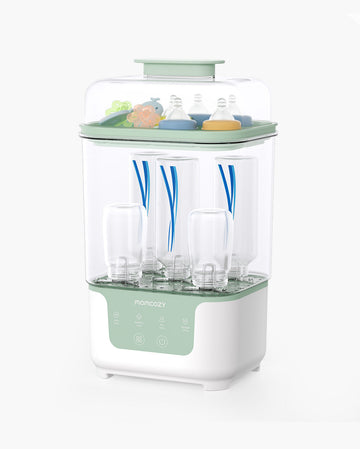
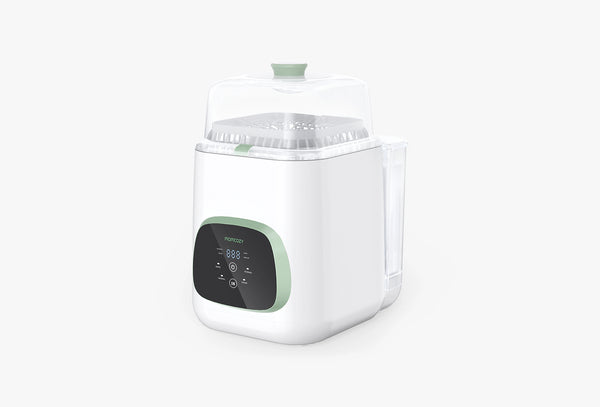
The Momcozy 4 in 1 Compact Bottle Sterilizer and Dryer combines sterilizing, drying, storing, and an automatic mode. It holds up to six standard bottles along with compatible pacifiers, pump parts, and small accessories.
Its steam cycle takes eight minutes, and drying finishes in under 30 minutes. The nesting design reduces the unit’s footprint during storage. Processed items remain protected inside the closed chamber for up to 72 hours, which helps parents prepare several feeds in advance.

Member price
From€259,95Code Save 20%
2. Momcozy KleanPal Pro Baby Bottle Washer and Sterilizer
The Momcozy KleanPal Pro Baby Bottle Washer and Sterilizer handles washing, steam sterilizing, drying, and storage in one appliance. It accommodates up to four bottles plus compatible nipples, pacifiers, pump parts, and feeding accessories.
Its 19-minute Rapid Wash helps with bottle turnover during frequent feeding or pumping. Nine mode combinations let parents select washing alone, sterilizing and drying, or a complete cycle. The closed storage setting keeps processed items protected for up to 72 hours.
3. Dr. Brown’s™ Bottle Sterilizer and Dryer
The Dr. Brown’s™ Bottle Sterilizer and Dryer uses steam to process up to six baby bottles at once. Its removable accessory tray also accommodates compatible bottle parts, breast pump components, pacifiers, and teethers.
Parents can select sterilizing, drying, or a combined cycle through the electronic controls. HEPA-filtered air supports the drying process, while the automatic shutoff helps prevent overheating. Processed items remain protected for up to 24 hours when the lid stays closed.
4. Philips Avent Baby Bottle Sterilizer & Dryer Premium SCF293/00
The Philips Avent Baby Bottle Sterilizer & Dryer Premium SCF293/00 uses steam followed by filtered air to process bottles and accessories. A complete sterilizing and drying cycle takes 40 minutes.
Its modular chamber holds up to six Philips Avent bottles and can be rearranged for smaller feeding parts or a manual breast pump. Items remain protected for up to 24 hours when the lid stays closed.
5. Baby Brezza SuperQuick™ Baby Bottle Sterilizer and Dryer
The Baby Brezza SuperQuick™ Baby Bottle Sterilizer and Dryer completes steam sterilizing and hot-air drying in 10 minutes. This short turnaround may help families working with a limited number of bottles.
The chamber holds up to eight bottles, two complete pump-part sets, and smaller accessories. Parents can choose sterilizing, drying, or combined operation. Processed items remain protected for up to 48 hours inside the unopened unit.
6. Tommee Tippee Steridryer Electric Steam Sterilizer & Dryer, White
The Tommee Tippee Steridryer Electric Steam Sterilizer & Dryer, White accommodates up to six bottles and uses natural steam followed by HEPA-filtered air.
Its combined sterilizing and drying cycle takes approximately 40 minutes, excluding cooling time. Separate sterilizing and drying settings allow parents to run only the function they need. Contents remain protected for up to 24 hours when the lid stays closed.
7. Papablic Baby Sterilizer & Dryer
The Papablic Baby Sterilizer & Dryer has a stackable chamber that supports three load configurations. Its largest arrangement holds up to 11 bottles plus compatible pacifiers, teethers, and accessories.
A complete steam sterilizing and hot-air drying cycle takes approximately 30 minutes. Sterilizing and drying can also be selected separately. The larger capacity may help families processing bottles for twins or several feeds at once.
8. Baby Brezza One Step™ Baby Bottle Sterilizer and Dryer Advanced
The Baby Brezza One Step™ Baby Bottle Sterilizer and Dryer Advanced uses steam and HEPA-filtered hot air. Its chamber accommodates up to eight bottles, two complete pump-part sets, pacifiers, and accessories.
The modular design provides four loading configurations for items of different sizes. Drying takes approximately 30 minutes, and processed items stay protected inside the closed chamber for up to 48 hours.
9. Tommee Tippee Supersteam Electric Steam Sterilizer
The Tommee Tippee Supersteam Electric Steam Sterilizer offers a simpler setup for parents who already use a separate drying rack. It processes up to six bottles in five minutes using natural steam.
Because this model does not include powered drying, bottles and components need a clean area where they can air-dry after the cycle. Items may remain protected for up to 24 hours when left inside with the lid closed.
10. Papablic Baby Bottle Steam Sterilizer and Dryer Pro
The Papablic Baby Bottle Steam Sterilizer and Dryer Pro provides sterilizing, drying, storage, and food-heating functions through a digital control panel.
Four stacking configurations accommodate different bottle and accessory combinations. Its largest arrangement holds up to 13 bottles and compatible accessories, making it one of the higher-capacity choices in this comparison. Processed contents remain protected for up to 24 hours inside the unopened chamber.

How to Choose the Best Steam Sterilizer
Feature lists can look similar until you compare them with your actual feeding routine. Focus on capacity, drying, space, and workload before considering secondary settings.
- Capacity: Count the bottles and pump parts used between cleaning sessions. Wide bottles and large flanges take up extra room.
- Drying: Built-in drying helps when you need items again soon or lack a clean air-drying area.
- Total cycle time: Compare sanitizing and drying times separately. The combined cycle determines when items will be available.
- Counter space: Measure the available height, width, and depth. Upper cabinets may block access to a tall lid.
- Item compatibility: Check the care instructions for every bottle, nipple, valve, pacifier, and pump component.
- Storage mode: A protected storage setting can reduce handling between sanitizing and the next feed.
- Maintenance: Removable racks and an accessible heating plate make routine cleaning easier.
- Power requirements: Confirm voltage compatibility, especially if you plan to travel internationally.
- Level of automation: Choose a sterilizer and dryer for already washed items. Consider an automatic bottle washer when hand washing creates the main burden.
How to Use a Steam Sterilizer Safely
Steam can cause burns, and crowded loading may prevent it from reaching every surface. Following the same process for every load improves both safety and sanitizing performance.
- Wash your hands and disassemble each item. Separate bottles, rings, nipples, valves, caps, and pump components.
- Clean every surface. Remove all visible milk or formula residue before sanitizing.
- Check heat compatibility. Follow the care instructions provided with each feeding item.
- Add the correct amount of water. Too little water can interrupt steam production. Excess water may affect the cycle or appliance.
- Leave space around each part. Arrange items so steam can circulate through bottle openings and around small components.
- Select the correct cycle. Follow the appliance manual for load size, settings, and processing time.
- Wait for items to cool. Open the lid away from your face and keep your hands clear of escaping steam.
- Dry items completely. Use the drying function or place parts in a clean, protected area to air-dry. Rubbing them with a dish towel can transfer germs.
- Store with clean hands. Place fully dry parts in a clean cabinet or keep them inside an approved closed storage mode.
- Clean the appliance. Empty residual water, wipe the heating plate, wash removable parts, and descale at the recommended interval.

Is It Worth Buying a Bottle Sterilizer?
A bottle sterilizer may be worth buying when it solves a repeated problem, such as slow bottle turnover, limited drying space, frequent pumping, or several daily sanitizing loads.
A basic electric model can handle clean bottles with few extra steps. A sterilizer and dryer helps when damp parts create delays. An automatic bottle washer may provide greater time savings when hand washing is the most demanding part of the routine.
Estimate how many complete loads you will run each day. A unit that handles your normal load in one cycle will usually be easier to use consistently.
FAQs
Q1. How Often Should You Sterilize Baby Bottles?
Sanitize bottles daily, or more frequently, when your baby is under 2 months old, was born prematurely, or has a weakened immune system. Daily sanitizing may be unnecessary for an older, healthy baby when each item is cleaned carefully after use.
Q2. Who Needs a Steam Sterilizer?
It is especially useful for families with newborns, premature babies, medically vulnerable infants, frequent pumping schedules, heavy bottle use, or no dishwasher sanitizing cycle.
Q3. Are Steam Sterilizers Good?
Yes. Steam provides an effective, chemical-free sanitizing method for compatible feeding items. Proper cleaning, loading, water measurement, cycle completion, and drying all affect the result.
Q4. Sanitizing vs. Sterilizing
Sanitizing reduces germs to levels considered safer for household use. Sterilizing is a validated process designed to eliminate all viable microorganisms under controlled conditions. Household bottle sterilizers perform a sanitizing role, although “sterilizer” is the common product term.
Q5. What Are the Disadvantages of Steam Sterilization?
Steam can damage items that are not heat-safe. It also creates a burn risk, may leave condensation, occupies storage or counter space, and causes mineral deposits inside the appliance. Models without drying require a separate drying step.
Q6. Which Sterilizer Is Better for Bottles, UV or Steam?
Steam works well for heat-safe bottles and requires only water. UV avoids moisture, but light must reach each surface to work effectively. Base the choice on bottle compatibility, validated cycle instructions, capacity, drying needs, and appliance maintenance.
Q7. What Is the Most Effective Method of Sterilization?
For household bottle care, careful cleaning followed by an approved steam, boiling, or dishwasher sanitizing method provides effective germ reduction. Use a method permitted by the feeding item’s manufacturer and complete every required step.
Q8. Is a Steam Sterilizer and Autoclave the Same Thing?
No. An autoclave uses pressurized steam under controlled conditions. A household bottle sterilizer does not provide the same pressure, process monitoring, or medical sterility assurance.
Q9. How Long Does a Steam Sterilizer Cycle Take?
Steam-only sanitizing cycles commonly take several minutes. Drying may add 20 to 60 minutes. The Momcozy 4 in 1 Compact Bottle Sterilizer and Dryer has an eight-minute steam cycle and completes drying in under 30 minutes.
Choose a Steam Sterilizer That Fits Your Routine
The best steam sterilizer should match your normal bottle load and solve the part of bottle care that takes the most time. Compare capacity, drying, full cycle length, storage, counter space, and maintenance before choosing. A well-matched model can keep clean feeding items available with fewer manual steps.








