You can hear it every time your baby breathes. There's a little snuffle, possibly a snort or two, a bit of a stuffy sound. If you look at your baby's nose there's absolutely nothing in it. You might go and have a go with a nasal aspirator and come up completely empty. So what on earth is going on?
If you're wondering why does my baby sound congested but no mucus to be seen at all then you're not the only one. Babies have such tiny nostrils that even a slight degree of dryness or irritation can make their breathing sound quite loud. It can be entirely normal newborn breathing. In some instances there may be a very small amount of mucus which is simply not visible.
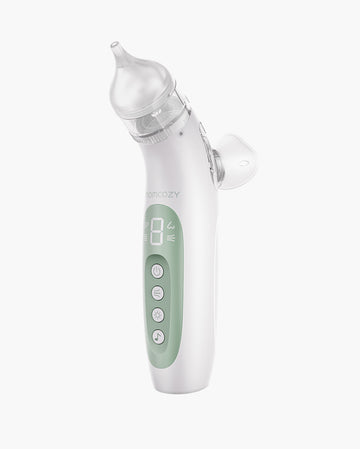
Before you go and clear your baby's nose again, take a moment to check how they're breathing, how they're feeding and how they're behaving. You can certainly look at the Momcozy baby nasal aspirators as an option for routine nasal clearance but an aspirator isn't always required. Just as important as knowing how to clear the nose is knowing when to leave it alone and when to seek medical advice.
Key Takeaways
- Babies can sound quite stuffy even when their nostrils appear clear. Small nasal passages, dryness, irritation and the normal noises of breathing can all be a factor.
- If your baby is happy, feeding as normal and breathing without any real effort then you probably don't need to do anything to the nose.
- A clean cool mist humidifier and suitable infant saline products may be of help in the case of dryness or sticky mucus.
- Nasal suction is useful when there's mucus to be seen or when the mucus has been loosened sufficiently to be removed safely.
- Repeated suctioning won't necessarily get the noise to go away and may in fact irritate your baby's nose.
- Difficulty breathing, significant feeding problems, unusual lethargy, or blue or gray coloration require medical attention.
Why Can a Baby Sound Congested When There Is No Visible Mucus?

A 'clear' nose doesn't in itself mean the baby isn't breathing through it. There are quite a few things that can result in a baby having a congested sounding breath and not all of them are due to mucus that you can just blow out.
Their nasal passages are incredibly small
One reason babies sound snuffy is that their nasal passages are so much narrower than those of older children and adults that even a very slight change in the lining of the nose or a very small amount of mucus can have a big effect on the flow of air and result in a snuffling sound.
A baby may sound as if their nose is blocked when in fact there's very little mucus at all. The noise is particularly apparent in a quiet environment.
Dry air can irritate the nose
Have you noticed your baby's breathing sounds a bit stuffier when the air-con's on or the air inside is dry? Dry air can irritate the nose and that will make the breathing sound noisier even if there's no actual discharge.
Smoke, dust and strong odours can all be irritating to the sensitive nasal tissue. If the problem is dryness then keeping the air as clean as possible and using a well maintained cool mist humidifier may help.
There may be a little mucus you can’t see
Sometimes there is mucus present but it doesn't collect at the nostril opening. A small amount may be further back or too sticky to be easily mobilised with gentle suction.
This would account for the fact that you can hear congestion but see nothing when you look in the nose. It doesn't mean you should be trying to go any further with an aspirator. If you can't safely remove the mucus then it's better to stop and reassess.
Newborn breathing can be noisy
Newborns will sometimes make little snorts, snuffles, squeaks and all sorts of other noises as they breathe. It can be quite disconcerting when you're trying to work out what is normal for your baby.
Some noisy breathing is of course perfectly harmless. The noise on its own isn't necessarily a cause for concern. You need to look at the way your baby is breathing and the way they are behaving. If the noisy breathing is associated with any visible effort, with feeding problems or any other oddity then you should get in touch with your doctor.
Does a congested sound mean your baby needs suction?
Not necessarily at all. A rather dry sounding noise doesn't in itself mean there's mucus present which needs clearing.
A nasal aspirator is for removing the mucus that's in the nose. It won't deal with every cause of noisy breathing (in particular it won't help if the noise is due to a minor irritation, some swelling or just the fact that your baby has such small nasal passages to begin with).
What if nothing comes out?
Getting nothing from an aspirator can be quite frustrating, particularly if your little one is still sounding congested afterwards. It doesn't necessarily mean you need to go to a higher setting or try again.
The mucus may be too far back to get to safely, or there may be no mucus at all to remove in the first place. Either way, no output is a valid reason to stop.
If your baby is feeding well, breathing easily and behaving normally then you can just watch them rather than going ahead and suctioning. If you're at all concerned about persistent or worsening symptoms then get in touch with your paediatrician.
Why repeated suction isn’t always helpful
The inside of a baby's nose is very delicate. Repeated suctioning can irritate the nasal lining, cause the baby discomfort and in some cases can result in bleeding.
It's tempting to just keep going until the noise stops, but that isn't necessarily the safest thing to do. Don't simply stick the tip in deeper or increase the suction power just because nothing's coming out. If you're not sure how often to use an aspirator then just go by the instructions on the device and ask your paediatrician what they would recommend for your baby's age.
What Should You Check Before Trying to Clear Your Baby’s Nose?
Before reaching for a nasal-care product, look at what’s actually happening. Is there mucus you can see? Does your baby seem comfortable? Are they feeding as usual?
These observations can help you decide what to do next without treating every snuffle as a blockage.
What you notice:
- Soft mucus is visible near the nostrils opening.
- A dry crust is visible.
- The nose looks clear, and your baby breathes and feeds comfortably.
- Feeding has become difficult.
- Your baby appears to be working hard to breathe.
- Noisy breathing is noticeable during sleep.
What it might mean:
- There may be mucus that can be removed.
- Dried mucus may be present.
- There may be nothing that needs removing.
- The breathing sound may be affecting feeding, or another issue may be present.
- This may indicate a more serious problem.
This list isn’t intended to diagnose your baby. If you’re unsure whether their breathing is normal, a healthcare professional can help you decide whether an examination is needed.
What Can You Do When Your Baby Sounds Stuffy but Their Nose Looks Clear?
If your baby is otherwise well then simple measures may be all that's required. You don't need to be removing mucus that isn't there and you don't need to be using products in the hope that every single breathing sound will go away.
Try adding moisture
Dry indoor air will of course make a sensitive nose even more irritated. A clean cool mist humidifier may go some way towards making the environment more comfortable. As always, follow the manufacturer's instructions for cleaning and maintenance.
Plain saline drops or spray (formulated for infants) may also be of help in terms of moisturising the nasal passages or in loosening up that dry mucus when appropriate. Use as per the label and as advised by your paediatrician, particularly in the newborn period.
Saline isn't a panacea for all types of noisy breathing. If the noise is due to small nasal passages or some other cause which isn't simply mucus that can be cleared away then you're unlikely to make much difference at all.
Keep common irritants away
Look at what's in your baby's environment. Cigarette smoke, strong perfumes, air fresheners and dust can all be irritating to the sensitive nasal tissue.
You don't need to go completely scent free in your home overnight but reducing strong scents and avoiding smoke around your baby are sensible things to do. Regular cleaning and good ventilation will also help to keep the environment comfortable.
Clean only what you can see
If you see mucus at the opening of your baby's nose just gently wipe it away with a soft clean cloth. Don't insert cotton buds, fingers or anything else into the nose. Dry crusts will require a different approach so don't pick at them or try to force them out. Ask your doctor what the best way is to soften the more tenacious bits.
If you can't see anything at all then it's quite reasonable to just leave the nose alone and concentrate on your baby's breathing and comfort.
Don’t change your baby’s sleep position to relieve congestion
Noisy breathing can be quite obvious at night really, when the house is quiet and you're just listening to everything. That said, changing your baby's sleeping position is not a safe way to deal with congestion.
Always place your baby on their back on a firm, flat and level sleep surface. Don't elevate the crib mattress at all and don't use any pillows, wedges, rolled towels or any other inclined sleep product to improve breathing. Swings are not a safe alternative for regular sleep.
If your baby is obviously having trouble breathing whilst asleep then you need to get medical advice rather than attempting some kind of positioning workaround.
When Is a Nasal Aspirator Actually Useful?
A nasal aspirator can be of use when there's mucus present and you can get at it. The trick is knowing when it's appropriate.
When suction may help
Suppose you can see mucus in the baby's nostril or the saline has worked to loosen up the dry mucus. If that mucus is causing any problems with nasal breathing or feeding then gentle suctioning will help to remove it.
The aim is to clear the accessible mucus rather than to get rid of every snuffling sound. Once the removable material is gone there may be no point in continuing.
When suction probably won’t solve the problem
If the baby's nose is clear and the aspirator comes up with nothing then the noise is probably not due to mucus that you can safely remove.
In that scenario stronger suction isn't necessarily the answer. You can end up irritating the nose with multiple attempts without in any way dealing with the cause of the sound.
Choosing a tool for actual mucus removal
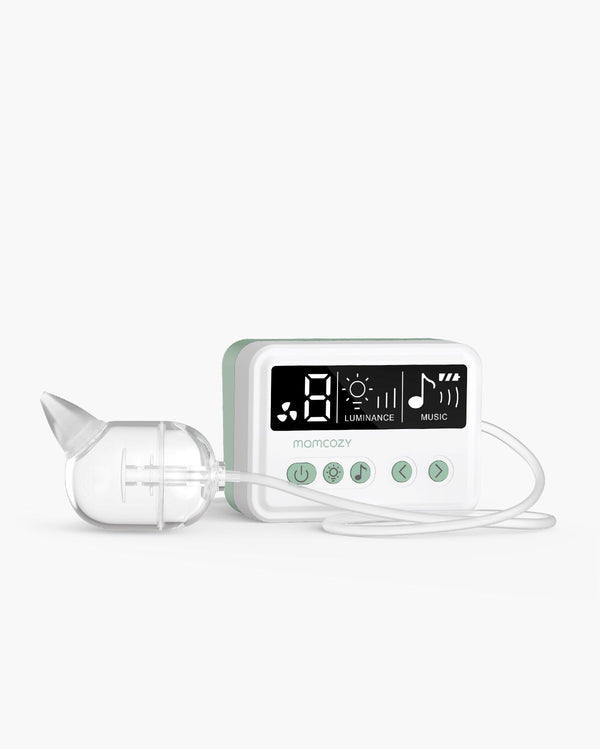
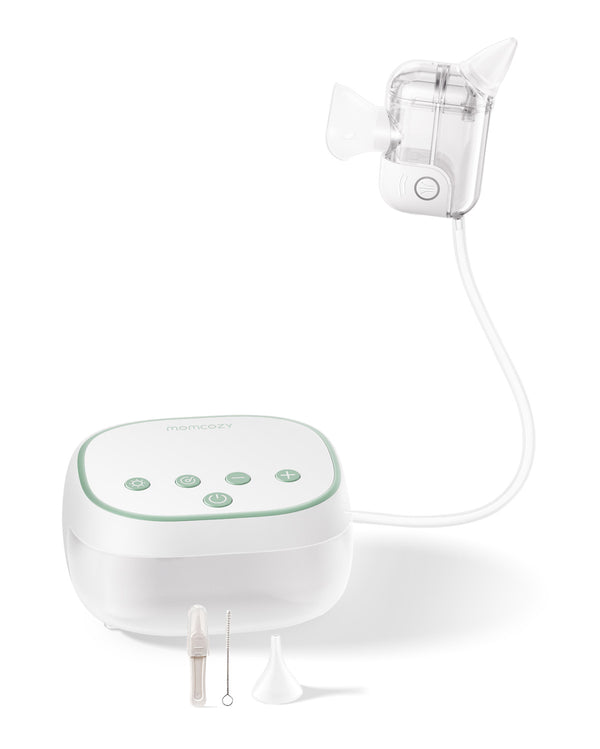
For parents who need a nasal-care device, the Momcozy BreezyClear™ 2-in-1 Spray & Suction Electric Nasal Aspirator offers a combination of fine mist and adjustable suction. It offers a 10 μm fine mist, a six-second automatic stop, and four suction levels.
Those features may be relevant when mucus needs to be softened and removed. They don’t mean the device is necessary whenever a baby sounds congested.
Always check the current product manual for age guidance and instructions. Momcozy’s product guidance advises consulting a pediatrician for children under two. Don’t use a product for a newborn without confirming that it’s appropriate for their age and circumstances.
Member price
€93,99
If You Need Suction, Soften First and Keep It Gentle
When mucus is actually present, a cautious approach can help you avoid unnecessary irritation. Follow your pediatrician’s advice and the device’s current instructions rather than improvising a technique.
- Soften dry mucus when appropriate. If mucus is sticky or dry, an infant-appropriate plain saline product may help loosen it. Use only as directed on the label or by your healthcare professional.
- Keep suction shallow. If mucus becomes removable, use the aspirator as instructed and keep the tip at the nostril entrance. If the device has adjustable suction, use the lowest effective setting rather than starting with the strongest.
- Stop if the nose becomes irritated. Don’t continue if your baby is uncomfortable or the nose begins bleeding. If no mucus comes out, stop rather than repeating the attempt or inserting the tip farther.
For more detailed technique guidance, Momcozy has a separate guide to suctioning your baby’s stuffy nose. That article is the better place for step-by-step instructions.

What If the Aspirator Still Pulls Out Nothing?
You hear the sound, try the aspirator, and get no mucus. What now?
First, take a break. The result doesn’t necessarily mean that something is stuck or that the device isn’t strong enough. Your baby may have no removable mucus, or the noise may be coming from something that suction cannot address.
Don’t increase suction or insert the tip deeper
It’s natural to want a clear result, but trying harder isn’t always better for a baby’s delicate nose. Stronger suction or deeper insertion may cause irritation or injury.
Instead, check your baby’s overall condition. Are they breathing comfortably? Can they feed normally? Are they alert and behaving as usual?
If the answer to those questions is reassuring, observation may be appropriate. You can also reduce environmental irritants and consider suitable moisture if dryness seems to be contributing.
Know when to stop home care
If the sound continues, becomes more pronounced, or starts affecting feeding or breathing, contact your pediatrician. Persistent symptoms deserve attention even if you can’t see mucus.
For questions about repeated use, consult your pediatrician and Momcozy’s separate guide on when and how often to use a baby nasal aspirator.
If your baby is struggling to breathe, develops blue or gray coloration, or appears seriously unwell, seek emergency help immediately. Don’t delay, care to try another suction attempt.
Which Baby Breathing Sounds Can Be Normal?
Newborn breathing doesn’t always sound quiet or regular in the way adults expect. Some babies snuffle, snort, or make occasional noises even when their noses look clear.
The important thing is to look beyond the sound itself.
Snuffling and snorting
Light snuffling may occur because a baby’s nasal passages are small. An occasional noisy breath in an otherwise comfortable baby doesn’t necessarily mean there’s a blockage that needs to be cleared.
However, you shouldn’t automatically assume that every sound is normal. A new, persistent, or worsening noise especially one accompanied by other symptoms deserves attention.
Listen to the sound, but watch the breathing
A baby who makes occasional snuffling sounds while feeding and behaving normally is in a different situation from one who appears to be struggling for air.
Watch for skin pulling inward around the ribs or below the breastbone, pronounced nostril flaring, or grunting with breaths. Persistent unusual breathing sounds also warrant medical assessment.
Other concerning changes include significant feeding difficulties, unusual lethargy, and blue or gray coloration around the lips, tongue, or face.
You don’t need to identify the exact breathing sound or diagnose its cause yourself. If you’re uncertain, contact your pediatrician. Severe breathing difficulty or blue or gray coloration requires emergency assistance.
What If Congestion Sounds Are Affecting Feeding or Sleep?
Sometimes, the sound is less concerning than the way it affects your baby’s routine. If feeding becomes difficult or sleep seems unusually disrupted, it’s worth looking at the bigger picture rather than simply reaching for the aspirator again.
When your baby is feeding
Babies need to coordinate sucking, swallowing, and breathing during feeds. If your baby repeatedly struggles to feed comfortably, pauses because of breathing difficulty, or refuses feeds, contact your pediatrician.
If you can see mucus interfering with nasal breathing, appropriate gentle clearing may help. But when the nose looks clear and feeding is still difficult, don’t assume that suction is the answer.
Continue your baby’s usual breast milk or formula feeding unless your healthcare professional advises otherwise. Don’t offer extra water to a young infant unless specifically recommended by a healthcare professional.
When your baby is sleeping
You may notice the snuffling more at night, especially when everything else is quiet. The timing alone doesn’t explain the cause.
Keep the sleep setup safe: place your baby on their back on a firm, flat, level surface, without pillows, wedges, loose bedding, or mattress modifications.
If the sound comes with labored breathing, unusual difficulty waking your baby, or other concerning changes, seek medical care. Don’t use an inclined sleeping position or a swing to try to make breathing quieter.
When Should You Call the Pediatrician?
You don’t have to wait until your baby looks seriously ill before asking for help. While some noisy breathing can be harmless, certain signs need prompt attention.
Breathing changes that need attention
Seek emergency help if your baby has severe difficulty breathing, appears to be struggling with each breath, or develops blue or gray lips, tongue, or face.
Other warning signs include pronounced pulling in around the ribs or chest, persistent nostril flaring, and grunting with breathing. Don’t spend time trying different nasal-care products when these signs are present.
Feeding or behavior changes
Contact your pediatrician promptly if your baby has significant difficulty feeding, repeatedly cannot feed comfortably, becomes unusually lethargic, or develops persistent or worsening symptoms.
Fever in a newborn or very young infant also requires prompt professional guidance. The appropriate response depends on the baby’s age and circumstances, so follow your pediatrician’s instructions rather than relying on a general online threshold.
Trust your concern
You know your baby’s usual behavior better than anyone else. If the breathing sounds different from normal, keeps getting worse, or simply worries you, it’s reasonable to call your pediatrician even when no mucus is visible.
When there are signs of severe breathing difficulty or blue or gray coloration, seek emergency help immediately.
Frequently Asked Questions
Why does my newborn sound congested but have no mucus?
Newborns have very small nasal passages, so mild irritation, dryness, or tiny amounts of mucus can make breathing sound louder than expected. Some newborns also make normal snuffling noises. Check your baby’s breathing effort, feeding, comfort, and behavior rather than relying on the sound alone.
Why does my baby sound congested only when lying down?
You may notice the sound more when your baby is quiet or resting, but that pattern doesn’t identify the cause. Keep your baby on their back on a firm, flat sleep surface. Contact your pediatrician if the sound persists, worsens, or comes with breathing difficulty.
Why does my baby sound congested after feeding?
There are several possible explanations for noisy breathing after feeding, and the sound alone cannot establish the cause. If your baby repeatedly struggles to feed, has persistent coughing, or shows signs of breathing difficulty, seek pediatric guidance instead of assuming that more suction will help.
Should I suction my baby’s nose if I can’t see any snot?
If no mucus is visible and your baby is breathing comfortably and feeding normally, repeated suction is generally unnecessary. Pause and observe rather than trying to make something come out. Contact your pediatrician if symptoms persist or affect feeding or breathing.
Can saline help when no mucus is visible?
An infant-appropriate plain saline product may moisturize the nose or loosen dry mucus when appropriate. It may not change noisy breathing caused by small nasal passages or irritation. Follow the product label and your pediatrician’s advice, particularly for newborns.
What if my nasal aspirator gets nothing out?
Stop and reassess instead of increasing suction or inserting the tip deeper. There may be no removable mucus, or the noise may have another cause. If your baby is comfortable, observation may be reasonable. If breathing or feeding is affected, contact your pediatrician.
Can too much suction make congestion worse?
Repeated suction can irritate the nasal lining and may cause discomfort or bleeding. It also won’t necessarily help when the noise isn’t caused by removable mucus. Follow the device instructions, use suction only when appropriate, and ask your pediatrician if you’re unsure how often to use it.
How can I tell whether the noise is normal or a breathing problem?
Look at your baby’s overall condition. Occasional snuffling in a comfortable baby who feeds normally may be less concerning than noisy breathing accompanied by chest retractions, pronounced nostril flaring, feeding difficulties, unusual lethargy, or color changes. Severe breathing difficulty or blue or gray coloration requires emergency help.
Conclusion
Hearing your baby sound congested without visible mucus can be concerning, but it is not always a sign of illness. Small nasal passages, dry air, and normal newborn breathing patterns can contribute to these sounds. Keeping your baby comfortable, maintaining a clean environment, and practicing gentle nasal care can help. If your baby needs help clearing nasal mucus, the Momcozy Baby 2-in-1 Nasal Aspirator with Sprayer offers a convenient option for gentle nasal care when used according to the product instructions. Remember, a nasal aspirator may help remove mucus, but it will not address every cause of congestion-like sounds. If your baby has difficulty breathing, struggles to feed, or develops persistent or worsening symptoms, contact your pediatrician for guidance.