Finding the best breast pump shouldn't feel like solving a puzzle, but with so many choices out there, it totally can. Whether you need something discreet for work, powerful for exclusive pumping, or budget-friendly that actually works, the right pump makes everything easier. Today's pumps are quieter, more comfortable, and way more convenient than what our moms had to deal with.
Choosing among the best breast pumps of 2026 starts with one question: where will you pump? This guide reviews 15 of the best breast pumps 2026 has to offer across three types — wearable, electric with hospital-grade suction, and multi-user hospital-grade — so you can match the right pump to your day. For most new moms, pairing a hospital-grade electric pump at home with a wearable on the go covers every scenario. Breast pumps are regulated medical devices, and the FDA’s breast pump guide explains what actually matters when you choose.
What Are the Different Types of Breast Pump?
Picking the right breast pump type makes a huge difference in your pumping experience. Whether you're exclusively pumping, building a freezer stash, or just need occasional relief, understanding these four main types helps you choose what actually fits your life.
Manual Breast Pump
Manual pumps are hand-operated and work on one breast at a time, giving you complete control over suction and speed. They're affordable, silent, and perfect for emergencies when your electric pump dies. These lightweight pumps are ideal for travel or keeping in your bag. The downside? Your hand gets tired quickly, and you can't multitask while pumping. Great for occasional use, not for multiple daily sessions.
Traditional Electric Breast Pump
These pumps use a motor, powered by an outlet or batteries, to create suction automatically. They are available in both single and double models, letting you pump from one or both breasts. Most offer adjustable suction levels and speeds to match your baby's nursing pattern. While generally more powerful than manual pumps and great for regular use, they can be noisy and typically require you to stay in one spot during sessions.
Wearable Breast Pump
Wearable pumps fit under your clothes without being noticeable—you can pump in public without anyone knowing. These pumps slip into your bra with quiet motors (under 48dB), app controls, and hands-free operation. You can pump during meetings, while cooking, or on your commute. The trade-off is they're less powerful than traditional electric pumps. They work well for maintaining supply but might not be ideal if you have low supply or pump exclusively.
Hospital-Grade Multi-User Breast Pump
Hospital-grade pumps, which typically feature a large, durable motor unit, provide maximum milk production and are designed for multiple users with special closed systems. You can adjust cycle speed and vacuum strength to match your baby's sucking pattern for efficient milk removal. These benefit moms with NICU babies, multiples, or medical issues preventing direct breastfeeding. Since you probably won't need one long-term, renting for a month or two makes sense. They're powerful and efficient but bulky, expensive, and definitely not portable.
What Are the Different Types of Breast Pump?
Picking the right breast pump type makes a huge difference in your pumping experience. Whether you're exclusively pumping, building a freezer stash, or just need occasional relief, understanding these four main types helps you choose what actually fits your life.
Manual Breast Pump
✓ Pros
- Complete control over suction & speed
- Affordable option
- Completely silent operation
- Perfect for emergencies
- Lightweight & travel-friendly
- Keep in your bag anytime
✗ Cons
- Hand gets tired quickly
- One breast at a time only
- Can't multitask while pumping
- Not for multiple daily sessions
Best For:
Occasional use, travel, emergency backup when electric pump dies
Traditional Electric Breast Pump
✓ Pros
- Single and double models available
- Adjustable suction & speeds
- Match baby's nursing pattern
- More powerful than manual pumps
- Great for regular use
- Automatic suction
✗ Cons
- Can be noisy
- Need outlet or batteries
- Stay in one spot during sessions
- Less portable
Best For:
Regular daily pumping, work use, building supply
Wearable Breast Pump
✓ Pros
- Fit discreetly under clothes
- Pump in public unnoticed
- Slip into your bra
- Quiet motors (under 48dB)
- App controls available
- Pump during meetings, cooking, commute
- Hands-free operation
✗ Cons
- Less powerful than traditional electric
- Higher price point
- Not ideal for low supply
- Not ideal for exclusive pumping
Best For:
Maintaining supply, working moms, multitasking
Hospital-Grade Multi-User Breast Pump
✓ Pros
- Maximum milk production
- Large, durable motor unit
- Closed systems for multiple users
- Adjust to match baby's pattern
- Most efficient milk removal
- Powerful and efficient
✗ Cons
- Bulky size
- Very expensive to buy
- Definitely not portable
- Short-term need usually
Best For:
NICU babies, multiples, medical issues, renting for 1-2 months
15 Best Breast Pumps in 2026
After testing dozens of pumps and reading thousands of mom reviews, we grouped the best breast pumps 2026 by type. Pick the category that fits your life, then find your match in the list below.
Best Wearable Breast Pumps (Hands-Free)
Wearable breast pumps sit inside your bra, so you can pump while working, driving, or chasing a toddler. They trade a little raw power for total freedom of movement. Here are the best wearable breast pumps of 2026.
Comparison at a Glance: Wearable Breast Pumps
| Pump |
Suction |
Power |
Best For |
| Momcozy Air 1 |
up to 280 mmHg |
1800 mAh case (~15 sessions) |
Slim, on-the-go |
| Momcozy W1 |
Adjustable (warm-massage) |
Rechargeable |
Sensitive nipples |
| Elvie Pump |
Moderate, app-controlled |
Rechargeable |
Discreet, quiet |
| Willow Go |
up to 280 mmHg |
Rechargeable |
Leak-resistant mobility |
| Freemie Independence II |
Hospital-grade power |
Rechargeable |
Concealable under clothes |
| Lansinoh Discreet Duo |
260 mmHg |
Rechargeable |
Budget wearable |
1. Momcozy Air 1 — Best Ultra-Slim Wearable Breast Pump
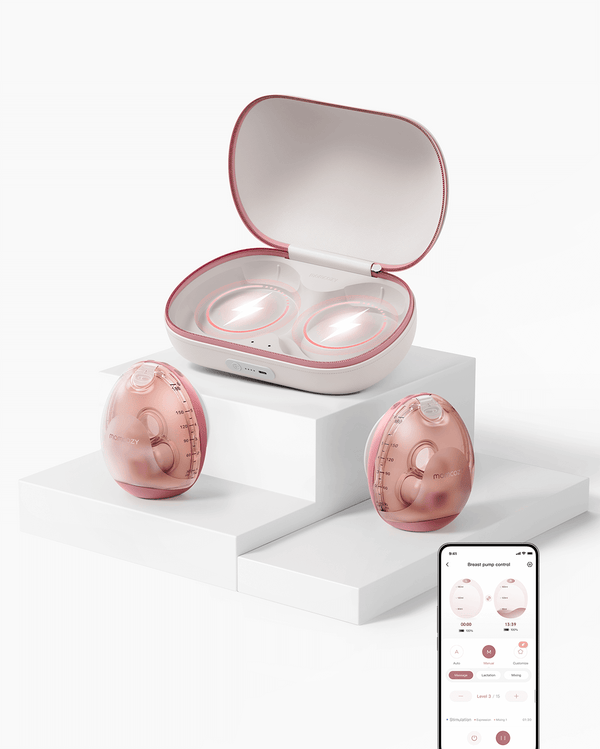
The Momcozy Air 1 is the slimmest wearable in this guide. It packs hospital-strength suction up to 280 mmHg into a discreet in-bra cup, with an 1800 mAh charging case that powers up to 15 sessions between charges.
Ultra-slim
Wireless Charging
Effortless Alignment
Smart App Control
- Ultra-slim in-bra design disappears under clothing
- Hospital-strength suction up to 280 mmHg
- 1800 mAh charging case supports up to 15 sessions or 5 days of use
- Quiet motor for discreet pumping anywhere
- Simple 5-part design makes cleaning quick
- App tracking helps you log time and output
Best for: Moms who want the most discreet, travel-light wearable for daily on-the-go sessions.
2. Momcozy W1 — Best Warm-Massage Wearable Breast Pump
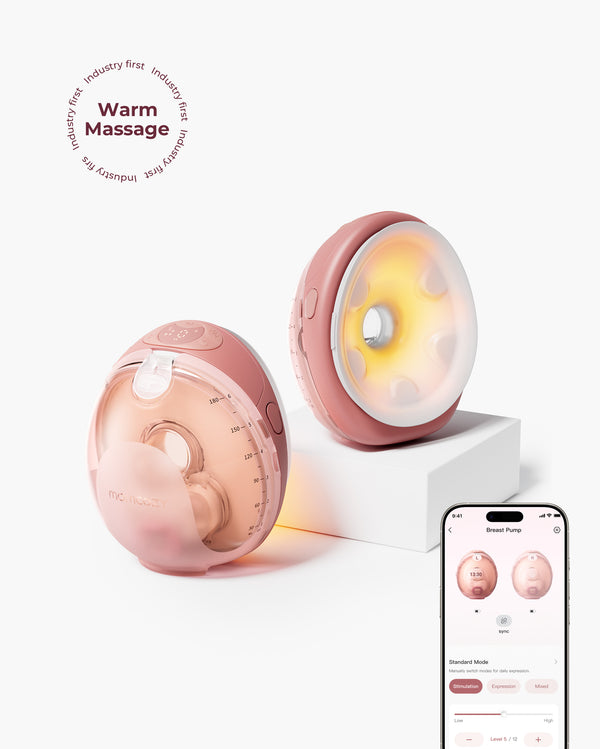
The Momcozy W1 (Wellness 1) adds a gentle warm massage to every session. The built-in warmth and soft massage motion help milk flow, which many moms find kinder to sore or sensitive nipples.
From $381.00 CAD $476.00 CAD
Warm-Massage
Milk Boost Mode
Reliable Battery
Transparent Top
- Warm-massage technology promotes comfort and let-down
- In-bra, hands-free, and fully wearable
- Adjustable suction with a dedicated comfort mode
- Rechargeable and quiet for everyday use
- A soothing starter pump for first-time moms
Best for: Moms with sensitive nipples, or anyone who finds pumping uncomfortable and wants a calming option.
3. Elvie Pump — Best Silent Wearable Breast Pump
The Elvie Pump is one of the quietest wearables you can buy. It tucks completely in-bra, pairs with an app on your phone, and lets you pump without anyone noticing.
- Ultra-quiet motor for truly discreet pumping
- Fully in-bra, with no tubes or cords
- App control from your phone
- Rechargeable and portable
- Sleek, low-profile design
Best for: Moms who pump at the office or in public and need near-silent, invisible operation.
4. Willow Go — Best Leak-Resistant Wearable Breast Pump
The Willow Go delivers hospital-grade power up to 280 mmHg in a spill-resistant cup. It is leak-proof up to 45 degrees, so you can move, bend, and multitask without worry.
- Hospital-grade suction up to 280 mmHg
- Two modes: Stimulation (6 levels) and Expression (9 levels)
- Leak-proof up to 45 degrees for active moms
- Fully wearable, in-bra design
- Rechargeable battery
Best for: Busy moms who want strong suction but need to move around while pumping.
5. Freemie Independence II — Best Concealable Wearable Breast Pump
The Freemie Independence II uses small closed-system cups you wear inside your regular bra. It brings hospital-grade power in a setup that hides completely under everyday clothes.
- Concealable closed-system cups fit inside any bra
- Hospital-grade power for strong output
- Collects up to 8 oz per cup
- Wearable and mobile for work or errands
- No bulky external unit
Best for: Moms who want hospital-grade strength but must keep pumping invisible at work.
6. Lansinoh Discreet Duo — Best Value Wearable Breast Pump
The Lansinoh Discreet Duo is a quiet, cord-free wearable with hospital-strength 260 mmHg suction. It is an easy, budget-friendly way to add hands-free pumping to your routine.
- Hospital-strength suction up to 260 mmHg across 9 levels
- 4 pump modes to mimic baby's rhythm
- No cords or tubes, fully wearable
- Quiet and lightweight
- Friendly price point
Best for: First-time moms who want an affordable, no-fuss wearable to start.
Best Electric Breast Pumps with Hospital-Grade Suction
Electric breast pumps plug in or recharge and deliver the strongest, most consistent suction. The hospital-grade models below bring clinical-level power home for building and protecting supply. Momcozy's V3 and V3 Pro lead this group.
Comparison at a Glance: Electric Breast Pumps
| Pump |
Suction |
Power |
Best For |
| Momcozy V3 Pro |
up to 270 mmHg |
Cordless / rechargeable |
Hospital-grade, portable |
| Momcozy V3 |
up to 270 mmHg |
Plug-in |
Home workhorse |
| Spectra S2 Plus |
270 mmHg |
Plug-in (AC) |
Quiet home use |
| Spectra S1 Plus |
270 mmHg |
Rechargeable |
Cord-free home |
| Medela Pump in Style with MaxFlow |
~295 mmHg |
Battery or plug-in |
Trusted brand, travel |
1. Momcozy V3 Pro — Best Cordless Hospital-Grade Breast Pump
The Momcozy V3 Pro is a cordless hospital-grade pump. It delivers up to 270 mmHg of dual-motor suction with independent control per breast, then adds smart stabilization so you get clinic-level power anywhere, untethered from a wall.

- Up to 270 mmHg dual-motor suction, independent per breast
- SoftStart™ eases in over about 10 seconds
- Five rhythms: Cozy Flow, Power Pumping, Milk Boost, Lactation Starter, Deep Emptying
- StableFlow™ smart pressure stabilization and Adaptive Suction
- App control and closed anti-backflow system
- Cordless, with brightness-adaptive night light and waterproof bag
Best for: Moms who want hospital-grade output at home and on the go without a wall outlet.
2. Momcozy V3 — Best Plug-In Hospital-Grade Breast Pump
The Momcozy V3 is the plug-in version of the same hospital-grade system. It brings up to 270 mmHg dual-motor suction and a 1500-hour motor built for months of heavy daily use at your nightstand.
- Up to 270 mmHg dual-motor suction, independent per breast
- SoftStart™ gentle ramp-up and five built-in rhythms
- App control and closed anti-backflow system
- 1500-hour motor life for long-term heavy use
- Plug-in for reliable, uninterrupted sessions
- Carrying bag included for easy storage
Best for: Moms who pump mostly at a set spot at home and want maximum durability.
3. Spectra S2 Plus — Best Quiet Wall Pump
The Spectra S2 Plus is a beloved plug-in electric pump with up to 270 mmHg of hospital-strength suction and a fully closed system. It is ultra-quiet, making it a calm home workhorse.
- Up to 270 mmHg hospital-strength suction
- Closed anti-backflow system
- Ultra-quiet motor for night sessions
- Plug-in (AC) power for steady use
- Backlit display and timer
Best for: Moms who pump at home and want a quiet, reliable, no-fuss electric pump.
4. Spectra S1 Plus — Best Rechargeable Electric Pump
The Spectra S1 Plus is the rechargeable twin of the S2. Same up to 270 mmHg suction and closed system, but with a built-in battery so you can pump cord-free anywhere in the house.
- Up to 270 mmHg hospital-strength suction
- Built-in rechargeable battery for cord-free use
- Closed anti-backflow system
- Quiet motor with night-light and timer
- Trusted by many lactation consultants
Best for: Moms who want Spectra power but need to move around the house while pumping.
5. Medela Pump in Style with MaxFlow — Best Trusted Travel Pump
The Medela Pump in Style with MaxFlow pairs Medela's 2-Phase Expression with about 295 mmHg suction (per independent testing). It comes in battery or plug-in versions, so it travels well.
- About 295 mmHg suction per independent testing
- Closed system with backflow protection
- 2-Phase Expression mimics baby's suckling
- Portable (battery) or plug-in options
- A well-known, widely recommended brand
Best for: Moms who want a familiar, reliable brand with strong output for home and travel.
Best Multi-User Hospital-Grade Breast Pumps
Multi-user hospital-grade pumps are the clinical units used in NICUs and maternity wards. They are built for many mothers to share safely and are almost always rented, often through insurance with a prescription. They deliver the strongest, most consistent suction for medical needs. The Aeroflow hospital-grade FAQ explains the multi-user versus personal-use split.
Comparison at a Glance: Multi-User Hospital-Grade Pumps
| Pump |
Use |
Power |
Best For |
| Ameda Pearl |
Multi-user, rental |
Portable w/ battery |
WIC / rental stations |
| Medela Symphony |
Multi-user, rental |
AC (rental) |
NICU / medical need |
| Ameda Platinum |
Multi-user |
AC |
Hospital / supply build |
| Ardo Carum |
Multi-user, rental |
AC |
24/7 hospital use |
1. Ameda Pearl — Best Multi-User Rental Pump
The Ameda Pearl is a multi-user hospital-grade pump made for WIC programs and rental stations. Its closed HygieniKit protects milk with an FDA-cleared viral barrier, so it is safe to share.
- Multi-user hospital-grade design
- 6 stimulation levels and 12 expression modes
- HygieniKit double pump kit with viral barrier
- Backlit LCD display with timer
- Available by monthly rental
Best for: Moms who need a rented hospital-grade pump at home after a NICU stay or low supply.
2. Medela Symphony — Best NICU-Grade Rental
The Medela Symphony is the hospital pump most moms meet after delivery. It is a multi-user, hospital-grade rental with 2-Phase Expression, designed for medical necessity.
- Hospital-grade, multi-user rental unit
- 2-Phase Expression technology
- FDA-approved for clinical use
- Sealed motor safe for many users
- Available through insurance with a prescription
Best for: Moms prescribed a clinical pump for premature or low-supply babies.
3. Ameda Platinum — Best Clinical Supply-Builder
The Ameda Platinum is a multi-user hospital-grade electric pump proven in clinical research to help establish and maintain milk supply for preterm and full-term babies.
- Multi-user hospital-grade electric pump
- Clinically proven for supply building
- Designed for hospitals and home rental
- Reliable, consistent suction
- Supports long pumping journeys
Best for: Moms with a premature baby or a long-term medical need for strong, steady pumping.
4. Ardo Carum — Best 24/7 Hospital Pump
The Ardo Carum is a Swiss-made multi-user hospital-grade pump built for round-the-clock hospital use with many mothers. A Sensitive Programme and range of flange sizes keep every mom comfortable.
- Hospital-grade, multi-user design
- Made in Switzerland for 24/7 use
- Sensitive Programme for comfort
- Multiple pump sets and flange sizes
- Available to rent
Best for: Moms who need the same clinical pump they used in the hospital, continued at home by rental.
How to Pick the Right Breast Pump
The most suitable setup for most moms is a two-pump combo: a big host pump at home plus a wearable for outings. A full-size pump like the Momcozy V3 or V3 Pro delivers hospital-grade suction and complete, supply-building sessions at your nightstand, while a wearable such as the Momcozy Air 1 keeps you consistent at work or on the go. They are complementary, not either/or—together they cover every part of your day, which is why a big-host-plus-wearable pairing fits real life best.
Choosing the right breast pump isn't about finding the "best" pump—it's about finding the best pump for your specific situation. Here's how to narrow down your options based on what actually matters in your daily life.
Start With Your Pumping Frequency
-
Occasional Pumping (Few times a week or less): A manual pump or simple silicone collector works fine. You don't need to invest hundreds in features you won't use. The Medela Harmony or Dr. Brown's Silicone pump will do the job without breaking the bank.
-
Part-Time Pumping (Once or twice daily): Look for a good electric pump—either traditional or wearable. You want something efficient but don't necessarily need all the bells and whistles. The Evenflo Advanced or Momcozy Air 1 offer solid performance without premium prices.
-
Full-Time Pumping (3+ times daily or exclusively pumping): Invest in a high-quality pump with strong suction and comfort features. Consider a hospital-grade electric pump like the Momcozy V3 Pro or the Spectra S2 Plus for home use—they're direct rivals in the hospital-strength category. If you need mobility instead, a Momcozy wearable like the Air 1 works just as well. Your pump will be working hard, so durability and efficiency matter. Because you pump this often, many moms keep two pumps: a big host (the V3 Pro) at home plus a wearable (Air 1 or W1) for outings, so you never break your rhythm.
Consider Your Lifestyle
Where will you pump most often?
-
Mostly at home: A wall-powered pump like the Momcozy V3 or the Spectra S2 Plus gives you maximum power without worrying about battery life
-
At work/on-the-go: Wearable pumps like the Momcozy Air 1 or Elvie let you pump during meetings or commutes
-
Mix of both: Consider having a primary pump for home and a portable backup—for instance, a Momcozy V3 Pro host at home paired with an Air 1 wearable for when you're out
How important is discretion?
- If you need to pump in shared spaces or during work calls, prioritize quiet operation (under 45dB) and slim profiles
- The Elvie and Momcozy Air 1 are nearly invisible under clothing
- If privacy isn't a concern, you can save money with louder, bulkier options
Check Your Insurance Coverage
Before buying anything, call your insurance company. Most plans cover at least one breast pump, and some cover premium models. Ask specifically about:
- Which pumps are fully covered
- If you need a prescription from your doctor
- Whether you can upgrade to a better model by paying the difference
- If rental pumps are covered for medical needs
Get the Right Fit
The flange (the part that touches your breast) size matters more than most people realize. A wrong fit can cause pain, damage, and poor milk output. Most pumps come with a 24mm flange, but nipples range from 15mm to 36mm.
Beyond flange size, your physical comfort plays a huge role in how well your body releases milk. Using a supportive nursing pillow can help take the strain off your back and neck, allowing you to relax and focus on your session.
Signs you need a different size:
- Nipple rubs against the tunnel sides (too small)
- Too much areola gets pulled in (too large)
- Pain or discomfort during pumping
- Poor milk output despite good suction
Many pumps include multiple sizes or inserts. If not, measure before buying or choose a brand with affordable sizing options.
Evaluate Special Circumstances
-
NICU baby or medical issues: Rent a hospital-grade pump. These powerful machines help you establish and maintain your milk supply when you can't nurse directly. Most hospitals have rental programs for hospital-grade pumps.
-
Twins or multiples: You'll need the strongest pump you can get. Hospital-grade rentals are worth the investment—they'll save you time and help you keep up with multiple hungry babies. The consistent suction makes a real difference when you're pumping round the clock.
-
Returning to work soon: Start strong with a hospital-grade pump to build your supply in those crucial first weeks. Once your supply is established, you can switch to something more portable if needed. Many moms rent for the first 2-3 months, then transition to their insurance-covered pump.
-
Building a freezer stash: If you want to stock up on milk, hospital-grade pumps get the job done faster. They pull more milk in less time, which really adds up when you're trying to build a reserve.
-
Struggling with supply or exclusively pumping: Don't mess around—get a hospital-grade pump. When pumping is your primary way of feeding, you need equipment that won't let you down. The investment pays for itself in peace of mind and better milk output.
Think About Long-Term Value
Consider the total cost over time:
- Replacement parts (membranes, valves, tubes) need replacing every 1-3 months with heavy use
- Battery life degradation in rechargeable pumps
- Whether you'll use it for future children
- Resale value (closed-system pumps hold value better)
Some pumps come with extras that others don't. For example, Momcozy breast pumps include a complete spare parts set in the box—basically several months of replacement parts you won't need to buy separately. When comparing pumps, look at what's actually included. A pump that seems pricier might save you money if it comes with accessories and spare parts you'd have to buy anyway.
Think long-term about coverage, not just price. For many moms the smartest value is a two-pump pairing: a hospital-grade host pump like the Momcozy V3 or V3 Pro for complete at-home sessions, plus a wearable such as the Air 1 or W1 for work and outings. One covers supply-building power, the other keeps you consistent on busy days—together they carry you from the first week through weaning, so you buy once and stay covered.
Don't overbuy features you won't use:
- App connectivity is nice but not essential for everyone
- Multiple modes sound good but most moms stick to one or two settings
- Hospital-grade suction might be overkill if you're only pumping occasionally
Red Flags to Avoid
- Pumps under 250mmHg suction strength if you plan to pump regularly
- Open-system pumps that can get milk in the motor
- Pumps with proprietary parts that are expensive to replace
- Used pumps that aren't designed for multiple users (contamination risk)
- Pumps with less than 38 cycles per minute (too slow for efficient pumping)
There's no universal "best" pump—just the best pump for your situation. If you're still unsure, start with a mid-range option that fits your primary use case, and add a backup pump later if needed. Many moms end up with two pumps anyway: one for power, one for convenience.
You can always rent first to try different styles before committing to a purchase. And if your first choice isn't working out, most quality pumps have good resale value in the secondhand market.
Find Your Best Breast Pump Match Today
The smartest setup for most new moms pairs two pump types: a hospital-grade electric pump at home (the Momcozy V3 or cordless V3 Pro) for strong, complete sessions, plus a wearable for life on the move. They are teammates, not rivals. For evidence-based breastfeeding support as you build your routine, the CDC breastfeeding page is a trusted resource, and Corporate Lactation’s wearable vs. traditional comparison explains why many moms keep one of each.
Picking from these best breast pumps gets easier when you stop overthinking and focus on basics: how often you'll pump and where. Most insurance covers at least one pump completely—don't leave that money on the table. Whether you need the hospital-grade Momcozy V3 Pro for exclusive pumping or the simple Dr. Brown's for occasional relief, there's something here that fits. Measure your flange size, check your coverage, and grab the pump that matches your real life. Your pumping journey starts with that first smart choice.
FAQs About Best Breast Pumps
Q1: Should you use single or double breast pumping?
For 90% of mothers, double pumping is preferable. Due to increased prolactin release, it reduces pumping time by half (15–20 minutes as opposed to 30–40 minutes) and boosts milk output by roughly 18%. Only while nursing on one side while pumping the other, or when the supply between the breasts is extremely unequal, can single pumping make sense. Even so, you can catch let-down when nursing by using a silicone collector on one side.
Q2: Do I need a pumping bra?
Unless you only pump once in a while, yes. If you don't have one, you'll be unable to do anything else but hold flanges for 15 to 30 minutes. Any electric pump may be made hands-free with a $20–30 pumping bra; a pricey wearable pump is not necessary for independence. Cutting tiny holes in an old sports bra is another do-it-yourself option. For more stability, the majority of mothers still favor pumping bras, even with wearable pumps.
Q3: Will insurance cover the pump?
Yes, at least one breast pump per pregnancy is required by the majority of U.S. insurance coverage. Basic manual pumps and high-end versions costing $400 are covered. When you are 30 weeks pregnant, call your insurance company, ask for their DME breast pump suppliers, and obtain a prescription from your doctor. A lot of plans use suppliers who take care of all the paperwork. By paying the difference, you can frequently upgrade. Pumps and parts are also covered by HSA/FSA accounts.
Q4: Can I use a second-hand breast pump?
Yes for hospital-grade rentals, but no for personal pumps. Personal pumps are single-use devices that may contain mold and bacteria in the motor that cannot be cleaned. Additionally, used pumps have less suction. The Ameda Pearl and other hospital-grade pumps are made to accommodate numerous users with new personal kits. If money is short, use insurance coverage, rent a hospital pump, or purchase a new manual pump.
Q5: What's the difference between hospital-grade and personal pumps?
Hospital-grade pumps are multi-user rentals with stronger motors (up to 300mmHg) that last thousands of hours. Personal pumps are single-user with smaller motors (250-270mmHg). Hospital pumps cost $1,000-3,000 to buy but rent for $50-100/month. They're worth it for NICU babies or supply issues, but unnecessary for most moms. Some personal pumps like the Momcozy M9 advertise "hospital-grade suction," which refers to strength, not multi-user capability.
Q6: Can I use a wearable and a hospital-grade electric pump together?
Yes — and many moms do. A hospital-grade electric pump like the Momcozy V3 or V3 Pro handles thorough morning and evening sessions at home, while a wearable keeps you consistent at work or on errands. They cover every scenario without being redundant. A correct flange fit matters as much as suction: the La Leche League pump guide covers fitting.