The benefits of breast pumps extend to nearly every aspect of modern motherhood. A quality pump gives you the power to feed your baby on your terms—building up a freezer stash, maintaining supply when separated from your little one, or simply taking a much-needed break while still providing liquid gold.
Whether you choose manual, electric, or the latest wearable technology, the right pump can transform your breastfeeding experience from stressful to sustainable.
So, what are the benefits of breast pumping? In short, pumping lets you give your baby breast milk on your own schedule—whether you are at work, apart from your baby, or sharing feedings with a partner. The main benefits of breast pumping are flexibility (any caregiver can feed), supply protection (regular emptying keeps milk flowing), relief from engorgement, and a backup stash for emergencies. It also helps premature or sick babies, twins, and moms who cannot nurse directly. For the health backdrop, the CDC summarizes why breast milk matters.
Key Takeaways
- Pumping gives you flexibility—any caregiver can feed your baby breast milk.
- Regular pumping protects and builds your milk supply through consistent emptying.
- It relieves painful engorgement and lets you build a frozen backup stash.
- Pumping supports premature, sick, or adopted babies and moms who cannot nurse directly.
- A big host pump at home plus a wearable for outings covers every pumping scenario.
Why Use a Breast Pump? 14 Reasons & Benefits
Going back to work is the most common reason to start, but the reasons of using a breast pump reach much further—and the reasons to use a breast pump go well beyond the office. So do the benefits of pumping breast milk: the benefits of breast milk pumping and the benefits of using a breast pump show up as everyday flexibility, supply protection, relief from discomfort, and real health perks for both of you. Here are 14 reasons and benefits that explain why a pump earns its place in modern motherhood.
1. Return to Work Without Stopping Breastfeeding
For many moms this is reason number one. Pumping lets you keep your baby on breast milk during workday hours—modern wearables even let you pump discreetly at your desk. Your supply stays strong and your baby keeps getting liquid gold.
2. Share Feedings with Your Partner and Family
Stored milk turns feeding into a team effort. Dad can take the night shift, Grandma can bond on visits, and siblings can help. For many moms the benefits of breast pumping for mom come down to autonomy—you decide when and how to feed, and someone else can share the load.
3. Feed a Premature, Sick, or Latching-Challenged Baby
Pumping is essential when a baby is too small, sick, or latch-challenged to nurse directly. You can deliver your milk by bottle or feeding tube until they are strong enough to nurse at the breast.
4. Build a Freezer Stash for Emergencies and Breaks
A frozen stash means your baby still gets breast milk on sick days, date nights, or any curveball. Life happens—pumping a little extra buys you peace of mind and a real break.
5. Relieve Engorgement and Prevent Clogged Ducts
Painfully full breasts? A quick session softens things fast. The FDA notes pumping can relieve engorgement, clear plugged ducts, and draw out flat or inverted nipples so baby latches better.
6. Maintain or Boost Your Milk Supply
Regular emptying keeps milk flowing; if output dips, add sessions or try power pumping (short, frequent bursts that mimic cluster feeding). Pumping through illness or a medication course also protects your supply so you can resume nursing once cleared.
7. Make Feeding Twins or Multiples Manageable
With multiples, building a stash lets others help with feedings so you are not nursing two or three babies around the clock. Pumping makes breastfeeding twins or triplets actually sustainable.
8. Choose How You Feed—Including Exclusive Pumping and Gentle Weaning
Some moms choose exclusive pumping from the start; others use pumped milk to ease gently into weaning once solids begin. Whichever path you take, a pump puts you in charge of how and when your baby is fed.
Make more than your baby needs? Donate to an accredited milk bank—the Human Milk Banking Association of North America outlines how donor milk saves fragile infants. Adoptive moms can also induce lactation through consistent pumping to bond and feed; the La Leche League offers routine guidance.
10. Get Ready for Travel and Special Events
Pumping ahead means your little one has milk while you travel, attend a wedding, or enjoy an evening out. No more stress about being away from your baby's feeding schedule.
11. Take a Mental-Health Break and Protect Your Well-Being
Nursing around the clock is draining. Pumping lets someone else feed so you can rest and reset—good for both of you. That breathing room protects your own well-being through the fourth trimester and beyond.
12. Give Your Baby Immune and Nutritional Protection
Pumping carries real health benefits of pumping breast milk for your baby. Expressed milk keeps the antibodies, enzymes, and live nutrients that build a developing immune system; the American Academy of Pediatrics notes breast milk is the recommended source of nutrition for about the first six months.
13. Support Your Own Long-Term Health
For you, let-down releases oxytocin, which lowers stress and helps your uterus contract back toward its pre-pregnancy size. Research links breastfeeding and pumping with a lower risk of certain cancers and high blood pressure later in life. The NHS highlights that breast milk adapts to your baby's needs at each stage.
14. Enjoy Everyday Flexibility—a Missed Nursing Window Isn't a Missed Feeding
The benefits of breast pumping milk extend to daily life: a delayed nursing session no longer means a missed feeding. You gain freedom to run errands, take a call, or step away, knowing your baby's next feed is ready.
Different Types of Breast Pumps
Choosing the right breast pump starts with understanding your options. Each type has its own strengths, and what works perfectly for one mom might not fit another's lifestyle.
Manual Breast Pumps
Manual pumps are the simplest option—you control the suction by hand, usually with a squeeze handle or lever. The benefits of a manual breast pump include complete control over suction strength and rhythm, letting you mimic your baby's natural nursing pattern.
Best for: Stay-at-home moms who pump occasionally, moms building a backup supply, or as a secondary pump to keep in your diaper bag.
Electric Breast Pumps
Electric pumps do the work for you with a motor that creates suction automatically. They come in single (one breast) and double (both breasts) options. The benefits of electric breast pump use include faster sessions, less physical effort, and customizable suction patterns.
Best for: Working moms, exclusive pumpers, or anyone pumping multiple times daily.
When you need to build or protect your supply at home, a traditional plug-in pump like Momcozy's V3 (plug-in hospital-grade, up to -270 mmHg) or the portable/cordless V3 Pro delivers the strong, steady suction that does the job. They pair naturally with a wearable for on-the-go days.
Wearable Breast Pumps
Wearable pumps fit inside your bra, giving you true hands-free mobility without tubes or cords. The benefits of wearable breast pump technology mean you can pump while living your life—working, cooking, or playing with older kids.
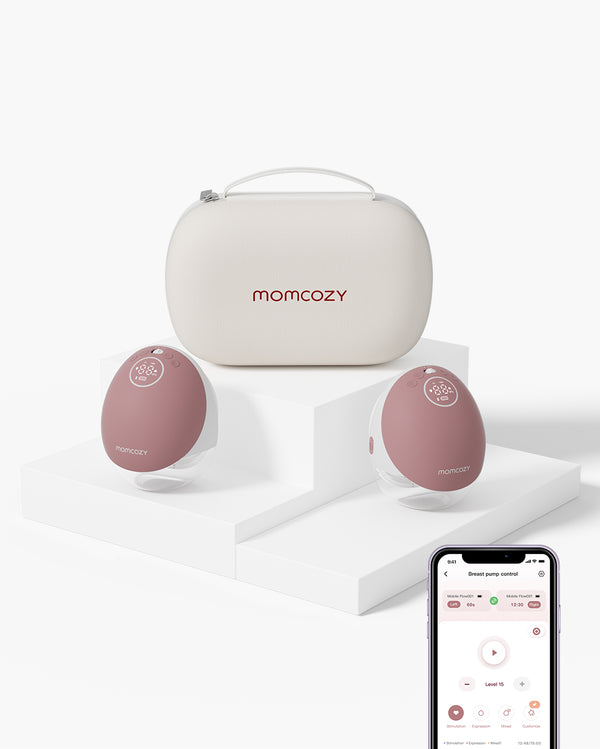
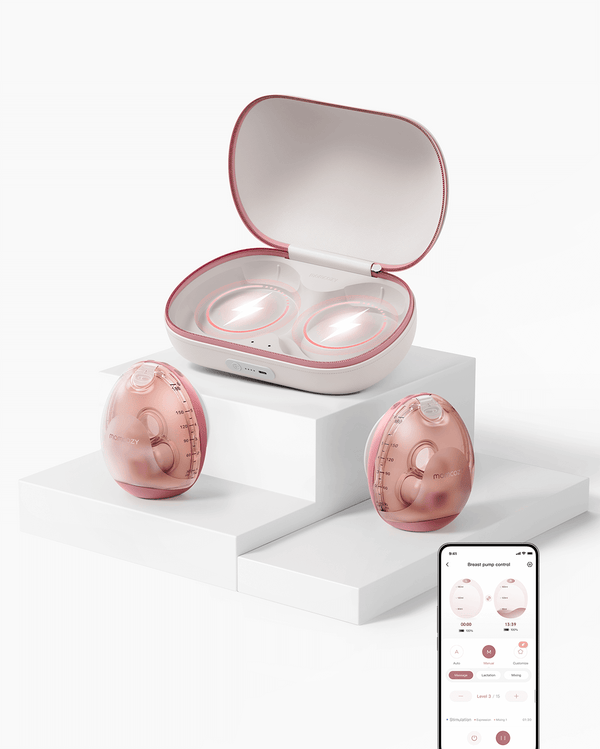
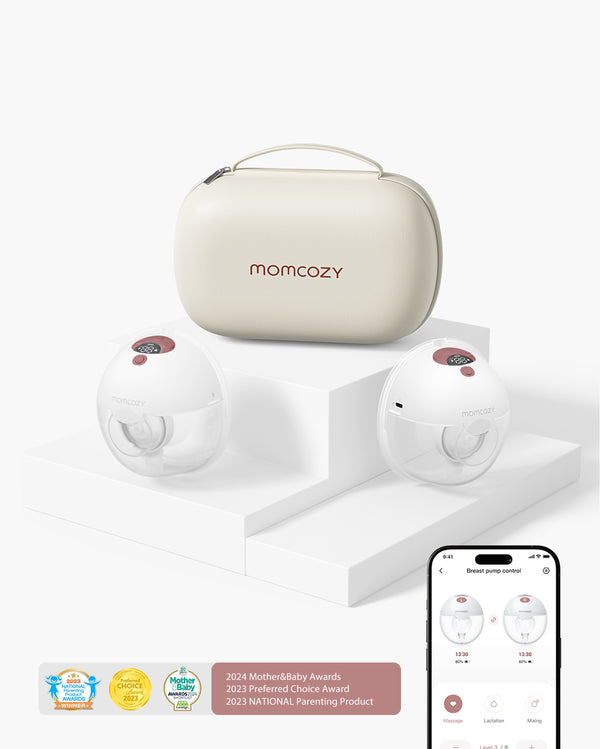
Modern options like the Momcozy M9 Mobile Hands-free Breast Pump and All-in-one M5 Wearable Breast Pump offer quiet operation and app connectivity for tracking sessions.
Best for: Busy moms who need flexibility, working moms without dedicated pumping spaces, moms who want to multitask, or anyone tired of being stuck in one spot.
High Efficiency
Expert-Tuned Rhythms
APP Control
Long Battery
Hospital-Grade Pumps
Hospital-grade pumps are the most powerful option available, designed for maximum efficiency and heavy-duty use. These are large console-style pumps with a main motor unit that you typically find in hospitals and lactation centers. Unlike personal-use pumps, hospital-grade models are built to withstand continuous use by multiple mothers over extended periods. Traditional hospital-grade pumps are built with a closed system that prevents milk from entering the motor, making them safe for multiple mothers to use with their own individual pump kits. Most hospitals and medical supply companies offer convenient rental programs.
For mothers who need hospital-grade power with more convenience, the V1Pro Hands-Free Breast Pump offers hospital-grade suction in a more convenient package than traditional models.
Hospital-strength
-300mmHg Suction
15 Suction Levels
3rd-Gen Motor
High Efficiency
Expert-Tuned Rhythms
APP Control
Long Battery
Best for: Mothers of premature infants, moms with supply challenges, exclusive pumpers, or mothers of multiples. Many hospitals offer rental programs.
For personal use at home, Momcozy's V3 (plug-in) and V3 Pro (portable/cordless) bring hospital-grade suction and built-in pumping rhythms like Power Pumping and Milk Boost—useful when you are establishing supply. They sit in the same category as the rental units hospitals use, but are yours to keep.
Which Type Is Right for You?
The best pump depends on your specific situation:
- Pumping occasionally? A manual pump or basic electric single pump works fine.
- Returning to work full-time? A double electric or wearable pump is essential.
- Exclusively pumping? Consider a hospital-grade or high-quality double electric pump.
- Want maximum flexibility? Wearable pumps give you the freedom to pump anywhere.
- Feeding multiples or a premature baby? Hospital-grade pumps provide the power you need.
Many moms find that owning two types—like a wearable pump for work and a manual pump for occasional use—gives them the most flexibility. The key is matching the pump type to how often you'll use it and what your daily life looks like.
Many moms find the most practical setup is a big host pump at home for strong, supply-building sessions plus a wearable for outings—each covers a different part of the day.
How to Choose the Right Breast Pump
Picking the right breast pump isn't one-size-fits-all. Your lifestyle, pumping frequency, budget, and personal preferences all play a role.
The most suitable setup for most moms is a two-pump combo: a big host pump at home plus a wearable for outings. A full-size pump like the Momcozy V3 (plug-in hospital-grade, up to -270 mmHg) or the V3 Pro (portable/cordless) delivers strong, consistent suction that builds and protects your supply, while a wearable such as the Air 1 or W1 keeps you consistent on the go. They are teammates, not rivals—together they cover every scenario your day throws at you.
Benefits of a Manual Breast Pump
Manual pumps offer unique advantages that make them the right choice for specific situations. The benefits of manual pumping breast milk include complete control over every aspect of pumping.
When manual pumps shine:
- You only pump once or twice a week
- You need a backup pump in case of emergencies
- You're traveling and want a lightweight pump
- You want the least expensive alternative
- You need to pump silently (sleeping baby nearby, quiet office)
- You prefer controlling the rhythm and suction yourself
Manual pumps are inexpensive because they don't require energy and usually cost between $20 and $50. Additionally, they are quite dependable because there are no motors or dead batteries. They work best, though, when used sparingly.
Benefits of Electric Breast Pumps
Electric pumps remain the workhorse choice for many nursing mothers. The benefits of electric breast pump technology center on efficiency and consistency.
Why moms choose electric pumps:
- Pump both breasts simultaneously (with double electric models)
- Consistent suction without physical effort
- Adjustable speeds and suction levels
- Efficient for maintaining milk supply
- Faster pumping sessions (typically 15-20 minutes)
- Insurance often covers them
Double electric pumps are the gold standard for working mothers and exclusive pumpers. They save significant time compared to single pumps or manual options, and most come with rechargeable batteries for flexibility. The main drawback? You're still tethered to the pump by tubes and need to remain relatively stationary during sessions.
If you want hospital-grade power without renting, Momcozy's V3 (plug-in) and V3 Pro (portable/cordless) are strong electric options built for exactly this—frequent, supply-building sessions at home or on the road.
Benefits of a Wearable Breast Pump
This is where pumping technology has truly revolutionized the breastfeeding experience. The benefits of wearable breast pump options have changed what's possible for modern mothers.
Game-changing advantages:
- Pump freely—no wires or tubes
- Sleek enough to wear under everyday clothes
- Multitask while pumping
- No need for a special pumping area
- Quiet operation won't disrupt meetings or sleeping infants
- Rechargeable batteries eliminate the need to search for outlets
- Ideal for hectic, on-the-go lifestyles
For mothers who require flexibility more than anything else, wearable pumps are ideal. Pumping can be done while driving, cooking, doing conference calls, or tending to older children. Because of the flexibility they offer, pumping becomes more of a seamless part of your day rather than an interruption.
The investment is higher—typically $100-$400—but for many moms, the convenience and time savings make wearable pumps worth every penny. They're particularly valuable if you lack a private pumping space at work or have a schedule that doesn't accommodate 30-minute pumping breaks.
Momcozy wearables like the Air 1 and W1 are built for exactly these on-the-go moments, and they pair well with a big host pump you keep at home.
Benefits of Exclusive Pumping, Hand Pumping, and Power Pumping
Not every pumping journey looks the same. The benefits of exclusively pumping breast milk include precise tracking of intake, full control over feeding schedules, and the ability to keep babies on breast milk even when direct latching is not possible. Exclusive pumpers often build a strong routine that works for them and their baby.
The benefits of hand pumping breast milk (manual expression) are practical, too: it is free, silent, and always with you. A manual pump or hand expression is perfect for quick relief, travel, or as a backup when your electric pump is not handy. The La Leche League offers guidance on building a pumping routine that fits your life.
The benefits of power pumping breast milk come down to supply: by mimicking a baby's cluster-feeding pattern (short, frequent sessions), power pumping signals your body to make more. It is a go-to tool when your output dips and you need to boost supply without adding hours at the pump.
Why Choose Momcozy Wearable Breast Pumps
When it comes to wearable breast pump technology, Momcozy leads the market for good reason. In 2024, Momcozy wearable breast pumps achieved the highest global sales revenue in the category, establishing the brand as the market leader in this innovative space.
Momcozy's commitment to innovation shows in the numbers—over 520 patents and 330 registered trademarks protect our advanced pumping technology. This isn't just marketing; it's a genuine investment in creating better solutions for mothers.
The proof is in the user base: over 4.5 million moms worldwide trust Momcozy products, with more than 1.8 million followers across social media platforms sharing their experiences and supporting each other. When that many mothers choose and recommend a brand, it speaks volumes about real-world performance.
The benefits of breast pump technology are only realized when you find the right match for your situation. Whether you need discretion for office pumping, maximum power for building supply, or natural comfort for all-day sessions, Momcozy's innovative lineup ensures there's a perfect solution for your pumping journey.
For many moms the smartest setup pairs a Momcozy wearable—the Air 1 or W1 for on-the-go sessions—with a big host like the V3 (plug-in) or V3 Pro (portable/cordless) at home, where strong suction builds and protects supply. They cover different parts of your day, so you never have to choose between power and freedom.
Ultra-slim
Wireless Charging
Effortless Alignment
Smart App Control
From $385.00 CAD $481.00 CAD
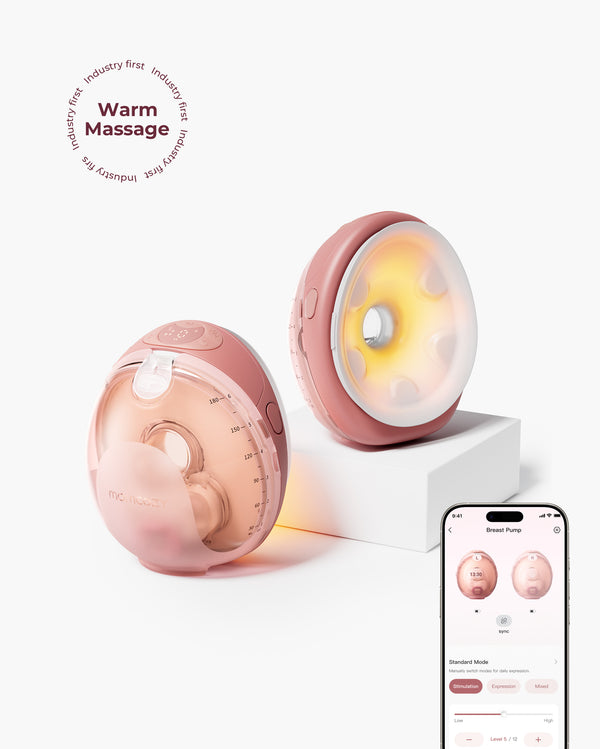
Warm-Massage
Milk Boost Mode
Reliable Battery
Transparent Top
5 Tips for Successful Pumping
Making pumping work takes more than just the right equipment. Here are practical strategies to maximize your success:
-
Create a regular routine. To sustain supply and develop your body, pump at the same time every day. During working hours, try to do this every two to three hours, if at all feasible, to coincide with your infant's eating schedule.
-
Keep yourself nourished and hydrated. Prior to and during pumping sessions, sip water. Your body requires fuel to create milk, so keep nutritious snacks close at hand.
-
Create a calm atmosphere. Take long breaths, listen to soothing music, or watch pictures or videos of your child. Anything that promotes relaxation increases productivity because stress prevents letdown.
-
Before pumping, massage. For one to two minutes, gently massage your breasts to promote milk flow and aid in the more thorough emptying of your ducts.
-
Make sure the flange fits correctly. You should not rub your nipple; it should move freely. Most pumps come in a variety of sizes for you to try; choosing the incorrect size diminishes efficiency and causes discomfort.
How to Overcome Challenges with Breast Pumping
Even with the best pump and intentions, you'll likely face some bumps along the road. Here's how to tackle the most common pumping challenges so they don't derail your breastfeeding goals.
1. Low Milk Output When Pumping
Not getting much milk? This is the most common concern, and it's usually fixable.
Solutions:
-
Check your flange fit. Wrong size = poor output. Your nipple should move freely without rubbing or pulling in areola tissue.
-
Pump more often. Add 1-2 extra sessions daily, even just 10 minutes, to signal your body to make more.
-
Try power pumping. Pump 20 minutes, rest 10, pump 10, rest 10, pump 10. Do this once daily for a few days to boost supply.
-
Stay hydrated. Aim for 80-100 ounces of water daily. Dehydration directly impacts supply.
Remember: pump output doesn't always reflect your actual supply. Many moms produce plenty for their babies but don't respond well to pumps.
2. Painful Pumping Sessions
Pumping should never hurt. If it does, something needs adjusting.
Solutions:
-
Lower the suction level. Stronger isn't better—find the highest comfortable setting, not the highest possible setting.
-
Ensure proper flange size. Too small causes friction and compression; too large pulls in the areola tissue. The M5 Wearable Breast Pump includes multiple flange sizes (15/17/19/21/27mm) to find your perfect fit.
-
Center your nipple. Reposition if it's rubbing the sides of the tunnel.
- Apply lanolin or coconut oil before pumping to reduce friction.
If pain persists, consult a lactation consultant—you might have underlying issues.
Comfort Fit
Steady Output
Hands-Free Freedom
Easy App Control
3. Trouble with Let-Down
Struggling to achieve let-down with a pump is common. Pumps aren't as effective as babies at triggering the reflex.
Solutions:
-
Use sensory cues. Look at baby photos, smell their clothing, or listen to recordings of baby sounds.
-
Warm your breasts first. Apply a warm compress or pump after a shower.
- Massage before pumping. Stimulate manually for 1-2 minutes before starting.
-
Try different settings. The Momcozy Mobile Flow™ Hands-Free Breast Pump allows complete pattern customization through the app—experiment with different rhythms and intensities to find what triggers your let-down.
-
Relax completely. Stress blocks let-down. Practice deep breathing, close your eyes, or even pump while watching your favorite show.
High Efficiency
Expert-Tuned Rhythms
APP Control
Long Battery
Jelly Strip Support
More Comfort
Weightless Wearing
4. Pumping Takes Too Long
If you're spending 45+ minutes per session, pumping becomes unsustainable.
Solutions:
-
Use a double electric or wearable pump. Pumping both breasts simultaneously cuts time in half. The Momcozy Air 1 Ultra-slim Breast Pump or V1 Pro Hospital-Grade Wearable Breast Pump gives you hands-free efficiency.
-
Don't pump until empty. Most milk comes in the first 15-20 minutes. Extra time for a few drops isn't worth it.
-
Ensure good let-down. Use the strategies above—poor let-down makes sessions drag.
-
Check suction power. The V1 Pro with -300mmHg hospital-grade suction works much faster than weak pumps.
5. Difficulty Finding Time and Privacy
Balancing pumping with work and daily life feels impossible sometimes.
Solutions:
-
Switch to wearable. The Air 1 Ultra-Slim operates under 45dB and is invisible under clothing—pump anywhere without privacy concerns.
-
Multitask while pumping. Check emails, make calls, or eat lunch to maximize efficiency.
-
Keep duplicate parts at work. No more packing and unpacking daily.
6. Maintaining Supply While Working
Many moms see supply dips after returning to work.
Solutions:
-
Match baby's schedule. If your baby eats every 3 hours, pump every 3 hours at work.
-
Add a morning pump. Supply is highest in the morning—take advantage of it.
-
Never skip sessions. Missing pumps signals your body to make less milk.
7. Cleaning and Sanitizing Fatigue
Washing pump parts multiple times daily is exhausting.
Solutions:
-
Use the fridge hack. Store parts in the fridge between same-day sessions, then wash thoroughly at day's end.
-
Buy multiple part sets. Wash them all at once instead of after every session.
-
Choose simple designs. The Air 1 Ultra-Slim has only five parts to clean.
8. Feeling Isolated or Discouraged
Pumping can feel lonely and mechanical compared to nursing.
Solutions:
-
Connect with other moms. Momcozy's 1.8+ million social media followers create a supportive community.
-
Celebrate small wins. Every ounce matters and deserves recognition.
-
Give yourself grace. Your mental health matters too—fed is best, however that looks.
Most pumping challenges have solutions. Don't hesitate to reach out to a lactation consultant if you're stuck. With the right strategies and equipment, pumping can become a sustainable part of your feeding journey.
Frequently Asked Questions
What are the benefits of breast pumping?
The biggest benefits are flexibility and supply protection. Pumping lets any caregiver feed your baby breast milk, keeps your supply flowing through regular emptying, relieves engorgement, and builds a freezer backup. It also supports premature, sick, or adopted babies and moms who cannot nurse directly.
What are the benefits of pumping breast milk for my baby?
Pumped milk keeps the same antibodies, enzymes, and live nutrients as milk fed at the breast, supporting your baby's immune system and growth. You also get to measure exact intake, which helps you and your pediatrician track feeding closely.
Can I use a wearable pump and a hospital-grade pump together?
Yes—and many moms do. A big host pump at home (like the Momcozy V3 or V3 Pro) delivers strong, supply-building suction, while a wearable such as the Air 1 or W1 handles on-the-go sessions. They are teammates, not rivals: together they cover every scenario, from morning sessions at your nightstand to pumping at your desk.
Is pumping as healthy for my baby as nursing directly?
Your baby gets the same nutritional and immune benefits from pumped milk as from nursing directly—the milk is identical. The main difference is the feeding method, not the milk itself. Safe storage and handling keep that milk just as healthy.
Benefits of Breast Pump: Find Your Perfect Pumping
The benefits of breast pumping boil down to one thing: feeding your baby your way, on your schedule. Whether you're heading back to work, need a break, or want to share feedings with your partner, the right pump makes it all possible. From budget-friendly manual pumps to game-changing wearable technology like Momcozy's innovative lineup, there's a solution that fits your life.
However you pump, the goal is the same: feeding your baby your way. Many moms find the most reliable setup pairs a big host pump at home—the V3 (plug-in hospital-grade) or V3 Pro (portable/cordless)—with a wearable like the Air 1 or W1 for life on the move. With wearable, electric, and hospital-grade options, Momcozy covers every pumping scenario.