For most children, around 12 months is when experts recommend moving milk away from the bedtime routine. After 12 months, bedtime milk becomes a dental risk and a sleep crutch more than a nutritional need.
When to Stop Milk Before Bed for Babies and Toddlers
The answer depends on your child's age, but the general direction is clear: the sooner you move milk away from the sleep moment, the better. Here is a breakdown by stage.
Is 12 Months the Magic Number?
For most babies, 12 months is the turning point. Before 12 months, nighttime feeds are often nutritionally necessary, especially for breastfed babies or smaller infants. After 12 months, whole cow's milk can replace formula, and your child's nutritional needs can be met through meals and daytime drinks.
The American Academy of Pediatrics (AAP) recommends starting to wean from the bottle around 12 months and completing the transition by 18 months. Keeping milk as a bedtime sleep prop past 12 months increases the risk of tooth decay and makes it harder for children to learn to fall asleep on their own.
What Do Professional Guidelines Say?
The NHS (UK) and the AAP both advise moving away from bedtime bottles by 12 months and discouraging milk feeds that happen right at the point of sleep. Both organizations highlight the link between falling asleep with milk in the mouth and early childhood tooth decay. For US families, the AAP is the primary guidance to follow. The NHS alignment shows this is a consistent international recommendation, not just a local one. The key point: it is not just about stopping milk, it is about when in the bedtime routine you offer it.
Why Timing Matters: The Real Risks of Prolonged Bedtime Milk
Offering milk right before sleep seems harmless, but it creates three distinct problems. Each one compounds over time if the habit continues.
Dental Health and "Baby Bottle Tooth Decay"
Baby bottle tooth decay, also called early childhood caries, happens when milk sits in contact with teeth during sleep. Saliva production drops during sleep, so the natural rinse that protects teeth disappears. The natural sugar in milk (lactose) stays on the teeth and feeds acid-producing bacteria.
This damage can affect baby teeth well before permanent teeth come in. Baby teeth matter for chewing, speech development, and holding space for adult teeth. Even breastfeeding right before sleep without brushing afterward can also contribute to tooth decay if teeth are not brushed afterward.
Sleep Associations: Why Your Child Cannot Self-Settle
When a child falls asleep while feeding, they associate the act of feeding with the process of falling asleep. Every time they wake up during the night, they need the same thing to fall back asleep. This is called a sleep association.
Children who fall asleep with milk often wake more frequently and genuinely cannot resettle without a feed. Breaking this association is one of the most common reasons parents struggle with toddler sleep.
Metabolic Health: How Nighttime Milk Can Affect Sleep Quality
Milk contains natural sugars and protein that your body processes even during the night. Some sleep consultants and nutrition experts note that milk offered right before bed can cause a blood sugar rise followed by a drop, which may contribute to restlessness at bedtime and night wakings in some toddlers. Research in this area is still developing, but moving milk earlier in the evening is a low-risk step that many families find helps with sleep quality overall.
Signs Your Child Is Ready to Drop the Bedtime Bottle or Breastfeed
Children often show clear signs that they are ready to move on. Watch for these:
- Your child finishes the bedtime bottle quickly and seems more interested in the comfort than the milk.
- Your child falls asleep during the feed rather than drinking actively.
- Your child eats three full meals and snacks during the day without relying on milk as a primary calorie source.
- Your child can fall asleep in other situations, like in the car or stroller, without a feed.
- Your child is 12 months or older and your pediatrician has confirmed they are growing well.
If several of these apply, your child is likely ready to make the shift.
The 3-6-9 Pattern: How Sleep Disruptions Affect Night Feeding
Many parents notice that sleep disruptions tend to cluster around certain ages: roughly 3 to 4 months, 6 months, and 9 months. This pattern is sometimes called the "3-6-9 rule" in parenting communities, though it is not a formal clinical term. It reflects a commonly observed trend where developmental leaps and physical changes temporarily disrupt sleep and increase nighttime feeding demands.
|
Age
|
Common Cause
|
Typical Duration
|
|
3–4 months
|
Sleep patterns shift (a natural brain change)
|
2–6 weeks
|
|
8–10 months
|
Separation anxiety, increased mobility
|
3–6 weeks
|
|
12 months
|
Walking, transitioning to one nap
|
2–4 weeks
|
|
18 months
|
Language development, growing independence
|
2–6 weeks
|
Sleep disruptions can occur at any age, and every child develops on their own timeline. The ages above reflect periods when many families notice increased night waking, but not every child will follow this pattern exactly.
During these periods, increased night waking does not necessarily mean your child needs more milk. It usually means they need more comfort and reassurance. Responding to the emotional need without defaulting to feeding helps protect the progress you have made.
Step-by-Step Strategy: How to Stop Milk at Night for a 2-Year-Old
The ideal time to start weaning from bedtime milk is around 12 months. If that window has passed and your child is now a toddler, it is not too late. Two-year-olds are old enough to understand simple explanations, which gives you more tools to work with during the transition. Use this gradual approach:
-
Week 1: Move the milk earlier. Offer milk as part of dinner rather than right before bed. This separates milk from the sleep moment without removing it entirely.
-
Week 2: Shrink the amount. If your child asks for milk at bedtime, reduce the amount by 1 to 2 oz every few days. A smaller serving is less satisfying as a sleep prop.
-
Week 3: Replace with water. Offer a small cup of water as part of the bedtime routine. Keep it consistent and low-key so it becomes the new normal.
-
Week 4: Lean into the routine. A predictable bedtime routine (bath, book, bed) gives toddlers the security they were previously getting from the milk. Stick to the same steps in the same order every night.
Your child may protest for several nights. Stay calm, stay consistent, and acknowledge that they are upset without reintroducing the bottle. Most children adjust within one to two weeks, though every child is different.
What to Give a Toddler at Night Instead of Milk?
Removing bedtime milk does not mean your child goes without comfort or hydration. There are practical alternatives that support dental health and sleep.
Healthy Alternatives and Hydration
|
Alternative
|
Age Appropriate
|
Notes
|
|
Water (small cup)
|
6 months+
|
Best option for dental health
|
|
Warm water
|
6 months+
|
Soothing without sugar
|
|
Milk at dinner (not at bed)
|
12 months+
|
Keeps nutrition without sleep or dental risk
|
Water is the best choice to offer if your child asks for something after teeth are brushed. It hydrates without affecting teeth or sleep.
Can a Diabetic Child Drink Milk at Night?
Children with Type 1 diabetes sometimes need a small snack or drink before bed to prevent blood sugar from dropping too low overnight. However, the type and amount should always be determined by your child's endocrinologist or pediatric dietitian. Plain milk contains carbohydrates that affect blood glucose, so timing and portion matter. This is one situation where the general advice to stop bedtime milk may not apply, and individual medical guidance takes priority.
Make the Right Gear Work for the Feeds You Still Have
Pediatrician Dr. Whitney Casares points out that while night feeding is hard, many of the most draining parts are fixable. The starting point is reducing "feeding friction": simplifying the steps, the setup, and the mental load so each feed takes less out of you. The video below walks through what that looks like in practice.
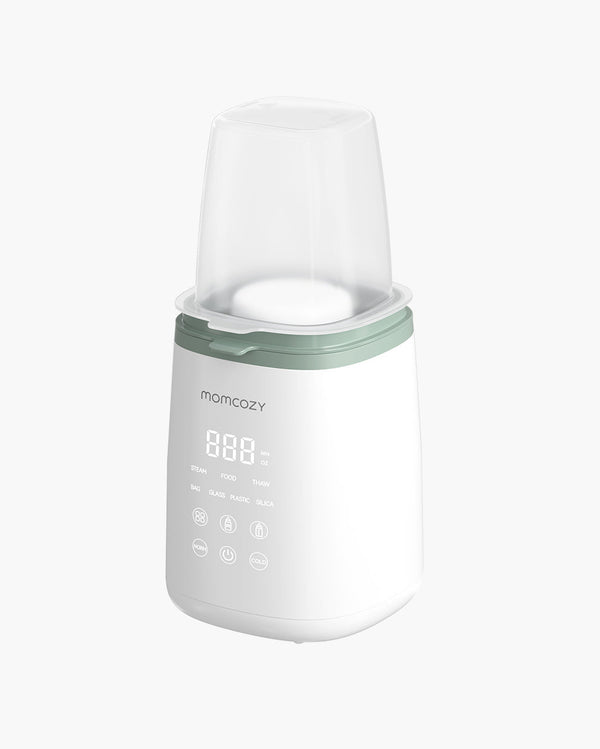
While you work toward stopping bedtime milk, your remaining night feeds can be simpler. The Momcozy Night Pro Baby Bottle Warmer - Night Feeding is built for middle-of-the-night moments.
Fast Warming
Steam Warming
Keep Warm
It warms a 4 oz bottle in as little as 3 minutes using water bath warming, which heats evenly without hot spots. The see-through water chamber has a built-in two-level soft nightlight, so you can check and fill the water level in the dark without turning on the lights. A real-time countdown shows exactly how long is left, so you can soothe your baby, change a diaper, and come back to a ready bottle.
The one-touch memory function recalls your last settings automatically, which means no setup needed in the middle of the night. Once warming finishes, the bottle stays warm for up to 60 minutes. It works with plastic, glass, and silicone bottles, as well as breast milk storage bags, and all materials are BPA-free Tritan.
To compare options across the full range, the Momcozy baby bottle warmer collection includes warmers for home use, travel, and every feeding stage.
Stop Giving Milk Before Bed the Right Way
For most children, moving milk away from the bedtime routine by 12 months is the right call. The main reasons to make the switch are dental health, sleep independence, and overall sleep quality. Move milk earlier in the bedtime routine, reduce the amount gradually, and replace the habit with water and a consistent routine. Stay patient, stay consistent, and most children will adjust on their own timeline.
This article is for informational purposes only and is not a substitute for professional medical advice. Always consult your pediatrician before making changes to your child's feeding routine.
FAQs About When to Stop Giving Milk Before Bed
Q1. Does a 2-Year-Old Still Need Milk Before Bed?
No. A 2-year-old does not need milk specifically before bed. Milk can still be part of their daily diet, but it should be offered earlier in the day or at dinner, not as the last step before sleep. Most 2-year-olds get enough nutrition from meals and do not need bedtime milk for calories.
Q2. How Much Milk Should a 3-Year-Old Drink Per Day?
The AAP recommends about 16 to 20 oz (2 to 2.5 cups) of milk per day for children ages 2 to 3. This should be spread through the day, not concentrated at bedtime. Offering milk at breakfast and with lunch or dinner covers the daily amount without creating a bedtime sleep association or dental risk.
Q3. When Is the Hardest Age to Break the Bedtime Bottle Habit?
The longer a bottle habit continues, the harder it tends to be to break. Most sleep consultants find that toddlers over 18 months are more emotionally attached to their bottles than younger babies, making the transition more challenging. Starting the weaning process around 12 months is generally easier for both parent and child.
Q4. Why Is SIDS Highest at 2 to 4 Months?
Evidence suggests the peak risk at 2 to 4 months is connected to a period of brain development when the part of the brain that helps babies wake themselves up during sleep is still developing. This means some babies may not wake themselves as effectively when breathing is compromised. The cause of SIDS is not yet fully understood, and safe sleep practices (back sleeping, firm flat surface, no soft bedding) are recommended for the full first year.
Q5. How Do Babies Show Bonding During the Weaning Process?
Babies often seek more physical closeness during weaning because the feeding routine provided comfort as well as nutrition. You may notice your baby reaching for you more often, making more eye contact, or calming quickly when held. Responding with skin-to-skin contact, talking, and consistent cuddle time helps your baby feel secure as the feeding routine changes.