One day your toddler fits perfectly in their high chair. The next, they're squirming, climbing out, and eyeing the big-kid seats at the dinner table. If you're wondering when babies move from high chair to booster — and whether your child is actually ready — you're not alone. This guide breaks down the timing, the safety checks, the signs to look for, and exactly how to make the switch go smoothly.
Key Takeaways
- Most children are ready to move from a high chair to a booster seat between 18 months and 3 years old, but physical readiness matters more than age.
- A booster seat must always be strapped securely to a stable, flat-seated dining chair.
- Never rush the transition — staying in a high chair longer is perfectly fine if your child isn't ready.
- A convertible high chair like the Momcozy DinerPal High Chair can grow with your child, reducing the pressure to switch early.
- Multiple readiness signs should be present before making the move — not just one.
5 Modes
Safety Design
Lifelong Use
Ease of Cleaning
5 Modes
Safety Design
Lifelong Use
Ease of Cleaning
What Is a High Chair vs. a Booster Seat?
If you've been using these terms interchangeably, you're not alone — but they serve different purposes at different stages.
The High Chair
A high chair is a freestanding, elevated seat designed for babies and young toddlers. It typically includes a 5-point harness, a footrest, and a removable tray. Most high chairs are designed for children starting around 6 months old — once they can hold their head steady and sit upright with some support. High chairs offer the most structural support during the early feeding years.
The Booster Seat
A booster seat is a smaller seat that straps onto an existing dining chair, raising your child up to table height. It usually has a 3-point harness and no tray (or a basic snap-on tray). Booster seats are designed for older toddlers who already have good core strength and balance but still need a lift to sit comfortably at the family table.
Key Differences
| Feature |
High Chair |
Booster Seat |
| Structure |
Freestanding |
Attaches to existing chair |
| Harness |
5-point |
3-point |
| Tray |
Yes, removable |
Optional or none |
| Portability |
Low |
High |
| Best For |
6 months – ~3 years |
18 months – ~5 years |
| Support Level |
Full upper and lower body |
Core and balance assumed |
The bottom line: a high chair offers more support for younger children, while a booster seat is for kids who are developmentally ready for less structure.
The Safety Check: How Do Harness Systems & Table Fit Compare?
Before making any switch, it's worth understanding what safety features you're trading in — and what you need to look for in a booster setup.
-
Harness systems: Baby high chairs use a 5-point harness (two shoulder straps, two hip straps, one crotch strap) that keeps babies securely in place even when they wiggle, lean, or fall asleep. Booster seats typically use a 3-point harness, which works well for toddlers who can sit upright independently — but offers less protection for children who still slump or shift unpredictably.
-
Table fit: A booster seat must be strapped firmly to a solid, flat-seated dining chair. It should never be placed on a stool, a folding chair, a swivel chair, or any seat without a flat, stable surface. The child's feet should be able to rest on something — either the chair rungs or a footrest — to support proper posture during meals.
-
What to look for in a high chair: The Momcozy DinerPal High Chair checks all the safety boxes — it's certified under both ASTM F404 (US) and EN14988 (EU) standards, features a machine-washable 5-point harness, a 23.5" extra-wide BPA-free tray, and is built from FSC-certified beechwood with 248°F heat treatment for durability and hygiene. Its adjustable footrest supports the 90-90-90 ergonomic posture, which reduces choking risk and keeps toddlers focused during meals.
5 Modes
Safety Design
Lifelong Use
Ease of Cleaning
5 Modes
Safety Design
Lifelong Use
Ease of Cleaning
When Do Babies Move from High Chair to Booster? Ideal Age & Physical Readiness
The most common question parents ask is: what's the right age? The honest answer is that there's no single age that applies to every child.
General range: Most children make the switch somewhere between 18 months and 3 years old. Some kids transition closer to 2, others aren't ready until closer to 3 or even later — and that's completely normal.
What actually matters more than age:
-
Core strength: Can your child sit upright for an entire meal without slumping or needing to lean against the chair back?
-
Balance: Do they stay stable when reaching across the table or turning to talk?
-
Body size: Are their legs starting to hang uncomfortably, or is the tray pressing into their belly?
-
Self-feeding ability: Are they feeding themselves with reasonable coordination?
Here's something worth knowing: if you have a convertible high chair, you may not need to rush this transition at all. The Momcozy DinerPal High Chair offers 7 height positions and a 5-in-1 design that transitions from an infant seat all the way to an adult stool, supporting up to 308 lbs. That means the chair genuinely grows with your child — eliminating the pressure to switch before they're ready.
What Are the Signs Your Child Is Ready to Move from High Chair to Booster?
Here's what to check before making the move. Ideally, most of these signs should be present — not just one or two.
-
They sit upright and stay stable throughout a full meal without slouching or needing extra support.
-
They look physically cramped — legs too long for the seat, tray pressing against their torso, or feet with nowhere to rest comfortably.
-
They're trying to climb out of the high chair on a regular basis, which becomes a safety concern.
-
They want to sit at the table like older siblings or adults and show frustration with the tray setup.
-
They can follow simple mealtime instructions — staying seated, using utensils, not throwing food — showing they're ready for less restriction.
-
Their core is strong enough to sit in a booster seat without tipping or shifting unpredictably.
If you're checking this list and only one or two boxes apply, it's probably worth waiting a little longer.
When Should You Wait and Delay the Transition?
Not every toddler who seems restless is actually ready for a booster seat. Here are clear reasons to hold off:
-
They still need the 5-point harness to stay upright and safe during meals — the booster's 3-point system won't provide enough support.
-
They rock, stand, or shift constantly in their seat — this behavior in a booster seat strapped to a chair creates a tipping risk.
-
They have developmental delays affecting their balance, posture, or motor control — always follow your pediatrician's guidance in these cases.
-
Your dining chairs aren't compatible with a booster seat — if you only have stools, swivel chairs, or folding chairs, it may not be safe to use a booster at all.
-
Your pediatrician has recommended waiting — if your child's doctor has flagged any concerns, that guidance takes priority.
There's no parenting badge for switching early. If your child isn't ready, keeping them in the high chair is the right call.
Step-by-Step Guide to Making the Switch
When you've decided the time is right, here's how to make the transition in a way that's safe and low-stress.
-
Confirm readiness first. Go back through the signs in Section V and make sure most of them apply to your child.
-
Choose the right booster seat. Look for one with a secure strap-to-chair system, a 3-point harness, and a stable base. Check weight and age limits before buying.
-
Set it up on the right chair. Place the booster on a flat-seated, stable dining chair. Strap it in firmly and test it before putting your child in it.
-
Do a practice run before mealtime. Let your child sit in the new setup while supervised — outside of an actual meal — so it feels familiar before food is involved.
-
Keep early meals short and positive. Don't expect perfection right away. Short, successful meals build confidence faster than long, stressful ones.
-
Stay consistent. Once you've made the switch, stick with it. Going back and forth between the high chair and booster makes the transition harder for your child.
-
Consider skipping the booster entirely. If you have a convertible high chair like the Momcozy DinerPal High Chair, you can adjust the height and remove the tray to bring your toddler directly to the table — no separate booster needed.

Tips for Smoother Mealtimes During the Transition
Even when your child is ready, the first few weeks in a booster seat can come with some pushback. These tips help:
-
Let your toddler feel involved. If possible, let them choose between two booster seat options, or let them help "set up" their seat before meals. Ownership reduces resistance.
-
Keep the mealtime routine the same. Same time, same place, same plates. Consistency helps your child feel secure even when the seat is new.
-
Use a non-slip mat. Placing a non-slip mat under the booster adds extra stability and prevents the chair from sliding.
-
Keep the harness on. Even if your toddler protests, keep the straps fastened until they're consistently safe and stable in the seat.
-
Use positive reinforcement. A simple "you're doing great sitting at the big table" goes a long way in making the booster feel like a reward, not a change.
-
Bring a familiar item. Their favorite cup, placemat, or spoon can make the new setup feel more like home.
What Are the Most Common Mistakes Parents Make During the Transition?
A few missteps can make this transition harder — or less safe — than it needs to be.
-
Switching too early. If your child doesn't have the core strength to sit independently, a booster seat doesn't provide enough support to compensate.
-
Using the wrong chair. Placing a booster on a swivel chair, stool, or folding chair is a tipping hazard. Always use a solid, flat-seated dining chair.
-
Removing the harness too soon. It can be tempting to skip the straps once your child seems settled, but harnesses exist for a reason — keep them in use until your child is genuinely stable.
-
Expecting an instant adjustment. Most toddlers take at least a few days — sometimes a couple of weeks — to feel comfortable in a new seat. Patience matters here.
-
Choosing a booster that doesn't fit your chairs. Not all boosters work with all chair styles. Check compatibility before buying.
Find the Right Seat for Every Stage with Momcozy
Knowing when babies move from high chair to booster comes down to watching your child — not the calendar. Most kids are ready between 18 months and 3 years, but physical readiness and safety setup matter far more than hitting a specific age.
If you want to take the pressure off the timeline entirely, the Momcozy DinerPal High Chair is built to grow with your child from first bites all the way through the toddler years — no early switching required. Every mealtime milestone, from nursing to the family table, is one worth getting right.
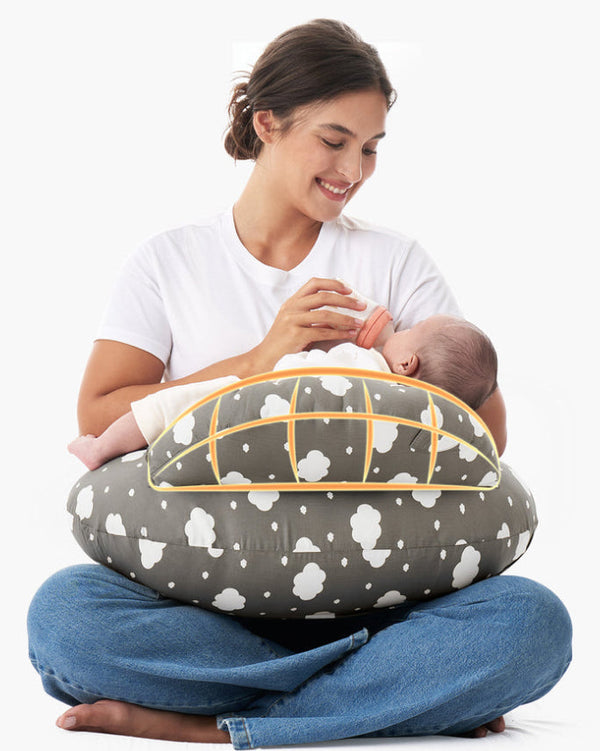
Of course, safe and comfortable feeding starts well before your child ever sits in a high chair. The Momcozy Multifunctional and Adjustable Nursing Pillow is designed to support proper positioning during breastfeeding and bottle-feeding from the newborn stage — a natural first step in a feeding journey that eventually leads to the family table. Browse the full Momcozy nursing pillow collection to find the right fit for your stage.
5 Modes
Safety Design
Lifelong Use
Ease of Cleaning
FAQs About When Babies Move from High Chair to Booster
Q1: At what age do most babies move from a high chair to a booster seat?
Most children make the transition between 18 months and 3 years old, but age alone shouldn't be the deciding factor. Physical readiness — including core strength, balance, and the ability to sit through a full meal — matters more than hitting a specific birthday. Some children stay in a high chair comfortably until age 4 or 5, especially with a convertible model.
Q2: Can a 12-month-old use a booster seat instead of a high chair?
Not typically. Most 12-month-olds don't yet have the core strength or balance to sit safely in a standard booster seat without full harness and structural support. A high chair with a 5-point harness is the safer and more appropriate choice at this age. Always check the weight and age minimums listed on any booster seat before use.
Q3: Is it okay to skip the booster seat and go straight to a regular chair?
It depends. Some toddlers transition directly from a high chair to a regular chair with a seat cushion or a step stool for foot support — especially if they're tall enough to reach the table comfortably. The key is that they can sit safely and stably for the full length of a meal without risk of sliding or falling.
Q4: Do booster seats need to be strapped to the chair every time?
Yes. A booster seat should always be strapped securely to the dining chair before use — every single time. An unstrapped booster can slide or tip when a child shifts their weight, which creates a fall risk. Never assume it's stable just because it seems snug.
Q5: What's the difference between a booster seat and a toddler chair insert?
A booster seat elevates your child to table height by attaching to an existing chair. A toddler chair insert, sometimes called a seat reducer, is placed inside a larger chair to make it more snug and supportive. They serve similar purposes but are designed differently. Booster seats are generally more portable and better suited for dining table use.
Q6: Can I use a convertible high chair instead of buying a booster seat?
Absolutely. A convertible high chair that adjusts in height and allows tray removal can function as a booster-style seat for older toddlers — without requiring a separate purchase. The Momcozy DinerPal High Chair, for example, offers 7 height positions and a 5-in-1 design that adapts as your child grows, making a separate booster seat unnecessary for many families.