


MEDICALLY REVIEWED BY

Mary Bicknell, MSN, BSN, RNC, ANLC
Mary Bicknell comes with over 30 years of experience as an RN in the NICU. Educating mothers on the importance of healthy breastfeeding is important to her. It can be challenging to maintain successful breastfeeding through many difficult situations and long hospitalizations. Mary is committed to helping families define what successful breastfeeding means to them; and to assist them to obtain their goal. After leaving the bedside, Mary became a nurse leader and continued to make sure that breastfeeding education and support was always available to the families in her unit.
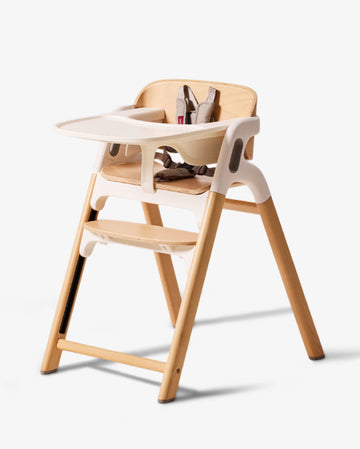
Use a convertible high chair as a preschool workspace only if the exact-model manual permits that configuration and activity, and only while your child fits it securely and comfortably. If the manual does not approve a desk, activity-chair, or table setup, use it only in its approved seating mode—or switch to a child-sized table and chair.
A convertible chair may be useful for short, supervised coloring or early-learning activities, but “convertible” does not automatically mean “approved for crafts.” The safest approach is to treat the manual, product labels, and current manufacturer guidance as the decision-makers.
Confirm What Your Specific Chair Is Approved to Do
Start with the model name and product label, then locate the manual for your exact chair model. Check the instructions for the exact configuration you plan to use—not just the chair’s overall marketing description.

For example, the Momcozy DinerPal is described as having five seating modes and growing from a baby set to an adult chair, but that broad description does not itself establish that it is approved as a desk, activity chair, or chair-and-table craft station. View the DinerPal product information
Before setting out crayons or homework pages, confirm:
- Which configurations are approved for your child’s current age, size, and developmental stage.
- Whether the selected mode is intended for feeding, general seating, learning-tower use, or another purpose.
- The applicable weight, height, and seating limits for that configuration. Do not rely on an overall product capacity as a limit for every mode.
- Whether the tray, harness, seat insert, footrest, or other parts must be installed, removed, or used in a particular way.
- Whether a restraint is required, permitted, or not applicable in the approved mode.
- The required conversion, locking, inspection, and cleaning steps.
If the manual is missing, unclear, or outdated, contact the manufacturer about your chair before repurposing the chair. Ask a direct question: Is this exact model and configuration approved for seated coloring, crafts, or preschool work? What child limits and restraint instructions apply?
Federal high-chair standards address stability, restraint systems, and fall-hazard warnings, but meeting those requirements does not mean every configuration is appropriate for desk or craft use. CPSC guidance on high-chair safety also identifies climbing in or out, rocking or pushing back, and restraint, tray, or lock failures among common circumstances in high-chair fall incidents.
Set Up for Stable Seating and Reachable Work
Once you have an approved configuration, assess it as a workspace rather than assuming it fits because your child can still sit in it for meals.
A preschooler should be able to sit without repeatedly sliding, leaning far forward, or twisting to reach the paper or activity. Their feet need support, whether from the chair’s approved footrest or another support expressly permitted by the manufacturer. Do not improvise with boxes, cushions, risers, or altered parts.

Use adjustable seat and footrest positions only as the instructions allow. Some convertible chairs, including the DinerPal, have adjustable seating and footrest positions, but product information does not provide a universal preschool craft setting. Adjust for the individual child, then watch how they actually sit.
Do a quick pre-use check
Before each activity, confirm that:
- You are using an approved configuration.
- All parts required for that mode are present and properly installed.
- Connections, locks, and adjustments are secure according to the manual.
- The child does not need to climb into or out of the chair independently.
- The work surface is close enough for drawing or writing without excessive reaching.
- The child can remain seated without rocking, pushing back, or trying to stand.
For learning-tower conversion, DinerPal guidance specifically calls for checking that connections are secure and stable before use. Apply the same careful, manual-directed inspection to any approved conversion—but do not assume that instructions for one mode apply to another.
Stay close enough to help your child get in and out. A craft session can change the way a child uses a chair: reaching for materials, turning to show a picture, or trying to retrieve a dropped item may invite climbing or rocking.
Keep Crafts Supervised and Supplies Simple
A compact workspace works best when it holds only the materials needed for the current activity. This reduces clutter, limits reaching, and makes it easier for an adult to supervise.
Offer a few age-appropriate supplies at a time, such as crayons, paper, or other materials that match the product’s age grade and instructions. For paints and crayons, look for nontoxic labeling and ASTM D-4236 on the package. Commercial art supplies for young children may also carry an ACMI AP seal.

Choose water-based supplies rather than solvent-containing art materials. Water-based does not make every product suitable for every child, so still read the package, follow its age guidance, and supervise use.
Keep the following adult-controlled or out of reach:
- Small loose craft pieces, including beads, craft eyes, and similar objects that may present a choking risk.
- Any material your child mouths, throws, or cannot use as directed.
- Products labeled “Keep Out of Reach of Children,” “Not for Use by Children,” “Poison,” “Danger,” “Warning,” or “Caution.”
- Adult art materials and products with hazard warnings.
- Permanent and dry-erase markers if they are not appropriate for the activity or child.
Do not leave a preschooler unattended in the chair during homework or crafts, even for a quick cleanup or another household task. Supervision includes watching for climbing, mouthing supplies, frustration with the setup, and attempts to get down without help.
After the project, put supplies away and have your child wash their hands with soap and water. Pediatric guidance for choosing and using children’s art supplies also emphasizes supervision and label screening.
Treat the Surface as Furniture, Not a Craft-Proof Table
A wipeable surface can simplify ordinary messes, but it is not proof that the chair can withstand every craft material. A dishwasher-safe tray or wipeable non-fabric surface does not establish resistance to paint, glue, permanent marker, solvents, scratches, or other craft chemicals.
Before beginning, decide whether the activity is simple enough for the chair’s approved surface and care instructions. If it is likely to involve materials that are difficult to remove or could damage the chair, choose another approved work surface instead.

For routine cleanup:
- Remove and store supplies before your child gets down.
- Follow the manual’s instructions for the frame, tray, seat, and harness separately.
- Wipe non-fabric surfaces only as directed.
- Do not use cleaners, solvents, or scrubbing methods that the product instructions do not permit.
- Check crevices, straps, locks, and moving parts for residue before the chair is used again.
DinerPal product information describes its non-fabric surfaces as wipeable and its tray as dishwasher-safe; it also describes the harness as removable and machine-washable on a gentle cycle. Follow the care instructions for your exact product, especially if materials have contacted straps or other safety components.
Know When to Move to a Dedicated Table and Chair
A convertible high chair does not need to become your child’s permanent homework station. Move to a dedicated, child-sized table and chair when the approved setup no longer supports safe, comfortable work.
General child-furniture fit guidance favors a seated posture in which the child’s feet rest flat, knees bend at about 90 degrees, and hips are at about 90 degrees. This is a fit check—not a manufacturer setting for a high chair, and not a guarantee that any high chair is appropriate for desk work.
Consider switching when your child:
- Cannot keep their feet supported in the approved setup.
- Slouches, leans, or repeatedly shifts to reach the work.
- Needs frequent repositioning to stay comfortable.
- Tries to climb in, out, or onto the chair.
- Needs a wider surface for projects, shared activities, or spreading out materials.
- Has exceeded the relevant configuration limits.
- Needs an activity mode that the manual does not approve.
Reassess as your child grows and whenever posture, leg position, comfort, or behavior changes. Height and observed sitting posture are more useful than age alone when judging whether furniture still fits.
A convertible high chair can support a preschool activity routine only when the exact instructions permit the chosen configuration and your child can use it safely. If either point is unclear, pause, consult the manufacturer, and move to a properly sized dedicated table-and-chair setup.








