


MEDICALLY REVIEWED BY

Shelly Umstot, BSN, RN
Shelly Umstot is a BSN and has been a registered nurse for over 35 years. She lives in North East Ohio and is a freelance health content writer. Her passion is bringing understanding to those with questions and concerns regarding health issues and helping them obtain and maintain their optimal health. She loves being with her family and has two lovely granddaughters who have stolen her heart. Assisting new parents in finding the information they need to face the joys and challenges of caring for their children is a gratifying experience for her as a professional, parent, and grandparent herself.
Carrying your baby is convenient, but it is also a way to stay close, connected, and responsive to your little one’s needs. Those snuggly moments in a carrier are not just sweet. They can also help your baby feel secure while giving you more freedom to move through daily routines.
Knowing the right baby carrier positions by age is important because your baby’s body changes quickly. A newborn needs steady head, neck, hip, and spine support. An older baby may want more room to look around. A toddler may be ready for hip or back carries, depending on the carrier’s guidelines.
The best carrier position depends on your baby’s age, head and neck control, sitting ability, weight, comfort cues, and the instructions for your specific carrier. If you are still comparing options, the Momcozy baby carrier collection can help you review different carrier styles for each stage.

Quick Answer: What Baby Carrier Position Should You Use by Age?
Newborns usually need an inward-facing front carry with strong head and neck support. Babies with steady head control may gradually explore short outward-facing or hip carry periods if they meet developmental readiness signs and the carrier supports that position. Toddlers may be better suited for hip or back carries, depending on the carrier’s weight limit and setup instructions.
Age is only a general guide. Developmental readiness matters more. Always consider your baby’s head and neck control, core strength, sitting ability, comfort cues, and your carrier manufacturer’s instructions before switching positions.
Baby Carrier Positions by Age: At-a-Glance Chart
As your little one grows, their head control, hip position, and curiosity all change. This means the recommended carrying style changes, too. Use the chart below as a quick guide, but always confirm your baby’s readiness and your carrier’s instructions before changing positions. 、
|
Age / Stage |
Suggested Position |
What to Check |
|
Newborn to 4 months |
Inward-facing front carry |
Airway, head/neck support, snug fit, M-position hips |
|
4 to 6 months |
Inward-facing front carry |
Head control, supported hips, comfort cues |
|
6 to 12 months |
Inward-facing, short front-facing periods, or hip carry if developmentally ready |
Sitting ability, overstimulation, weight fit |
|
12 months+ |
Hip carry or back carry, depending on carrier guidelines |
Carrier weight limit, parent comfort, toddler willingness |
Main Baby Carrier Positions Explained
Not all carriers feel the same. That’s the beauty of babywearing. Some positions are perfect for those sleepy, snuggly newborn days. While others let your little explorer take in the world around them. The right carry can make daily routines easier. It gives you more mobility. It also keeps your baby calm in new environments.
As your baby grows, their needs, comfort, and curiosity will change. So will the positions that work best.
The common baby carrier positions include:
- Front carry (inward-facing) – Perfect for bonding in early months.
- Front carry (outward-facing) – Lets older babies see the world.
- Hip carry – Good for babies who like to look around.
- Back carry – Best for toddlers and longer outings.
Each style supports different needs. Your baby’s age is the biggest factor in choosing. Always keep in mind that comfort and safety go hand in hand. The right position helps protect developing hips. It supports the spine and allows you to carry your child longer. Also, without strain. And most importantly, the right carry means both you and your baby can truly enjoy the ride.
Baby Carrier Positions by Age

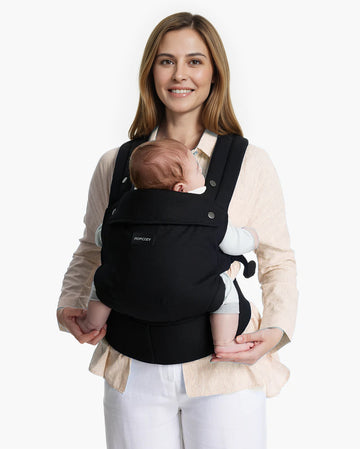
Newborn to 4 Months: Inward-Facing Carry with Full Head and Neck Support
Your baby’s neck muscles are still developing, so they need extra support to keep their head steady and their airway clear. Choose an inward-facing front carry with proper head and neck support to keep them close and comfortable.
Soft wraps can feel cozy and womb-like for younger babies, while a structured newborn carrier can provide more defined support if it is designed for newborn use. If you prefer a soft, flexible option, compare Momcozy wrap baby carriers for inward-facing newborn carriers.
Keep sessions short at first and do frequent check-ins. Watch for signs of discomfort, overheating, or slumping. In these early months, closeness is everything. Inward-facing carry allows skin-to-skin contact, helps you monitor your baby’s face, and lets your baby stay close to your voice and heartbeat.
Can a Newborn Use a Soft Structured Carrier?
Yes, a newborn can use a soft structured carrier if that specific carrier is designed for newborn use and the baby meets its stated fit requirements. The words soft structured carrier describe the carrier’s construction; they do not, by themselves, confirm that it is appropriate from birth.
Before using one with a newborn, check:
-
Newborn eligibility: Confirm that the manufacturer specifically allows use at your baby’s current size or stage.
-
Carrying position: Newborns generally need an inward-facing position unless the carrier’s instructions state otherwise for a later developmental stage.
-
Head and neck support: The baby should be supported without the carrier panel covering the face.
-
Airway visibility: Keep the baby’s face visible and make sure their position does not force the chin tightly toward the chest.
-
Seat and body fit: The carrier should support the baby securely without forcing a position that does not match their current size.
-
Carrier-specific instructions: Follow the product’s own fit, adjustment, and use guidance rather than assuming all structured carriers work the same way.
If you are choosing a carrier specifically for this stage, Momcozy’s newborn carrier collection brings together options intended for early babywearing.
4 to 6 Months: Inward Carry While Baby Builds Head and Core Control
By now, your baby’s neck control improves. However, their hips are still developing, so proper leg positioning remains important. Continue with inward-facing carries. This is until your baby can sit without help to ensure safety. This stage is a sweet spot for bonding. All while your little one becomes more curious about the world. You might notice they try to peek around more. Even though your baby becomes more curious, they still need support. Try to offer gentle movements so they can observe without strain.
6 to 12 Months: When to Consider Front-Facing or Hip Carry
Now, your baby can sit up on their own. You can introduce inward-facing front carries for short periods of time. This position lets them watch the world with wide-eyed wonder. This is while still staying close. Try the Baby Carrier for adjustable comfort that grows with your child. Keep outward-facing sessions limited at first to avoid overstimulation. Switch back to an inward-facing position when they need a rest. This balance gives them the best of both comfort and exploration.
12 Months and Beyond: Hip Carry, Back Carry, and Longer Outings
Back carries or hip carries are great now. Offering a comfortable way to handle your toddler’s growing size. These positions give your child a better view. It keeps them engaged during longer outings. It makes it easier to carry them for extended periods. Hip carriers are especially handy for quick trips. Back carries are perfect for walks, errands, or travel. This stage is about blending support with freedom. Your child can enjoy the ride while staying safe.
How to Wear and Adjust a Baby Carrier Correctly
A properly adjusted baby carrier keeps your baby safe and comfortable. Always follow the instructions for your specific carrier.
-
Keep your baby high enough in a way that you can easily see and kiss their head.
-
Make sure their face stays visible, and their airway remains clear.
-
Adjust the carrier so your baby sits snugly against your body without slumping.
-
Tighten shoulder straps and waist belts for even weight distribution.
-
Support your baby’s hips and thighs in a natural seated position.
-
Check the fit regularly and make adjustments as your baby grows.
Baby Carrier Fit Check: Airway, Hips, Back, and Comfort
Now that you know how to adjust a baby carrier, check that before every carry, you do a quick fit check to make sure your baby is safe and comfortable.
-
Airway: Keep your baby’s face visible, with their nose and mouth unobstructed. Their chin should not be pressed against their chest.
-
Hips: Support your baby’s hips in an “M” position, with the knees slightly higher than the bottom when possible. This position helps distribute weight evenly and supports healthy hip development. The carrier seat should support the thighs from knee to knee without forcing the legs straight down.
-
Back: Make sure your baby’s back is well supported and matches their developmental stage.
-
Comfort: Watch for signs of discomfort, overheating, or fussiness, and adjust the carrier as needed.
When carrying your baby, always monitor their breathing, temperature, and comfort cues.
When to Switch Positions or Stop Using a Carrier
It may be time to switch positions or stop using a carrier when:
-
Your baby gains new developmental skills, like strong head and neck control or independent sitting.
-
Your baby seems uncomfortable in their current carry position.
-
The current position no longer provides proper support for your baby’s size and development.
-
Your baby exceeds the carrier’s recommended height or weight limits.
-
You can no longer achieve a safe, secure fit according to the manufacturer’s instructions.
You should also avoid using a carrier if your baby cannot be positioned safely, the carrier does not fit properly, you are engaging in activities that could put your baby at risk, or your baby appears uncomfortable, overheated, unwell, or has difficulty breathing.
Always follow your carrier’s guidelines and choose positions based on your baby’s developmental readiness, comfort, and safety, not age alone.
Why Is a Baby Carrier Important?

It’s not just about hands-free convenience. A good baby carrier is a parenting tool. It’s something you’ll use again and again. It keeps you connected. It gives you freedom to move. It can turn fussy moments into calm ones.
A good baby carrier:
- Keeps baby close for emotional bonding.
- Supports proper hip and spine development.
- Makes public outings easier and less stressful.
- Encourages skin-to-skin contact for newborn comfort.
- Frees your hands for simple daily tasks.
- Helps soothe babies during naps or transitions.
- Promotes healthy attachment through physical closeness.
The right carrier is essential. It provides comfort and safety throughout your baby’s development. Choose a carrier that fits your baby. A well-timed feeding and carrying routine goes hand in hand. Using the right carrier makes a shared moment worth cherishing.
For parents who love being active outdoors, alternating between a carrier and a baby stroller prevents fatigue and lets you enjoy longer excursions without cutting them short.
Why Positioning Matters: Safe & Supportive from Day One

A wrong position can cause discomfort or even harm. Correct positioning supports the natural “M” shape of your baby’s legs. It also keeps their airway clear. No matter your carrier type, this is non-negotiable.
When your baby is seated in the proper position, this keeps their weight evenly distributed, reducing strain on their body and yours. Proper alignment also helps prevent hip dysplasia. This supports healthy posture as they grow. Think of it as setting a strong foundation. It’s just like building a house; your baby’s comfort and safety start with how they’re supported from the very beginning.
How to Determine the Right Baby Carrier Position?
The safe baby carrier position is to match your baby’s developmental stage with their carry style. You’ll both enjoy the experience more. Younger babies need extra support for their heads, necks, and hips. This is to protect their growing bodies. As they get older and stronger, they’ll crave more movement. They will also move for a better view of the world around them.
Think of it as a gradual shift. From cozy, protective holds to positions that allow curiosity. Keep checking that your carrier is adjusted to their size and weight since a well-fitted carrier ensures comfort for you, too. The right match means happier outings and less strain on everyone.
FAQs Related to Baby Carrier Positions
What is the safe position for a baby in a carrier?
Carry your baby upright and high enough to kiss the top of their head, with their knees higher than their bottom in a spread "M" shape and their back gently supported. Keep the airway clear: chin off the chest, face visible and not pressed into fabric. This protects breathing and supports healthy hip development.
What is the "M-position" and why does it matter?
The M-position, or spread-squat, is when your baby's knees sit higher than their bottom and the carrier supports thigh to thigh, making an "M" shape with the legs. It cradles the hip joints in their natural, healthy alignment, which the hip-dysplasia institute recommends to lower the risk of hip problems in young babies.
What carrier position should I use for a newborn?
Newborns should ride inward-facing, upright, and snug against your chest, fully supporting the head and neck, with knees tucked up in the M-position. Carry them high and tight so they can't slump, and always keep the face uncovered and visible. A stretchy wrap or supportive carrier with an insert works well at this stage.
When can my baby face outward (forward-facing) in a carrier?
Wait until your baby has strong, steady head and neck control and can sit with support, usually around 5 to 6 months. Even then, keep outward-facing sessions short to avoid overstimulation and protect the hips, and switch them back to inward- or hip-facing when they tire, get fussy, or fall asleep.
How do baby carrier positions change by age?
Newborn to about 4 months: inward-facing, fully head-supported. Around 4–6 months: inward or, with solid head control, brief outward-facing. About 6–12 months: hip carries and back carries become options as they grow. From 12 months on: back carrying is usually most comfortable for longer wears and an active toddler.
When can I start using a baby carrier?
You can babywear from birth, provided the carrier properly supports your newborn's head, neck, and hips and keeps the airway open. Soft stretchy wraps and structured carriers with a newborn insert are designed for this. Check your specific carrier's minimum weight — often around 7–8 lb — before using it for a newborn.
What is the age or weight limit for baby carriers?
Most carriers are designed for newborns up to toddlers, commonly to around 2–3 years or a weight limit near 33–44 lb, depending on the model. There's no fixed age to stop — you can keep using one while your child fits the limits and still enjoys it. Always follow your carrier's stated weight range.
How do I know if my baby is positioned correctly in the carrier?
Use a quick check: your baby is upright and high, their face is visible and clear of fabric, the chin is off the chest with a finger's gap at the neck, the back is supported in a gentle curve, and the knees sit higher than the bottom. If any of these is off, re-seat your baby before walking.
Final Takeaways on Baby Carrier Positions by Age
Every baby stage has its own best carry. From the snug, womb-like wrap of the newborn months. To the sturdy back carry for adventurous toddlers. Following age-based guidelines ensures your baby gets the proper support. Necessary for their development neck, spine, and hips. While also saving you from unnecessary strain. The correct position not only makes carrying more comfortable, but also helps prevent injury. But also encourages bonding and helps your baby feel secure, wherever you go.
Whether you choose the best infant carrier collection. Any carriers with adjustable features or a simple wrap for a more traditional feel. It’s the positioning that’s the key to safety and comfort. A well-fitted carrier grows with your child. It adapts to their needs at each stage. Explore the baby carrier collection for safe, supportive options. Options designed to keep both you and your little one happy. Throughout every step of your babywearing journey.








