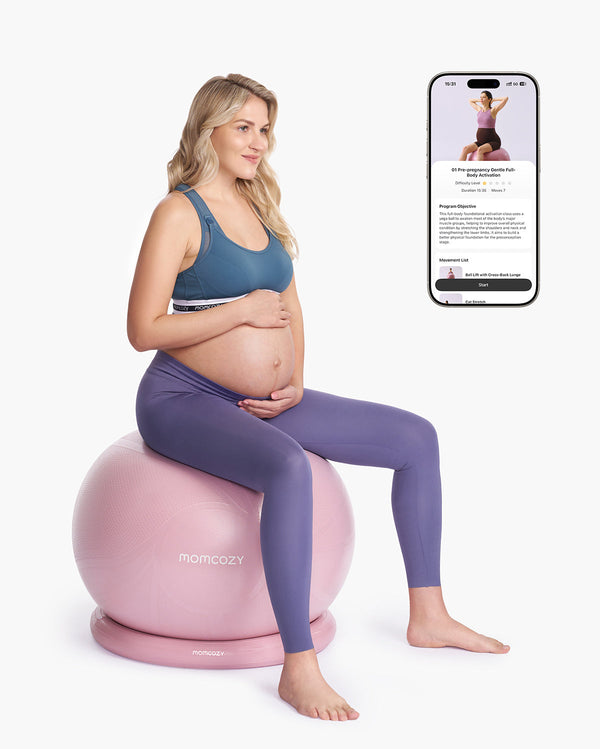
Hey Mama! I am so glad you are here! First off, congratulations on your upcoming new addition! It is both a sweet and exciting time in your family life. As you prepare your home and decorate the nursery, don’t forget to prepare your body and mind as well! When a baby is born, a mama is born also - this process will leave you forever changed.
So many moms LOVE being active, but wonder what that will look like now that pregnancy is here! The great news is that most women can continue exercising throughout their pregnancy, with some modifications as the baby grows. In fact, the American College of Obstetricians and Gynecologists (ACOG) highly recommends movement during pregnancy!
Recommended Activity: 150 minutes per week (e.g., 30 min/day, 5 days a week) of moderate-intensity aerobic and strength-conditioning exercises
If you are wondering how on earth you are going to navigate labor and delivery, you are in the right place.
With so many options on the market, and social media FULL of so many pregnancy focused movement programs, it can be overwhelming to choose! It can feel like you just took a pregnancy test and saw the two pink lines, and all of a sudden the algorithm is pushing baby related stuff your way. So, how is a mama to know what is right for her? I have been where you are, as a mom AND a physical therapist, with the women I work with every day. A pregnancy exercise ball workout is a great way to promote movement throughout all stages, right up until birth!
As a Pelvic Floor Physical Therapist, my mission is to move us away from the old-school "just rest and wait" mentality of pregnancy. We aren't just waiting for a baby; we are training for one of the most life changing and physical events of our lives. One of the most common tools I use with every single one of my patients—literally from the moment that pregnancy test turns positive— is a high-quality pregnancy and birth ball, like The Momcozy BirthEase Maternity Exercise Ball Set.
Anti-Burst Design
Stability Base Included
Guided Training Program
Why Is Exercise for Pregnant Women Important?
Exercise during pregnancy is not just about staying in shape - it is about preparing for one of the most athletic events of a woman’s life, and the recovery that follows. When you're growing a human, your center of gravity shifts, your joints loosen (thanks to the hormone relaxin), and your heart works about 30–50% harder than usual. Regular, moderate movement helps your body manage these shifts as the baby is growing, as well as can reduce chances of complications like gestational diabetes, preeclampsia and weight gain.
Is It Safe to Use an Exercise Ball During Pregnancy?
Yes, exercise balls are generally considered safe during pregnancy. In some outlier cases, such as cervical insufficiency, placenta previa or risk of preterm labor, your provider may recommend that you do not use a pregnancy exercise ball.
In most cases, having a dynamic surface for pregnancy exercise ball workouts is a safe and low impact way to get your body moving!
Safety Tips Before Starting Exercise Ball Pregnancy Exercises
- Consult your provider - be sure that there are no reasons you should not be exercising and/or using a pregnancy exercise ball. You may even consult a pelvic PT!
- Be sure your exercise ball is properly inflated - there should be some give, but it should not sink in more than 1-1.5 inches.
- Choose a space clear of clutter or obstructions - a carpet will give you more traction vs. a tile or hardwood floor!
- Stay hydrated during exercise!
Ten Easy Moves for a Pregnancy Exercise Ball Workout
Pelvic & Hip Mobility
Seated Pelvic Tilts
- Sit tall on the ball with feet flat.
- Tuck your tailbone under to round your lower back (slumping slightly).
- Reverse the movement by arching your back and pointing your tailbone toward the wall behind you.
Lateral Hip Sways
- Sit centered on the ball with your hands on your hips or knees.
- Shift your weight to move your hips side-to-side in a slow, controlled "leaning" motion.
- Keep your torso upright as the ball shifts beneath you.
Gentle Rhythmic Bounces
- Sit with a wide, stable base and a straight spine.
- Gently bounce up and down, ensuring your feet stay in contact with the floor.
- Use this time to practice deep diaphragmatic breathing and pelvic floor relaxation.
Stretching & Flexibility
Modified Child’s Pose (Hug a Ball)
- Kneel on a soft surface with knees wide and the ball in front of you.
- Lean forward to drape your chest and arms over the ball, hugging it for support.
- Rest your head to one side and breathe deeply into your back and ribs.
Seated Overhead Reaching
- Sit firmly on the ball and plant your feet wide.
- Reach one arm toward the ceiling, then lean slightly to the opposite side to stretch your ribcage.
- Switch sides, moving slowly to maintain balance.
Seated Thoracic Rotation
- Sit tall and place your right hand on your left knee.
- Reach your left arm back behind you, rotating your upper back and head to look toward your hand.
- Hold for a breath, then repeat on the other side.
Strength & Stability
Wall Ball Squats
- Place the ball between your lower back and a wall, leaning back slightly into the ball.
- Lower into a squat, allowing the ball to roll up toward your shoulder blades.
- Drive through your heels to stand back up.
Wall Ball Pushups
- Stand facing a wall and hold the ball against it at chest height.
- Place your hands on the sides of the ball and step your feet back into a plank.
- Bend your elbows to bring your chest toward the ball, then push back to start.
Ball Bridges (1st Trimester Only)
- Lie on your back with your heels resting on top of the ball and knees bent.
- Squeeze your glutes to lift your hips off the floor until your body forms a straight line.
- Slowly lower back down, using your core to keep the ball from wobbling.
Seated Marches
-
While sitting on the ball, slowly lift one heel, then the other.
-
Move slowly and with control, maintaining a controlled breath.
-
For a challenge, lift the whole foot off the floor. This builds core stability and balance.
Safety Tip: Always ensure you are wearing non-slip shoes (or are barefoot on a yoga mat) and have a stable surface nearby to grab if you lose your balance.
Are There Any Precautions I Should Take When Using a Pregnancy Ball?
If you are feeling unbalanced or dizzy/nauseous - safely stand up from the ball using support, or descend to the floor. We would recommend being near a chair or table for additional support, until you know how your body will respond to pregnancy exercise ball workouts.
Stay hydrated with water nearby during your workouts. If you are feeling short of breath, pause between exercises for recovery.
How to Choose the Right Exercise Ball
You will want to consider materials of the pregnancy exercise ball (BPA free), thickness of the material, burst rating, and size. Generally speaking, when the ball is fully inflated, and you are seated, your hips should be slightly higher than your knees. The MomCozy BirthEase Ball set has an intentional design with ergonomics and safety in mind. Being BPA-Free, materials and construction are also with safety in mind.
Anti-Burst Design
Stability Base Included
Guided Training Program
When to Avoid Fitness Ball Exercises for Pregnancy
If there is a change in your pregnancy status (developing preeclampsia, low amniotic fluid), you should consider stopping pregnancy exercise ball workouts. Always consult your provider!
Other “Stop Immediately” considerations:
- Vaginal bleeding or leaking fluid.
- Decreased fetal movement.
- Coning or Doming: If you see a "ridge" forming down the center of your belly (a sign of Diastasis Recti), the exercise is putting too much pressure on your abdominal wall.
- Calf pain or swelling: This can sometimes be a sign of a blood clot (DVT), which requires immediate medical attention.
3 Exercise Tips for a Better Birth
1. The "Figure-8" (Active Labor / Rotation)
The Move: Sit tall on the ball with feet wider than your hips. Gently sway your hips in a smooth "8" motion.
2. The "Forward Fold" (Back Pain Relief)
The Move: Kneel on a soft mat or rug. Lean forward and drape your chest and arms over the ball, hugging it close to your chest.
3. The "Deep Release" (Transition / Pushing)
The Move: Sit on the ball and focus on Low-Pressure Breathing. Inhale into your ribs; as you exhale, imagine your pelvic floor softening and "widening" into the ball.
FAQs
When Should I Start Using an Exercise Ball in Pregnancy?
You may begin using a ball for pregnancy exercise ball workouts at any time. It is advised that you do not make drastic changes in your physical routines further into your pregnancy. As always, consult your provider if you have questions.
How Long Should I Bounce on a Ball in Pregnancy?
You can bounce for 30 sec-2 min at a time, giving yourself seated or rolling rest breaks, shifting weight back and forth between your sit bones and bottom.
Is There a Difference Between an Exercise Ball and a Birthing Ball?
Birthing balls are usually made from thicker, heavy-duty materials, rated for “anti-burst”strength. This means if the ball is punctured, it will slowly deflate, rather than pop like a balloon. This is extremely important for safety during pregnancy to avoid falling. Birthing balls often have a non-slip finish or ribbed texture to keep the ball from sliding out from under you during use. You can check it: https://momcozy.com/blogs/pregnancy/is-there-difference-between-yoga-ball-and-pregnancy-ball
The MomCozy BirthEase Ball would be an excellent choice - it is made from extra-thick, BPA-free PVC with anti-burst technology. If punctured, the ball deflates slowly rather than popping, supporting a weight capacity of up to 330 lbs.
Be sure to check out the MomCozy App for more guidance on your pregnancy exercise ball workout journey!
We feature Stage-Based Video Courses Follow expert-led videos designed by maternal specialists to guide you safely from preconception through postpartum. Whether you’re a beginner or a pro, our clear instructions make it easy to use your birthing ball with confidence at home.
Smart, Personalized Plans Get exercise routines tailored to your journey directly in the Momcozy App. With progressive video goals, easy tracking, and a supportive community, we help you stay consistent and see safe results every step of the way.
Conclusion
Move with Purpose, Mama.
You don’t need a gym full of equipment to have a fit, functional pregnancy. You just need the right tools and a smart plan. By mastering these exercise ball movements, you aren’t just stretching; you’re physically prepping your pelvis for the marathon of labor. Remember: Listen to your body, prioritize your alignment, and never underestimate the power of a good pregnancy exercise ball workout!
Which move are you trying first?