


Millions of people globally struggle with a condition called edema, and it is often managed with edema support hose. This condition is caused by fluid retention. Edema may result from various causes, including pregnancy, sitting or standing with little movement for a prolonged period, health conditions, and as a normal part of aging. It most frequently impacts the lower extremities (legs, ankles, and feet) of moms, and most significantly impacts the quality of a patient’s life through the negative impacts it has on mobility and on blood circulation. It is essential to have healthy skin in order for blood to flow, and edema will eventually cause skin to become very unhealthy.
The reason edema must be cured is that there are a number of very serious healthcare threats that will occur if edema is left untreated. Fortunately, there are a lot of non-invasive options for edema, such as edema support hose or compression socks. These solutions make life easier. Having many great options may seem like too much to process, but this guide hopes to help people who have no knowledge of compression socks understand how these socks help and guide them on how to choose the right compression socks.
Best Edema Support Hose
Finding the right balance between compression and comfort is paramount for each person who struggles with socks for swollen feet and ankles. If you are searching for the best socks for swollen feet and ankles, or the best ankle compression socks, our edema support hose range offers solutions for everyone. These socks help relieve the discomfort for people who deal with chronic swelling as well as those who spend a lot of the day on their feet:
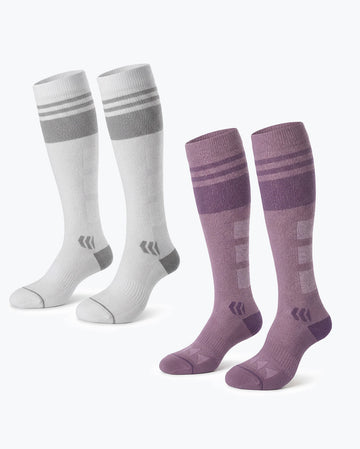
Momcozy Wide Calf Compression Socks 20-30mmHg for Sports (2 Pairs)

- Price: $29.99 (Pack of 2)
- Sizes: S, M, L – Wide calf fit
- Colors: Purple and White, Pink and Grey, Black and Grey, Black and Black, Purple and Pink
- Why We Love It: These socks offer firm compression that effectively relieves swelling, supports tired legs and improves blood circulation, specifically for those with wider calves. It is also ideal for sports, travel, or anyone needing stronger edema relief.
Momcozy Compression Socks for Women Wide Calf
- Price:$29.99 (Pack of 2)
- Sizes: XL - 5XL – Wide calf fit
- Colors: Black/Black, Light Gray/Pink, Black/Dark Gray
- Why We Love It: These socks combine gentle and effective compression with a wide-calf fit for all-day comfort. They help relieve swelling and prevent pinching, making them ideal for daily wear, pregnancy, or mild edema.
JOBST Opaque Compression Stockings

- Price: $40 - $75
- Sizes: S - XL, S Petite - XL Petite
- Colors: Black, Beige/Nude, Navy
- Why We Love It: The opaque stockings are made of soft, skin-friendly fabric. It provides gentle, gradual compression for tired, heavy legs and minor swelling.
Sigvaris Essential Cotton Calf

- Price: $72.76
- Sizes: S Short - XL Short, S Long - XL Long
- Colors: Black, Light Beige, Navy, White
- Why We Love It: This compression stocking features ultra-soft, skin-friendly fabric that adapts perfectly to your leg shape for a glove-like fit. With a wide size range, lengths, and toe options, it’s easy to put on and take off, offering all-day comfort and reliable support for both men and women.
Dr. Comfort Select Sheer Below Knee Stockings 15-20mmHg

- Price: $32.99
- Sizes: S – XXL
- Colors: Black, Nude
- Why We Love It: Having fashionable, stylish, and functional stockings is important for looking good. This pair combines just that. It allows you to look good without sacrificing your comfort.
How Do Compression Stockings Work?
Compression stockings for feet and legs utilize a type of pressure called graduated pressure. These stockings are constricted at the ankle and become less constricted as they travel up the leg. This contraction of the stockings against the skin works to aid the return of lymphatic fluid and blood to the heart and combats gravity so that fluid does not accumulate in the feet and legs.
How does this help edema?
- Improves venous return: The application of pressure to the veins aids in the return of blood to the heart.
- Reduces fluid buildup: There is less buildup of fluid in tissues due to pressure being applied.
- Supports lymphatic drainage: The pressure that compression socks apply to tissues helps promote the removal of waste and immune cells, thus supporting lymphatic drainage.
Compression socks for swollen ankles and feet can be beneficial for people with chronic venous insufficiency and lymphedema.
It can be beneficial for those with varicose veins, plus people who are athletes or travelers with limited mobility.
If you have swollen feet, water retention, or swollen legs, the right edema support hose can help reduce the effects of swelling.
Graduated vs. uniform compression:
Most support hose use gradient compression to help ease edema, whereas uniform compression is generally less used and much less efficient in helping edema.
Understanding Compression Levels (mmHg)

Compression socks are available in different pressure levels, measured in millimeters of mercury (mmHg). The appropriate compression level suited for your swelling depends on your specific condition and symptoms.
- Mild (8-15 mmHg): For mild to moderate swelling, tired or achy legs, and for situations in which swelling prevention is required.
- Moderate (15-20 mmHg): Ideal for minor swelling associated with pregnancy and prevention of swelling during travel, including long flights or car trips.
- Firm (20-30 mmHg): For swelling due to varicose veins, moderate to severe swelling, and post-surgical recovery.
- Extra firm (30-40 mmHg): For severe edema and lymphedema (requires prescription).
Examples:
- Office workers and travelers often use compression socks with pressures starting at 15-20 mmHg.
- Pregnant women, nurses, and athletes who stand or move all day may benefit from 20-30 mmHg.
- People with conditions should see their doctor before purchasing compression socks. Swelling that is painful, tender, red or discolored (blue or purple), gives a warm feeling, and swelling should be evaluated by a doctor because it may be a serious or life-threatening condition.
Which is tighter, 15/20 or 20/30 compression socks?
20/30mmHG compression socks are tighter than 15/20mmHG compression socks. Too much compression causes worse issues than not having enough support. Blood flow issues can develop from compression socks that are too tight. If you are a beginner to compression therapy, or are uncertain which level you should start with, consult your doctor.
Types of Compression Stockings
There are several styles of compression stockings. Each type serves a different purpose and is preferred by different users.
- Knee-high compression stockings: These are the stockings most people are familiar with. These stockings help with foot and ankle swelling.
- Thigh-high stockings: These are knee-high compression stockings but reach higher on your leg to meet your thigh. These help people who have swelling of the thigh and the lower leg, or people who have a higher risk for blood clots.
- Pantyhose or full-leg compression stockings: These stockings stretch from your foot and ankle to help people with edema that extends beyond the knee.
- Open-toe vs. closed-toe: Open-toe stockings are designed for breathability. They can be worn with sandals/summer shoes or by those with toe discomfort. On the other hand, closed-toe provides full coverage and warmth.

Choosing the right style:
- For swelling below the knee, it is advised to use knee-high compression stockings. For swelling above the knee, or as your doctor recommends, use pantyhose or thigh-high stockings.
- When buying socks for swollen feet and ankles, think about the ease of the stocking, the length and the thickness of the material.
It is very important to get the right size for your socks not only for comfort, but also for effectiveness for the swelling of your feet. Use your best judgement when thinking about which socks to get. Take lower and upper leg measurements at the same time every day before you buy socks. Take measurements first thing in the morning before standing, when swelling is usually at its lowest—or follow the brand size chart and your clinician's advice. You want socks that hug your legs tightly, but don’t cause discomfort. You don’t want your socks causing indentations in your legs. You should not see any skin discoloration after removing your support hose.
Do Compression Stockings Really Help with Edema?
Yes, compression stockings help manage swelling, pain, and improve leg function in patients with edema.
Evidence:
- Studies have shown that symptoms of leg swelling caused by chronic venous insufficiency and lymphedema are reduced through graduated compression.
- Most guidelines from vascular and lymphatic health organizations suggest that compression therapy is the first-line approach in the treatment of edema.
Limitations:
- Treatments other than compression therapy may be needed to address swelling of the legs. These include frequent elevation of the legs, movement, and addressing the underlying cause. To elevate your legs, lie back on a couch or bed and place your legs on three or four pillows, making sure your feet are at a level higher than your heart, several times a day for 15-30 minutes at a time. Gravity will help push the fluid from your feet to the heart and reduce swelling. Also, if you sit for extended periods of time with no movement, do a simple set of ankle rolls every hour for at least 15 minutes. These movements will improve swelling and fluid retention.
- There are a number of causes of leg swelling; not all cases are related to the venous or lymphatic systems. When swelling is the result of a heart or kidney condition, check with your doctor before using compression therapy.
How to Use Your Compression Stockings Correctly

Follow these tips to get the maximum benefit from your compression stockings for legs with mild swelling.
- Wear them first thing in the morning before swelling increases.
- Ensure your skin is dry to make application easier.
- Turn the sock inside out up to the heel and slip your foot in, then gently roll it up your leg.
- Smooth out wrinkles: The stockings work best when smoothed out to remove all wrinkles. Circulation is reduced by unnecessary stocking bunching.
- Check the fit: The stocking should fit your leg snugly.
- Remove at night: They must be taken off every night unless otherwise instructed by your doctor.
- Wash regularly: The best way to wash your compression stockings is to hand wash them in cold water and allow them to air dry.
Troubleshooting:
- Stockings that are too small roll down, and so will stockings that aren’t tall enough.
- Indentations or marks from tight stockings that do not fade may indicate compression stockings that are too small.
Who Can Benefit from Compression Stockings?
Best support socks can be used for numerous situations. These conditions include:
- People who suffer from chronic swelling (edema) due to venous insufficiency, lymphedema, or other conditions.
- People who are pregnant (as a method of swelling and leg fatigue control)
- People who are in positions who spend a lot of time standing and people who spend a lot of time sitting (such as teachers, office workers, or healthcare workers).
- People who perform sporting activities (for both recovery and performance)
- People who have undergone surgery (to avoid blood clots and swelling)
- Long-haul travelers (both air and ground)
- The elderly (for circulation)
Caution:
Diabetics, people suffering from advanced cases of Peripheral Arterial Disease, neuropathy or people with infected and compromised skin should CONSULT a PHYSICIAN FIRST.
Potential Side Effects
Compression socks typically don't have side effects. However, socks that don't fit properly or are worn wrong can cause:
- Skin irritation, redness, or itching
- Tingling, numbness, or pins-and-needles sensation
- Indentations or pressure marks on the skin
How to avoid side effects:
- Wear the proper size and level of compression.
- Keep the sock top flat against your leg.
- Take the sock off if you experience pain or numbness, and it doesn't go away.
When Should You Not Wear Compression Stockings?
The following people should NOT wear compression stockings:
- People with severe peripheral artery disease
- People with untreated open wounds/infections on the legs/feet,
- People with stocking allergies
- People with advanced heart failure or kidney disease
If you are in doubt, consult your healthcare provider prior to use of compression socks.
FAQs
How long should you wear compression stockings for edema?
You may be advised to wear your edema compression stockings for the whole day and then remove them before sleeping. Of course, this advice may vary depending on your situation, so you should consult your doctor.
What not to do while wearing compression socks?
- Compression stockings should never be pulled down, folded, or manipulated in a way that restricts blood flow.
- Compression stockings should not be worn over open wounds unless instructed by a doctor.
- Ignore discomfort that does not resolve or suspect/manifest changes in the skin.
What is better than compression socks?
For some conditions, prescription-strength stockings or pneumatic compression devices may be more effective. Always ask your healthcare provider about the best options for you.
Can I wear compression stockings to bed?
Unless your doctor says so, do not wear your compression stockings to bed, as it is prescribed to very few patients. Nighttime stocking use is almost never necessary.
Conclusion
Edema support hoses are designed with compression to help with fluid buildup in the legs, ankles, and feet and decrease discomfort caused by swelling. Learning to put compression socks for swollen feet on can create major relief. Your comfort and ease of movement are prioritized after you begin to wear a support hose daily. Take a look at your legs and check the skin to ensure you take proper care of your support hose. The health of your legs is important,as the needs of your legs can vary over time.
To guarantee the safety and effectiveness of your edema management plan, visit your Primary Care Physician on a regular basis. If you have ongoing issues with keeping your legs and feet healthy, check out the Momcozy Compression Socks Collection. For safety guidelines and proper use of our socks, please take a look at our safety guidelines. To learn how to use our socks properly, please refer to the safety guidelines.








