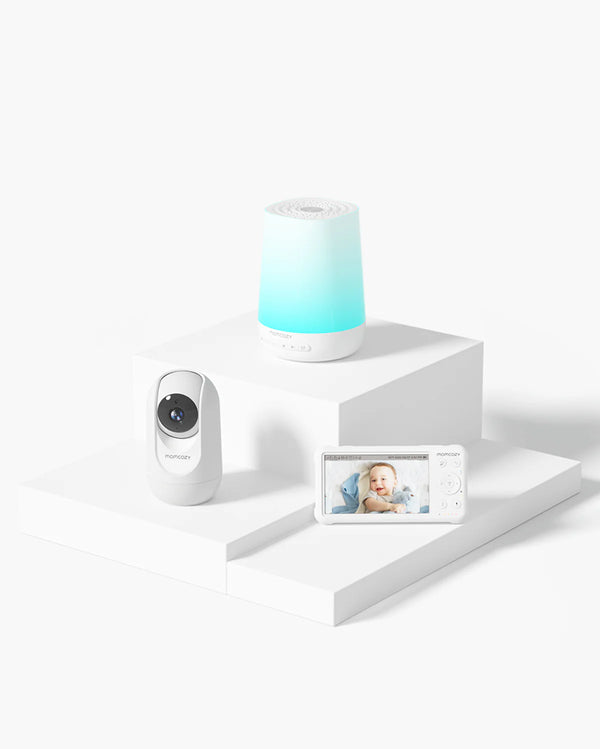
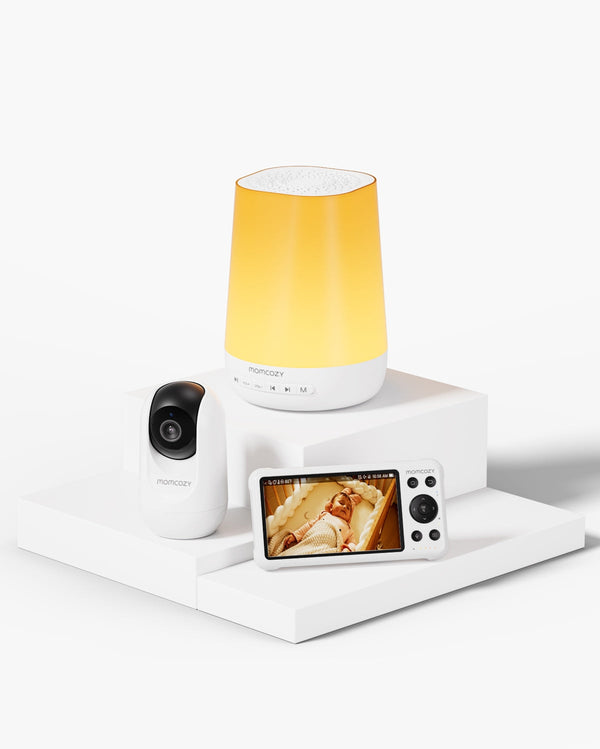
Getting your baby to sleep can feel like solving a puzzle. One tool that's helped countless families is a sound machine. Let's walk through everything you need to know about sleeping with a sound machine safely and effectively.
What Is a Sound Machine and How Does It Work?
A sound machine is a device used to produce constant background noises to help disguise unexpected noises that are annoying enough to wake up your baby. They basically act as a sound blanket to drown out noises such as slamming doors, barking dogs, and traffic.
These devices emit regular, rhythmic noises, which are something the brain of the infant needs to filter out. Rather than having infants startled out of a sound sleep by unexpected noises, the constant sound trains the infant to sleep through it.
Why You Should Consider Using a Sound Machine for Your Baby
Babies are easily startled and have difficulty resettling to fall back asleep, unlike adults. In reality, babies actually go nine months surrounded by loud noises, as the womb produces constant background noises between 50 and 60 decibels, with occasional spikes, such as when a vacuum is running. Hence, it is not so surprising that some children can fall back to sleep more effectively with background noises than if it is completely silent.
Sound machines are also important when it comes to forming sleep associations. When the baby hears the sound, it creates a connection between the sound and the time to sleep. This is applicable when you are at home, visiting relatives, or on holiday.
For instance, you could utilize a clever gadget such as Smart Baby Sound Machine - App Remote Control to regulate your infant’s sleeping atmosphere wherever you are, whether it is at home, at the hotel, or even at grandma and grandpa’s.
App-Fernsteuerung
Schlaf-Wach-Routine
7-Farben-LED-Licht
34 Sounds
How Does Ongoing Use of a Sound Machine Help Babies to Fall Asleep Faster?
Infants alternate between light and deep sleep about every 45-minute cycle. During the light stages, they are more apt to awaken to sounds and also to their startle reflex.
A sound machine blocks out the interruptions. If a neighbor has a barking dog and a truck drives by, the constant sound ensures the disruptions won’t disturb a baby. In addition to ensuring a calm nursery, it can also calm irritable infants by giving them the familiar surroundings of the womb. Inspired by experts, sound machines are also suitable for the ‘sleep but not fully alert’ technique.
What are the Differences Between White, Pink, and Brown Noises?
Not all sound machine options are the same—here is a quick rundown of the most common ones.
White Noise Characteristics
In white noise, all frequencies are of equal strength. Examples of white noise are the sound of static on a radio and the hum of a fan. White noises are best used to block abrupt noises, but some children may not take to it.
Pink Noise Benefits
Pink noise favors lower frequencies and involves higher frequencies. It is also softer. Examples are rain and wind in the trees. Research has indicated that pink noise could work to improve the quality of an individual’s sleep.
Brown Noise Features
Brown noise is more centered around low frequencies, akin to the sound of a rumbling waterfall and/or mighty surf. This may prove more beneficial to children who are easily overwhelmed.
What Other Sound Choices Are Available Other Than White Noise?
There are currently sound machines on the market, which provide alternate noises to the traditional ones, and which some infants may actually prefer.
Nature Sounds & Ocean Waves
Examples include rain, ocean waves, and the sound of a forest. The rhythmic cycle of ocean waves is very soothing to infants.
Heartbeat and Womb Sounds
These are modeled on what the infant heard before birth. A rate of 60 to 70 heartbeats a minute is supposed to resemble a resting rate. All-in-One nursery configuration, such as Baby Care Bundle: Smart Baby Sound Machine and Dual-mode Baby Monitor BM04 often incorporate white noises, music tracks, and womb sounds under a single system, and you can alternate between various options based on your growing infant.
App-Fernsteuerung
Schlaf-Wach-Routine
7-Farben-LED-Licht
34 Sounds
Rain and Thunderstorm Sound
A soft rain is also a great background option, not too mechanical. You can also select a machine to add some thunder, but please ensure it won't startle the baby.
What Is the Safe Volume Level When Sleeping with a Sound Machine?
This is crucial. Just because something helps your baby sleep doesn't mean louder is better.
Recommended Decibel Levels for Infants
Pediatric guidelines, including those referenced by the American Academy of Pediatrics, recommend keeping infant sleep sound environments at or below about 50 decibels at crib level.
| Sound Level |
Decibels |
Example |
| Whisper |
30 dB |
Quiet library |
| Normal conversation |
60 dB |
Restaurant |
| Safe maximum for baby |
50 dB |
Moderate rainfall |
| Vacuum cleaner |
70 dB |
Too loud for baby |
Many sound machines can reach 85 decibels or higher at maximum setting—definitely too loud and potentially damaging to hearing over time.
Volume Guidelines for Different Age Groups
Newborns can tolerate slightly higher volumes in the short term—around 50–60 decibels—to replicate womb conditions. However, as your baby grows, gradually reduce the volume. Once your baby is a few months old, aim for that 50-decibel maximum during sleep.
How Can You Tell If Your Baby's Sound Machine Is Too Loud?
Here are practical ways to check if you've set the volume correctly.
Use the conversation test: stand next to your baby's crib while the machine runs. If you must raise your voice to talk to someone standing next to you, it's too loud.
Simple Volume Testing Methods
Download a free decibel meter app on your smartphone. Measure the sound level right at your baby's crib—not at the machine itself. Start with the volume lower than you think necessary, then gradually increase until you find the sweet spot.
Warning Signs of Excessive Noise
Watch your baby's reactions. If they seem startled when you turn on the machine or show signs of overstimulation rather than soothing, dial it back. Some babies develop temporary threshold shifts if exposed to too-loud sounds regularly.
What Are the Essential Safety Tips for Sleeping with a Sound Machine?
Apart from the volume and where it is, here are some important safety considerations.
Before bedtime routines begin, a few minutes of gentle rocking in a electric baby swing can help baby transition from active play to a calmer state—just remember to always move them to a firm, flat crib for actual sleep.
Timer vs. Continuous Settings
Leave the sound machine on all night if you can. Do not use a timer. If it cuts off and your baby is up, it may be more difficult for them to go back to sleep.
Device Maintenance and Safety Checks
Checking the power cord periodically and keeping it away from children is also important. Battery replacement is also important, and it should be kept clean, free from dust, which could distort audio.
Electrical Safety Considerations
Choose sound machine models with appropriate certification. Always keep the machine away from water and never route the power cord under a carpet or blanket, which could cause it to overheat.
When Should You Stop Sleeping with a Sound Machine?
Many parents are wondering when to phase out.
Age-Based Transition Guidelines
There is no certain age to quit using one. Most pediatric sleep specialists agree it is okay if it’s working. If the child is becoming too reliant on it by the time they are two to three, you can start to wean.
Gradual Weaning Strategies
If you decide to quit, you should implement it gradually. You should turn it down a notch every few nights. After reaching the lowest volume, you should turn it off after your child has fallen asleep.
How Do You Select the Best Sound Machine for Your Family?
Select mmachines that have real sound loops (not too obvious, short loops).
Key Features to Look for
The volume control should allow detailed changes, not just low, medium, and high. A battery backup is convenient during power failures. If you are interested in having app control, timers, and volume control, you can look into some of the Smart Nursery products, such as the Smart Baby Sound Machine with App Remote Control, or you could browse the Baby Sound Machines to select the right product based on the room and schedule.
Budget-friendly vs. Premium Versions
Basic machines, which cost between $20 and $40, are generally adequate. High-end models provide additional music options, speakers, and features such as night lights and applications.
Portable vs. Stationary Model
If you are the traveling type, consider designs with rechargeable batteries. If you are planning to buy it for the nursery, fixed models with AC power could also provide superior audio. In some instances, the family may decide to keep a small smart device for the diaper bag and another more advanced smart device in the nursery to keep the sound familiar when the environment changes.
FAQs
Q1. Can Sleeping With a Sound Machine Create Permanent Dependency?
A sound machine is something that babies can associate with sleeping, but it is not a concern. Again, it is very much like having a pillow to sleep with. Essentially, most children outgrow having to use a sound machine, and it is more of a preference than anything. What you want to ensure is that the sound machine is merely part of a good sleeping routine, not the only thing the child can fall asleep to. If you are someone who likes to go on the road, it is okay to have something portable.
Q2. Is It Safe to Use a Sound Machine Every Single Night?
Yeah. As long as it is used properly, it is safe to operate each night. Issues arise when it is turned up too loud or when it is installed improperly, not when it is used each night. Many families operate sound machines each night without issue. Just keep the decibels to 50, keep a suitable distance between it and the crib, and conduct regular checks. If you are concerned about the issue of dependence, recall that it is not uncommon for adults to prefer it either.
Q3. Will My Baby’s Hearing Be Affected by Regular Sound Machine Use?
If it is kept at a safe level (50 decibels or less at the level of the crib), sound machines are not harmful to children’s hearing. However, exposure to anything above 85 decibels is potentially hazardous, which is far beyond the safe operating level. Research on infant auditory development has found no adverse effects on infant hearing when sound machines were used correctly. Still, if there are past concerns with your child’s hearing difficulties and ear infections, consult with your pediatrician regarding the machine in case of recovery.
Conclusion
Sleeping with a sound machine can transform your family's rest when used safely. Keep the volume at 50 decibels or below, place it seven feet from the crib, and choose soothing sounds. Start tonight with these guidelines and adjust based on your baby's responses. For ongoing sleep struggles, consult your pediatrician or a sleep consultant.
If you want to put these ideas into practice, consider theMomocozy Baby Care Bundle: Smart Baby Sound Machine and Dual-mode Baby Monitor BM04 for all-in-one monitoring and soothing, the Smart Baby Sound Machine - App Remote Control for everyday use around the home, or explore the wider Momcozy baby sound machine range to find a sound machine that fits your baby's sleep style and your routine.