Hospital Grade Breast Pump

Momcozy's hospital-strength wearable breast pumps feature an advanced closed-system design, delivering hospital-strength suction performance in a hands-free, single-user format.

Sort by:
Translation missing: th.V1 Pro Hospital-Grade Wearable Breast Pump in pink with two collection cups
After Code
$199.99
$169.99
Overview
4.7
评分4.7星(满分5星)
423
$199.99 USD
Hospital-Grade -300mmHg Suction 15 Suction Levels 3rd-Gen Motor
Translation missing: th.V2 Pro Hospital-Grade Wearable Breast Pump - Ultra-light & Potent
After Code
$199.99
$169.99
4.7
评分4.7星(满分5星)
382
$199.99 USD
Hospital-grade More Comfort Whisper-quiet Portable
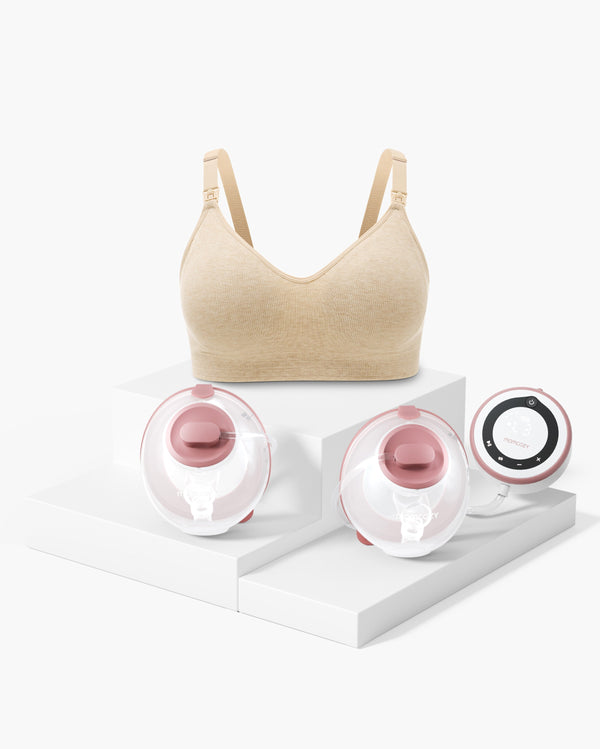
Translation missing: th.V1 Pro Bra Bundle: V1 Pro Breast Pump and US. Cotton Nursing Bra
5.0
评分5.0星(满分5星)
33
$239.98 USD
Translation missing: th.V1pro/V2pro Wearable Breast Pump Replacement Parts
4.7
评分4.7星(满分5星)
54
From $9.99 USD
Some breast pump accessories do need replacing regularly to maintain performance. If you notice that your pump seems to have lost suction, the first thing you should do is take...

How the V1 Pro Compares: Key Specs at a Glance

The V1 Pro is the core pump in this collection, and its specifications define what hospital grade performance means in a wearable format. The accessories and bundles below extend and complete that setup.
Pro Series Specs
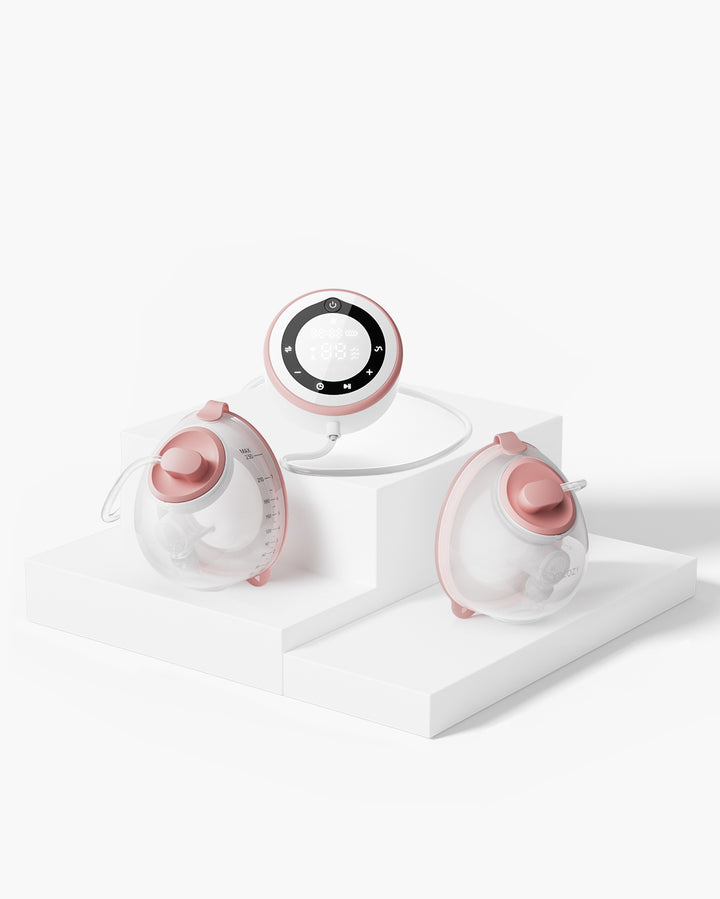
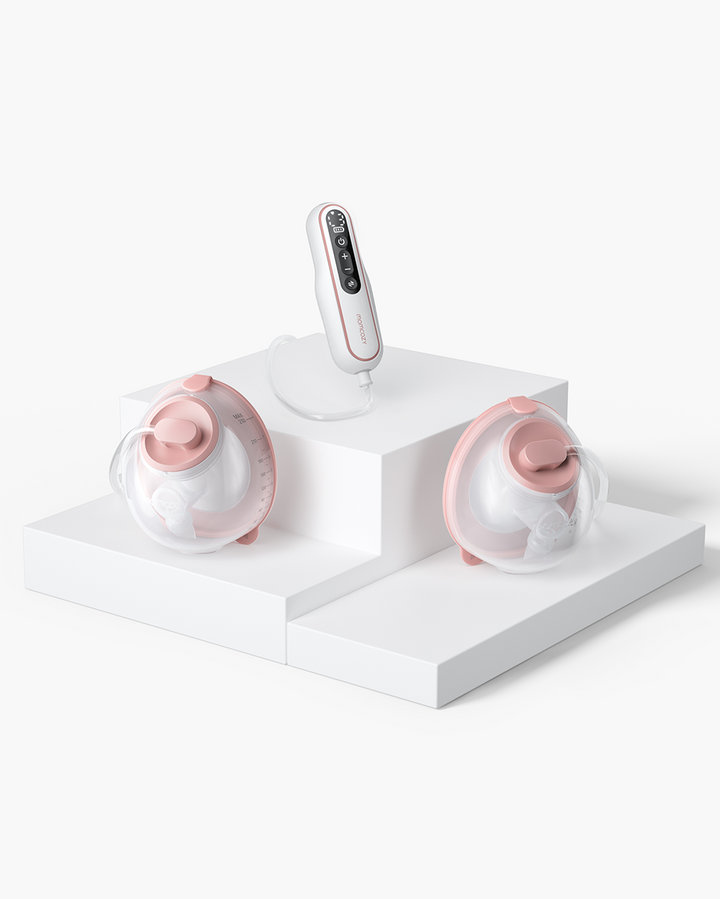
V1 Pro V1 Pro
V2 Pro
Max Suction -300 mmHg (Peak Power) -288 mmHg (Efficient)
Intensity Levels 45 Total Options
15 per mode
27 Total Options
9 per mode
Battery Life 2300 mAh
(7-9 Sessions)
1800 mAh
(4-6 Sessions)
Motor Tech 3rd-Gen Pro Motor 3rd-Gen Compact Motor
Best For Establishing supply &
Customized comfort
Commuting, Travel &
Active daily use
Verdict Performance Choice Portability Choice

What Is a Hospital Grade Breast Pump?

These terms are often confused, but they are not interchangeable. A true "hospital-grade" pump is a multi-user device built for clinical rental settings, with specialized programming designed for mothers with medical necessity. "Hospital strength" describes a high-performance personal pump — like the Momcozy V-Series — that delivers powerful, hospital-strength suction in a portable, single-user format.

The industry distinguishes these pumps in three primary ways:

  • User Design: In general industry practice, pumps described as "hospital-grade" are intended for multi-user rental settings — such as hospitals or lactation centers — where multiple mothers use the same motor unit with individual collection kits. Pumps described as "hospital-strength" are personal-use devices designed for a single user.
  • Suction Performance: Pumps in this category are designed to sustain strong, consistent suction across a full session — not just reach a peak number. While maximum suction levels vary across models and categories, what matters most for effective output is the pump's ability to maintain comfortable, consistent pressure throughout each session. The V1 Pro and V2 Pro are built around this principle, prioritizing sustained performance over single-point peak claims.
  • Safety & Hygiene (Closed System): Both utilize a closed system with a protective barrier to ensure milk never contacts the motor or tubing. This "anti-backflow" design is a mandatory safety requirement for multi-user hospital-grade models and a premium hygiene feature in hospital-strength personal pumps.

The Momcozy V-Series (V1 Pro & V2 Pro) bridges this gap by delivering "Hospital Strength" suction (-300 mmHg) in a portable, single-user format. This provides the efficiency and motor longevity expected from a clinical machine with the mobility of a wearable pump.

Features & Benefits: V1 Pro vs. V2 Pro

Momcozy V1 Pro

  • Hospital Grade Precision: 3 modes with 15 intensity levels and adjustable cycle speeds for ultimate control.
  • Separated Wearable Design: Keeps motor weight off the breast, reducing sensitivity and ensuring a discreet fit.
  • High-Capacity Battery: 2300 mAh battery supports up to 9 sessions, ideal for exclusive pumping.

Momcozy V2 Pro

  • Hospital-Strength Output: Delivers the -288 mmHg suction with 9 levels for efficient milk removal.
  • Ultra-Compact Mobility: A smaller, lighter motor unit that is easy to carry, ensuring maximum freedom.
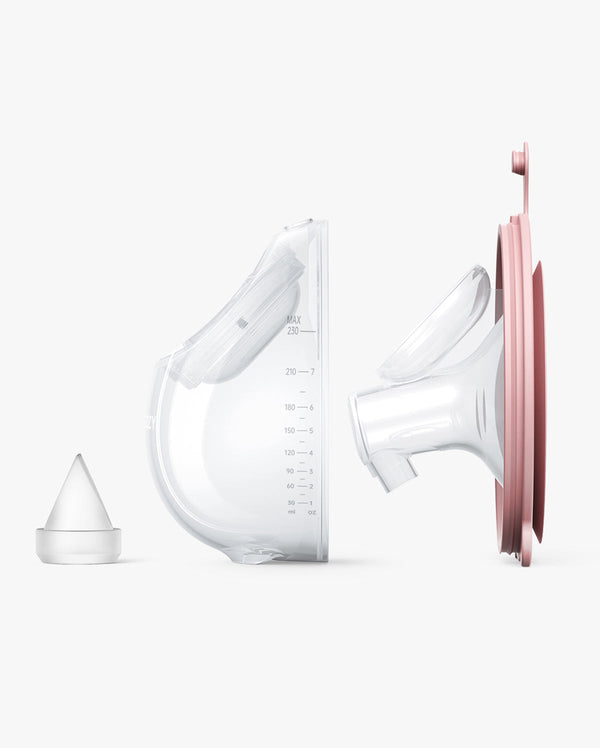
  • Universal V-Series System: Uses the same 3-part easy-clean system as the V1 Pro for simple maintenance.

How to Choose a Hospital Grade or Hospital Strength Breast Pump

Selecting the right pump comes down to four practical factors that affect daily usability:

  1. Suction Power & Range: Look for at least -250 mmHg. V1 Pro reaches -300 mmHg and V2 Pro reaches -288 mmHg for sustained output.
  2. Weight Distribution: Separated designs like the V-Series reduce breast strain compared to all-in-one models.
  3. Battery Capacity: Choose based on your daily session count. V1 Pro (2300 mAh) is best for those who can't charge often.
  4. Parts & Cleaning: Fewer parts mean less maintenance. The V-Series 3-part design is a practical advantage for busy routines.

Momcozy Diaper Pail Buying Guide: Finding the Best Match for Your Nursery

01

What Is a Diaper Pail?

A diaper pail is a nursery container designed specifically for used diapers. Unlike a general household trash can, it is built around frequent diaper drop-off, odor containment, bag removal, and placement near a changing station.
For families handling several diaper changes a day, especially during newborn nights, a baby diaper pail can keep disposal close to the changing area and reduce immediate trips to an outdoor bin. It still needs regular emptying and cleaning, but it can make the routine more contained and easier to manage.
02

How Odor Control Works in a Diaper Pail

Odor control matters at three points in the disposal routine:

  1. When a diaper is dropped in
  2. The rotating lid creates the first barrier while supporting zero-contact disposal. Between diaper changes
  3. An integrated gap-sealing ring helps close the space between the rotating chamber and the disposal opening. When a full bag is removed

The patented clamp helps close the bag opening before removal, reducing odor exposure during bag changes. These three elements form Momcozy’s Triple-Seal structure.

No odor control diaper pail should be treated as completely odor-free. Results also depend on correct bag installation, emptying before the bag is overfilled, regular cleaning, and replacing the deodorizing pack as directed. Parents comparing an odor locking diaper pail should look at the full disposal process, not only the lid.

03

Do You Really Need a Diaper Pail?

Not every family needs a diaper pail.

A dedicated diaper pail may be useful when:

  • Diaper changes happen overnight or upstairs.
  • Used diapers may remain indoors between trash trips.
  • The changing area is in a bedroom, shared room, apartment, or small nursery.
  • Parents prefer a dedicated diaper disposal routine.
  • Someone in the household is sensitive to lingering diaper odors.

A regular trash can may be enough when:

  • Used diapers are taken outside immediately.
  • The outdoor bin is close to the changing area.
  • Household trash is emptied several times a day.
  • Only a small number of diapers are changed at home.

For parents asking do you need a diaper pail, is a diaper pail necessary, or are diaper pails worth it, the answer depends on convenience, odor control, available space, bag cost, and cleaning needs.

04

Diaper Pail vs Trash Can

Feature Diaper Pail Regular Trash Can
Primary use Designed for frequent diaper disposal in a nursery Designed for general household waste
Odor control May use a rotating lid, sealing ring, bag clamp, or deodorizing accessory Depends mainly on the lid, bag, and emptying frequency
Diaper drop-in May reduce direct contact and limit how much of the interior is exposed Usually requires opening the main lid
Capacity Varies by model; some include a fill window or capacity designed for frequent diaper changes Varies widely by household trash can
Bag system May require proprietary refills or accept regular trash bags Usually accepts standard household trash bags
Cleaning May include removable or easy-access parts Varies by trash can design
Best suited to Bedrooms, upstairs nurseries, apartments, and frequent diaper changes Homes where diapers are removed quickly or trash is emptied often

A regular trash can can hold diapers, but a diaper trash pail is designed around repeated nursery use. A dedicated diaper pail may be more practical when parents want used diapers contained near the changing station, fewer immediate trips outside, and a bag-removal process designed to limit odor exposure.

The current Momcozy model adds a rotating lid, clamp bag seal, 22L capacity, transparent window, and dual child safety locks.

05

Diaper Pail Bags, Refills, and Regular Trash Bags

Different products use different bag and refill systems:

Bag or Refill Type What It Means What Parents Should Check
Standard trash bags Common household bags in a supported size Size, strength, fit, and installation
Proprietary diaper pail refills Rings, cartridges, rolls, or bags made for a specific system Price, availability, and replacement frequency
Deodorizer refills Replaceable accessories designed to support odor control Product compatibility and replacement instructions

The Momcozy Triple-Seal model works with most standard 13-gallon trash bags, including drawstring and non-drawstring styles, so proprietary diaper pail refills are not required.

Bag fit still matters. Thickness, strength, and how securely the bag sits around the rim can affect setup and removal.

Parents comparing diaper pail bags, diaper pail refills, regular trash bags, or a diaper pail that uses regular bags should consider:

  • Bag availability
  • Ongoing cost
  • Supported bag size
  • Bag strength and fit
  • Ease of installation
  • Ease of full-bag removal
  • Whether deodorizer replacements are optional or required
06

How to Choose a Diaper Pail for Your Nursery

Choose a diaper pail based on the room, changing routine, safety needs, and ongoing costs.

For Newborn Night Changes

Look for:

  • Easy diaper drop-in
  • A visible fill level
  • Straightforward bag removal
  • Convenient placement near the changing area
  • An opening that can handle different diaper sizes

For Apartments or Small Nurseries

Check:

  • Product footprint
  • Lid-opening clearance
  • Space needed to remove a full bag
  • Distance from walkways, doors, heaters, and vents
  • Whether the pail can sit safely near the changing area

For Homes With Toddlers or Pets

Compare:

  • Child-lock design
  • Product stability
  • Access to loose bags
  • Access to deodorizing accessories
  • Safe placement options

For Lower Ongoing Costs

Confirm:

  • Whether special refills are required
  • Compatibility with regular trash bags
  • Recommended bag size
  • Local bag availability
  • Replacement frequency
  • Whether deodorizer refills are optional

The best diaper pail is not simply the model with the longest feature list. It is the one that fits the nursery layout, diaper-changing frequency, safety needs, and maintenance preferences.

For shoppers looking for a small diaper pail or the best diaper pails for odor, practical fit and daily usability matter alongside sealing features.

The Momcozy Triple-Seal model offers 22L capacity, a transparent fill window, dual child safety locks, and compatibility with most standard 13-gallon trash bags.

07

How to Use, Empty, and Clean a Diaper Pail

How to Use a Diaper Pail

  1. Install a compatible bag according to the product instructions.
  2. Make sure the bag is seated and secured correctly.
  3. Place the pail near the changing station but outside a child’s play area.
  4. Close the lid after each diaper.
  5. Avoid pressing diapers into an overfilled bag.

How to Empty It

  1. Empty the pail before the bag becomes tightly packed.
  2. Use the bag clamp as directed.
  3. Remove the bag carefully.
  4. Tie the bag securely.
  5. Install a new bag with the correct fit.

How to Clean It

  1. Remove the full bag.
  2. Wipe high-touch and interior surfaces as directed.
  3. Rinse the removable top when needed.
  4. Allow all cleaned parts to dry fully.
  5. Reassemble the product only after the parts are dry.
  6. Replace the deodorizing pack according to the product instructions.
  7. Follow the manual for model-specific cleaning and safety guidance.

Momcozy confirms that the removable top can be rinsed with water and provides an official DP01 instruction center.

FAQ
Choose & Compare
Odor Control
Bags & Refills
Use & Care
Do you really need a diaper pail?

You may not need a diaper pail if every used diaper is taken outside promptly or household trash is emptied several times a day. A dedicated pail becomes more useful when changes happen in a bedroom, upstairs nursery, apartment, or nighttime changing area where diapers may remain indoors longer.

Is a diaper pail worth it?

A diaper pail can be worth it for families that change diapers frequently and want a dedicated disposal point near the changing station. Its value comes from odor-control design, fewer immediate trips outside, easier organization, and a bag system intended for diaper disposal. A regular can may still be enough when trash is removed promptly.

What is the difference between a diaper pail and a diaper trash can?

People sometimes use the terms interchangeably. A diaper pail is generally purpose-built for used diapers, while diaper trash can can also describe any trash container used for them. Compare the lid, sealing structure, bag setup, capacity, cleaning access, and safety features rather than relying only on the name.

How do I choose a diaper pail for my nursery?

Start with the changing routine and room layout. Compare:

  • Footprint
  • Opening method
  • Capacity
  • Bag compatibility
  • Full-bag removal
  • Cleaning access
  • Child safety features
  • Ongoing refill costs

Frequent newborn changes may make easy drop-in use more important, while a compact room may make footprint and lid clearance the priority.

Which Momcozy diaper pail should I choose?

The current Momcozy Triple-Seal Diaper Pail is designed for families looking for zero-contact disposal, 22L capacity, a transparent fill window, dual child safety locks, and compatibility with most standard 13-gallon trash bags. Check the product dimensions and instructions before deciding whether it fits the room and routine.

Do diaper pails really control smell?

Diaper pails can help contain diaper odors better than an open or loosely covered trash can, but no pail is completely odor-free. Performance depends on the sealing design, bag fit, emptying schedule, room conditions, diaper contents, and cleaning routine.

Why does a diaper pail smell when opened or emptied?

Odors held inside the pail or bag can escape briefly when the lid is opened or a full bag is removed.

To reduce diaper pail smell during this step:

  • Empty the pail before the bag is overfilled.
  • Use the clamp correctly.
  • Tie the bag promptly.
  • Check that the bag is not torn.
  • Clean interior and high-touch surfaces regularly.
How does Momcozy Triple-Seal odor control work?

The system uses:

  1. 1.  A rotating-lid barrier during diaper drop-in
  2. 2.  An integrated gap-sealing ring between changes
  3. 3.  A patented bag clamp seal before full-bag removal

The included deodorizing pack provides additional freshness support. Regular emptying and cleaning are still necessary.

What is an odor-locking diaper pail?

An odor-locking diaper pail is designed to help contain diaper odors between changes through features such as:

  • A sealed or rotating lid
  • Internal sealing barriers
  • A clamped bag opening
  • A compatible deodorizing component

The exact structure varies by model, and regular emptying and cleaning are still required.

How can I reduce diaper pail smell between bag changes?
  • Install the bag correctly.
  • Close the lid after every use.
  • Avoid overfilling the bag.
  • Empty the pail on a consistent schedule.
  • Check for a torn or poorly seated bag.
  • Rinse removable parts when needed.
  • Replace the deodorizing pack as directed.

If diaper pail smell suddenly becomes stronger, first check the bag fit, fill level, and sealing areas.

Do Momcozy diaper pails need special bags?

No. The Momcozy Triple-Seal model does not require proprietary diaper pail refills. It works with most standard 13-gallon trash bags. Use the recommended size and installation method for a secure fit.

Can I use standard 13-gallon trash bags in a diaper pail?

Yes, when the model is designed for them. The Momcozy Triple-Seal Diaper Pail works with most standard 13-gallon trash bags, including drawstring and non-drawstring styles. Bag strength and fit can still affect installation and removal.

What is the difference between diaper pail bags and refills?

Diaper pail bags are disposable bags used to hold dirty diapers.

Diaper pail refills may refer to:

  • Brand-specific cartridges
  • Refill rings
  • Continuous bag rolls
  • Replacement trash bags
  • Deodorizer packs
  • Other accessories made for a particular system

Check what the specific model requires before purchase.

How often should I change the diaper pail bag?

Change the diaper pail bag:

  • Before it is overfilled
  • When odor becomes noticeable during opening
  • When the bag becomes difficult to remove
  • When the bag is torn or poorly seated
  • When the transparent fill window shows that it is near capacity

Frequency varies with pail capacity, diaper size, daily diaper volume, room temperature, and bag fit.

Are diaper pails that use regular bags cheaper over time?

They can be, depending on:

  • Local trash bag prices
  • Bag replacement frequency
  • The type and strength of bag selected
  • Whether deodorizer accessories are replaced
  • Whether proprietary refills would otherwise be required

A diaper pail that uses regular bags may reduce reliance on proprietary refills, but actual long-term cost depends on the household’s selected bags and usage.

How do you use a diaper pail?

1. Install the recommended bag.

2.  Secure it according to the instructions.

3.  Place the pail near the changing area.

4.  Drop in the used diaper.

5.  Close the pail after every use.

 Use the rotating lid, clamp, child locks, and deodorizing accessories only as directed.

How often should you empty a diaper pail?

Empty the diaper pail before the bag becomes overfilled or difficult to remove.

More frequent emptying may be helpful:

  • During the newborn stage
  • When several children use the pail
  • In warm rooms
  • When odor becomes noticeable during opening
  • When the fill window shows that the bag is near capacity
How do you clean a diaper pail?

1. Remove the full bag.

2.  Follow the product manual.

3.  Wipe approved interior and exterior surfaces.

4.  Rinse the removable top when needed.

5.  Let every cleaned part dry fully.

6.  Reassemble the pail only after it is dry.

Momcozy confirms that the removable top can be rinsed with water.

Where should I put a diaper pail in the nursery?

Place the diaper pail:

  • Close enough to the changing station for convenient disposal
  • Outside a child’s play area
  • Away from heaters and vents
  • Away from doors and walkways
  • Where there is enough room to remove a full bag

 On a stable surface

Is a diaper pail safe around toddlers?

Use the diaper pail with normal child-safety precautions:

  • Keep the pail closed.
  • Engage both child safety locks on the Momcozy model.
  • Keep loose bags out of reach.
  • Keep deodorizing accessories out of reach.
  • Do not allow children to climb on or play with the pail.
  • Follow the product manual for model-specific warnings.

The current Momcozy model has dual child safety locks designed to help prevent children or pets from opening it.

FAQs

What is the difference between the V1 Pro and V2 Pro?

V1 Pro delivers -300 mmHg and V2 Pro delivers -288 mmHg suction. The V1 Pro is for those who want maximum customization (15 levels + adjustable speeds) and the largest battery. The V2 Pro is for mothers prioritizing a more compact, streamlined motor for easier travel.

Can I use the V1 Pro or V2 Pro as my primary pump, or are they only for supplemental use?

Both are designed as primary pumps, not supplemental devices. The V1 Pro's 3rd-generation motor, 2300 mAh battery, and 7–9 sessions per charge make it well-suited for exclusive pumping schedules. The V2 Pro's compact 3rd-generation motor offers reliable all-day performance for mothers who prioritize portability. Replacement parts are available separately for both models to maintain hygiene without interrupting your routine.

Is hospital strength the same as hospital grade for breast pumps?

Hospital strength and hospital grade are related but distinct terms. A hospital-grade pump is a multi-user rental device built for clinical settings, with specialized motor technology and programming designed to support mothers with medical necessity. "Hospital strength" is a manufacturer-used term describing powerful suction performance in a single-user personal pump — it does not mean hospital grade.

While some brands use these terms loosely, they are not interchangeable. Hospital-grade pumps are generally recognized for delivering strong, consistent suction in clinical settings, though there is no official regulatory standard defining a specific mmHg threshold for either term.

When evaluating a pump, look beyond the label. Consider consistent suction performance across a full session, comfort and adjustability of settings, and how well the pump fits your daily lifestyle — these factors matter far more than any marketing term.

What suction level is considered hospital grade?

Pumps are generally considered hospital grade when they sustain suction at or above -250 mmHg. The Momcozy V1 Pro reaches -300 mmHg in Expression and Mixed modes, placing it within this range. Standard personal-use wearable pumps typically cap between -180 and -220 mmHg.

How often should I replace the V1 Pro pump parts?

Valves typically require replacement every 4–8 weeks depending on use frequency; flanges and collection cups can last longer but should be replaced if cracking, discoloration, or reduced suction is noticed. The V1pro/V2pro Replacement Parts set covers all three washable components.

Is the V1 Pro compatible with standard nursing bras?

The V1 Pro's collection cup is designed to sit inside a supportive nursing bra. The V1 Pro Bra Bundle pairs the pump with a US cotton nursing bra specifically fitted for the cup dimensions. Third-party pumping bras with a standard opening may also be compatible, but fit should be verified before use.

Who benefits most from a hospital grade pump versus a standard wearable pump?

Mothers establishing supply in the first 6–8 weeks postpartum, those with premature or NICU infants requiring frequent expression, and mothers returning to work who need consistent output across multiple daily sessions are the primary candidates. Standard wearable pumps are sufficient for mothers with established supply and lower session frequency.

Can I use the Standard Collection Cup with pumps other than the V1 Pro?

The Momcozy Standard Collection Cup is compatible with V-series pumps and most traditional tube-connected electric breast pumps. It is not designed for M-series or S-series all-in-one wearable pumps. Check your pump's tube connector diameter before purchasing.

How do I clean the V1 Pro parts safely?

The three washable parts — flange, collection cup, and valve — are dishwasher-safe on the top rack or can be hand-washed with warm water and mild soap. The motor unit should never be submerged. Allow all parts to air-dry completely before reassembly to prevent moisture buildup.

Does the V1 Pro require a prescription or insurance approval in the US?

Many US insurance plans cover breast pump costs under the Affordable Care Act. Whether the V1 Pro qualifies depends on your specific plan and whether your insurer lists it as a covered device. Contact your insurance provider directly with the pump's model name before purchasing.

What is the difference between the two V1 Pro Bra Bundles?

Both bundles include the V1 Pro pump and a US cotton nursing bra. The difference is the bra colorway: one bundle offers a white/neutral tone, the other a warm tone. Pump specifications are identical across both bundles — choose based on personal preference for the bra.