


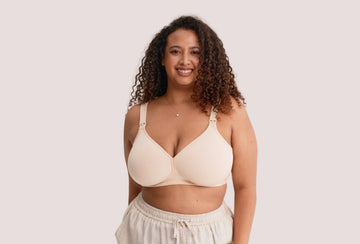
Pregnancy imposes so many changes on your body, more so on your breasts. Your usual bras might begin to be tight, uncomfortable and unsupportive as they develop and mature and get more sensitive. That is when maternity and nursing bras will be needed.
In this guide, we will discuss how many maternity bras do you need during pregnancy and after childbirth, plus the type of maternity bras to use and the best features to consider.
What Are Maternity Bras?
A maternity bra is a special bra that is adapted to take care of your growing breasts in pregnancy. As compared to ordinary bras, maternity bras:
- Give it additional elasticity and flexibility to suit expansion.
- Characteristic lightweight breathable materials on tender skin.
- Make broader straps and bands to be supported.
- No underwires to minimize discomfort and blocked milk ducts.
These types of bras are very significant in comforting your body during the preparation to breastfeed.
Why Do You Need Nursing Bras?
Nursing bras are not the same as maternity bras since they are designed to provide easy access to breastfeeding. They are equipped with clip-down cups or pull-aside panels; therefore, you can pump or nurse without taking off your bra.
Nursing bras have the following advantages:
- Easy access to food, particularly at night time during breastfeeding.
- Light support to alleviate stress and drooping.
- Plush materials to avoid soreness and plugged ducts.
- Pumping moms: hands-free.

When Should I Start Buying Maternity Bras?
The majority of women experience breast alterations at the beginning of the first trimester. The time when a first maternity bra is needed is usually at 12-16 weeks, when the regular bras become tight and uncomfortable.
The approximate schedule to follow is as follows:
First Trimester (0-12 weeks):
Purchase 1-2 stretchy maternity bras or bralettes to be used early.
Second Trimester (12-28 weeks):
Once your breasts start to enlarge, add 2-3 supportive everyday maternity bras.
Third Trimester (28-40 weeks):
Change to 2-3 nursing bras to get ready to feed.
Postpartum (after birth):
Prepare 3-5 nursing bras to be put on every day and at night.
What Are the Types of Nursing Bras and What’s the Difference Between Them?
Nursing bras are not similar. The appropriate type will depend upon your pregnancy level, lifestyle and feeding habits.
| Type | Features | Best For |
| Plus Size Nursing bra |
Extended sizes, seamless full-coverage cups, wire-free structured support
Recommended Product: Momcozy AirMesh Busty Nursing Bra: Built for fuller busts, with a firm elastic underband, deep molded cups and wide padded straps in place of wire. The crescent-shaped internal sling keeps supporting the breast while you feed, and the six-hook back closure comes with an extender. |
Plus sizes and fuller busts, day-to-night wear |
| Seamless Nursing Bra |
Stretchy, wire-free, ultra-comfortable
Recommended Product: Ultra Soft Seamless Nursing Bra YN21 - This is an ultra-soft, wire-free nursing bra that offers all-day support. It is also free of irritation as its design is smooth and can be used on sensitive skin when pregnant and during breastfeeding. |
Pregnancy, day-to-day wear, and sleeping |
| Support Nursing Bra |
Extra support, wide straps, structured cups
Recommended Product: Jelly Strip Nurse Seamless Bottom Nursing Bra N46 - This is a comfortable bra, but one with much stretch and support that does not make it feel tight. It fits very well on a day-to-day basis, with the changes of breast size. |
Larger bust sizes, all-day wear |
| Sleep Nursing Bra |
Super soft, no hooks, easy pull-aside access
Recommended Product: Momcozy Busty Cotton Nursing Bras- Nursing bras crafted from soft, breathable premium U.S. Cotton; gentle on sensitive skin for comfortable all-day wear; includes a convenient laundry bag for easy care and maintenance. |
Nighttime feeding, comfort |
| Pumping Bra | Hands-free pumping slots or clipsFinding the right body support is vital when you're managing how many maternity bras do i really need? | Pumping moms, working mothers |
| Crossover Bra | Pull-aside cups, minimal structure | Light support, lounging, nighttime use |
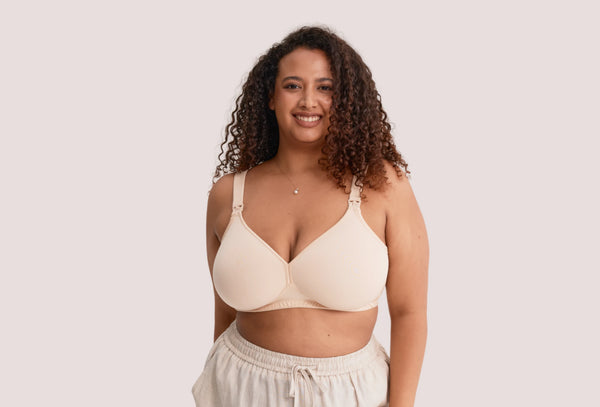
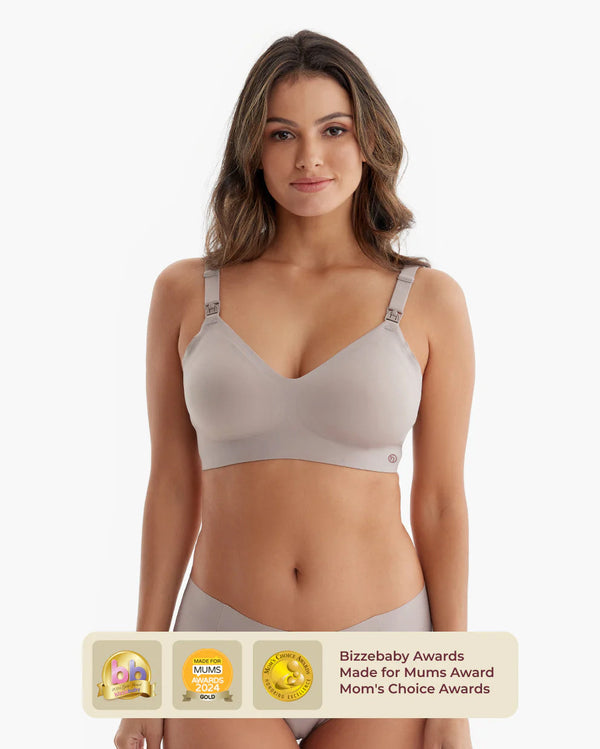
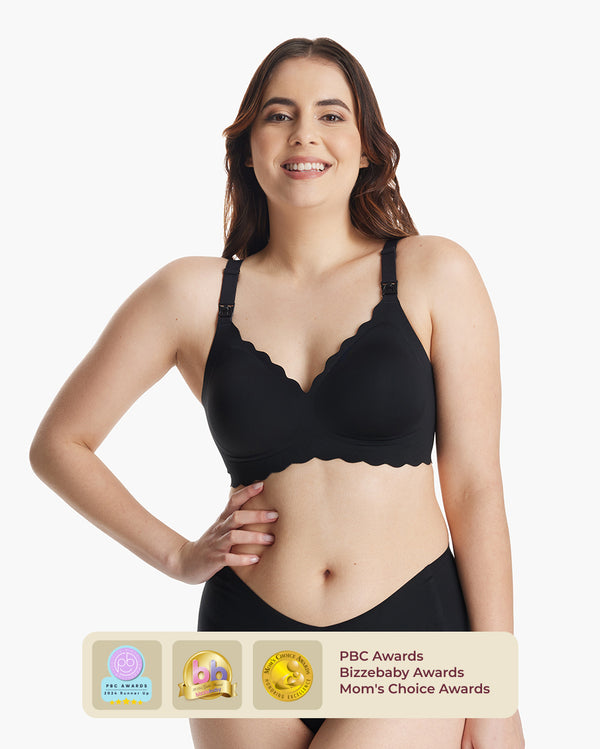
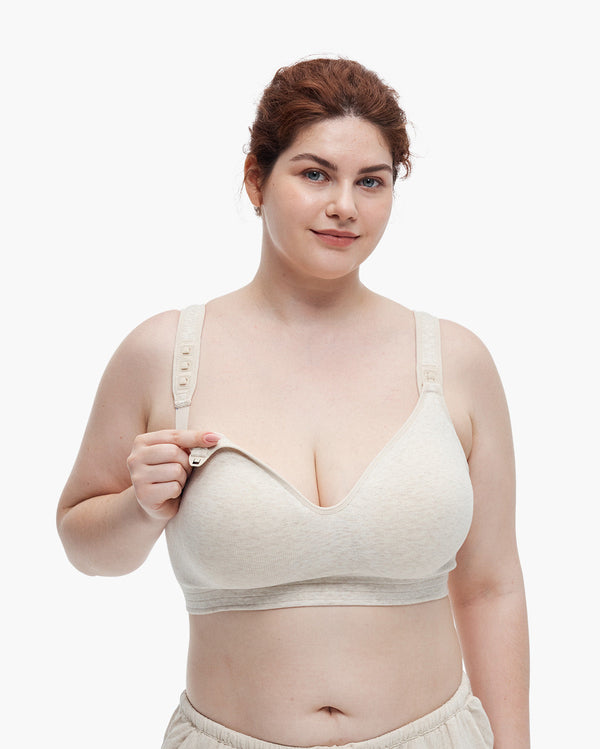
How Many Maternity and Nursing Bras Do I Need?
Your maternity and nursing bra purchase will depend on how often you do laundry and how often you pump or nurse.
General rule:
At any particular stage, 3-5 nursing bras are good enough:
- One to wear
- One in the wash
- One ready to go
The following is a rudimentary stage-by-stage breakdown:
Pregnancy:
- Have 2-4 maternity bras on hand
- Wear soft and stretchy clothes such as seamless bras or supportive everyday bras to be comfortable as you put on extra weight in your breasts.
Postpartum (First 6 Weeks):
- Get ready 3-5 nursing bras (before your baby is born).
- Centres on sleep bras and seamless bras to be round-the-clock and convenient in feeding.
Breastfeeding Months 2-12:
- Have 4-6 nursing bras in rotation.
- Included should be a combination of support bras, pumping bras and sleep bras to use during the day and night.
Returning to Work:
- Add 2-3 extra pumping bras
- Find hands-free pumping bras so that pumping at work would be more convenient and efficient.
Tip:
The assortment of styles guarantees that you are comfortable at all times, be it at home, sleeping or pumping.
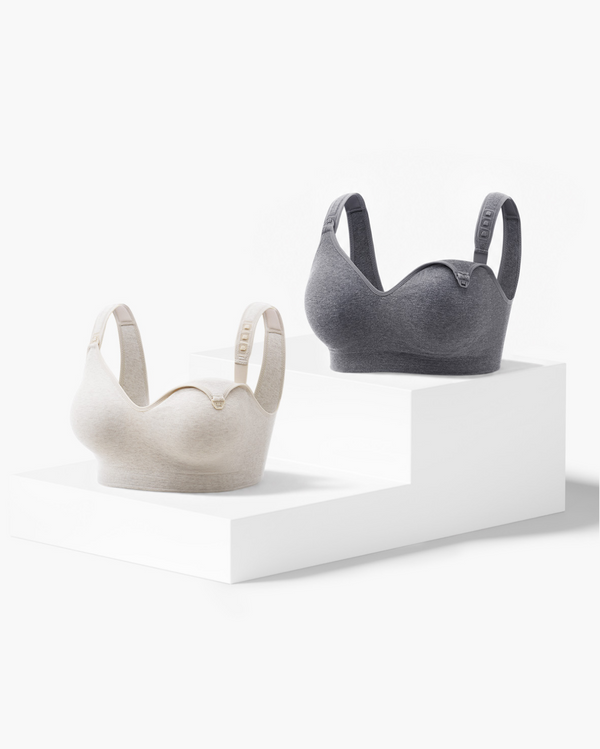
Quantity is only half the sum; each bra in the rotation also has to hold a heavier bust without stretching out. That argues for two or three cut for a larger cup rather than five scaled up from a smaller one. The Momcozy AirMesh Busty Nursing Bra is one such option: it runs to an I cup, the band is broad and reinforced, the cups are molded with depth, and an internal crescent sling plus wide padded straps share the load.
What Features Should I Look for in a Breastfeeding Bra?
Comfort and utility should be the foremost consideration when buying the ideal maternity or nursing bra.
Key features to look for:
- Breathable, stretchable, soft fabric.
- Designing wireless to prevent clogged ducts.
- Bands and straps that can be adjusted to a tailored cut.
- Nursing access is easy with one hand or a pull-aside.
- An expansive underband to be more supportive.
- Light, modesty pad and leak protection pad.
- Easy to take care of by machine washing.
How to Find the Right Size Maternity and Nursing Bra
Breast size may increase by two cup sizes as a result of pregnancy and when breastfeeding starts.
Steps to measure at home:
- Measuring band size: Take a tape measure and place it under your bosom, and round it to the nearest whole number.
- Measuring your bust: Measure the fullest circumference of the breasts.
- Determine the size of the cup: Take the difference between your bust size and band size.
1" = A cup, 2" = B cup, 3" = C cup, and so on.
- Compare the measurements to the size chart of the brand.

How to Care for Nursing Bras
Proper care helps extend the life of your bras.
- Cold washing on a gentle cycle.
- A lingerie bag should be used to avoid stretching.
- Do not use severe detergents and fabric softeners.
- Air dry, do not use the dryer.
- Change between different bras to decrease wear and tear.
How Often Should I Change My Nursing Bra?
- Daily wear bras: every 6-12 months or when they lose their elasticity.
- Sleep bras: Every 6 months in the name of hygiene and comfort.
- Pumping bras: After every 3-6 months as a result of heavy use and frequent washing.
Will I Need Multiple Bras in Different Sizes?
Yes. During pregnancy and breastfeeding, your breasts will increase and decrease in size. It's best to have:
- High-stretch early pregnancy bras.
- Bra one cup larger than normal in late pregnancy and early postpartum.
- After you have settled your supply of milk, put on post-breastfeeding bras.
What Other Types of Postpartum Clothing Should I Have?
In addition to nursing bras, you might want to include the following in your postpartum wardrobe:
- Nursing layering tanks and easy access tanks.
- Belly-supporting postpartum leggings.
- Multi-tasking hands-free pumping bras.
- Maternity snow white nightgowns or sleepwear.
- Postpartum recovery belly bands.
FAQs
Can I wear a regular bra during pregnancy?
Yes, but with the swelling of the breast, a normal bra can be uncomfortable. Maternity bras are even more comfortable.
Does a larger bust change how many bras I need?
A fuller bust often means fewer styles fit well, so having two or three that do helps. Nursing bras for large breasts are cut with wider bands and fuller cups for that reason.
How do nursing bras work?
They also have cups that can be unclipped or pulled out to allow easy access to the breast to breastfeed or pump.
Should I wear my nursing bra at night?
Yes, leakproof sleep bras come in handy during nighttime feeding.
Why can’t I just wear a larger size of my regular bra?
Higher regular bras have no access to feeding and lack flexibility, and the underwires may result in clogged ducts.
How do I know if my nursing bra fits properly?
It must fit snugly but not too tight, no diggy straps, no gaps and should be able to get to the cup easily with one hand.
Can I use regular bras for nursing?
Not perfect either, they do not have convenient cups, and are neither comfortable nor restrictive.
Do I need different nursing bras for day and night?
Yes. Day bras are more supportive when compared to night bras, which are oriented towards softness and comfort.
Do I need to wear a bra 24/7 while breastfeeding?
No. Wear, however, when it suits, leaking or comfort, particularly at night.
How many nursing bras do I need for the hospital?
Carry 2-3 bras: one on, one spare and one spare in case of a leak.
Conclusion
Buying the correct maternity and nursing bras for pregnancy and postpartum is way more comfortable. Begin with some smooth maternity bras at the beginning of the pregnancy, and then progress to supportive nursing bras towards the end of the pregnancy.









