


Short answer first: the core safety rules are still the same, but recent guidance is clearer about where you can be flexible and where you should not.
For everyday use, the simplest safe rule is:
4 hours at room temperature (up to 77°F), 4 days in the fridge, freeze by day 4, and use thawed milk within 24 hours in the fridge (current storage guidance).

If you want a simple way to keep date/time labeling consistent, Breastmilk Storage Bags can make daily milk storage rotation easier while following these safety rules.
Quick Action Checklist
- Label milk with the date/time and chill it right away if you will not use it soon (storage tips).
- Use the “4 and 4” memory rule: up to 4 hours at room temp (77°F or lower), up to 4 days refrigerated (storage times).
- Clean bottle and pump parts that touch milk after every use; do not just rinse and reuse (pump hygiene).
- Air-dry parts fully before storage; avoid towel-drying that can reintroduce germs (feeding-item cleaning).
- For babies under 2 months, premature babies, or babies with weak immune systems, sanitize daily in addition to cleaning (higher-risk guidance).
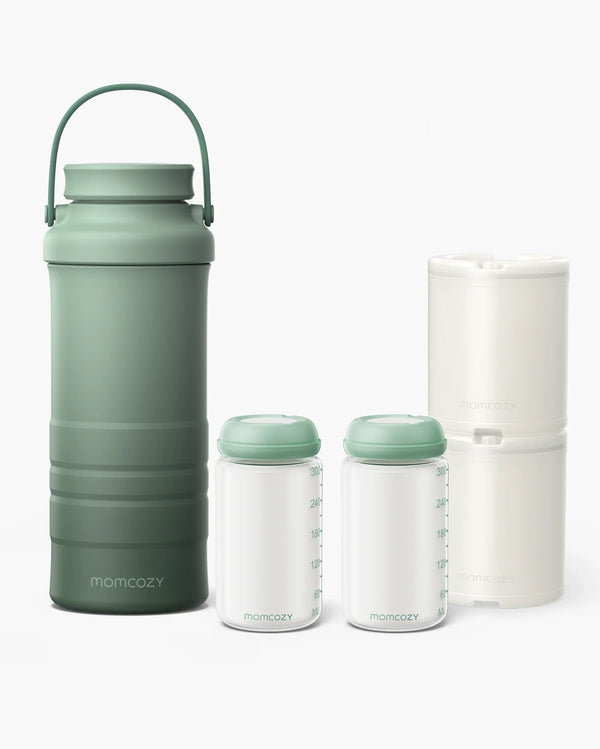
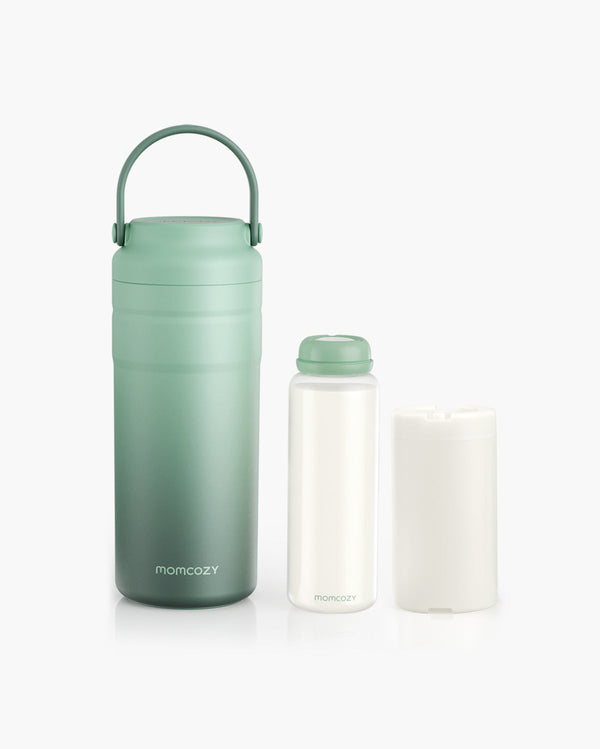
- Once milk is warmed or at room temperature, use it within 2 hours; do not refreeze thawed milk. Avoid reheating the same milk multiple times, even if it is still within the 2-hour window. (thawing/warming rules).Practicing these guidelines can feel overwhelming when you are away from home, as outdoor temperatures rarely cooperate with the 77°F rule. To take the stress out of your trips, utilizing a Momcozy Portable Breast Milk Cooler for Outdoor 22oz is a game-changer. This specialized cooler reliably preserves up to 22oz of your liquid gold at safe temperatures while you are out, ensuring you never have to panic about the room-temperature clock ticking down.


What Has Changed (or Become Clearer)
Recent updates (through 2025) emphasize practical details parents often ask about at the sink or in the middle of the night:
- Freezer guidance is framed as quality windows, not panic deadlines: about 6 months is best quality, up to 12 months is acceptable (CDC).
- Thawing rules are more explicit: the 24-hour clock starts when milk is fully thawed, not when you moved it from freezer to fridge (CDC).
- Cleaning guidance is more risk-based: daily sanitizing is especially important for younger/high-risk babies, while older healthy babies may not need daily sanitizing if cleaning is thorough (CDC feeding items, CDC pump parts).
- The “fridge hack” for pump parts is treated cautiously: cleaning after each use is preferred, and refrigeration between sessions has limited safety evidence (CDC FAQ on pump-part refrigeration).

What Still Applies
- Wash hands before handling milk and pump parts (CDC).
- Keep milk in proper containers, not random plastic bags (CDC).
- Store milk toward the back of fridge/freezer, not in the door (CDC).
- Never microwave breast milk (hot spots can burn baby) (CDC).
- If baby does not finish a bottle, that milk has a short reuse window (2 hours) (CDC).
Comparison Table: Conservative vs Flexible Windows
|
Decision point |
Conservative “easy to remember” rule |
Flexible option you may also see |
Practical pick for daily life |
|
Fresh milk at room temperature |
Up to 4 hours at 77°F or lower (CDC) |
Up to 6 to 8 hours if very cleanly expressed (HealthyChildren/AAP) |
Use 4 hours when you are unsure about room temp or handling conditions. |
|
Fresh milk in refrigerator |
Up to 4 days (CDC) |
Same “best within 4 days” framing (HealthyChildren/AAP) |
Plan stash rotation around 4 days. |
|
Frozen milk storage |
About 6 months best quality; up to 12 months acceptable (CDC) |
Up to 9 months in standard freezer, 12 months in deep freezer (HealthyChildren/AAP) |
Treat 6 months as your target for best quality. |
|
Thawed milk in refrigerator |
Use within 24 hours; do not refreeze (CDC) |
“Best within 24 hours,” with longer outer window sometimes listed (HealthyChildren/AAP) |
Use within 24 hours for a low-stress safety margin. |
|
Sanitizing bottles/pump parts |
Clean every use; sanitize daily for high-risk babies (CDC feeding items) |
Daily sanitizing may be optional for older healthy babies if cleaning is careful (CDC) |
If in doubt, clean every use and sanitize once daily. |
Navigating these different temperature windows becomes much easier when you have the right tools to manage your daily routine. Incorporating reliable Momcozy breast milk cooler into your routine helps bridge the gap between conservative and flexible storage options. Whether you are commuting to work or planning a family day trip, these temperature-controlled storage solutions ensure your breast milk remains safely chilled, giving you ultimate peace of mind.
Normal vs Red-Flag Situations
Normal/common
- Milk fat separates in storage; swirl to mix before feeding (CDC).
- Milk does not have to be warmed; many babies take it cool or room temp (CDC).
- Older healthy babies may not need daily sanitizing if washing is thorough (CDC).
Red-flag / stricter handling needed
- Baby is under 2 months, premature, or immunocompromised: prioritize strict cleaning and daily sanitizing (CDC).
- Pump tubing has mold or milk inside: replace tubing (CDC).
- Milk exceeded safe time windows (counter/fridge/warmed leftovers): discard it (CDC).
- Preterm or hospitalized babies may have site-specific rules, so follow your care team’s protocol (HealthyChildren note).
FAQ
Q: Can I keep pump parts in the fridge between pump sessions?
A: The safer default is to clean parts after each use. If you cannot, refrigeration for a short period may slow growth, but it is not proven equivalent to full cleaning, and it is especially risky for high-risk babies (CDC pump hygiene FAQ).
Q: Do I need to sterilize after every single feeding?
A: Usually no for older healthy babies if items are cleaned carefully each use. Daily sanitizing is more important for babies under 2 months, premature babies, or immunocompromised babies (CDC feeding-item guidance).
Q: Can thawed breast milk go back into the freezer?
A: No. Once thawed, do not refreeze. Use thawed milk in the fridge within 24 hours, and use warmed milk within 2 hours (CDC storage/thawing rules).








