


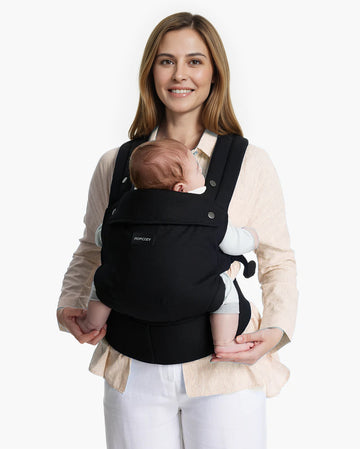
MEDICALLY REVIEWED BY

Mary Bicknell, MSN, BSN, RNC, ANLC
Mary Bicknell comes with over 30 years of experience as an RN in the NICU. Educating mothers on the importance of healthy breastfeeding is important to her. It can be challenging to maintain successful breastfeeding through many difficult situations and long hospitalizations. Mary is committed to helping families define what successful breastfeeding means to them; and to assist them to obtain their goal. After leaving the bedside, Mary became a nurse leader and continued to make sure that breastfeeding education and support was always available to the families in her unit.
Most families switch when a wrap no longer supports safe positioning and comfort for the duration they need, not at one exact weight.
Does your baby suddenly feel heavy halfway through a grocery run, even though your wrap felt perfect a few weeks ago? Babies carried for about three hours a day are often calmer,so sustainable carrying matters in your daily life. So, let's design a clear way to decide when to switch, how to protect your back, and how to keep your baby safely supported.
Why There Isn’t One Magic Switch Weight
The most important starting point is that weight alone is not a sufficient fit criterion. Two babies at the same weight can fit very differently because torso length, leg spread, muscle tone, and your own body shape all affect how secure and comfortable a carry feels.

Safety guidance is built around following manufacturer minimum and maximum limits, but those limits are guardrails. Real-life switching often happens earlier than the maximum when your shoulders tense up, your lower back aches, or you keep re-tightening fabric every few minutes.
In real postpartum routines, the trigger is often practical: if a 30- to 45-minute walk now leaves you sore, your current setup is no longer distributing load well enough. At that point, moving to a structured carrier is usually a comfort decision that also improves consistency and safety because it is easier to put on the same way every time.
Wrap vs Structured Carrier: Definitions and Tradeoffs
The MOMCOZY Baby Carrier Wrap is a hands-free, breathable sling for newborns to toddlers (7-25 lbs) with an ergonomic, adjustable fit, ideal for early newborn weeks, skin-to-skin contact, and customizable positioning.
The core difference that a wrap is a long piece of fabric tied around you. Wraps usually feel close and adaptable in the early months, while structured carriers often work better for longer wear sessions as babies get heavier. The wrap tradeoff is setup time and tension management; the structured tradeoff is bulk and less molded newborn softness.
|
Carrier style |
Where it usually shines |
Common downside as baby grows |
|
Wrap |
Early newborn weeks, naps, skin-to-skin feel, highly customizable fit |
More setup time, more heat from layers, harder to keep tension perfect when baby gets heavier |
|
Structured carrier |
Longer walks, errands, shared use between caregivers, heavier babies |
Bulkier feel, less cocoon comfort in the earliest weeks |

Where Does a Soft Structured Carrier Fit?
A soft structured carrier is one type of structured carrier, not a separate stage that every baby must move into at a specific age or weight. It uses a defined carrier panel, adjustable straps, a waistband, and buckles rather than relying on wrapped fabric to create the carrying structure.
For families moving from a wrap, a soft structured carrier may be worth considering when:
-
Longer carries are becoming harder to maintain comfortably in the wrap.
-
You need a more repeatable setup for errands, walks, or switching between caregivers.
-
Keeping consistent fabric tension is becoming difficult as your baby grows.
-
The baby meets the size, fit, and positioning requirements of the specific structured carrier.
The important distinction is that “soft structured” does not mean “newborn-ready.” Some structured carriers are designed to accommodate newborns, while others are intended for a later stage. Always check the instructions for the individual carrier rather than using the product category alone to decide when to switch.
If your baby is still in the newborn stage, compare options specifically designed for early fit in Momcozy’s newborn carrier collection. If you still prefer the flexible, fabric-based format, you can also explore wrap baby carriers.
The Decision Framework That Works Better Than a Scale
Check Baby Readiness First
The safest transition starts with T.I.C.K.S. positioning and visible airways, not age labels alone. Baby should be high enough to kiss, face visible, chin off chest, and back supported so breathing stays easy during movement.
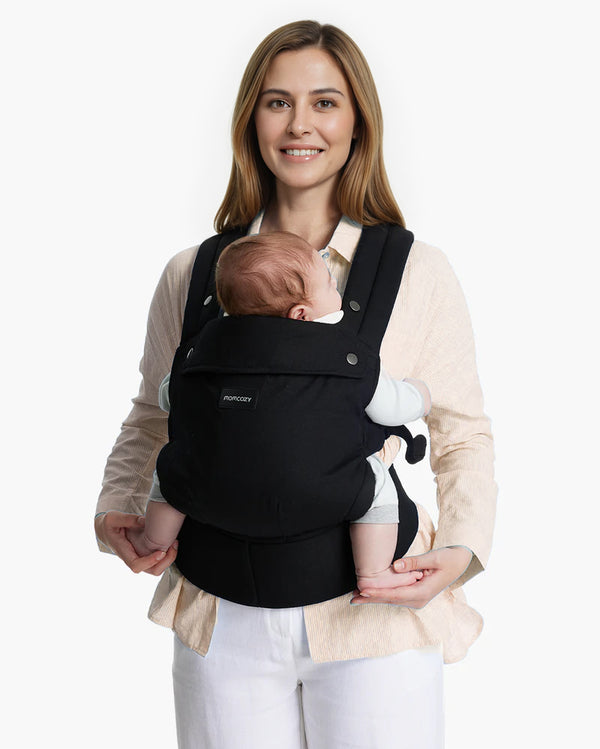

Hip position matters just as much as airway checks because thigh-supported, knees-above-bottom “M” posture is linked to healthier hip alignment, especially in early infancy. A quick home check is whether the fabric or panel reaches knee to knee without forcing legs straight. If legs are pinned together or dangling from a narrow base, it is time to adjust carrier type or size.

Check Parent Comfort and Recovery
Comfort is not cosmetic; it is one of the strongest performance factors in carrier use. If one shoulder keeps taking most of the load or your lower back is compensating, that is a fit mismatch, not a willpower problem.
Recovery stage changes the answer too. If you have back pain or other postpartum concerns, discuss babywearing with your clinician. For example, if you can wear comfortably for only 20 minutes in a wrap but 60 minutes in a structured carrier, the structured option is already the safer everyday choice because you stay steadier and less fatigued.
A Practical Transition Pattern for Most Families
A common pattern is that wrap use stays high early, then drops as outings get longer and baby gets more active; many parents end up using two carriers over time. Keeping a wrap for naps and a structured carrier for errands often protects both closeness and your back.

If you prefer ring slings, single-shoulder carrying can feel great at first, but longer wears can overload one side. In practical terms, this often means sling or wrap for short calming windows and structured support for grocery runs, airport lines, or long walks where even small fit problems become obvious.
Nuance That Changes the Decision
Fit-focused guidance and medical safety guidance agree on non-negotiables, but they sometimes use different thresholds because they define readiness differently. One side emphasizes product limits and airway rules first, while the other emphasizes whether real-world fit is stable and comfortable for both of you. If those views seem to conflict, keep the stricter safety rule and let comfort decline be your cue to switch sooner.
There is also added uncertainty when babies are premature, under minimum weight, or medically fragile, and primary care input is recommended before routine babywearing in those cases. In that situation, delaying or rushing the switch by calendar matters less than getting one safe, repeatable setup you can use confidently.
Common Question: Do You Have to Stop a Wrap at a Specific Weight?
No fixed number forces every family to stop a wrap on the same day, and inward, high, visible positioning remains central to safety. The switch point is when you can no longer maintain that safe position and your own comfort for the length of wear you actually need. If carrying feels unstable, hot, or exhausting during normal routines, that is your green light to move to structured support even if your wrap is still technically within its posted weight range.
Choosing the switch based on fit, comfort, and safety checks gives you the best of both worlds: closeness early on and stronger support as your baby grows. A carrier that protects your body is what helps you stay calm, responsive, and connected day after day.
Disclaimer
"At What Weight Should you Switch from a Wrap to a Structured Carrier" is educational content intended to support informed discussions, not to diagnose conditions or replace one-on-one guidance from qualified professionals.
Transition timing from wrap to structured carrier depends on head/neck control, torso stability, and fit, not weight alone. An early switch without proper support can increase slump risk or pressure points.
Any mention of carrier products, brands, or accessories is informational only. Outcomes differ by body type, carry method, baby size, and correct adjustment/maintenance, and no product can guarantee identical results.
If you notice airway compromise, persistent chin-to-chest posture, or discomfort for parent or baby, pause use and get hands-on fit support from a qualified educator or clinician.
Your use of this article is at your own discretion and risk. Momcozy and its contributors are not liable for direct or indirect consequences related to reliance on this content.








