


Key Takeaways
- • International travelling with infants is not difficult when prepared. Planning flights, paperwork, and baby equipment will reduce stress levels and will make your travel easy.
- • Comfort is better than convenience. Book baby-friendly places, flights that are in line with the baby’s sleep routine and seats with enough space.
- • Keep things and documents in order. Store all significant documents in a single folder and only carry the necessary infant items to avoid searching all around to locate them.
- • With the right approach, airports and flights get simpler. Get there early, carry what you need with you and carry the baby in a carrier or stroller to get around easily.
- • Travelling slowly is effective with babies. Allow the baby time to adapt to new time zones and routines, and make a relaxed schedule, so that everybody is calm and rested.
It might be a stressful thought to have infants on international travel. The airports, long rides and new places are a lot. But with the right preparation, things can be so much easier.

Infants are able to adapt more easily than we anticipate. What they require most is being comfortable, routine and a relaxed parent. With proper planning and carrying the needed things along, like a nice stroller or baby carrier, it will be a lot easier to travel.
Booking Tickets: More Than Just a Click

- Pick the Right Destination: Select destinations with pleasant weather and baby-friendly attractions and accommodations to ensure your trip is comfortable and enjoyable. Direct flights or time of less traveling durations reduce stress. You can also read tips from other parents and learn about local customs in order to make your trip smoother.
- When to Book: Book in advance. Pediatricians suggest travelling at least 8 weeks to 3 months because the immune system of a baby is still in development. Never forget to consult your pediatrician when you are booking your trip. Book 2-3 months before travel to ensure you get a better seat and schedule as per the routine of your baby.
- Ticket Tips: It is preferable to have refundable tickets in case of a change of plans. Travel insurance should also be considered especially if traveling abroad.
- Flight Timing and Seating: Choose a flight schedule that fits the sleep routine of your baby. Overnight flights are good, since babies can sleep longer, whereas daytime flights are good with babies that nap in the day. Early reservation of bulkhead seats with a bassinet is recommended because they are hard to come by, and only specific rows have them. You can reserve an extra seat for your baby to provide them with space during long flights.
- Baggage and Baby Gear: Find out the rules for checking baggage before the flight. Strollers and baby carriers are free with many airlines, making traveling between the airports simpler.
Essential Documentation

You must have the necessary documents when you are planning international travel with infants. Lacking a single paper can lead to delays when boarding your plane. It is preferable to prepare too much.
The following documents should be carried:
- Your and your baby’s international travel passports. Passports may take weeks to be processed, so apply in good time before you go on a trip.
- A birth certificate to prove the age. This is particularly required when you and your baby have different surnames.
- Vaccination records, which may be requested by some of the countries.
- Travel consent letter, when one of the parents is travelling with the baby only.
- Custody papers (optional).
- Paper documents of travel insurance and emergency contacts.
- Medical summary that contains allergies, medicines and significant health details.
Note: Duplicate the essential documents and store them in a different place from the original documents. Digital copies that you save in your phone are also useful as backup. Then, put all these documents in one folder.
Timing the Flight: How Young is Too Young?
The majority of pediatricians would recommend that you wait until your baby is aged 8-12 weeks. At this time, they have already begun to develop an immune system and most likely have already had their initial vaccinations.
These are the things to look at prior to booking:
- Pediatrician approval - Schedule a checkup six to eight weeks prior to travel.
- Vaccines - Inquire if you need to change the timing of any vaccines before your trip.
- Airline rules - Most domestic flights have a minimum age of 7-14 days for babies, and most international flights have a minimum of 7 days to 3 months.
- Travel insurance - Make sure that your baby is insured in case of a medical emergency in a foreign country.
Planning Your Stay & Packing

Packing for an infant doesn’t mean bringing your entire nursery. Just bring the following:
- Pack diapers, a changing pad, wipes, and diaper bags that would last between 2 and 3 days. An additional set of clothes in case of inevitable messes. Another thing to pack is a portable changing mat so that you can always be clean.
- * Keep an eye on the weather where you are headed and prepare the right clothes. Add an additional layer, a sun hat or warm-up clothes based on the weather.
- Bring bottles, baby food or formula and a small sterilizer.
- Bring all the favorite toys, blankets, or pacifiers of your baby so that they can have fun during the journey.
- Pack a few first aid supplies such as fever medication, teething, and prescription drugs. Do not leave out the sunscreen when travelling to sunny places.
- Get small bags or organizers and store the baby things so that they are readily available.
To take places without stress, a compact stroller and baby carrier will be appropriate. These will make your navigation in airports and other new destinations easier. Here are the top 3 picks for you:
- The Momcozy PureHug Baby Carrier is a supportive, ergonomic and lightweight carrier that supports both baby and parent.
|
Rating |
Price |
Features |
|
$59.99 |
Hands-free comfort, Grows with 3mo-toddler, Adjustable three sizes, Ergonomic “M” position, Padded leg openings, Lumbar support, Adjustable straps, X-shaped back design, Two carrying positions |


- The Momcozy ChangeGo Baby Stroller has 23 configurations and adjustable designs for a comfortable ride for you and your baby.
|
Rating |
Price |
Features |
|
$699.99 |
Adjustable handlebar (5 positions), Scuff-free braking system, Spacious storage basket (up to 19.8 lbs), Full-size toddler seat, Extendable UPF50+ canopy, 3-position recline seat, Leather bumper bar, Adjustable leg rest |

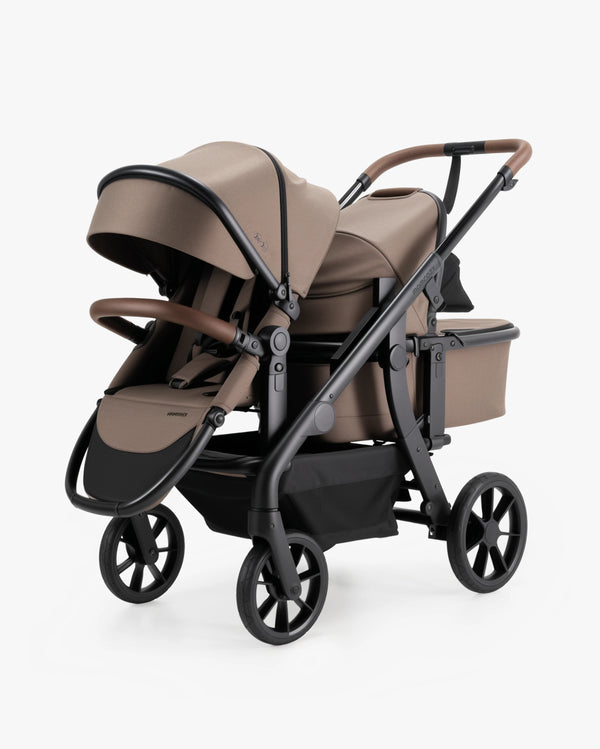


- Launching this March is the new Momcozy TuckGo Stroller. It's lightweight, travel-ready, and has a large ergonomic seat for effortless adventures.
|
Rating |
Price |
Features |
|
None yet |
None yet |
Dual comfort design, Spacious ergonomic seat, Three-position backrest, Adjustable leg rest support, Lightweight (6.3 kg), Carry-on compatible size, Strong carbon fiber frame |
You can explore more travel-friendly options through the stroller collection:
https://momcozy.com/collections/baby-stroller
And babywearing options here:
https://momcozy.com/collections/baby-carrier
Navigating the Airport & Boarding

Travelling with a baby can be stressful and makes the airport seem like a busy place, but planning will make the task far less complicated. Slow down, plan out, and set more time on everything.
- Arrive early. Traveling with a baby often takes longer. Check-in, document checks, and security may require you more time. Coming early will make you relaxed and keep your baby calm.
- Have necessities at hand. Put passports, boarding passes and baby documents in a small pouch. Store diapers, wipes, milk and even additional clothes in a single location so they are readily accessible.
- Take your baby and leave the stroller in the screening. Baby food, milk and formula are permitted but will be inspected.
- Use a baby carrier. Carrying a baby allows you to move freely in the airport with your hands. It also assists you in calming your baby in busy and noisy places.
- Change the diaper of your baby and feed them before getting on the plane.
- Remain composed since there could be a delay in boarding. The majority of the airport employees are glad to help families with babies.
Expert Tips for the High Seas (of Air)
Select flights that are aligned with the sleep of your baby. Overnight flights are the best because babies can sleep longer. Early booking is recommended in case one wants a bassinet seat on long flights since there are few.
Breastfeed during landing and takeoff in order to alleviate ear pressure. Get to the airport early because traveling with an infant may be time-consuming. Security may accept baby milk, formula and food, although these could be inspected separately.
The majority of airlines allow free gate-checking of strollers and car seats. You will also have the choice of whether boarding early would suit you, or whether boarding late is better, so that your baby does not spend a lot of time waiting on the plane.
Time Zones & Slow Travel
One thing many parents forget to plan for is “jet lag.” Babies are unable to drink coffee or fight fatigue. When you pass through time-zones, the body clock of your baby is disoriented. This can lead them to brief naps, night awakenings or unnecessary fussiness.
The most effective solution is to slow down. Rather than making a sudden change, go gradually with the new schedule. Some of the useful techniques are:
- Spend time outdoors during the daytime.
- Keep gentle bedtime routines familiar.
- Allow short naps during adjustment days.
- Plan fewer activities during the first 2-3 days.
- Slowly move sleep and feeding times toward the local schedule.
- Visit fewer places and spend more time there. Babies thrive in rhythm.








