


Storing the various containers you have at home is not just about beauty but also an important issue for the health and safety of your family. It is always good to know how to clean plastic bottle, whether this is the bottle of water you take to the gym every day or the feeding supplies you use on the baby, to make sure you are not inadvertently making a little habitat for bacteria and mold.
While they look smooth, plastic surfaces are actually porous on a microscopic level; they are susceptible to the formation of biofilms, or sticky layers of bacteria, which attach to the inside walls. This guide will provide you with tips on how to clean your plasticware and maintain it in a clean state.

Why Should I Clean My Plastic Water Bottle?
One common misconception is that a bottle is clean when it is only filled with water. As a matter of fact, each time we take a drink, skin cells, oral bacteria, and food particles are transferred into the container, forming a high-traffic surface that needs frequent cleaning.
Preventing Biofilms
E. coli and molds are bacteria that thrive well in warm and moist conditions. These microbes form a biofilm, and rinsing with plain water will not be effective without regular scrubbing.
Removing Smells and Stains
As time passes, bacterial byproducts form smells of musty or sour, and they may penetrate the plastic. These odors are avoided by cleaning regularly to help them not be permanent, and also so that your water will be fresh.
Maintaining Structural Integrity
Plastic is microscopically porous. Constant moisture and bacteria may lead to micro-pitting or make the material brittle. Washing the surface preserves the integrity of the bottle and greatly prolongs its life cycle.
Tip: Never forget about the lid and the straw. These parts possess numerous crevices and cracks that keep moisture stagnant, which in most cases carry the concentration of the mold.
How Often Should I Clean My Plastic Water Bottle?
The short answer is after each and every feeding. In comparison to adult water bottles, baby bottles contain milk and formula, which are very perishable and the most ideal sources of nutrients for the rapid growth of bacteria. The most effective method of protecting the immune system of your baby is to treat the bottles to the same hygiene standards as the medical equipment.
Preferably, all the bottles used must be rinsed off immediately, followed by washing with warm, soapy water once the feeding is complete. The fats and proteins in milk can easily congeal, so even an hour in the bottle can give the film a stubborn coating. A rapid scrubbing to be followed by a sterilization cycle makes sure that the environment is absolutely unfriendly to germs.
For Breast Milk and Formula
The rules are very strict when it comes to cleaning the plastic bottles that hold infant nutrition due to the behavior of these liquids.
- Formula & Breast Milk Residue: These provide a rich breeding ground for bacteria, which can multiply rapidly when kept at room temperature.
- The Golden Rule: After use, they must be cleaned and sterilized. This is to prevent the spoiling of milk proteins in the microscopic pores of the plastic, which is the greatest cause of residual sour odors.
Maintenance for the Extra Bottles
To the backup bottles that remain in the diaper bag of the cupboard during the just-in-case situations, a particular strategy is required:
-
The Pre-Use Sanitize
Clean a bottle that was stored and sterilize it, though it was clean when you put it away. This eliminates any dust or inactive spores that may have been formed during storage.
-
The Post-Outing Deep Clean
In case a bottle was carried in a warm diaper bag, it must be deep-cleaned right after coming home, despite the appearance that it has not been used.
-
Storage Tip
Keep your baby bottles without the lids and nipples. A drop of water on a bottle in a closed bottle forms a greenhouse effect that enhances the growth of molds.
Best Ways to Clean Plastic Bottles
When washing the inside of your plastic bottles, there are some sure methods, depending on the level of dirt.

-
The Soap and Scrub Method
This is the best daily routine of maintenance. Apply a light, no-smell dishwasher soap using a long-handled bottle brush. The bristles must stretch to the level of the shoulders of the bottle, and to the extreme bottom corners, which are the main places where sediment and bacteria are likely to be found.
-
The Vinegar Rinse
White vinegar can be used as a great descaler if you want to clean up hard water spots or want to get natural solutions. Half-fill the bottle with vinegar and water, and leave it overnight. The acetic acid helps in dissolving mineral deposits and counteracting the odors which may be left behind by the normal soap.
-
Baking Soda Paste
Baking soda is one of the most effective deodorizers to use when the bottle has acquired a stubborn or musty smell. Prepare a thick paste of baking soda and a little water, and rub it inside. Wait at least one hour, scrub it and rinse it out; this does not simply cover the odor molecules, but neutralizes them.
How to Deep Clean Baby Plastic Bottles
Washing baby equipment demands a higher level of hygiene than an ordinary gym bottle. Pediatricians indicate that sterilization is always necessary because the immune system of an infant is not yet fully developed and therefore more prone to bacteria that can be left in feeding equipment.
The Challenge of PP (Polypropylene) Bottles
Although most parents use Polypropylene (PP) bottles due to their durability and safety of being BPA-free, they pose a special cleaning challenge. The Centers for Disease Control and Prevention (CDC) emphasizes that infant feeding products must be carefully handled, as even a drop of breast milk or formula can promote the growth of bacteria in the container.
At the microscopic scale, Polypropylene is coated with a special surface texture that enables the fats in breast milk or formula to cling more violently to the walls than other materials. If these residues are not removed properly, a thin film of milk fat remains. This invisible layer can quickly spoil, creating an ideal breeding ground for pathogens.
Next-Level Bottle Care
When hand cleaning is just not good enough to clean the sticky PP material, the transition to the automated, medical level can provide a sense of relief. The Momcozy KleanPal Pro Baby Bottle Washer and Sterilizer is designed to fulfill these exact needs, and it bridges the gap between manual scrubbing and hospital-grade sterilization.
$319.99 USD


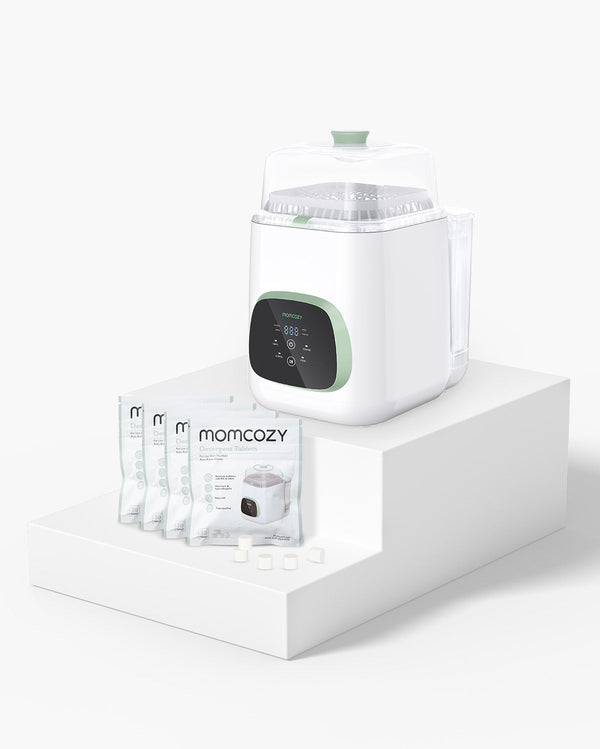
Momcozy bottle washer is designed to handle the nuances of cleaning plastic baby bottles by using:
-
High-Pressure, Multi-Angle Spray
It ensures that the unique interior surface of PP bottles is reached from every direction to strip away stubborn milk fats.
-
Sterilization & Drying
Beyond just washing, the unit eliminates 99.9% of bacteria and follows up with a complete drying cycle.
By removing both the residue and moisture, it effectively prevents regrowth and makes sure that your baby’s bottles are truly clean and ready for the next feeding.
How Do I Clean the Cap on My Water Bottle?
The top of the bottle is usually the dirtiest part. The health experts at the Cleveland Clinic caution that, when you wash the lid, you will not stop the growth of mold when you leave the silicone gasket inside the lid. Since caps have threads, gaskets and holes of straw, they provide nooks, where bacteria multiply, which necessitates the complete breakdown of the caps to ensure safety.
Disassemble Everything
Take out the rubber O-ring or gasket, where possible. Studies by hygiene professionals indicate that bacteria and mold grow in the narrow crack between the gasket and the plastic in which water is stagnant.
Soak for Deep Cleaning
Put all parts of the cap in a warm, soapy bowl of water. To clean deeper, particularly when there is an unpleasant smell, a 50/50 mix of vinegar and water will dissolve mineral deposits and biofilm.
Detailing
Gently scrub the threading at the point where the cap meets the bottle, and inside the drinking spout, using a small straw brush or a clean toothbrush.
Dry Completely
This is the most important step. Health professionals warn that you should never put a lid back on a container when it is wet; the primary cause of black mold is the moisture that has been stored in seals.
How to Clean Glass Bottles Correctly
Glass is typically utilized because of its purity; however, it must be handled with care so that it becomes crystal clear. Glass is also non-porous as opposed to plastic and will not absorb odors or flavors, but is more prone to clouding with hard water minerals.
These are the most effective and popular ways to keep your glass bottles in good condition:
Heat Sterilization
Heat resistance is one of the largest benefits of glass. The majority of glass bottles can be boiled in water, which offers high sterilization and is harder to obtain with plastic.
The Vinegar Soak
To remove the fog-like look of calcium and mineral formation, pour a white vinegar and warm water mixture into your bottle. Let it rest for 30 minutes, and the acid will dissolve the minerals, and the glass will shine again.
Rice or Beads Scrub
When you cannot access a specific part of the bottle with the brush, put in a tablespoon of uncooked rice (or stainless steel cleaning beads), a drop of dish soap and a small amount of water. Shake vigorously. The rice is used as a soft scrubbing agent to clean their interior walls.
High-Heat Dishwasher Cycles
Glass usually can be used in dishwashers, and it can be used in high-heat conditions. The easiest way to ensure that the bottle is medically clean is to use the “Sanitize” or high-temperature setting in your dishwasher.
FAQs
Why Do I Need to Wash My Water Bottle If I Only Put Water in It?
As previously stated, your mouth is not sterile. Every time you drink, bacteria enter the water. Also, airborne mold spores can enter the bottle whenever it is open. Even “pure” water can become a swamp if left in a dark, room-temperature plastic container for too long.
How Can I Make Plastic Bottles Clear Again?
Plastics cloud up due to the depositing of minerals or microscopic scratches. To eliminate the cloudiness, put the bottle in a solution of warm water and citric acid or a denture cleaning tablet. This dissolves the deposits of lime and calcium that give the fogged appearance.
What Cleans Plastic Without Damaging It?
Strong chemicals or a very harsh scrubber should not be used, and this can create micro-scratches that could harbor bacteria. Clean with light dish soap, vinegar, baking soda and soft bristled nylon brush.
How Can I Clean a Plastic Bottle from the Inside Without a Brush?
When in a hurry, try the “Abrasive Shake” technique. Add a handful of coarse sea salt or crushed eggshells into the bottle with soapy water. Close the lid and shake vigorously. The abrasive texture will scrub away residue from the interior walls. Repeat the rinsing a few times to be sure there is no residue.
Conclusion
Be it a baby bottle or a gym bottle, proper hygiene is not just a matter of looks. It is an essential support for the health of your family. When you select the appropriate cleaning technique for materials such as porous plastic or cloudy glass, you can successfully break down the stubborn biofilms and maintain each sip fresh and safe.
The key to preventing molds and extending the durability of your containers is to keep them clean and dry them out. No matter what household materials you use or other more advanced sterilization tools, these added measures will provide you with a sense of relief that your bottles were clean, inside and out.








