


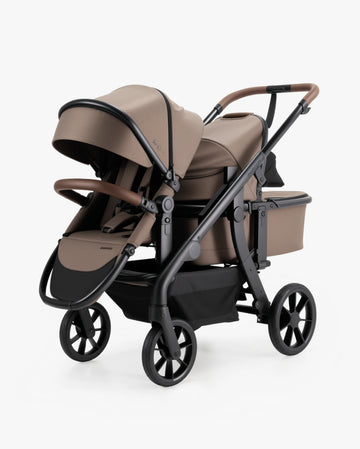
Most walks don't happen on perfect pavement. Cracked sidewalks, park paths, grassy shortcuts, curbs, and long neighborhood loops are the real route. A stroller that handles these well feels noticeably different from one that doesn't. What follows covers the features that matter for all‑terrain and walking use, not jogging or running, how to match a stroller to your actual route, and where Momcozy ChangeGo and TuckGo fit different families.

What Counts as an All‑Terrain Stroller?
An all‑terrain stroller is one category within a wider best stroller market that spans newborn prams, travel strollers, double setups, and more. The all‑terrain definition is practical: if your route includes bumps, uneven pavement, grass, gravel‑like park paths, or longer stretches where push effort adds up, wheel size, suspension, frame stability, and brakes all start to matter more.
What all‑terrain does not mean: mountain trails, sand, deep snow, or extreme off‑road conditions. Most strollers marketed as all‑terrain are built for mixed everyday surfaces, not wilderness use.
Some parents searching for an all‑terrain stroller are really looking for a solid walking stroller for long daily routes. That is a slightly different need from a jogging stroller, and the distinction matters for safety.
All‑Terrain vs Walking vs Jogging: What's the Difference?
These three categories overlap in marketing but not in design.
All‑terrain stroller: Built for mixed everyday surfaces, parks, sidewalks, and longer family outings, with larger wheels, suspension, and a stable frame.
Walking stroller: Optimized for daily routes and errands. May or may not have all‑terrain features, depending on the model.
Jogging stroller: Specifically engineered for running, with a lockable front wheel, pneumatic tires, hand brake, wrist strap, and manufacturer‑stated jogging approval. Age and head‑control requirements apply. Do not use a standard all‑terrain stroller for jogging unless the manufacturer explicitly approves it.
Standard stroller: Works well for short errands and smooth surfaces, but push effort increases on rougher terrain.
All‑Terrain Stroller Feature Checklist
The features that matter most depend on your route. Use this as a quick reference before comparing models.
| Feature | Why It Matters | Priority for Long Walks |
|---|---|---|
| Large wheels | Absorb bumps, roll over cracks more easily | High |
| Suspension system | Reduces jolts on uneven pavement and park paths | High |
| Stable frame | Keeps control with heavier loads or a second seat | High |
| Lockable front wheel | Improves straight‑line control on rougher paths | Medium |
| Reliable brake | Essential for hills, curbs, and parking lots | High |
| Adjustable handlebar | Helps caregivers of different heights push comfortably | Medium |
| Seat recline and leg rest | Matters when the child naps during long walks | High |
| Canopy coverage | UPF protection for longer outdoor time | Medium |
| Storage basket | Room for diapers, snacks, water, and a cooler | High |
| Fold and trunk fit | All‑terrain features add bulk; check dimensions | Medium |
| Five‑point harness | Safety restraint for active children | High |
| Terrain match | Match the stroller to your actual route, not an ideal one | High |
Match the stroller to your real route: sidewalks, parks, gravel paths, hills, travel days, or sibling outings.

What Are the Main Features to Consider When Choosing an All‑Terrain Stroller?
Wheel size: Larger wheels roll over cracks and bumps with less resistance. Full‑size all‑terrain strollers typically use 10 to 12‑inch wheels for better obstacle clearance over travel‑size options.
Suspension: This is where parents notice the most difference on long walks. A quality suspension absorbs jolts before they reach the seat, which matters most on cracked sidewalks and park paths.
Frame stability: A stable frame keeps the stroller controlled when the basket is full, on a curb, or with a second seat added. Wobble at the front end becomes more noticeable on uneven ground.
Front‑wheel control: Swivel wheels help with tight turns. A lockable front wheel adds straight‑line control on rougher or longer stretches.
Braking: A reliable brake is essential for hills, curbs, and stops. Check that it holds securely on a slope.
Handlebar height: An adjustable handlebar lets caregivers of different heights maintain a comfortable posture over a long walk.
Seat comfort: Recline, leg rest, and canopy coverage matter when a child may nap during an outing.
Storage: Long walks need more gear. A spacious, easy‑to‑access under‑seat basket makes a practical difference.
Fold and trunk fit: Full‑size all‑terrain strollers are larger and heavier. Check folded dimensions against your car trunk.
Age and double configuration: Newborns need a bassinet or approved flat‑lying mode. If you are searching for an all‑terrain double pram or double pushchair, total loaded weight, width, and turning radius all become more important.
Top All‑Terrain Strollers by Use Case
Walking routines vary widely, and the right stroller depends on your specific route, family size, and how often you fold and load it. The table below breaks down the main options by use case.
| Model | Type | Best For | Terrain Fit | Key Features | Possible Limitation |
|---|---|---|---|---|---|
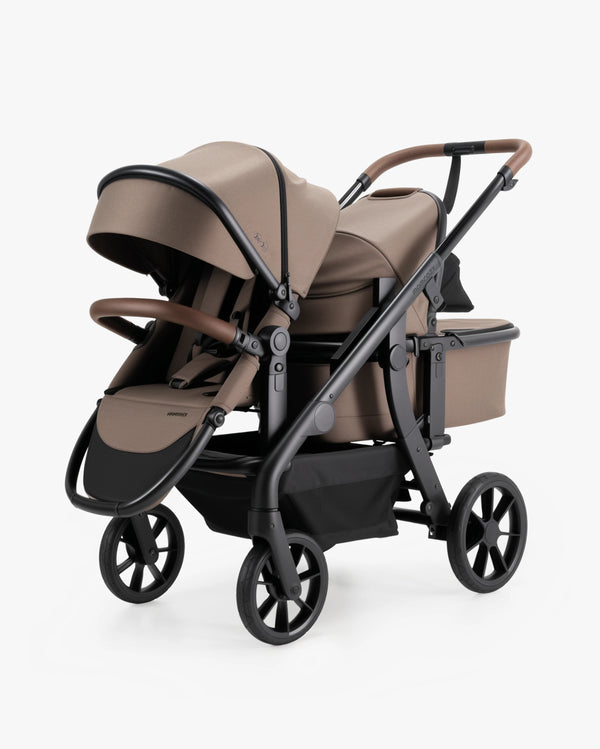
| Momcozy ChangeGo | Full‑size convertible | Long walks, growing families, gear‑heavy outings | Uneven sidewalks, parks, neighborhood routes | 10‑inch front wheels, 12‑inch rear wheels, spring suspension, 5‑position handlebar, 23 configurations, 33L basket | Larger than compact travel strollers; not a jogging stroller |
| Momcozy ChangeGo (double setup) | Convertible tandem double | All‑terrain double pram / pushchair for growing families | Two‑child walks, parks, sibling outings | Single‑to‑double flexibility, tandem configuration, large wheels, suspension, 33L basket | Some accessories sold separately; tandem adds width and weight |
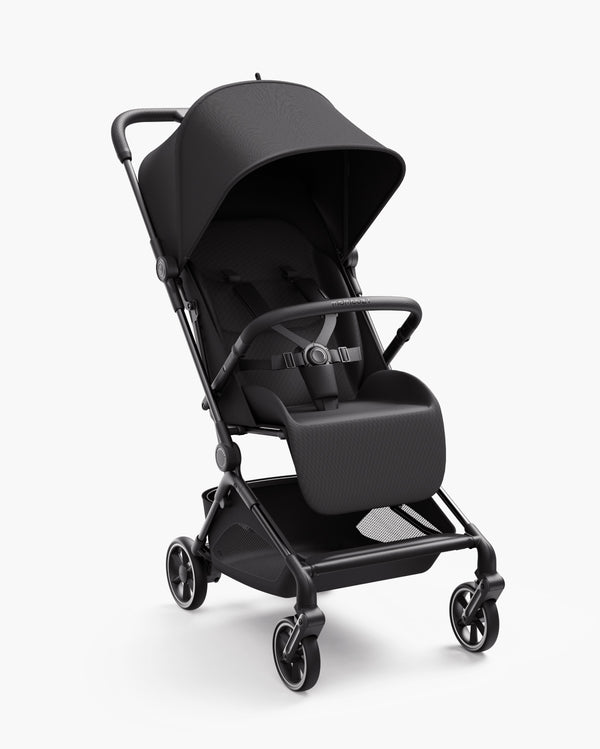
| Momcozy TuckGo | Lightweight travel stroller | Lightweight daily use, travel, city sidewalks | Paved sidewalks, airports, errands, everyday bumps | 14.4 lb, one‑hand fold, IATA‑compatible size, 4‑wheel suspension, 33L basket, 6‑48 months | Not a double stroller or rugged all‑terrain model; starts at 6 months |
| Jogging‑specific stroller | Running / active use | Parents who run with a stroller | Paved running paths, tracks | Locking front wheel, hand brake, wrist strap, pneumatic tires | Requires manufacturer jogging approval; age and head‑control requirements apply |
| Premium all‑terrain stroller | Full‑size premium | Smooth push on mixed urban and park surfaces | Urban sidewalks, parks, mixed terrain | Varies by model; typically large wheels, premium suspension, premium build | Higher price point; check manufacturer specs before buying |
Why Momcozy ChangeGo Works Well for Long Walks
For parents who walk regularly across mixed surfaces, the Momcozy ChangeGo is built around the features that matter most for longer outings.
- Wheels and suspension: The 10‑inch lockable front swivel wheels and 12‑inch rear wheels handle everyday obstacles with less push effort. The advanced suspension with high‑performance shock‑absorbing springs reduces jolts noticeably on cracked sidewalks and park paths.
- Handlebar: The leather telescopic handlebar adjusts across five positions, from 35.35 to 42.64 inches (898 to 1083 mm), so parents of different heights can find a comfortable posture.
- Braking: The scuff‑free brake releases with a press of the upward‑facing button, no scraped shoes and no fumbling on a downhill stop.
- Storage: The 33L under‑seat basket holds up to 19.84 lbs (9 kg), with room for diapers, snacks, water, and the extras that come with longer outings.
- Growing‑family flexibility: With 23 configurations, the ChangeGo grows from a single stroller with bassinet to a tandem double or wagon setup. Accessories include an additional toddler seat, bassinet, wagon backrests, and shopping basket, some sold separately. Fabric meets ASTM standards and carries OEKO‑TEX certification.
ChangeGo is designed for everyday walks, parks, and mixed‑surface family outings, not for jogging. Explore the Momcozy ChangeGo Baby Stroller for full specs and configuration options.
All‑Terrain Double Pram and Double Pushchair: What to Know
Parents searching for an all‑terrain double pram or all‑terrain double pushchair want a two‑child stroller that handles more than smooth mall floors. The terms vary by region, "double pram" and "double pushchair" in the UK and Australia, "double stroller" in the US, but the need is the same.
Tandem setups seat children front to back and stay narrower through doorways and on sidewalks. Side‑by‑side strollers offer equal seating but add width, which can make tight paths harder to navigate.
Two children plus gear increase push weight, turning effort, and braking load significantly. Larger wheels, suspension, and a lockable front wheel all become more important at that load. The ChangeGo converts from single to tandem double without buying a new stroller. Tandem is the format that keeps width manageable on sidewalks, which is one of the key tradeoffs parents weigh when choosing a best double stroller for everyday use.
When TuckGo May Be the Better Fit
The Momcozy Tuckgo Travel Stroller is designed for parents whose priority is lighter carry, compact fold, and easy loading.
At 14.4 lb with a folded size of 20 × 17 × 8 inches, TuckGo meets IATA carry‑on guidelines and fits in most car trunks without the lifting challenge of a full‑size stroller. The one‑hand fold, independent 4‑wheel suspension, one‑step brake, and 33L storage basket make it practical for daily errands, transit, and travel with a child from 6 to 48 months and up to 50 lb. The 3‑position seat recline and UPF 50+ three‑panel canopy provide comfort on the go.
TuckGo is not an all‑terrain double stroller or a rugged trail option. The tradeoff is straightforward: easier to lift and store, with everyday suspension for city sidewalks and park paths, while ChangeGo offers more wheel size, more suspension depth, and more configuration flexibility for rougher routes and growing families.
If your priority is getting in and out of the car easily, flying with a stroller, or managing a compact setup in a city apartment, TuckGo is the stronger fit. It starts at 6 months and is not designed for newborn flat‑lying use, which is the defining requirement for a best bassinet stroller in the earliest stage.

How to Match the Stroller to Your Real Walking Route
City sidewalks and errands: Prioritize steering, fold ease, brake access, and manageable weight.
Long neighborhood walks: Prioritize suspension quality, handlebar height, seat recline, canopy coverage, and storage. Push comfort over 45 minutes feels very different from a short errand run.
Parks and mixed surfaces: Prioritize wheel size, frame stability, and lockable front wheel. Grass, gravel paths, and packed dirt all benefit from larger wheels.
Hills and uneven curbs: Prioritize braking and load distribution. A full basket on a downhill slope is harder to control than one that is empty.
Two‑child outings: Prioritize convertible configuration, total loaded weight, width, and whether the setup steers well when fully loaded.
Safety and Setup Tips for Long Walks
- Always use the five‑point harness and follow the manufacturer's age, weight, and seat configuration guidance.
- Lock the stroller fully open before placing the child inside, and keep fingers away from hinges and wheels during folding.
- Use the basket for heavy items rather than hanging bags from the handlebar, to help reduce tipping risk.
- Check the brake before stopping on a hill or in a parking lot.
- For babies under 6 months, only a bassinet, flat‑lying pram mode, or approved car seat adapter is appropriate. Flat‑lying support is the first filter parents apply when choosing a best infant stroller at this stage.
- Do not run with a stroller unless the manufacturer specifically approves it for jogging and the child meets the developmental requirements.
The Right Stroller for Your Walk
The best all‑terrain stroller depends on where you actually walk, how long your outings are, and how your family is growing. For long walks, parks, mixed surfaces, and growing‑family flexibility, the Momcozy ChangeGo Baby Stroller covers the wheel size, suspension, and storage that daily walking demands. For lighter carry and everyday city sidewalks with a child 6 months and up, the Momcozy Tuckgo Travel Stroller is the more compact option.
The full Momcozy baby stroller collection covers all formats from single to double to travel. For growing families where a second child is on the way, the choice between tandem and side‑by‑side is the central question in any best double stroller decision.
FAQs
Q1: What Is the Best Stroller for All Terrain?
The right choice depends on your route and family setup. For mixed everyday surfaces including parks, uneven sidewalks, and longer walks, look for large wheels (10 inches or more), a quality suspension system, a lockable front wheel, and a stable frame. The Momcozy ChangeGo is built around these features for families who walk regularly on mixed terrain.
Q2: What Is the Best Stroller for Walks and Long Walks?
For long walks, suspension, handlebar adjustability, seat recline, canopy coverage, and storage matter more than for short errands. A stroller with a comfortable push posture and enough basket space for a full day out will feel very different from one that works only for quick trips.
Q3: What Are the Main Features to Consider When Choosing an All‑Terrain Stroller?
Wheel size, suspension system, frame stability, lockable front wheel, braking reliability, adjustable handlebar, seat recline, canopy coverage, storage capacity, and fold dimensions. Match each feature to your actual walking route rather than a theoretical one.
Q4: Is an All‑Terrain Stroller the Same as a Jogging Stroller?
No. A jogging stroller is specifically engineered for running, with a locking front wheel, hand brake, wrist strap, and manufacturer‑approved jogging use. All‑terrain strollers are designed for mixed everyday surfaces like parks and uneven sidewalks. Do not use a standard all‑terrain stroller for jogging unless the manufacturer explicitly approves it.
Q5: Can You Use an All‑Terrain Stroller for Everyday Walks?
Yes. Most all‑terrain strollers are designed primarily for everyday use on mixed surfaces. They handle sidewalks, parks, and errands well and are built for regular daily use rather than occasional trail outings.
Q6: What Should I Look for in an All‑Terrain Double Pram?
Look for a tandem or convertible configuration that keeps width manageable on sidewalks, larger wheels and suspension to handle the added weight of two children and gear, a reliable brake for loaded stops, and sufficient storage for two‑child outings. Total loaded weight and turning radius become more important in a double setup.
Q7: What Is the Difference Between an All‑Terrain Double Pram and an All‑Terrain Double Pushchair?
The terms refer to the same product type. "Pram" and "pushchair" are used more commonly in the UK and Australia, while "stroller" is the standard US term. All three describe a wheeled child carrier pushed from behind. The terrain and feature requirements are the same regardless of which term you use.
Q8: Is Momcozy ChangeGo Good for Long Walks?
Yes. The ChangeGo's 10‑inch front wheels, 12‑inch rear wheels, spring suspension system, five‑position telescopic handlebar, and 33L storage basket are all built for longer outings on mixed surfaces. It is not a jogging stroller, but for walking on parks, uneven sidewalks, and neighborhood routes, it covers the features that matter most.
Q9: Should I Choose ChangeGo or TuckGo for Daily Walks?
It depends on what your daily walk looks like. If you walk longer routes, cross park paths and uneven sidewalks regularly, carry a lot of gear, or plan to add a second child, ChangeGo is the stronger fit. If your priority is a lightweight stroller that folds easily for the car, travel, and city sidewalks with a child 6 months and up, TuckGo is the more practical choice.
Q10: Can a Lightweight Travel Stroller Be All‑Terrain?
Lightweight travel strollers with suspension can handle everyday bumps and smooth park paths, but they are not the same as a full‑size all‑terrain stroller. Smaller wheels and lighter frames absorb less impact on rougher or longer routes. The TuckGo's independent 4‑wheel suspension is suited for everyday surfaces. For more demanding mixed terrain and longer walks, a full‑size option like ChangeGo is a better fit.
Q11: What Stroller Features Matter Most for Uneven Sidewalks?
Wheel size, suspension quality, and front‑wheel control matter most on uneven pavement. Larger wheels clear cracks and obstacles with less effort. A quality suspension reduces the jolts that reach the seat. A lockable front wheel helps maintain straight‑line control on rougher stretches.
Q12: Are All‑Terrain Strollers Safe for Newborns?
It depends on the specific stroller and configuration. Not all all‑terrain strollers include a bassinet or flat‑lying pram mode. For newborns, use only an age‑appropriate bassinet, a manufacturer‑approved newborn insert, or a compatible car seat adapter. Always follow the manufacturer's stated minimum age and weight guidance. Flat‑lying bassinet mode is the defining feature parents filter for first when choosing a best bassinet stroller, and not all all‑terrain models include it.








