You put the baby down in a dark room and the question comes immediately: can I check in without waking them? That moment is exactly why night vision in a baby monitor matters so much to parents. It gives you a real, clear view without flipping on a light or walking in to check. Here is what it actually does, how it works, and what to look for before you buy.
What a Night Vision Baby Monitor Does
A night vision baby monitor lets you see your baby clearly in a completely dark room. No visible light is needed, and no disruption to the sleep environment.
It works during naps, at bedtime, and through overnight check-ins. Any time the room goes fully dark, the camera keeps showing you a clear, usable image.
How Night Vision Works in the Dark
Night vision relies on infrared (IR) light. Your eyes cannot detect it, but the camera sensor can.
Invisible Light, Visible Image
The camera emits infrared light into the room. That light bounces off your baby and the surrounding surfaces. The sensor picks up those reflections and converts them into a visible image, usually displayed in black and white or grayscale.
The whole process happens continuously, with no visible glow in the room at all.
Why Night Vision Matters for Parents
This is the practical part. Night vision in a baby monitor changes how you handle nighttime parenting in a few real ways.
No Lights, No Disruptions
You can check on your baby without turning on a lamp or opening the door. Babies often wake at the slightest change in light or sound. A monitor with night vision removes that risk.
More than Just Confirming Baby Is There
A good night vision feed shows you sleeping position, visible movement, whether your baby has rolled, and whether the nursery setup still looks clear. That is far more useful than just knowing your baby is in the crib.
Fewer Trips into the Room
If you are wondering whether your baby is stirring or fully awake, you can check the monitor first. That saves you a walk down the hall and saves your baby from being woken by a creaking door.
What You Can Actually See with Night Vision
Parents are often surprised by how much detail a quality night vision feed can show.
Movement and Position
You can see small movements: rolling, kicking, shifting position, or sitting up. These are the moments parents most want to catch, especially in the early months.
Sleep Cues
You can usually tell whether your baby looks settled, is starting to stir, or is fully awake. That information helps you decide whether to go in or wait a few minutes.
A Reliable View Instead of Guesswork
A clear night vision image replaces uncertainty. No more straining to hear through a sound-only monitor or peering through a dark doorway.
The Benefits That Go Beyond Seeing Clearly
Night vision does more than show you a picture. The downstream effects on both parent and baby matter.
Less Disruption for Baby
Because no visible light is used, your baby's sleep environment stays dark and calm. A dark, calm sleep environment can help support a more consistent nighttime routine, especially for young infants.
Less Nighttime Stress for Parents
Knowing you can check in at any moment, without disturbing anyone, takes the edge off the overnight hours. You do not have to lie awake wondering.
More Confidence in Your Responses
Parents who can see clearly tend to respond more calmly and deliberately. You know what is happening, so you can decide what to do instead of reacting out of uncertainty.
Smart Features That Make Night Vision Even More Useful
Night vision on its own is valuable. Pair it with smart features and it becomes a much more complete overnight monitoring tool.
Motion Detection in Low Light
Some monitors detect movement and send a notification when something changes, even in the dark. That means you do not have to watch the screen the entire night.
AI-Assisted Smart Notifications
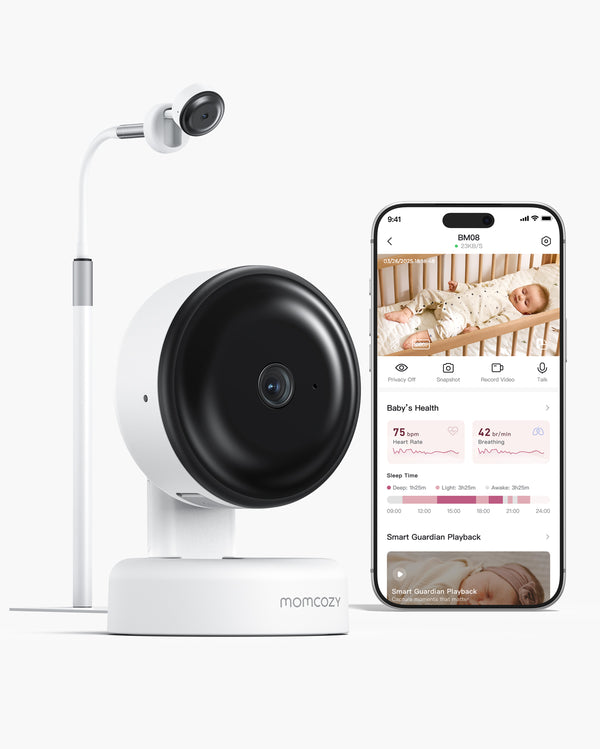
AI can filter out normal movements and flag only the ones that need your attention. The Momcozy Contact-Free Smart Baby Monitor BM08 combines 940nm infrared night vision with AI-assisted smart notifications to help parents notice sleep-related situations they may want to check, such as possible face covering or rolling. Its 2K HD resolution helps provide a clearer image for nighttime check-ins. The Momcozy Contact-Free Smart Baby Monitor BM08 is designed for everyday home baby monitoring support and is not a medical device.
No Wearables Required
No Monthly Fees
Cry & Face Covering Notifications
2K Night Vision
Supporting Features That Help Through the Night
Two-way audio lets you talk to your baby without walking in. Built-in white noise and lullabies can help baby settle back down. Sleep summaries give you a simple record of nighttime patterns, which can help you understand your baby’s routine over time.
What to Look for in a Night Vision Baby Monitor
| Feature |
What to check |
| Night vision clarity |
Can it show detail in total darkness, not just low light? |
| Resolution |
2K HD gives noticeably sharper images than standard 1080p |
| IR light type |
940nm is invisible to babies. 850nm emits a faint red glow |
| Signal stability |
Covers your full home, including through walls and across floors |
| Power reliability |
Stays connected overnight without cutting out |
| Audio features |
Two-way talk and built-in lullabies add useful overnight context |
| Security |
256-bit AES encryption keeps your video feed private |
Here is a simple test before buying: find a demo video recorded in complete darkness. If you can read the expression on a baby's face, the night vision is worth considering.
Clarity in Total Darkness
Look for a monitor tested in zero-light conditions, not just dim rooms. True darkness is what most nurseries reach after bedtime.
Resolution Makes a Real Difference
A 2K HD image lets you see facial expressions and sleep positions clearly. Standard 1080p can miss those finer details at a distance.
Signal Range and Power for Overnight Use
A monitor is only useful if it stays on and connected. Look for dual-band Wi-Fi support and a reliable power setup that will not drop out at 3 a.m.
Privacy and Encryption
Your baby's video feed deserves real protection. 256-bit AES encryption is the industry standard to look for when comparing monitors.
How to Set Up Night Vision for the Best View
Placement makes a bigger difference than most parents expect.
Camera Height and Angle
Mount or place the camera high enough to capture the full crib area. An angle from above gives you the clearest view of your baby's face and body position. A monitor with a flexible stand, like the Momcozy Contact-Free Smart Baby Monitor BM08, makes it easier to find the right angle without permanent wall mounting.
Safe Distance from the Crib
Keep all cords and devices out of reach of the crib. Place the camera far enough back to capture a wide field of view.
Avoid Reflective Surfaces Nearby
Mirrors, shiny wall panels, or glass can bounce infrared light back at the camera. That creates bright spots or washed-out areas in the image. Point the camera away from those surfaces.
Keep the Lens Clean
Dust or smudges on the lens will blur the night vision image noticeably. Wipe the lens gently with a soft, dry cloth every week or two.
Night Vision Works Best as Part of a Safe Sleep Setup
A monitor is a tool to support safe sleep. It does not replace a safe sleep environment.
Safe Sleep Comes First
The AAP safe sleep guidelines recommend placing baby on their back, on a firm and flat surface, with no pillows, blankets, bumpers, or stuffed animals in the crib. Night vision helps you confirm that setup is in place, but the setup itself is what keeps your baby safe.
Room Temperature Matters Overnight
According to sleep health research, a room temperature of 68°F to 72°F (20°C to 22°C) supports better infant sleep. Keeping the room in that comfortable range is an important part of your overall safe sleep setup.
Use Monitoring to Stay Informed, Not Anxious
Night vision gives you awareness. Try to use it as a calm check-in tool rather than a reason to watch the feed continuously through the night.
No Wearables Required
No Monthly Fees
Cry & Face Covering Notifications
2K Night Vision
Why Some Parents Over-Rely on Night Vision
Night vision is genuinely helpful, and that is part of why some parents find themselves using it more than they planned.
The Reassurance Loop
When you can see your baby at any moment, it is easy to keep looking. For parents already managing sleep deprivation or anxiety, the live feed can become a way to manage worry rather than actually rest.
App-Based Monitoring and the Checking Habit
Monitors with phone app access make it especially easy to check constantly, even when you are trying to sleep. That habit can interrupt your own rest more than it helps.
If you find yourself watching the feed instead of sleeping, it may help to set specific check-in intervals rather than watching continuously.
Find Your Night Vision Monitor
Night vision turns an ordinary baby monitor into something genuinely useful through the night. Clear image quality, reliable infrared technology, and smart notification features are the things worth prioritizing. A well-chosen monitor helps you see what is actually happening and respond with confidence, without ever disturbing your baby's sleep.
Explore the Momcozy Contact-Free Smart Baby Monitor BM08 and see whether its 2K HD night vision, Contact free detection+Sleep reports, and smart notifications fit your family’s nighttime routine.
FAQ about Baby Monitor Night Vision
Q1: Does Night Vision on a Baby Monitor Affect My Baby's Eyes?
No. 940nm infrared light is invisible to the human eye and produces no visible red glow, so it is designed for nighttime viewing without adding visible light to the nursery. Some older monitors use 850nm infrared, which produces a faint red light that some babies may notice. If this concerns you, look specifically for 940nm night vision when comparing options.
Q2: Can a Baby Monitor See in Complete Darkness?
Yes. Most dedicated night vision baby monitors work in total darkness. They use infrared light to capture a clear image even with no ambient light in the room. Image quality varies by resolution and sensor quality, so look for demo footage recorded in a fully dark room before buying.
Q3: Is Black-and-White Night Vision Normal?
Yes. Night vision images appear in grayscale because infrared sensors do not capture color information. Color video requires visible light. Grayscale night vision is standard and can provide enough visual detail for routine nighttime check-ins.
Q4: How Far Should I Place the Baby Monitor Camera from the Crib?
Place the camera at least 3 feet (about 1 meter) from the crib, positioned high enough to capture the full sleep surface. A higher angle gives you a better view of your baby's position and face without distorting the image.
Q5: Do All Baby Monitors with Night Vision Need Wi-Fi?
No. Some monitors transmit directly between the camera and a dedicated parent unit, with no Wi-Fi or internet connection needed. Others connect through your home Wi-Fi and let you view the feed from your phone. Both types can include infrared night vision. Wi-Fi-connected monitors add remote viewing, app notifications, and features like sleep summaries.