


Choosing between a baby carrier vs stroller depends on the outing, not a one-time winner. A quick errand up two flights of stairs is different from a full day at the zoo with diapers, snacks, and a tired caregiver. A baby carrier may make stairs, crowds, tight spaces, and transit easier, while a travel stroller can simplify longer walks, extra gear, and planned breaks. Your route, outing length, gear, baby’s stage, weather, and your own comfort all matter. Sometimes, bringing both is simply the easier choice.

Key Takeaways
There is no winner in the stroller vs baby carrier debate. The right choice depends on the outing.
- Carrier: Practical for stairs, crowds, short errands, and uneven routes where pushing adds work.
- Stroller: Better for longer outings, heavier loads, smooth routes, and planned breaks when the caregiver wants less on-body weight.
- Both: Well-suited for rugged terrain, long days, baby mood changes, or caregiver exchanges.
- Think route, length, weather, stage and preferences of baby, comfort of carer, and equipment.
- Carrying can simplify travel, but heat, length of wear, poor fit, or postpartum recovery might make it unpleasant. A stroller provides storage and rest, but stairs, off-road travel and folding constitute work.
- Neither replaces supervision, correct carrier positioning, manufacturer instructions, an appropriate car seat, or a firm sleep surface when needed.
The 60-Second Decision: What Kind of Outing Are You Taking?
Forget which one is “better.” For the next outing, ask which option removes an obstacle.
How long are you out? An errand may not need a stroller, while a half-day outing may.
Is the route smooth and step-free? Elevators and sidewalks make wheels easier; stairs, shops, and uneven paths can favor carrying.
How much gear are you bringing? Diapers, snacks, jackets, and bags can change the choice.
Does your baby tolerate both? Preferences can shift with age, mood, or later.
How does your body feel? Carrying avoids pushing but keeps weight on you; a stroller shifts that load but requires lifting and steering.
Could weather change the plan? Heat, rain, and sun can alter the choice.
Start with safety and fit, then caregiver capacity, route and duration, and finally storage.
Baby Carrier vs Stroller at a Glance
Think of this table as a quick starting point, not a replacement for product instructions, your baby’s cues, caregiver comfort, or the accessibility of your route.
| Outing signal | Starting point | Why it may fit | Check before leaving |
|---|---|---|---|
| Short errant; few items | Carrier | Quick in and out; nothing to unfold | Fit and wearer comfort |
| Long paved outing | Stroller | Storage and less on-body weight | Recline, canopy, route access |
| Crowds, arrow aisles, stairs | Carrier | Easier to maneuver | Heat, fit, safe activity |
| Museum, zoo, theme park | Stroller + carrier | Stroller as a base; carrier for queues or tight spaces | Venue rules, parking, total load |
| Sand, cobblestones, trail | Carrier or route-ready stroller | Terrain matters more than category | Manufacturer-approved use |
| Hot or humid conditions | Often stroller; shorter carrier periods | Less body-to-body heat may help | Shade, airflow, frequent checks |
| Recovering or pain-limited caregiver | Stroller or another wearer | Reduces continuous carrying | Lifting and folding demands |
| Toddler alternates walking and riding | Stroller + carrier backup | Adapts to changing energy and preferences | Child and product limits |
When a Baby Carrier Fits the Route Better
Think of a busy farmers market, a walk-up apartment, or a bus stop with no elevator. Add in bumpy sidewalks, a small convenience store or a restaurant where there's just enough space for a chair and a stroller is just one more thing to work around.
A baby carrier can make such trips easier. It packs down easily, allows quicker transitions once fitted, and keeps your baby close when steering a wheelbase is awkward. That proximity can also make it easier to notice your baby’s cues and respond when they need attention.
The trade-off is carrying the full load. Fit and adjustment matter, while heat and extended wear can become limiting. If another caregiver takes over, the carrier may need readjusting for their body and your baby’s fit. For stage-specific positioning, Momcozy’s baby carrier positions by age guide can help as your baby grows.

When a Stroller Fits the Day Better
Think of a full day at the zoo, a long walk in the neighborhood, or a shopping trip with a bag in each hand. When you're out for the day—or have more than one child—a stroller can help ease the burden.
The basket contains diapers, snacks, jackets and other equipment, and during stops, your child has a regular place to ride. It also facilitates handoffs to a grandparent or sitter without the child’s full weight being placed on the caregiver, lessening the unending strain on the shoulders, abdomen or pelvic floor.
The trade-off is all the things that come with the stroller: fitting it in the trunk or your hallway, lifting and folding it, dealing with stairs, tight aisles or bumpy terrain, and checking venue stroller-parking rules. Momcozy’s guide to lightweight, full-size, and umbrella stroller types for outings can help you work out which style suits your needs.
A stroller is not by itself a safe sleep surface. Follow product instructions and move your baby to an appropriate firm, flat sleep space when required.

Match the Choice to Baby’s Stage, Size, and Signals
The baby carrier or stroller that works early on may not work six months later. For babies or toddlers, confirm that the particular carrier or stroller configuration is suitable for your child’s size and developmental requirements; an age labeling is not a guarantee for fit.
As babies age, their weight, curiosity, need for rest, and patience for sitting or being carried can shift. A baby who loved a carrier at three months may protest it at six, while another may reject the stroller and opt for a known arrangement.
Try a short trip before committing to a long day. Test the actual baby, caregiver, bag load, carrier fit, and stroller fold—not the version you imagined while building your registry. A carrier keeps your baby close for shared observation, while a stroller can offer more room and a wider view. If you use a wrap, see how to use a baby wrap carrier for the technique.
Include the Caregiver’s Body in the Decision
Baby equipment may be sized for a baby, but the adult still hauls, pushes, lifts, and manoeuvres it. And it counts when you’re healing postpartum, after a C-section or tear, or dealing with pelvic-floor symptoms, back or shoulder pain, knee strain, disability, or just a low tolerance for lugging.
A carrier avoids pushing and lifting a frame, but the baby’s weight stays on the wearer. A stroller removes that continuous load but still requires folding, lifting, braking, and handling curbs.
The choice can also differ between caregivers. One may prefer a carrier while another prefers a stroller. Test the full outing load, not just the baby: a carrier and backpack can add up quickly, while a loaded stroller is harder to lift upstairs.
If you have pain, recovery restrictions, or mobility concerns, follow your individual healthcare provider’s advice. For broader early-outing preparation, see walking with a baby.
Adjust for Heat, Cold, Rain, and Sun
In warm weather the close contact can cause discomfort. Breathable fabric may make a difference, but shade, rest, fluid, and routine checks for heat stress still really matter. A stroller allows for more space between caregiver and baby, but both airflow and visibility are essential. Do not cover it with fabric that could cause heat to build up or block the air flow.
In chilly or rainy conditions, a good stroller rain cover might be adequate for a smooth ride. A carrier is fine for short jaunts in the right outer layers, as long as your baby's face and airway are uncovered.
Weather can alter the decision: a carrier may be best for a moderate day, while a stroller might be better in the heat, rain, or if you have more stuff.
Make the Call for Real-World Outings
The right choice can change once you leave the house. Here’s how it might look in everyday situations.
Quick grocery run
Choose a carrier for a short stop with a few items. A stroller may work better for a longer shop, more gear, or when storage can take some weight off your shoulders.
Restaurant or café
A carrier helps when stroller parking or table space is limited. If the venue is spacious and your child will be seated longer, a stroller may be more useful.
Bus, subway, or walk-up
A carrier can avoid folding and carrying a stroller through stairs or unreliable elevators. A stroller can still work when stations are accessible and boarding space is predictable.
Museum, zoo, or theme park
Use the stroller as a base for distance and supplies, with a carrier ready for queues, stairs, stroller-free areas, or a child who wants to be close.
Beach, trail, or old-town street
Look at the surface. Sand, steps, cobblestones, and narrow paths may favor carrying, while smooth paths can make wheels easier.
Airport or solo travel
A stroller can handle bags while a carrier helps with folding, boarding, or handoffs, provided the on-body load stays manageable. For packing, security, and gate-check details, see traveling with a baby stroller.
Do You Need Both? Build a Handoff Plan
So, do I need both a stroller and baby carrier? Not necessarily. On a long or mixed-route day, though, giving each one a specific job can make things easier. Use the stroller as your base when you need storage, distance, or planned stops. Keep the carrier in the basket for stairs, queues, transit, stroller-free areas, or when your child wants to be close.
Traveling light? Wear your baby for the first leg, then switch to a stroller at your destination, rental, or when another caregiver joins. Before leaving, decide what might trigger the switch: caregiver fatigue, a fussy or sleepy baby, changing weather, accumulating bags, a stroller-free area, or a caregiver handoff.
Remember, hands-free is not weight-free. A baby plus backpack and diaper bag can add up quickly. If neither adult can safely manage the unused gear during a switch, bringing both may create more work than flexibility.
What to Check Before You Buy
When you know roughly how you get around, compare features that address those needs.
For a carrier: Check your baby’s current age and weight range, approved positions, airway visibility, adjustability between caregivers, breathable materials, weight distribution, secure fastenings, and packability.
For a stroller: Look at the approved stage and weight, actual lift weight, folded size, one-hand fold, wheels and suspension, recline, canopy, harness, brake, basket access, and whether it fits your trunk or storage space. For more guidance, see how to choose a lightweight stroller and the baby stroller buying guide. Comparing categories? See full-size stroller vs travel stroller.
Two Momcozy Examples
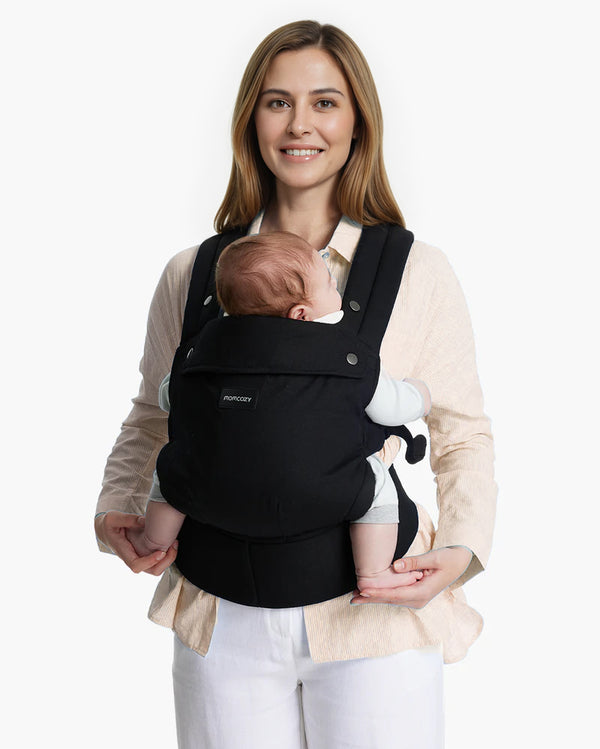
For stairs, busy shops, or quick trips, the Momcozy PureHug Baby Carrier offers adjustable sizing, padded straps, and waist/lumbar support. It is currently listed for babies 3–24 months and 7–45 lb; check the product page and manual for current fit information.
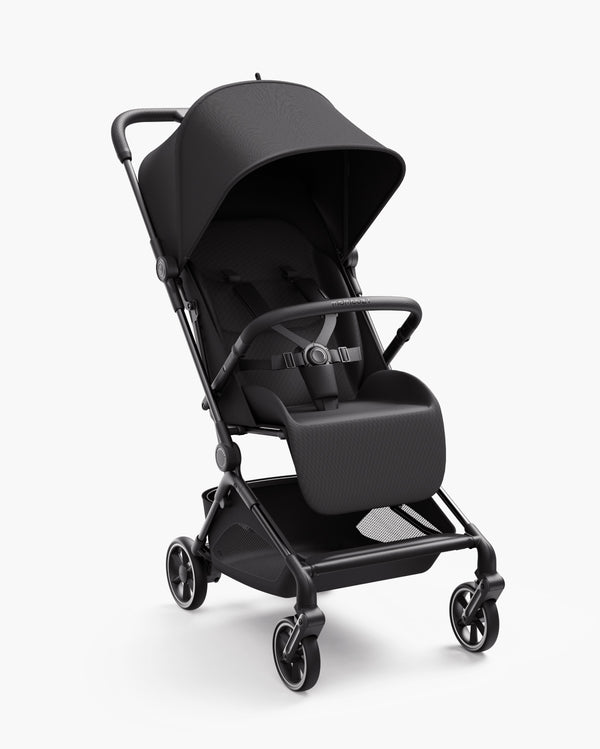
For travel or compact storage, the Momcozy TuckGo Travel Stroller weighs 14.4 lb and has a one-hand fold and compact folded size. It is currently listed for children 6–48 months and up to 50 lb; check current specifications against your child’s stage and storage needs.
FAQ
Do I need a stroller that accepts my infant car seat if I plan to babywear?
Not necessarily. It can make car-to-stroller transfers easier, but consider your baby’s stage, climate, vehicle routine, and how often you make those transfers. See Momcozy’s infant stroller buying guide by age for more guidance.
Can a carrier and a single stroller replace a double stroller for two children?
Sometimes. Consider the older child’s walking stamina, the younger child’s carrier tolerance, your route, and whether you can safely manage both children and extra gear.
Can I place an infant car seat on a grocery cart?
Do not improvise this setup. Use only manufacturer-approved systems and placements, and follow both the car seat and cart instructions.
What if my baby falls asleep in the carrier, stroller, or car seat?
Keep the airway visible and follow product instructions during supervised travel. When the trip ends, move your baby to an appropriate firm, flat sleep surface if the product is not intended for sleep.
Can I use a baby carrier in a car?
No. A baby carrier does not replace a properly installed, vehicle-appropriate car seat.
Is secondhand gear a sensible way to try both?
It can reduce costs, but check recalls, labels, manuals, buckles, straps, frame joints, brakes, missing parts, and product history before use. If its condition or history is unclear, consider another option.
Conclusion
The baby carrier vs stroller choice comes down to which option removes the biggest obstacle without creating a larger physical, safety, or logistical burden. A carrier can simplify mobility, a stroller can handle distance and gear, and both can work when the day calls for a handoff. Before deciding, picture your next three outings. Where does the same friction keep showing up—stairs, distance, storage, heat, or carrying? Choose the setup that makes those recurring moments easier.








