Introduction
The first few weeks with a newborn can be unpredictable, especially with regard to sleep patterns that seem to change every hour or so. Some babies may display signs of calmness for a moment or two and then suddenly become irritable, hard to settle, or even overtired. The subtle of a newborn's sleep cues patterns that signal they need sleep before they cry are often missed by parents.
Newborns don’t have a reliable clock like older babies. They are awake for a short time, and their brain systems are still in the process of development. Newborns need even a few more minutes of wakefulness, which makes them overtired. Once they are overtired, stress hormones like cortisol start building up, which makes the baby find it hard to fall asleep despite the tiredness.
A calm environment also makes these cues easier to act on. Many families use a Momcozy baby sound machine because white noise helps block sudden household sounds and creates a consistent sleep association. Pairing this with a Momcozy baby monitor which allows parents to observe stirring without entering the room too early.
What Are Baby Sleep Cues?
Physical and behavioral indicators that a baby is getting tired and ready for sleep are known as baby sleep cues.
Newborns rely on subtle physical changes and behavioral changes because they are unable to express their weariness directly. Instead of appearing all at once, these signals frequently appear gradually.
Common newborn sleep cues include:
- staring into space
- reduced movement
- slower blinking
- red eyebrows or eyelids
- yawning
- rubbing face
- turning away
- jerky arm or leg movement
- mild fussing
While some babies become more active when they are drowsy, others become extremely quiet.
When a newborn pulls away from stimulation or suddenly avoids eye contact, it's usually a sign that their nervous system wants to relax.
Although newborns often feed, sleep cues and hunger cues can readily overlap. For this reason, it is beneficial for parents to think about both wake time and cues.
Why Are Sleep Cues Important?
Newborns become overtired extremely rapidly, therefore sleep cues are important.
The brain and nervous system of a baby cannot withstand extended periods of wakefulness. Stimulating hormones make it more difficult for the body to fall asleep after an extended period of wakefulness.
When cues are missed:
- crying becomes stronger
- feeding becomes harder
- settling takes longer
- naps shorten
- nighttime wakings may increase
Responding early usually means:
- smoother transitions to sleep
- less intense fussiness
- longer sleep stretches
- easier transfers to crib or bassinet
Sleep cues also help parents move beyond guessing. Instead of waiting for crying, they can begin calming while the baby is still manageable.
The Three Stages: Early, Mid, and Late Cues
Sleepiness usually appears in stages.
Early Sleep Cues
These are the best signals to act on because babies settle fastest here.
Early cues include:
- staring quietly
- slower body movement
- less eye contact
- slight yawning
- quiet disengagement
At this stage, babies are usually calm enough to transition into sleep smoothly.
Mid Sleep Cues
Fatigue becomes more visible.
Mid cues include:
- rubbing face
- pulling ears
- head turning
- mild fussing
- jerky movements
Sleep is still possible without major difficulty, but parents need to respond quickly.
Late Sleep Cues
Late cues suggest overtiredness is very near.
Late cues include:
- crying
- back arching
- stiff body
- pulling away
- frantic movements
Once babies reach this stage, falling asleep often becomes harder because stress hormones are already elevated, which is often why an overtired baby can keep waking up even when they seem exhausted.
Different Types of Sleep Cues
Not every newborn shows sleepiness the same way.
Physical Cues
These include:
- yawning
- blinking slowly
- red eyelids
- rubbing nose or face
Behavioral Cues
These include:
- losing interest in surroundings
- avoiding eye contact
- sudden quietness
- mild fussing
Movement Cues
These include:
- jerky kicking
- arm flailing
- startling more easily
Some babies also sneeze repeatedly when overstimulated.
Learning your baby’s unique pattern takes observation over several days.
The "False Alarm" Check: Sleepy vs. Bored vs. Hungry
Not every fuss means sleep.
Hunger Often Looks Like:
- rooting
- sucking hands
- lip smacking
- tongue searching
Boredom Often Looks Like:
- fussing that improves with interaction
- looking around for stimulation
Sleepiness Often Looks Like:
- turning away
- reduced engagement
- staring
- slowing movement
If feeding happened recently and wake time is nearing its limit, sleepiness is more likely.
Troubleshooting: I Never See Sleepy Cues Until It’s Too Late
Some babies move very quickly from calm to overtired.
This often happens with:
- highly alert babies
- sensitive babies
- reflux babies
- babies exposed to heavy stimulation
In these cases, wake windows become essential because cues may be subtle.
Parents often need to begin calming before obvious tired signs appear.
The Overtired Emergency: What to Do?
A baby's body frequently enters a stress response when they are overtired, which makes it much harder for them to fall asleep, even though they are exhausted. Because stress hormones like cortisol and adrenaline start to circulate, many newborns actually become more alert rather than sleepier. For this reason, even when they are obviously in need of sleep, an overtired baby may scream wildly, curve their back, infant swing their arms, or refuse to be held.
The goal during an overtired episode is to reduce sensory input as soon as possible, while an overtired episode is intended to assist the nervous system in feeling secure enough to return to a state of calm.
Reduce Stimulation Immediately
As soon as overtired signs appear, simplify the environment.
Helpful first steps include:
- dim lights
- lower voices
- stop active play
- move away from bright rooms
- reduce visual stimulation
The brain knows it's time to calm down when the surroundings are quieter.
Move to the same sleeping area if at all possible, as newborns tend to relax more quickly in familiar environments.
Hold Your Baby in a Calm, Predictable Way
Overtired newborns typically react better to consistent, repetitive support than to frequent shifting.
Helpful approaches include:
- holding baby upright against your chest
- using gentle firm pressure
- swaddling if age-appropriate and safe
- rocking slowly in small movements
- keeping body contact consistent
Large movements sometimes increase stimulation rather than reduce it.
Many babies calm more quickly when the caregiver’s body remains steady and breathing is slow.
Avoid Common Mistakes During Overtired Crying
Some well-meaning responses can accidentally increase stimulation.
Avoid:
- repeated repositioning
- bright lights
- switching caregivers too often
- excessive bouncing
- talking continuously
- offering too many soothing methods at once
When babies receive too many changing inputs, the nervous system has more difficulty organizing itself. One calm method maintained consistently often works better than multiple quick changes.
The Biological Clock vs. The Cue: Using Wake Windows
Wake windows help parents anticipate sleep before overtiredness begins, and having a better sense of a newborn sleep schedule and how wake windows work together can make those early cues much easier to catch.
Typical newborn wake windows:
- 0–4 weeks: 30–45 minutes
- 4–8 weeks: 45–60 minutes
This includes:
- feeding
- burping
- diaper changes
- brief interaction
A 30-minute feeding may already consume most of a newborn’s wake window. This is why babies often need to sleep soon after feeding. Wake windows should support cues—not replace them.
A baby may need to sleep sooner after:
- poor previous nap
- overstimulation
- cluster feeding
- gas discomfort
Creating a Sleep Routine Based on Cues
A cue-based routine works better than a strict clock during early infancy.
Simple sequence:
- feed
- brief awake period
- diaper change
- observe cues
- begin calming routine
Mini routine:
- lower lights
- swaddle
- gentle hold
- turn on white noise
- place down drowsy
Consistency teaches babies what happens before sleep.
One especially helpful tool is the Momcozy Baby Sound Machine, designed to create stable sensory conditions for sleep.
Its features include:
- 34 soothing sounds
- white noise options
- lullabies
- nature sounds
- adjustable volume
- app control
- timer settings
- soft night light
The app control is useful because parents can adjust sound without entering the room, reducing disturbance during light sleep.
The soft night light also helps during night feeds and diaper changes because it avoids bright light exposure that can fully wake a newborn.
White noise helps by masking:
- door sounds
- kitchen noise
- conversation
- traffic
- sibling movement
This supports longer naps and fewer startle awakenings.
Sterowanie zdalne przez aplikację
Program pory na sen
7-kolorowe oświetlenie LED
34 dźwięki
Long Battery
Portable
20 Hi-Fi Sounds
Child Lock
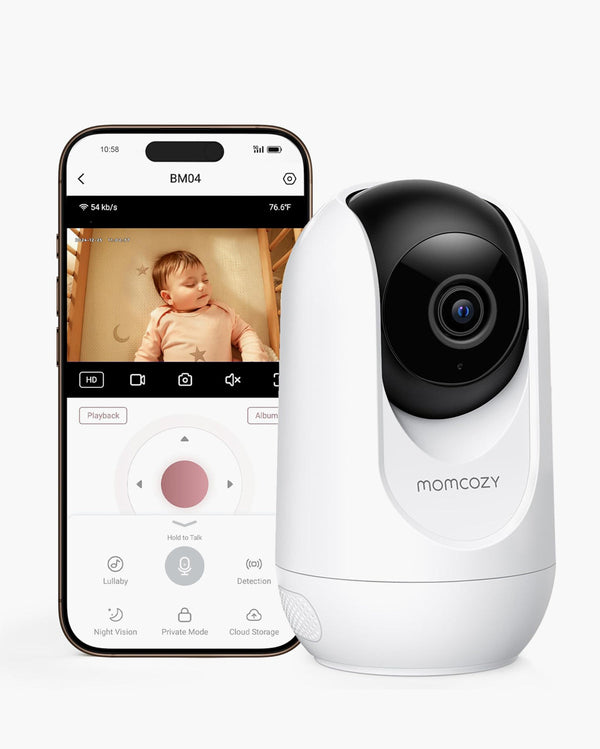
Product Support: Momcozy Baby Monitor for Sleep Observation
A baby monitor helps parents observe early waking without disturbing the baby.
The Momcozy 5.5-inch Full HD Baby Monitor offers:
- 1080p HD video
- infrared night vision
- 350° pan
- 90° tilt
- two-way audio
- 5000mAh battery
- secure non-WiFi connection
This helps parents notice subtle pre-wake signs such as:
- hand movement
- head turning
- facial changes
- leg stretching
These signs often happen before crying. Because newborns frequently move during active sleep, a monitor prevents unnecessary room entry that might accidentally wake them.
Two-way audio also allows soft reassurance without entering immediately. Using both a sound machine and a monitor together creates a more consistent sleep environment:
- sound machine supports falling asleep
- monitor supports observing sleep transitions
- both reduce overstimulation
Conclusion: Becoming a "Baby Whisperer"
Learning newborn sleep cues takes repetition and patience. At first, signals may feel inconsistent. But over time, patterns become clear, same yawn before naps, same stare before bedtime and same fuss after certain wake lengths
The goal is not perfect timing every day. It is gradually understanding your baby’s rhythm well enough to respond before overtiredness takes over. That understanding often leads to calmer sleep, less crying, and more confidence for parents during the newborn months.