


Returning to work while breastfeeding makes a regular workday seem like a juggling act. With all the meetings, deadlines, and a need to find a private spot to pump, you might be wondering what is reasonable break time for nursing mothers under U.S. law. There’s no fixed number of minutes. For most covered employees, federal law provides reasonable break time each time they need to express breast milk, along with a private space that isn’t a bathroom.
And a pumping break is more than the time the pump is running. Getting to the space, setting up, storing milk, cleaning up, and getting back to work all take time. This guide breaks down the federal rules, what pumping can look like during a real workday, when breaks may be paid, and how to make limited break windows work better.
Important: This is general information and not legal advice. Your coverage may vary, and state laws could be more protective. Verify with your HR and check the regulations that govern your place of employment.

Key Takeaways
- Reasonable break time for nursing mothers is needs-based, not a set number of minutes. Most covered employees can take breaks as often as needed to express milk for up to one year after birth.
- Under the PUMP Act, most FLSA-covered employees are also entitled to a private pumping space that is not a bathroom.
- Your break may include more than pumping itself—getting to the space, setting up, storing milk, cleaning up, and returning to work can all affect the time you reasonably need.
- Whether pumping time is paid depends on whether you're fully relieved from work and whether you're using an existing paid break.
- A prepared kit and comfortable, well-functioning pump can make your breaks productive—still, your gear never dictates what you are entitled to under the law.
What Is Reasonable Break Time for Nursing Mothers?
There is no fixed federal number of minutes for a pumping break. Under the FLSA, most covered employees can take reasonable break time each time they need to express breast milk, for up to one year after their child's birth. The key is having enough time to pump effectively rather than being limited to some arbitrary 15-, 20-, or 30-minute block.
And a pumping break involves more than the time your pump is running. Your total break may include:
- Getting to the pumping space
- Setting up and expressing milk
- Storing your milk
- Cleaning or packing your pump parts
- Returning to work
So, if your pump runs for 20 minutes, your full break may need to be longer. The DOL's Fact Sheet #73 gives examples of 20–30 minute breaks, two to four times during a workday. These are examples, rather than a mandate or promise from the government. How many times you need to pump and how long the whole thing takes will vary, so your schedule might not be the same.
That flexibility matters. The schedule that works when you first return to work may not be the schedule you need a few weeks or months down the line.
Your Federal Rights Under the FLSA and PUMP Act
Most covered employees have two important federal rights under the FLSA nursing mothers protections: the right to a reasonable break time to express breast milk for one year after the child’s birth and the right to a space, other than a bathroom, to pump that is clean and free from viewing by others. These rights are normally good for one year after the birth of the child.
The PUMP for Nursing Mothers Act, or PUMP Act, expanded these protections to more employees when it took effect in 2023. For most covered employees, PUMP Act break time means reasonable time to express breast milk, along with a private space to pump.
At a high level, your federal rights include:
- Reasonable break time: You can take breaks each time you need to express milk. Your employer generally cannot impose a schedule that does not allow you to meet that need.
- A private pumping space: The space must be shielded from view and free from intrusion while you pump.
- No bathroom: A bathroom does not meet the federal requirement, even if it is private or temporarily available.
- Up to one year after birth: These federal protections generally apply during the first year after your child's birth.
Federal coverage does have some exceptions, so your specific job and employer can matter. And federal law is only the starting point: state and local laws may provide stronger protections, including longer coverage or paid break requirements.
For the current federal rules and coverage details, see the U.S. Department of Labor's Pump at Work guidance.
How Long Should a Pumping Break Be in Practice?
For many workers, 30 to 40 minutes per pumping session can be a reasonable planning range, although the pump itself only needs to run 15 to 20 minutes. The law considers the amount of time that you reasonably need to use the pump to express milk, not just the time it takes for the pump to run.
A typical break may include:
- 5 minutes — Walk to the pumping space and get settled
- 5 minutes — Set up the pump
- 15–20 minutes — Pump
- 5 minutes — Store milk and pack or clean pump parts
- 5 minutes — Return to work
That totals about 35-40 minutes, but your break could end up being longer or shorter. A closer pumping area, faster setup, or a shorter session might take less time. A longer walk or extra cleanup may add to it.
A Sample 8-Hour Workday
A simple schedule could look like:
- 9:00 a.m. — Start work
- 10:30 a.m. — Pump break
- 1:00 p.m. — Lunch and/or pump, depending on your needs
- 3:30 p.m. — Pump break
- 5:00 p.m. — Finish work
Your schedule may need to look different, especially during the early months when pumping can be more frequent or take longer. As your routine changes, your workday schedule may need to change with it. For more practical ideas, see our guide to pump schedule for working moms.
Are Pumping Breaks Paid?
Not always. Understanding your pumping at work rights also means knowing when pumping time is paid. Under the FLSA, additional pumping time may be unpaid when you are completely relieved from work during the break. But if you are expected to work while pumping, that time generally counts as hours worked and must be paid.
Your regular paid breaks are different. If you use an existing paid rest break to pump, it must be paid just as it would be for any other employee. If pumping time pushes you beyond the hours your employer normally schedules or contributes to overtime, the usual FLSA rules on hours worked and overtime may also apply.
The exact rules can depend on your situation, and state law may provide stronger protections. For more detail, see the U.S. Department of Labor's Employer Responsibilities guidance.
How to Talk to HR and Protect Your Schedule
When you want to request a lactation break at work, it is important to ask early, be specific with your needs, and get the agreement in writing. Just before you go back to the office, inform HR and your supervisor about how often you anticipate pumping, the amount of time you’ll require, and the private location you’ll be using. For more preparation tips, see our guide to breastfeeding and returning to work.
It can help to put the details in writing, including:
- Your expected pumping frequency and approximate timing
- The private space you’ll use
- How the breaks can fit around meetings or coverage
- How you'll handle changes if your pumping needs shift
You can keep the request simple:
“I’ll need pumping breaks during my workday when I return. I’d like to confirm the timing and private space available so I can work them into my schedule.”
Once your schedule is set, you can block out the breaks on your calendar and let your manager know when you won’t be available. Save the emails and other forms of written confirmation in a place that’s easy to access.
A set schedule can help with planning, but your pumping needs may change. Federal guidance does not require you to follow a rigid schedule that prevents you from taking needed pumping breaks.
What If Your Break or Pumping Space Is Denied?
Begin by finding out what the problem is and if there is some other way to schedule the break or space. If the problem persists, keep a record of the dates, requests, and responses and then bring the matter to the attention of HR or the appropriate contact at your place of work.
For information on federal protections and potential next steps, visit the Wage and Hour Division of the U.S. Department of Labor. The objective is a plan that can be implemented—not to make the discussion a legal battle. A clear request, a reasonable timeline, and some documentation can simplify things quite a bit.
Making Each Pump Break Count (Workplace Gear and Setup)
Your rights provide you with the time, and the go-time setup allows you to make the most of that time. Keep your pump, bottles, storage bags, charger, cleaning supplies, and any other essentials all in one place so you can grab everything and go instead of having to build up your kit at every break.
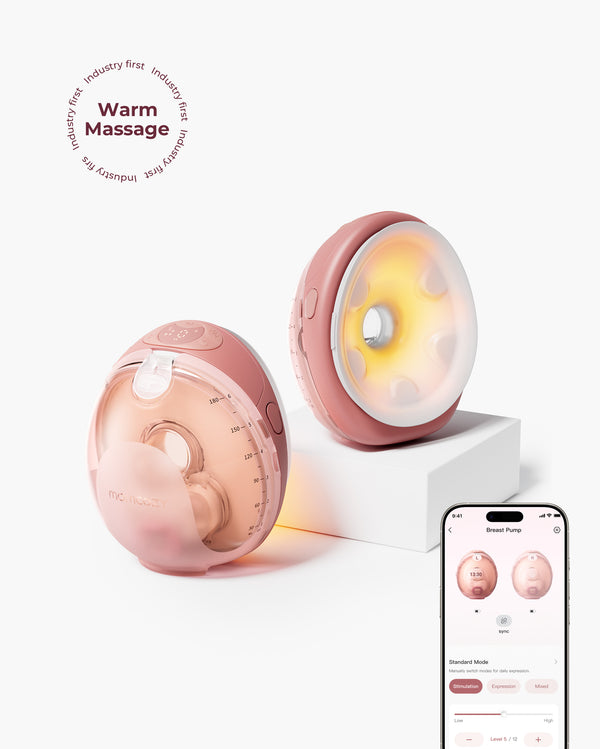
Features like those of a heated breast pump or massage breast pump could also help to make a brief pumping session more comfortable, particularly when you have to squeeze it in during a busy schedule.
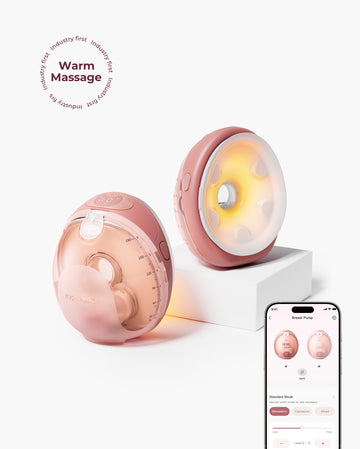
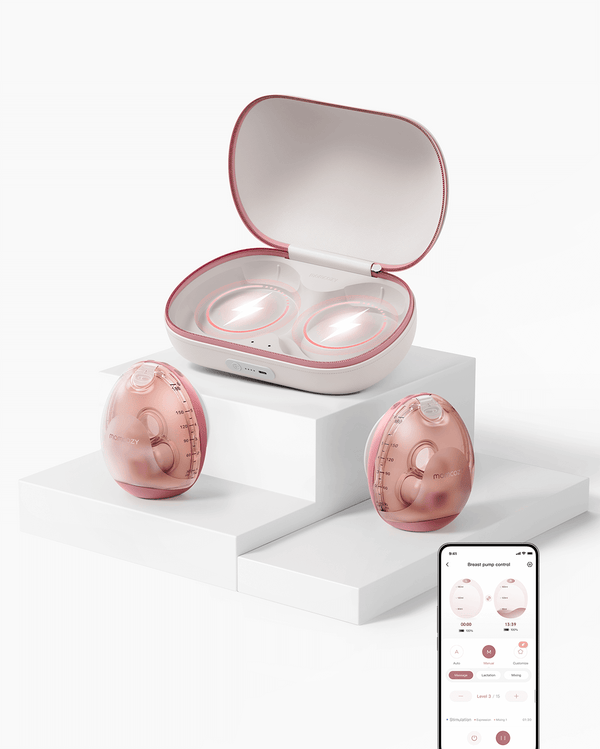
The Momcozy Wellness 1 Warm & Massage Wearable Breast Pump is a combination of wearing pumping technology with warming and massage functions. For a mom working on a tight break time, those comfort-centric features could make the session feel more manageable.
For a less obvious arrangement, the Momcozy Air 1 Ultra-Slim Breast Pump has a slimmer wear-all profile, which can come in handy if you're short on space or if you need to use something that's a bit less conspicuous under work attire. And your bra can influence how fast you can get ready.
The Momcozy AirMesh / Mesh Support Plus-Size Pumping and Nursing Bra provides a supportive pumping and nursing layer that can make access and setup more straightforward. These products don't change how much pumping time you're entitled to. They simply help you make better use of the break you already have.

FAQ: Reasonable Break Time and Pumping at Work
What is reasonable break time for nursing mothers?
For most employees covered by the FLSA, reasonable break time means enough time to express breast milk each time they need to pump, generally for up to one year after the child's birth. There is no federal number of minutes, so the amount of time required might vary.
How many times a day can I pump at work?
There is no mandated number of times a pumping break must be taken in a day under federal law. How often you pump is how often you take breaks.
Does my employer have to provide a lactation room?
Your employer usually has to provide a private space that is clean and free of distractions where you can pump, other than a bathroom. It does not have to be a permanent lactation room, but a bathroom is not acceptable under federal regulations.
Are pumping breaks paid?
Not necessarily. Additional pumping time may be unpaid when you are fully relieved from work, while time spent working during a pumping break generally must be paid. Existing paid rest breaks used for pumping must be paid like the same breaks for other employees.
Do remote / hybrid workers have pumping rights?
Yes. Remote employees are also typically protected by the same pump-at-work federal protections as other covered employees. Working from home does not by itself remove those protections, but the practical routine can look different when you're moving between home and the office. Our guide to wearable pumps and hybrid work covers some of those day-to-day adjustments.
What if my employer says no?
Always begin by requesting clarification and, if feasible, submit your request in writing. If the issue persists, escalate it to HR or other suitable workplace contact, and consult the U.S. Department of Labor's pumping-at-work guidance.
Reminder: This article provides general information about federal workplace protections and is not legal advice. Your coverage and state protections may differ.
Conclusion
Understanding what is reasonable break time for nursing mothers starts with knowing that federal law does not set a stopwatch for pumping. For most covered employees, reasonable break time is based on the time they actually need to express milk, along with a private space that meets federal requirements.
What is often overlooked is all the things surrounding the pump: getting to the room, setting up, pumping, storing milk, cleaning up, and returning to work. Planning for that whole window of time and having your necessities prepared can help a brief break in the workday feel a little more doable.
Before you head back, talk to HR about your pumping needs, confirm your private space and schedule, and get the agreement in writing. Give yourself some room to adjust, too; the routine that works in your first weeks back may change as your baby and workday change.
For the latest federal guidance, see the U.S. Department of Labor's Pump at Work resources and Fact Sheet #73. State or local laws may provide additional protections, so check those rules as well.








