Pumping after breastfeeding can be useful, but it is not necessary for every mom. If your baby nurses well, gains weight appropriately, and you do not need extra milk, you usually do not have to pump after every feeding. It can make sense when you want to build a small freezer stash, prepare for returning to work, relieve occasional fullness, or support milk production in a targeted way.
This article explains when pumping after nursing is helpful, how to plan it without unnecessary stress, what mistakes to avoid, and how a wearable breast pump such as the Momcozy Air 1 Ultra-slim Breast Pump can support a flexible breastfeeding and pumping routine.
Quick answer: Should I pump after breastfeeding?
You do not need to pump after every breastfeeding session if your baby is feeding well and you have no specific reason to collect extra milk. Pumping after nursing can be helpful if you want to store milk, prepare for daycare or returning to work, increase stimulation temporarily, or collect a small amount for another caregiver. If you pump too often without a clear goal, you may create extra pressure or encourage more milk production than you actually want.
|
Your goal
|
When pumping after nursing may help
|
What to watch for
|
|
Building a small freezer stash
|
Occasional short sessions after nursing or between feedings
|
Small amounts are normal, especially after the baby has already fed.
|
|
Returning to work
|
Planned pumping times that fit your workday and your baby’s feeding rhythm
|
A consistent routine is more important than long, stressful sessions.
|
|
Supporting milk production
|
Short extra sessions may be useful in some situations
|
Discuss ongoing supply concerns with an IBCLC, lactation consultant, or healthcare provider.
|
|
Relieving fullness
|
Brief pumping or hand expression can soften the breast
|
Avoid fully emptying too often if you are prone to oversupply.
|
Why the amount after nursing is often small
Many moms worry when they pump only a small amount after breastfeeding. In many cases, this is completely normal. If your baby has just nursed effectively, much of the available milk has already been removed. The amount collected afterward does not automatically show how much milk you make in total.
Milk output also depends on time of day, stress, your let-down response, flange fit, and how well your body responds to the pump. Some moms get more milk in the morning, while others pump more at a different time. A single pumping session should therefore not be used as the only measure of milk supply.
When pumping after breastfeeding can be useful
Pumping after breastfeeding is most useful when it supports a clear goal. If you want to collect a small amount of milk for later, a short session after one or two feedings may be enough. If you are preparing for returning to work, it may be more helpful to establish a regular pumping routine that mirrors the times your baby will receive bottles.
It can also be useful when you and your lactation consultant decide that additional stimulation is appropriate. Because breast milk production responds to demand, extra milk removal can sometimes encourage the body to make more milk. However, more pumping is not automatically better. Too much stimulation can lead to oversupply, discomfort, leaking, or clogged ducts in some moms.
|
Useful situation
|
Possible approach
|
US-localized note
|
|
You need milk for daycare
|
Add one predictable pumping session during the day
|
Label stored milk with the date and follow CDC storage guidance.
|
|
You are returning to work
|
Practice pumping before your first workday
|
Plan where you can pump, clean parts, and store milk safely.
|
|
You want a small freezer stash
|
Collect small amounts over several days
|
You do not need large amounts at once; small portions can add up.
|
|
You are trying to increase supply
|
Add short sessions carefully and track comfort
|
Seek professional support if output remains low or baby’s weight gain is a concern.
|
How long should you wait after breastfeeding before pumping?
There is no single waiting time that works for every mom. If your goal is to collect a small amount in addition to direct nursing, waiting about 30 to 60 minutes after a feeding may be practical. This can give your body time to begin refilling while still keeping the next nursing session comfortable.
If you are replacing a feeding because you are away from your baby, the timing should follow your baby’s usual feeding rhythm more closely. In that case, the pumping session is not simply “after breastfeeding,” but a replacement for a nursing session. If your goal is to increase supply, timing should ideally be discussed with an IBCLC or lactation consultant so you can avoid unnecessary stress or oversupply.
How long should a pumping session after nursing last?
A short session is often enough when you are pumping after a full breastfeeding session. Many moms begin with around 10 to 15 minutes and then adjust based on comfort, output, and the reason for pumping. If only a few drops or a small amount comes out, that does not automatically mean the session failed. Your baby may simply have already removed most of the available milk.
Longer sessions are not always better. If pumping becomes painful, stressful, or causes nipple irritation, the routine should be changed. Comfort, flange fit, and a realistic schedule matter more than forcing longer pumping times.
What to consider before adding pumping after every feeding
Pumping after every breastfeeding session can be useful in certain situations, but it should not become an automatic rule for every mom. If a healthcare provider or lactation professional recommends it because your baby needs additional milk or you are working on supply, then a structured plan may make sense. Without that kind of goal, pumping after every feeding can become exhausting and may overstimulate milk production.
Pay attention to how your body responds. If you develop painful fullness, frequent leaking, recurring clogged ducts, or anxiety around pumping amounts, reduce the intensity of the routine and seek support. A sustainable pumping plan should fit your baby, your body, and your daily life.
Which breast pump is suitable for breastfeeding and pumping?
A breast pump can make breastfeeding life easier when it fits your routine. For many moms, the key question is not only how much milk they can collect, but whether pumping remains realistic in everyday life. This is where a wearable or hands-free solution from Momcozy can be useful.
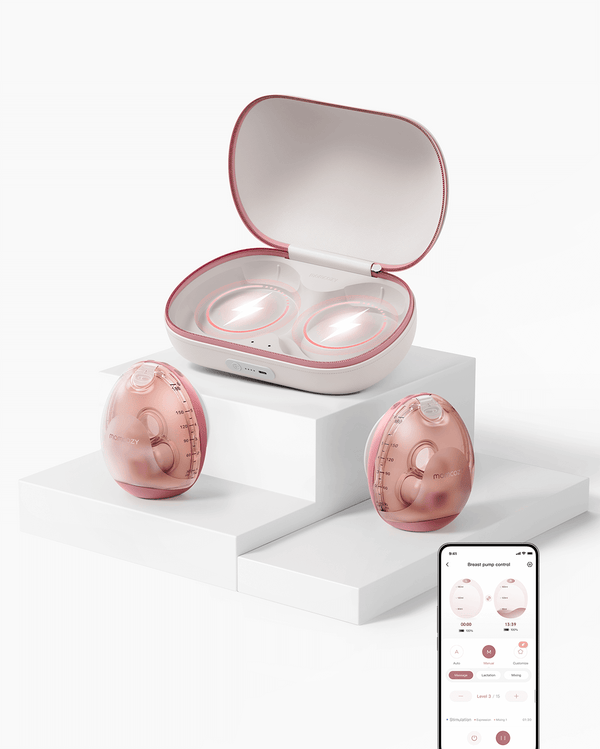
The Momcozy Air 1 can support you if you want to pump briefly after individual nursing sessions, build a small stash, or stay more flexible during work, travel, and daily life. According to the product page, it was designed for discretion, efficiency, and comfort: it is 2.4 inches / 6.1 cm slim, has a transparent top for easier nipple alignment, and offers a wireless charging case with up to 15 pumping sessions or 5 days of use. Momcozy also lists quiet operation under 45 dB, app control with real-time tracking and full-container notifications, and soft breast shields made of 50A silicone.
|
Mom’s need
|
Relevant Momcozy Air 1 feature
|
Final article wording
|
|
Hands-free pumping
|
Wearable and hands-free design
|
Ideal if you want to fit short pumping sessions more easily into your day.
|
|
Comfort while pumping
|
Adjustable suction strength and three standard modes: stimulation, expression, and mixed; plus two expert modes
|
You can choose adjustable suction and switch between stimulation, expression, and mixed modes depending on the phase.
|
|
Pumping on the go or at work
|
Wireless charging case with 1800 mAh, up to 15 pumping sessions or 5 days of use; quiet operation under 45 dB; app control with real-time tracking
|
A mobile solution helps you plan pumping times more flexibly.
|
|
Collecting milk safely
|
App notification when the milk container is full; transparent top for checking milk volume
|
Practical if you regularly want to collect small amounts after nursing.
|
Ultra compacto
Ajuste sin esfuerzo
Carga inalámbrica
Silencioso e inteligente
How to store pumped breast milk safely
If you pump breast milk after nursing, safe storage is just as important as pumping itself. The CDC recommends washing your hands thoroughly before expressing or handling breast milk and using breast milk storage bags or clean food-grade containers with tight-fitting lids.
For freshly expressed breast milk, the CDC gives the following general guidelines: up to 4 hours at room temperature, up to 4 days in the refrigerator, and about 6 months in the freezer for best quality; up to 12 months is considered acceptable. Label milk with the date it was expressed and avoid storing it in the refrigerator or freezer door, where temperatures may fluctuate more often.
Common mistakes when pumping after breastfeeding
One common mistake is starting with a very strict pumping schedule even though breastfeeding is going well and there is no clear need for extra milk. This can create additional pressure, and some moms mistakenly interpret small pumped amounts as a sign of low supply. After a nursing session, however, it is normal to collect less milk than during a replaced feeding.
Another mistake is using uncomfortable suction. More suction does not automatically mean more milk. A properly fitting breast shield is also important; La Leche League notes that the breast shield should be neither too tight nor too loose. If pumping hurts, the nipple rubs, or you feel discomfort after pumping, the pump setup should be reviewed.
FAQ: Common questions about pumping after breastfeeding
Should I pump after every breastfeeding session?
No. If your baby nurses well, gains weight, and you do not need extra milk, you usually do not need to pump after every feeding. It can make sense when you have a clear goal, such as building a stash, returning to work, or supporting milk production in a targeted way.
How long after breastfeeding should I wait before pumping?
If you want to build a small stash, waiting between feedings can be helpful. As a practical guide, many moms try about 30 to 60 minutes after nursing when they only want to collect small amounts. If you are replacing a feeding, timing should follow your baby’s usual feeding rhythm more closely.
Why do I get almost no milk when pumping after breastfeeding?
This is often normal. If your baby has just nursed effectively, less milk is available than before a feeding or during a replaced feeding. The pumped amount therefore does not automatically show how much milk you make overall.
Can pumping too often be a problem?
Yes. If you pump very often in addition to nursing, milk production may be stimulated more than you want. This can contribute to fullness, leaking, or discomfort. If you are prone to oversupply or clogged ducts, plan extra pumping sessions especially carefully.
Which breast pump is suitable for breastfeeding and pumping?
The right breast pump depends on how often you pump, where you pump, and how much flexibility you need. If you want to fit short sessions after nursing into your daily life, a wearable Momcozy breast pump such as the Momcozy Air 1 Ultra-slim Breast Pump can be a practical option: it combines an ultra-slim, discreet design with a transparent top for easier alignment, real-time milk-volume monitoring, a wireless charging case, app control, and quiet operation under 45 dB.
Conclusion: Pumping after breastfeeding should fit your goal
Pumping after breastfeeding is useful when it supports a specific goal: more flexibility, a small freezer stash, returning to work, or targeted support for milk production. But it is not a required routine for every mom. A good rhythm should feel manageable, should not cause pain, and should fit your baby, your body, and your everyday life.