


Table of Contents
Late night feeds, sore shoulders, tiny hands curled against your shirt, and a baby who somehow feels heavier by the minute. Feeding can be sweet, but it is also physical work. So, do I need a breastfeeding pillow?
For many parents, the answer is not about buying more baby gear. It is about making feeding more comfortable, steady, and easier to repeat many times a day.

The Nursing Pillow Debate
A breastfeeding pillow, also called a nursing pillow, is a firm support cushion that helps hold baby near breast or bottle height during feeding. The big question is whether it is truly useful or just another piece of baby clutter.
The reality is more balanced. A breastfeeding pillow is not strictly mandatory, and many parents can feed with regular pillows or arm support. But the right pillow can be a real game-changer for ergonomics, which means reducing strain on your body, and for latch quality, which means how well baby attaches to the breast.
Regular pillows may slide, flatten, or leave gaps during longer feeds. A nursing pillow can lift baby closer, support your arms, and reduce the need to hunch forward. For latch basics, WIC Breastfeeding Support explains signs of a good latch, including a wide mouth, turned-out lips, and a comfortable feeding feel. For many parents, a breastfeeding pillow becomes valuable when feeding causes shoulder tension, wrist fatigue, back strain, or constant position adjustments.
Why Many Parents Choose a Breastfeeding Pillow
A breastfeeding pillow is helpful because feeding happens often, and small posture problems can turn into real discomfort. The right support can make each session feel steadier for both parent and baby.
Ergonomic Support and Pain Prevention
Frequent feeding can be hard on the body. When you hold your baby’s full weight by hand, your wrists, arms, shoulders, neck, and back may start to feel sore, especially during long feeds or cluster feeding.
A common misunderstanding is that a nursing pillow is mainly for the baby. In reality, its biggest job is to support the parent. According to Today’s Parent’s nursing pillow advice, a pillow is often used to support the arm rather than directly hold the baby, helping reduce strain during the early weeks.
A good breastfeeding pillow can help you:
- Rest your arms instead of holding baby’s full weight
- Keep your shoulders relaxed
- Bring baby closer to breast or bottle height
- Sit more upright instead of leaning forward
- Maintain a calmer feeding position for longer sessions
This kind of support matters because breastfeeding starts with a comfortable position.
Essential for Different Body Types
Body shape plays a big role in whether a breastfeeding pillow feels useful. A parent with a long torso may need more lift, while a petite parent may need a lower or slimmer pillow.
For parents with longer torsos, a thicker or more supportive pillow can raise the baby closer to nipple height. This helps reduce hunching and keeps feeding from becoming a back and shoulder workout. Today’s Parent also points out that body type matters, especially when a parent needs extra height or an adjustable strap for better positioning.
For petite parents, the goal is different. A pillow that is too tall may lift baby too high, which can make latch uncomfortable. Hush Hush Little Baby explains that baby’s mouth should be even with the parent’s nipples, and the wrong pillow height may lead to a poor latch or sore nipples.

A Must-Have for Specific Situations
Some feeding situations make a breastfeeding pillow especially useful. It can provide a stable surface when positioning needs more care, comfort, or control. A nursing pillow may be especially helpful for:
- Larger Breasts: A stable pillow can help lift baby closer while the parent manages breast position and keeps baby aligned.
- C Section Recovery: A C section, or cesarean birth, is surgery through the abdomen and uterus. A pillow can act as a soft barrier between baby and the healing incision during C section recovery.
- Twins or Multiples: Extra support can help position more than one baby, especially in football hold.
- Long Night Feeds: A pillow can reduce arm fatigue when feeds stretch longer than expected.
For parents recovering from a C section, the football hold can make feeding feel gentler because baby rests along your side instead of across the abdomen. The USDA WIC football hold guide also notes that this position can work well after a C section, especially with a pillow under the arm for support.
Multi-Purpose Utility
A breastfeeding pillow is not only for breastfeeding. Parents who are bottle feeding, partners, grandparents, and other caregivers can also use it to reduce wrist and arm strain during feeds.
It may also support certain supervised awake activities as baby grows. For example, some parents use a nursing pillow during supervised tummy time or as gentle support when baby is learning to sit, as long as the product instructions allow it.
Still, safety comes first. A nursing pillow should only be used when an adult is watching. It should never be used as a sleep surface, lounger, or place to leave baby unattended.
When Breastfeeding Pillows Do Not Work Well
A breastfeeding pillow should help you sit comfortably and keep baby close. The right fit matters because pillow height, shape, and body placement can all affect feeding comfort.
- The Gap Issue: If the pillow does not sit close to your waist, baby may slide into the space between you and the pillow. This can make you lean forward and strain your back. A better setup keeps baby close and lifted, which matches WIC’s advice to raise baby to nipple height.
- Forcing the Position: Some pillows are too thick for short-torsoed or petite parents. If baby is lifted too high, the latch may feel awkward or shallow. The goal is a relaxed position where baby’s mouth meets the breast naturally, not one where your body has to adjust to the pillow.
- Using It for Sleep: A nursing pillow is for feeding support only. It should never be used for unsupervised sleep, lounging, or naps. The U.S. Consumer Product Safety Commission nursing pillow safety guidance says nursing pillows should only be used for nursing or feeding, and babies should be moved to a safe sleep space if they fall asleep.
How to Choose the Right One
The right pillow should fit your body, your baby, and your feeding routine. Comfort matters, but support matters just as much.
Firmness
Choose a pillow that is firm enough to hold the baby up. If the baby sinks too deeply, the latch may shift, and you may start lifting with your arms again. A soft feel is nice, but the pillow should still keep its shape during a full feeding session.
Adjustability
Feeding changes as the baby grows. A newborn needs more lift and support. An older baby may need less height but more room. Look for features that help the pillow stay in place, such as a wraparound shape or adjustable waist strap. These details can help reduce the gap and keep baby close.
Ease of Cleaning
Milk leaks, spit up, and small messes are normal. A removable, machine washable cover makes daily use easier. For memory foam styles, check the care label for the pillow core, and choose a removable, machine washable cover for everyday messes. Memory foam is a soft but supportive foam that molds to pressure and then returns to shape. Always follow the care label so the pillow keeps its structure.

Top Recommendation: Momcozy Nursing Pillows
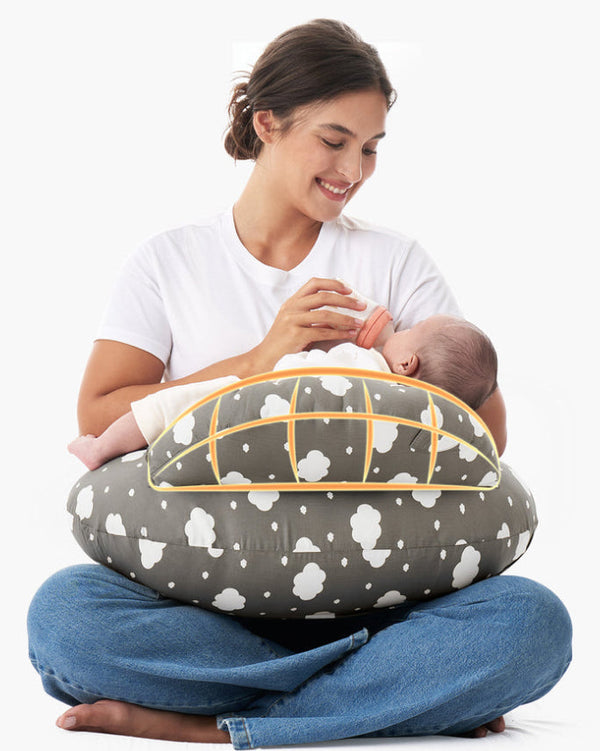
For parents still asking “do I need a breastfeeding pillow,” Momcozy offers nursing pillows that focus on real feeding needs: better lift, closer body fit, arm support, and easier daily care. The Momcozy Nursing Pillow Collection includes supportive options for breastfeeding, bottle feeding, C section comfort, and supervised baby support as little ones grow.
The Momcozy MaxSupport Nursing Pillow is designed with firm memory foam, a wide cushion, an adjustable waist strap, and a removable machine washable cover. It helps keep baby at a better height for latching while reducing the need for parents to hold baby’s full weight by hand.
For families who want more flexible support, the Momcozy Multifunctional and Adjustable Nursing Pillow offers an adjustable waist strap, widened side support, and a secure design that helps the pillow stay close to the body. It can support common feeding positions such as cradle hold, cross cradle hold, football hold, and bottle feeding.

De $59.99 CAD $68.00 CAD
The Momcozy Memory Foam Nursing Pillow is another option for parents who want a firmer, more stable feeding surface with soft comfort. Its memory foam structure helps support both baby and parent during repeated feeding sessions.
Key features across the collection include:
- Ergonomic wraparound support to help reduce the gap between parent and baby
- Firm cushioning to help keep baby near feeding height
- Adjustable waist straps for a closer fit
- Support for breastfeeding and bottle feeding
- Skin friendly fabrics for parent and baby comfort
- Removable covers for easier cleaning
These details make Momcozy nursing pillows a strong fit for parents who want comfort without overcomplicating feeding. Instead of simply adding softness, they help create a more stable, parent-friendly feeding setup.
Pro Tips for Using a Breastfeeding Pillow
A breastfeeding pillow works best when it supports your body instead of changing your natural feeding rhythm. These simple tips can make each session more comfortable.
- Bring Baby to You: Do not lean your body down toward the pillow. Lift baby and the pillow to breast or bottle height so your back stays supported and your shoulders stay relaxed.
- Follow the Tummy-to-Tummy Rule: Keep baby’s belly facing your belly, not the ceiling. This helps baby’s head, neck, and body stay in a more natural line during feeding.
- Add Extra Support If Needed: If the pillow is not high enough, place a regular pillow underneath it. If your lower back feels tired, add a small pillow behind your back.
- Keep Your Feet Supported: Your feeding posture starts from the ground up. Rest your feet flat on the floor or on a small footstool to reduce pressure on your lower back.
- Adjust as Baby Grows: A newborn and a four-month-old do not need the same setup. Change the pillow height, chair, or feeding hold when baby starts sliding, pulling, or feeling too high or too low.
Make Feeding More Comfortable With the Right Support
A breastfeeding pillow can make daily feeding feel easier when posture, latch, arm fatigue, or recovery comfort becomes a concern. The best option should fit your body, keep baby close, and support both breastfeeding and bottle feeding without forcing an awkward position. For a more stable and comfortable feeding setup, explore the Momcozy Nursing Pillow Collection and choose a support style that fits your routine.
FAQs
Q1. Do I Need a Breastfeeding Pillow Before My Baby Is Born?
You can prepare one before birth if you want your feeding area ready from day one. It is especially helpful if your baby registry focuses on practical items you will use often. Many parents prefer having support available early rather than shopping while recovering and feeding around the clock.
Q2. Do I Need a Breastfeeding Pillow for Night Feeds?
A breastfeeding pillow can make night feeds more comfortable because tired arms and poor posture are common at night. It helps create a steady setup when you are sleepy. Always stay awake while feeding and move the baby to a safe sleep space afterward.
Q3. Do I Need a Breastfeeding Pillow If I Have a Small Space?
Yes, it can still be useful in a small nursery, bedroom, or apartment. A nursing pillow does not need a large setup, only a safe seat and enough room to hold the baby close. Choose one that stores easily near your main feeding spot.
Q4. Do I Need a Breastfeeding Pillow for Every Feeding Session?
Not always. Some parents use it most during newborn feeds, night feeds, or longer sessions. As your baby grows stronger, you may use it less often, but it can still help when you want extra comfort or support.








