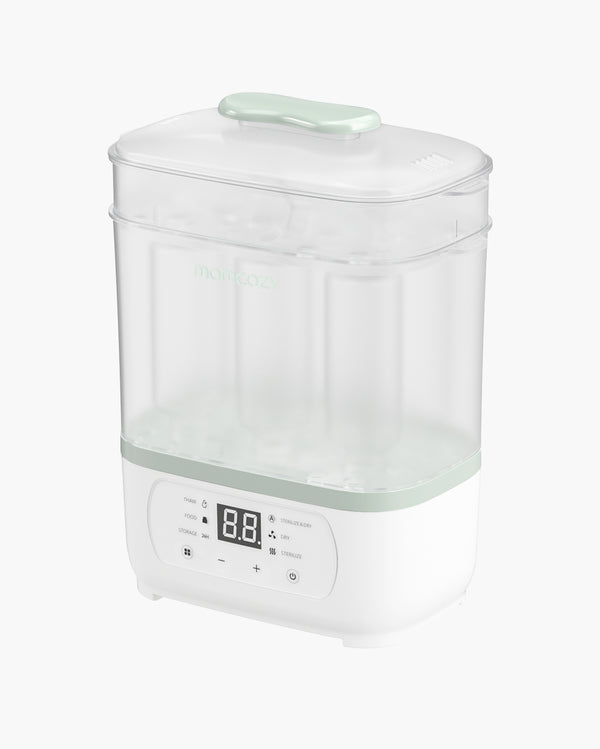
Clean bottles, nipples, rings, caps, and milk-contact pump parts after every use. Consider Adding daily sanitizing or sterilizing when your baby is under 2 months old, was born prematurely, has a weakened immune system, or when your clinician recommends it. For many older, healthy babies, careful cleaning after every use may be enough.
The key is not to treat cleaning and sanitizing as the same task. Cleaning removes milk residue and soil after each feed or pumping session. Sanitizing or sterilizing is an additional step that may be especially important at particular stages or under higher-risk circumstances.
The Everyday Rule at Every Stage: Clean After Each Use

Whether your baby is a newborn, an older infant, bottle-fed, combination-fed, or receiving expressed milk, the baseline routine remains the same: clean feeding equipment after use.
That includes:
- Bottles
- Nipples or teats
- Rings and caps
- Valves and membranes
- Milk collection bottles
- Breast-pump parts that come into contact with milk
Bottles should be cleaned after every feeding. Milk-contact pump parts should likewise be taken apart, rinsed, and cleaned as soon as possible after each pumping session.
For hand-washing, use this sequence:
- Wash your hands with soap and water.
- Take apart all bottle or pump components.
- Rinse the pieces under running water.
- Wash them in a clean basin reserved for infant feeding items, rather than directly in the sink.
- Use hot, soapy water and a clean brush used only for feeding equipment.
- Squeeze soapy water through nipple holes, then rinse thoroughly.
Always follow the pump manufacturer’s instructions for parts that can be brushed, dishwashed, steamed, or boiled. Some components need more careful handling.
Choose a Cleaning Method That Fits Your Routine

A reliable routine is one you can complete consistently. Hand-washing and dishwashing can both work when the equipment and settings are appropriate.
Hand-Washing
Hand-washing is a practical option when you need items ready quickly or have parts that are not dishwasher-safe. The important details are complete disassembly, a dedicated basin and brush, and thorough air-drying afterward.
Do not rub or pat bottle parts dry with a kitchen towel. Instead, let them air-dry completely on a clean, unused dish towel or paper towel in an area protected from dirt and dust.
Dishwasher Cleaning
Dishwasher-safe feeding items can be cleaned in the dishwasher after being taken apart and rinsed. Keep small pieces, such as nipples, valves, or rings, secure in a closed basket or mesh bag if appropriate for your dishwasher.
When dishwasher-safe items are washed with hot water and a heated-dry cycle or sanitizing setting, separate sanitizing may not be necessary under that guidance.
Check both the bottle or pump-part instructions and your dishwasher guidance before relying on this method.
When Daily Sanitizing Matters Most

Your baby’s age and health can change whether sanitizing should be part of the daily routine.
Baby’s Stage or Circumstance |
Everyday Cleaning |
Added Sanitizing or Sterilizing |
Under 2 months old |
Clean every feeding item after every use |
Daily sanitizing is particularly important |
Born prematurely |
Clean after every use |
Daily sanitizing is particularly important, including for milk-contact pump parts |
Weakened immune system |
Clean after every use |
Daily sanitizing is particularly important; follow clinician guidance |
Older, healthy baby |
Clean after every use |
Daily sanitizing may not be necessary when items are carefully cleaned |
This is not a reason to ease up on washing. It is a reason to add an extra step when your baby’s stage or health calls for it.
The same risk-based approach applies to breast-pump parts that contact milk. For a newborn, premature baby, or baby with a weakened immune system, include those parts in your daily sanitizing routine. Breast-pump cleaning guidance also emphasizes following the manufacturer’s instructions for each component.
How to Sanitize Without Undoing the Work
Sanitizing comes after cleaning, not instead of cleaning. Milk residue or other buildup should be removed before you use a sanitizing method.
A simple sequence is:
- Clean the items first. This includes bottle parts, pump parts, the wash basin, and the brush used for feeding equipment.
- Use a manufacturer-approved sanitizing method. One option for boil-safe, disassembled feeding items is to cover them with water, boil for 5 minutes, and remove them with clean tongs.
- Let every part air-dry fully. Avoid towel-drying as this can leave residue on the parts.
- Wash your hands before reassembly.
- Store dry parts in a clean, protected place, such as a closed cabinet reserved for clean dishes.
Do not assume every bottle, nipple, valve, or pump component can be boiled. Material limits vary, so the manufacturer’s instructions determine whether boiling, steam, dishwasher sanitizing, or another method is suitable.
There is No Single Universal “Stop” Age
Parents often want one clear age at which sterilizing can end. Current guidance does not support one answer for every family.
Some public-health guidance says that older, healthy babies may not need daily sanitizing if feeding items are carefully cleaned after each use. A separate NHS guideline recommends sterilizing all baby feeding equipment, including bottles and teats, until a baby is at least 12 months old. This additional guidance reflects a more precautionary approach.
Rather than choosing a milestone based only on age, consider:
- Is your baby still under 2 months old?
- Was your baby born prematurely?
- Does your baby have a weakened immune system or clinician-directed hygiene needs?
- Are you using a dishwasher cycle that includes hot water and heated drying or a sanitizing setting?
- Are the bottle and pump parts compatible with your chosen method?
First Use and Water-Safety Questions Need Separate Decisions
This guidance does not address first-use preparation or water safety.
A Calm Routine Selector for the Next Stage
Use this as your everyday decision guide:
- Clean after every use: bottles, nipples, rings, caps, valves, and milk-contact pump parts.
- Add daily sanitizing or sterilizing: when your baby is under 2 months, premature, immunocompromised, or advised by a clinician.
- For older, healthy babies: careful cleaning after every use may be sufficient, depending on the guidance you follow and the method you use.
Choose a cleaning or sterilizing workflow only if it fits your equipment’s instructions and helps your household carry out that routine consistently and safely.